The Modern Author: Why Debbie Millman Chose To Stop Waiting To Feel Ready

Debbie’s career shows that creative confidence is not a prerequisite for serious work, but a byproduct of sustained action taken in the presence of uncertainty.

Debbie Millman has built a career without waiting to feel ready.

Uncertainty appears throughout her work. Fear never fully disappears. Doubt remains present across projects, roles, and transitions.

But none of it is granted veto power.

She does not pause until clarity arrives. She does not require internal certainty before proceeding. She continues to operate while confidence is incomplete.

This is not a personality trait or an unusual level of bravery. It is an operating rule.

Millman’s career shows that creative confidence is not a prerequisite for serious work, but a byproduct of sustained action taken in the presence of uncertainty.

What looks like courage in retrospect is better understood as persistence without emotional permission.


The myth of courage as the starting point

Many creative careers stall because people misunderstand where confidence comes from.

They assume it must arrive first.

That before you begin, something internal needs to resolve: fear quieted, doubt reduced, conviction secured. Courage, in this framing, is treated as the starting condition.

It’s an attractive story because it turns hesitation into a character issue. If you’re not moving, you must be lacking bravery.

But that story misidentifies the problem.

Most aspiring authors are not unwilling to work. They are unwilling to work without an emotional guarantee that the effort will justify itself. They wait to feel like the kind of person who succeeds at the work before allowing themselves to do it.

They wait for confidence.

And in waiting, they confuse delay with discernment.


Confidence is a result, not a prerequisite

The reality is simpler and less comforting: confidence does not precede action. It follows it.

Confidence is not a trait you acquire in advance. It is evidence accumulated over time. It forms only after you have taken repeated steps that prove you can continue even when outcomes remain unclear.

This inversion is easy to miss because it runs counter to how we like to narrate creative success.

We prefer stories where internal clarity produces external momentum.

In practice, momentum produces clarity.


Debbie Millman’s long arc of persistence

Millman’s career makes this inversion visible.

Across her work—as a designer, interviewer, teacher, and author—fear is present, but it is never granted veto power. Uncertainty appears repeatedly, but it does not determine whether she proceeds.

She does not wait to feel ready.

She continues to operate until readiness becomes unnecessary.

This is not a personality trait or an unusual level of self-belief. It is an operating rule: action continues even when confidence is incomplete.

Her career is not built on eliminating doubt, but on refusing to let doubt dictate behavior.


Repetition as the confidence engine

Millman’s approach treats confidence as a lagging indicator. The signal comes after the behavior, not before it.

Action generates information. Information allows adjustment. Adjustment builds self-trust. What people later call confidence is simply familiarity with the fact that movement is possible even when certainty is absent.

This is why repetition matters more than motivation.

Repeated action produces psychological stability not because it feels good, but because it reduces ambiguity. Each instance of showing up adds data:

  • You can begin without clarity.
  • You can finish without assurance.
  • You can publish without knowing how it will be received.

Over time, the brain updates its beliefs—not through affirmation, but through demonstration.


Why waiting for confidence stalls creative work

Waiting for confidence interrupts this process.

When authors delay action until they feel certain, the work accumulates symbolic weight. The project becomes a referendum on talent. Each attempt carries the pressure of justification.

The fewer times you act, the higher the stakes feel.

This is how hesitation hardens into stagnation.

The problem is not fear itself. The problem is treating fear as a prerequisite filter rather than a background condition.


Choosing persistence over certainty

Millman’s persistence outperforms this loop because it breaks the dependency.

Action no longer waits for emotional permission. Uncertainty is treated as a normal condition of making anything that matters, not a problem to be solved in advance.

This reframes persistence itself.

Persistence is not merely a work ethic. It is an uncertainty-management strategy. It allows you to continue producing without requiring the internal environment to be calm, confident, or resolved.

The goal is not to eliminate fear.

The goal is to build a practice that does not depend on fear’s absence.


What this means for modern authors

For modern authors, the implication is structural.

Confidence should not be used as a gate. It should be treated as a signal that may or may not arrive later. Progress is better measured by continuity than by conviction.

Write before you feel ready.
Publish before you feel certain.
Return tomorrow even if today felt disorganized or incomplete.

Not as motivational slogans, but as a causal sequence.

Millman’s career demonstrates that the real advantage is not bravery, clarity, or self-belief at the outset.

It is the ability to remain in motion while uncertainty persists.

Confidence arrives eventually for those who stay long enough to earn it—but the work cannot wait for its permission.

Listen:

Watch:

https://youtu.be/Ch37ee9FcAI?si=JW1yaGhzdnpcyzrg

About the Author

Eric Koester is an award-winning entrepreneurship professor at Georgetown University, bestselling author, and founder of Manuscripts. He has helped more than 3,000 nonfiction authors turn ideas into books, and books into platforms for speaking, media, and business growth.

About Manuscripts

Manuscripts is a modern publishing partner for nonfiction authors who want their books to drive real-world outcomes. We help founders, executives, coaches, and experts design, write, and launch books that build authority, attract opportunities, and compound into long-term business assets.

Work With Us

If you’re writing a book you want to matter, we’ll help you map the right strategy before you write another word.

 Schedule a Modern Author Strategy Session
https://write.manuscripts.com/maa-web

Read more...

The Modern Author: Arianna Huffington on Burnout, Focus, and Creative Energy

Arianna Huffington didn’t burn out because she was weak.

She burned out because she was successful, driven, and running at full speed with no off switch.

After collapsing from exhaustion in 2007, she didn’t just recover. She rebuilt her entire philosophy of work, creativity, and leadership. That journey led to Thrive, Thrive Global, and a career-long mission to end the burnout epidemic.

This conversation isn’t about writing faster.

It’s about writing without frying your brain.

Because tired authors don’t fail from lack of talent.

They fail from diminishing returns.

And Arianna has spent years studying exactly where that line is.


Who This Is For

This is for you if:

  • you’re exhausted but still pushing
  • writing feels heavy instead of energizing
  • focus comes in short bursts, then disappears
  • your phone keeps winning
  • you know the book matters, but you’re running on fumes

The Modern Author Lesson

You don’t finish meaningful books by pushing harder.

You finish them by protecting creative energy and removing silent drains.

Burnout isn’t a badge of honor.

It’s a signal that the system is broken.


5 Takeaways Authors Can Steal from Arianna Huffington

1) Burnout creates diminishing returns, not breakthroughs

The point: More effort doesn’t always mean better work.

Arianna’s insight came the hard way. She collapsed from exhaustion while running the Huffington Post, a moment that forced her to confront a truth most authors ignore:

When you’re depleted, output drops even as effort increases.

Use it as an author:

Stop measuring writing by hours. Measure it by clarity per session.

Ask:

  • Did this session move the idea forward?
  • Did I protect energy for the next session?
  • Did I stop before quality declined?

Chapter angle:

“Why pushing harder makes your book worse.”


2) Balance is the wrong goal, recovery is the right one

The point: Creative intensity is fine. Chronic depletion is not.

Arianna doesn’t talk about “balance” the way most people do. She doesn’t believe in evenly dividing energy every day.

She believes in cycles.

Write deeply when you’re in flow. Then recharge deliberately.

Use it as an author:

Design writing seasons, not daily perfection.

  • sprint when creativity is high
  • recover without guilt
  • stop before exhaustion becomes the norm

This keeps writing sustainable instead of punishing.

Chapter angle:

“Why creative surges are healthy and burnout is optional.”


3) Your first draft doesn’t need a keyboard

The point: Writing is thinking, not typing.

Arianna shared that for her last two books, she dictated the first draft. Not because she was lazy, but because she noticed something important:

She could speak clearly for an hour without notes.

So she stopped fighting her natural strengths.

Use it as an author:

Lower the friction to get words out.

Try:

  • dictating while walking
  • voice notes during commutes
  • speaking sections as if explaining to a friend

Once a draft exists, editing becomes far easier.

Chapter angle:

“The fastest way to get unstuck is to stop typing.”


4) Distraction is poison for deep work

The point: Focus isn’t fragile. It’s interrupted.

Arianna is ruthless about one rule:

No notifications while writing. None.

If she wants the news, she goes and gets it. She doesn’t let it come to her.

Interruptions break creative continuity, and regaining depth takes far longer than most people realize.

Use it as an author:

Adopt one non-negotiable distraction rule for 7 days.

Examples:

  • phone out of the room
  • notifications off
  • one writing tab only
  • write before consuming anything

You don’t need perfect focus. You need protected focus.

Chapter angle:

“The hidden cost of ‘just checking’ your phone.”


5) Vulnerability isn’t optional if you’re writing about your life

The point: Readers can feel when you’re holding back.

Arianna was direct:

If you’re not willing to be vulnerable, you shouldn’t write a book that includes your life.

That doesn’t mean oversharing. It means honesty. No perfection. No performance.

Readers don’t connect to polish. They connect to truth.

Use it as an author:

Ask yourself:

  • Where am I trying to look impressive?
  • Where am I avoiding the real story?
  • What would change if I wrote this without protecting my image?

That’s usually where the book comes alive.

Chapter angle:

“Why perfect books feel empty.”


The Modern Author Playbook

Protect Energy, Produce Clarity (7-Day Reset)

Step 1: Identify your biggest energy leak

Choose one:

  • overworking
  • constant notifications
  • writing when exhausted
  • perfectionism
  • guilt-driven productivity

Step 2: Name the cost

Finish this sentence:

“When I keep doing this, my writing suffers because…”

Step 3: Choose one protection rule

Examples:

  • stop writing before exhaustion
  • dictate first drafts
  • phone out of the room
  • no editing during drafting

Step 4: Run the experiment for 7 days

No optimization. Just consistency.

Step 5: Capture proof

Each day, write one line:

“What felt easier or clearer today because I protected my energy?”

That’s how sustainable writing habits are built.


FAQs

Why do so many authors burn out while writing?

Because they treat writing like a grind instead of a creative system that requires recovery.

How do you write consistently without exhaustion?

By protecting focus, removing distractions, and stopping before diminishing returns kick in.

Is dictation really effective for book writing?

Yes. For many authors, it’s the fastest way to generate a first draft because it bypasses perfectionism and friction.


The Bottom Line

Burnout doesn’t make you serious.

Exhaustion doesn’t make you committed.

Finished books come from authors who respect their creative energy enough to protect it.

Arianna Huffington didn’t just survive burnout.

She redesigned how meaningful work gets done.

That’s the lesson modern authors can’t afford to ignore.

https://youtu.be/kOw5Y_4dA5Y

About the Author

Eric Koester is an award-winning entrepreneurship professor at Georgetown University, bestselling author, and founder of Manuscripts. He has helped more than 3,000 nonfiction authors turn ideas into books, and books into platforms for speaking, media, and business growth.

About Manuscripts

Manuscripts is a modern publishing partner for nonfiction authors who want their books to drive real-world outcomes. We help founders, executives, coaches, and experts design, write, and launch books that build authority, attract opportunities, and compound into long-term business assets.

Work With Us

If you’re writing a book you want to matter, we’ll help you map the right strategy before you write another word.

👉 Schedule a Modern Author Strategy Session
https://write.manuscripts.com/maa-web
Read more...

Write Like a Thought Leader: Why No One Cares About Your Success Until You Do This (Russell Brunson’s Lesson)

Most people think audiences care about credentials.

They don’t.

They care about movement.

Russell Brunson understood this early. Long before ClickFunnels was a category, before the massive stages and seven-figure launches, he talked openly about what he was building, what was working, and what wasn’t, while it was still in motion.

That’s the lesson most aspiring thought leaders miss.

People don’t care about your success after it happens.

They care when they can see it unfolding.


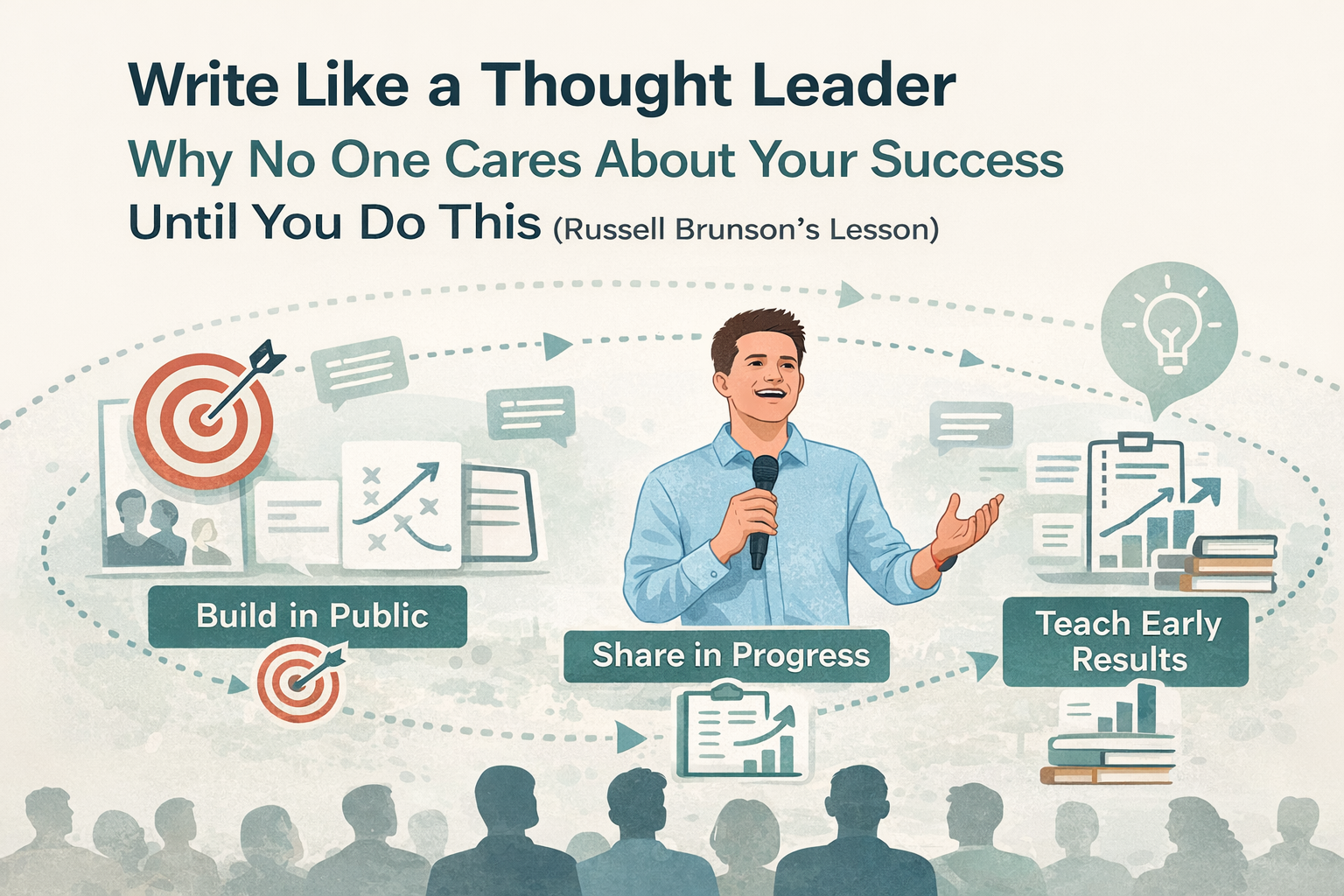
The Russell Brunson Pattern: Build in Public, Teach in Public

Russell Brunson doesn’t wait until something is “done” to talk about it.

He:

  • shares frameworks as he’s using them
  • teaches concepts while they’re being tested
  • explains outcomes before they’re polished into case studies

This creates a powerful dynamic:

  • audiences feel early
  • trust builds faster
  • momentum compounds

The key insight isn’t marketing bravado. It’s psychology.

People don’t attach to finished success.

They attach to visible commitment.


The Principle: People Care When You Take Yourself Seriously

Here’s the core thought leadership principle behind this post:

People don’t validate your success. They respond to your conviction.

Russell didn’t wait for the world to crown him credible.

He acted like the work mattered before anyone else did.

That posture, repeated publicly, creates gravity.


Why This Matters for Authors

Most nonfiction authors do the opposite.

They:

  • hide until the book is “good enough”
  • wait for permission to teach
  • assume attention comes after achievement

But attention is built before the book is finished.

Russell’s style proves a counterintuitive truth:

Teaching is how you earn the right to be followed.


The “Conviction-First” Writing Framework

This is how to apply the Russell Brunson lesson directly to your book and content.

1) Lead with belief, not validation

Start chapters and posts by stating what you believe now, not what you’ve proven forever.

Example:

“Most funnels fail because people overbuild before they understand demand.”

That sentence doesn’t require universal proof. It requires ownership.

Why it works:

Belief signals leadership. Hedging signals insecurity.


2) Teach from the middle, not the finish line

Russell teaches while building, not after the case study is complete.

As an author, that means:

  • write from the testing phase
  • share partial results
  • explain what you’re trying and why

This doesn’t weaken authority. It humanizes it.

Why it works:

Readers trust people who are in the arena, not just reporting from it.


3) Show progress, not perfection

You don’t need a massive win to earn attention.

You need:

  • a direction
  • momentum
  • consistency

Russell constantly shows:

  • iterations
  • refinements
  • new versions of old ideas

Why it works:

Progress feels real. Perfection feels distant.


4) Name the pattern you’re discovering

The shift from “story” to “thought leadership” happens here.

After sharing what you’re doing, extract the insight:

  • What’s working?
  • What keeps repeating?
  • What surprised you?

This turns activity into teaching.

Example:

“Every time we simplified the message, conversion improved. Complexity was the enemy.”

Now it’s not just a story. It’s a principle.


5) Invite the reader to act alongside you

Russell’s work often feels collaborative, not declarative.

End sections with:

  • “Try this”
  • “Test this”
  • “Watch what happens when you…”

This frames the reader as a participant, not a spectator.


How This Shows Up in Manuscripts Projects

The authors who gain traction fastest don’t wait to feel “successful.”

They:

  • put "Working Title (Coming 2026" in their LinkedIn bio before they've finished their first draft
  • publish while learning
  • teach before the book is finished
  • share frameworks as living tools

Their books feel alive because they were shaped in public.

This mirrors the Russell Brunson model exactly.


Evidence That This Works

1) Pattern Evidence

Audiences consistently engage more with in-progress insights than polished retrospectives.

2) Social Evidence

Readers frequently say:

“I feel like I’m learning alongside you.”

That’s not accidental. That’s design.

3) Outcome Evidence

Authors who teach early:

  • build audiences faster
  • get better feedback
  • write stronger books because ideas are pressure-tested

Common Mistakes (and Fixes)

Mistake: Waiting to be “successful enough”

Fix: Act like the work matters now

Mistake: Over-explaining credentials

Fix: Demonstrate belief through consistent action

Mistake: Hiding drafts and ideas

Fix: Share thinking before it’s perfect


A Simple Template You Can Copy

Use this when drafting a chapter or post:

  1. Belief: “Here’s what I think is true right now.”
  2. Action: “Here’s what I’m doing to test it.”
  3. Observation: “Here’s what I’m seeing so far.”
  4. Pattern: “Here’s the principle emerging.”
  5. Invitation: “Here’s how you can try this.”

This is conviction made visible.


Quick FAQ

Why don’t people care about my success yet?

Because they can’t see your commitment in motion. Visibility precedes validation.

What did Russell Brunson do differently?

He taught while building, shared frameworks early, and acted like the work mattered before it was widely successful.

Is this the same as “building in public”?

Related, but more intentional. This is teaching in public, not just sharing updates.


The Bottom Line

People don’t rally behind finished success.

They rally behind belief, motion, and leadership.

Russell Brunson didn’t wait to be impressive.

He showed up convinced.

If you want to write like a thought leader, start there.

→ Schedule Your Free Strategy Call


About the Author

Eric Koester is an award-winning entrepreneurship professor at Georgetown University, bestselling author, and founder of Manuscripts, the Modern Author OS used by more than 3,000 authors. His work has helped creators turn ideas into books, books into brands, and brands into scalable businesses.

About Manuscripts

Manuscripts is the leading full-service publishing partner for modern nonfiction authors. We help founders, executives, coaches, and experts turn their books into growth engines, through positioning, coaching, developmental editing, design, AI-enhanced writing tools, and strategic launch systems. Manuscripts authors have sold thousands of books, booked paid speaking gigs, landed media features, and generated millions in business from their IP.

Work With Us

If you’re writing a book you want to matter, let’s map out your Modern Author Plan.

👉 Schedule a Modern Author Strategy Session → https://write.manuscripts.com/maa-web
👉 Explore Manuscripts Publishing Services → https://manuscripts.com/publish-with-us/

👉 See Modern Author Success Stories → https://manuscripts.com/authors/

Modern Author Resources

  • How to Write a Book if You’re Busy
  • Modern Ghostwriting for Nonfiction Authors
  • AI Tools for Authors in 2026
  • How to Build an Audience Before You Write Your Book
  • The Evergreen Launch System for Modern Authors

Powered by Codex: The Modern Author Author Intelligence Tool

Read more...

How To Leverage Creativity in Writing: Insights From Austin Kleon

Pablo Picasso once said:
“Good artists borrow, great artists steal.”
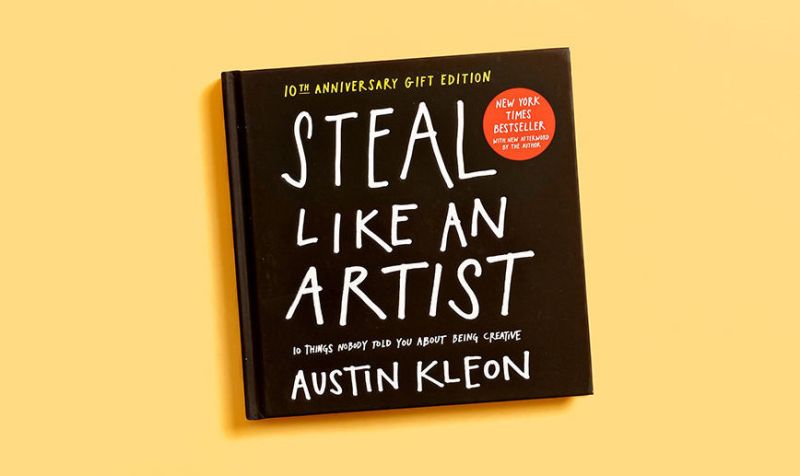
So I sat down with Austin Kleon, author of “Steal Like An Artist” to talk about creativity and writing.

These are the 10 best takeaways:

1) Exploring and Collecting.

Having a system for exploring and collecting ideas is vital. The best creators: • Explore the world • Capture its essence • And share the result

2) Input to Output Ratio.

Inputs: • Reading • Learning • Inquiring Outputs: • Writing • Ideating • Creating The ratio should be at least 1:1 If not 2:1, input to output.

3) Thinking in Verbs, Not Nouns.

Don't become too attached to job titles or nouns. Instead, focus on the verbs. The actions you take. The stuff you really enjoy. The things others respond to.

4) Authenticity and Frequency.

Authenticity and consistency are KEY. Try to set: • Goals • Deadlines • Aspirations This will help maintain frequency which will turn into consistency.

5) The Role of the Reader.

A book comes alive when the reader picks it up. The reader's interpretation and engagement with the work is a crucial part of the creative process. So pour out your heart and soul.

6) Making Yourself Interesting.

To create interesting work, you need to be an interesting person. That doesn't mean: • Outlandish • Eccentric • Flashy Just be genuinely interested in the world. And make it interesting to others.

7) The Importance of Fun.

Writing should be fun. If it feels like work, not play, it's hard for the reader to enjoy it. They feel what you feel. (That's the beauty of writing).

8) Stealing Like an Artist.

This doesn't mean plagiarizing. Rather, you should draw inspiration from existing works and add your own spin. Everything's already been said. But maybe not by you...

9) The Power of Visuals.

Austin Kleon's creative process often involves visuals. When there are more pictures than words, creativity thrives. As they say: "A picture is worth 1,000 words."

10) The Value of Notebooks.

As a writer, you NEED a notebook. Not only will it help capture thoughts and ideas, but you can also revisit them. You'll see your evolution over time. How do you cultivate creativity in your writing?
Read more...