Cal Newport’s writing works because it doesn’t stop at insight. It designs behavior. If you want to write like a thought leader, this is the difference that matters. It gives readers clear rules for action, so they don’t just understand the idea, they know what to do next.
Why most smart ideas don’t change behavior
Explanation feels like progress. It isn’t.
Most writing ends when the concept makes sense. The reader nods, feels informed, and returns to reality, where nothing is constrained, decided, or redesigned.
That’s the failure mode:
Ideas stall when they stop at explanation instead of prescribing action.
If the writing doesn’t answer the reader’s real question, what changes now? the idea stays optional.
Optional ideas don’t change behavior.
The hidden difference between insight and behavior change
Insight is passive.
Behavior change is engineered.
Many people who want to write like a thought leader focus on sounding intelligent.
But thought leadership isn’t about sounding smart, it’s about shaping decisions.
Understanding tells a reader what’s true. Behavior change requires decisions that make a different future more likely.
That’s why behavior change depends on:
Constraints (what’s no longer allowed)
Commitments (what will happen even when motivation fades)
Defaults (what happens without extra willpower)
Without those, the idea is just an observation.
Newport’s writing doesn’t just describe what matters.
It forces a choice.
What Cal Newport actually sells: rules, not concepts
Newport is often described as a productivity thinker.
But what he actually produces is more specific:
Operating rules.
He takes an abstract principle and turns it into a concrete constraint readers can live inside. That’s the mechanism.
You can see it clearly in his best-known ideas:
Deep Work isn’t “focus more.” It’s “block time, protect it, and treat distraction as a policy failure.”
Rules do what concepts can’t:
Remove ambiguity
Reduce decision fatigue
Create consistent behavior without constant self-talk
Most writers offer inspiration.
Newport offers structure.
That’s why his readers change.
This is the difference between sounding authoritative and building real positioning. If you're serious about long-term influence, your positioning strategy as an author matters more than volume.
The Behavior-Shifting Rule Framework (Newport’s real method)
There’s a repeatable structure underneath Newport’s behavior-changing writing.
It’s simple. And it’s transferable.
This same principle applies when designing your book’s structure or strategy. In our complete guide to building a nonfiction book strategy, we break down how constraints shape stronger outcomes.
The framework
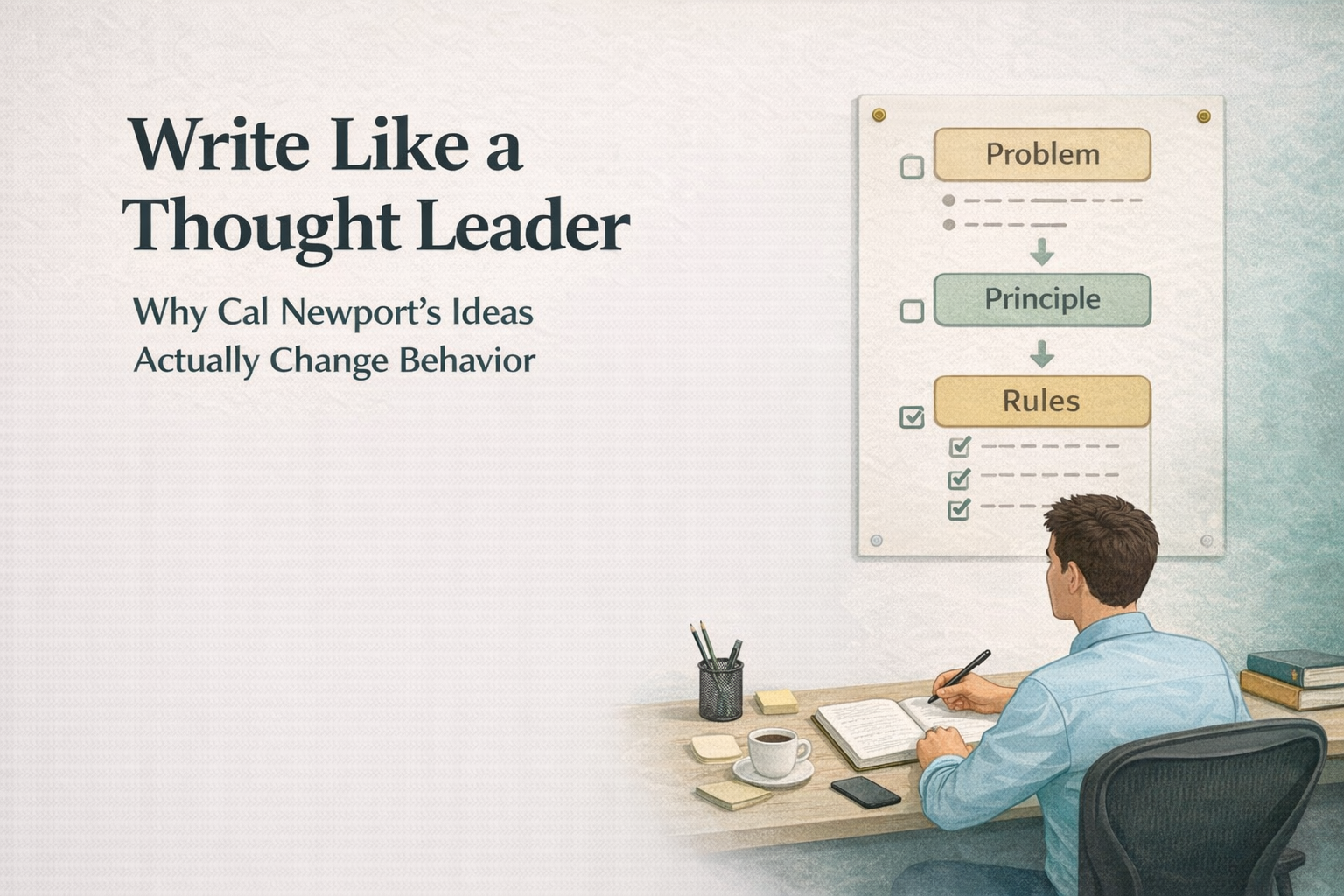
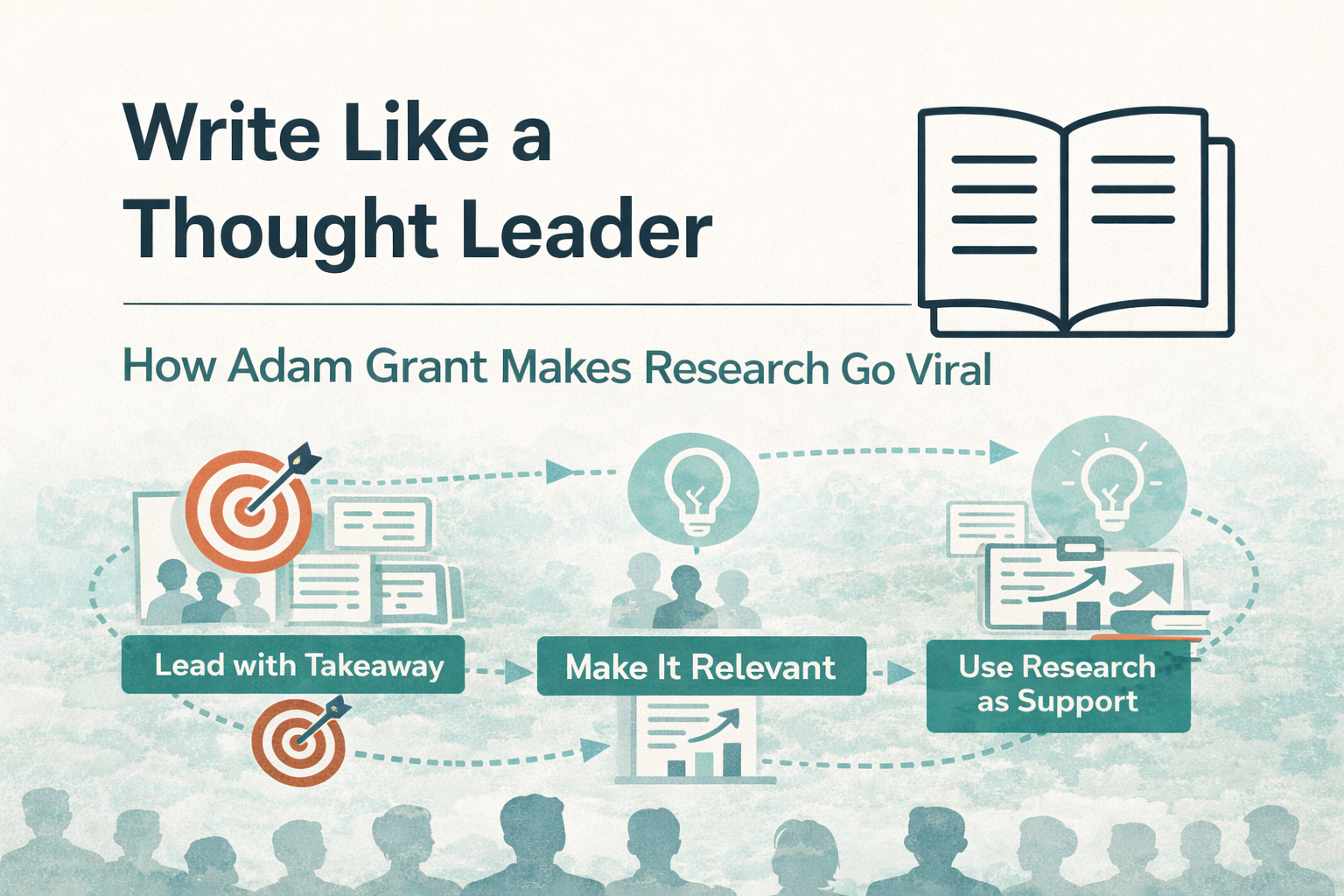
Problem: Name a concrete friction or failure readers already experience. Principle: State the governing idea that reframes that problem. Rules: Translate the principle into a small set of explicit actions or defaults.
This is how insight becomes behavior.
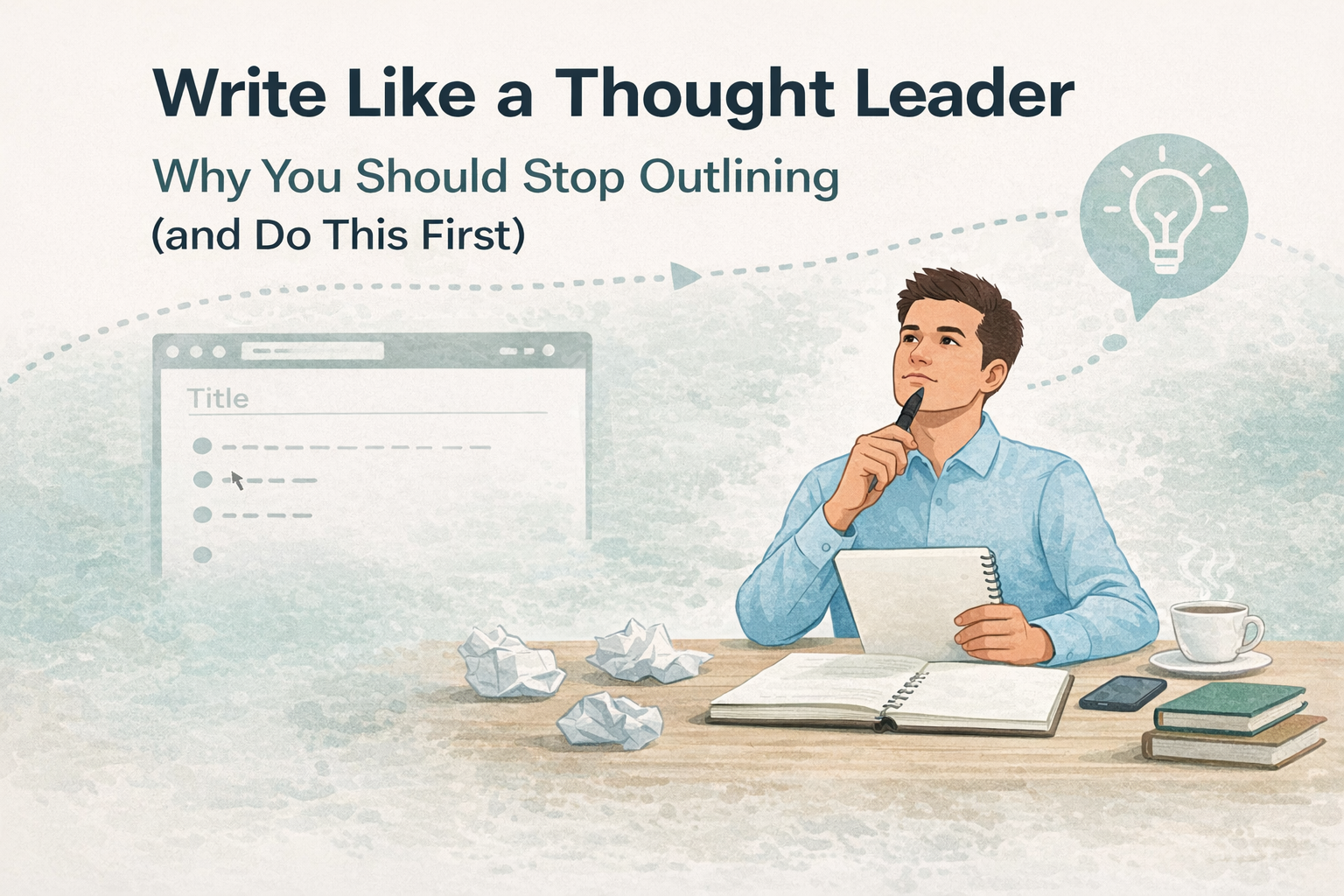
To write like a thought leader, you must move beyond explanation and translate principles into constraints your reader can actually follow.
Writer-use template (fill in the blanks)
Problem: “Most people ___, which leads to ___.” Principle: “The better approach is ___.” Rules:
Do: ___
Stop: ___
Default: ___
How writers apply it
Decide what behavior should change after reading
Choose one principle that justifies that change
Express it as rules or constraints, not advice
If a reader has to invent their own next step, you didn’t finish the job.
The goal isn’t for readers to agree.
It’s for them to act.
Why writers avoid giving rules
Rules feel dangerous.
They sound prescriptive. They invite disagreement. They create edge cases. They risk being wrong.
So writers retreat into safer territory: explanation.
Many modern authors fall into this trap because they optimize for sounding insightful instead of shaping behavior. If you're building authority in today’s landscape, understanding the modern author publishing model is essential.
They describe the problem. They share nuance. They offer possibilities. They avoid telling the reader what to do.
That keeps the writer protected.
It also keeps the reader unchanged.
Behavior-shifting writing requires the writer to take a stance and accept tradeoffs. Newport does that consistently.
That’s why his work moves people instead of merely informing them.
Writing that moves people means taking responsibility for outcomes
Thought leadership isn’t about sharing ideas.
It’s about guiding behavior.
If nothing changes after someone reads your work, the writing may be smart, but it isn’t complete.
Cal Newport’s work sets a higher bar. He doesn’t just explain what matters. He designs rules that make different behavior more likely.
Ideas don’t change behavior. Defaults do.
If you want to write like a thought leader, stop explaining and start designing rules your reader can follow tomorrow.
Eric Koester is an award-winning entrepreneurship professor at Georgetown University, bestselling author, and founder of Manuscripts, the Modern Author OS used by more than 3,000 authors. His work has helped creators turn ideas into books, books into brands, and brands into scalable businesses.
About Manuscripts
Manuscripts is the leading full-service publishing partner for modern nonfiction authors. We help founders, executives, coaches, and experts turn their books into growth engines, through positioning, coaching, developmental editing, design, AI-enhanced writing tools, and strategic launch systems. Manuscripts authors have sold thousands of books, booked paid speaking gigs, landed media features, and generated millions in business from their IP.
Work With Us
If you’re writing a book you want to matter, let’s map out your Modern Author Plan.
A Strategic Playbook for Turning a Book Into Revenue, Authority, and Long-Term Leverage
A Modern Author Shift
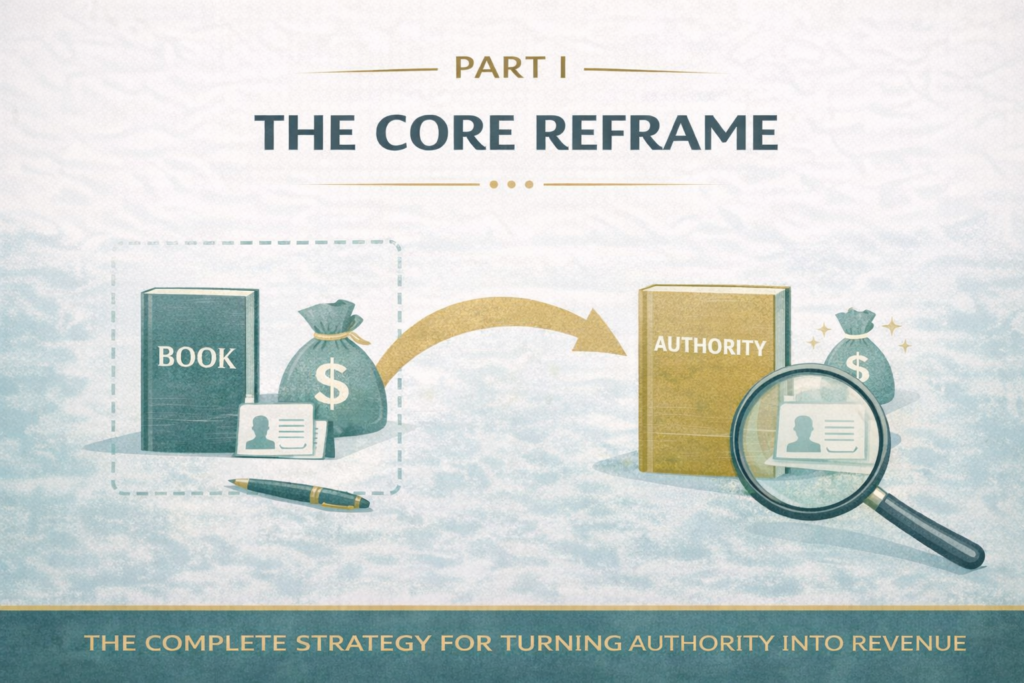
Most people still believe a book is the product.
They think the goal is:
Sell copies
Hit a list
Earn royalties
Hope the book “does something” for their career
That model is outdated.
In 2026, the book is not the business.
The book is the asset.
It’s the most powerful credibility engine still available in the modern economy, but only if you understand what it actually does.
A serious nonfiction book doesn’t pay you because someone buys it on Amazon.
It pays you because it unlocks everything that comes after:
Clients
Speaking
Workshops
Enterprise deals
Licensing
Partnerships
Media
Category authority
That’s the real game.
And modern authors are playing it very differently than traditional publishing ever taught.
The Truth About Book ROI
Here’s the uncomfortable reality:
Most nonfiction authors do not earn meaningful income from book sales alone.
Even successful books rarely generate life-changing royalties.
Outside research and our internal Author ROI data align on the same pattern:
Only a small minority of an author’s lifetime earnings comes directly from retail book sales.
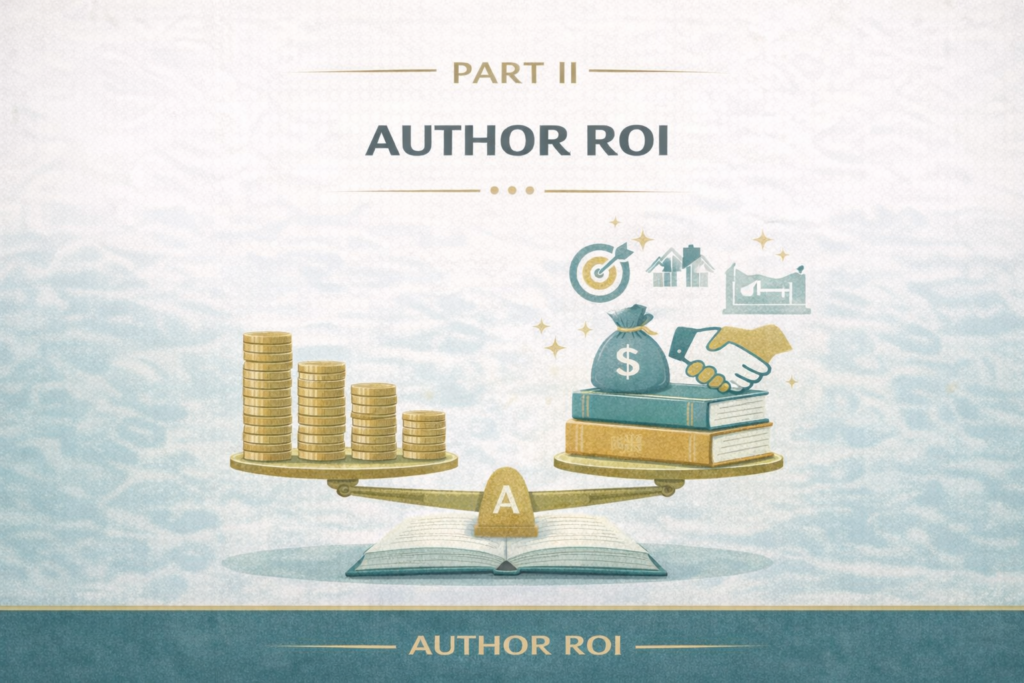
From our author surveys in the Manuscripts author community, only 5-15% of earnings come from retail book sales. The vast majority comes from what the book enables:
Consulting offers
Coaching programs
Keynotes
Corporate training
Professional services
Intellectual property expansion
In other words:
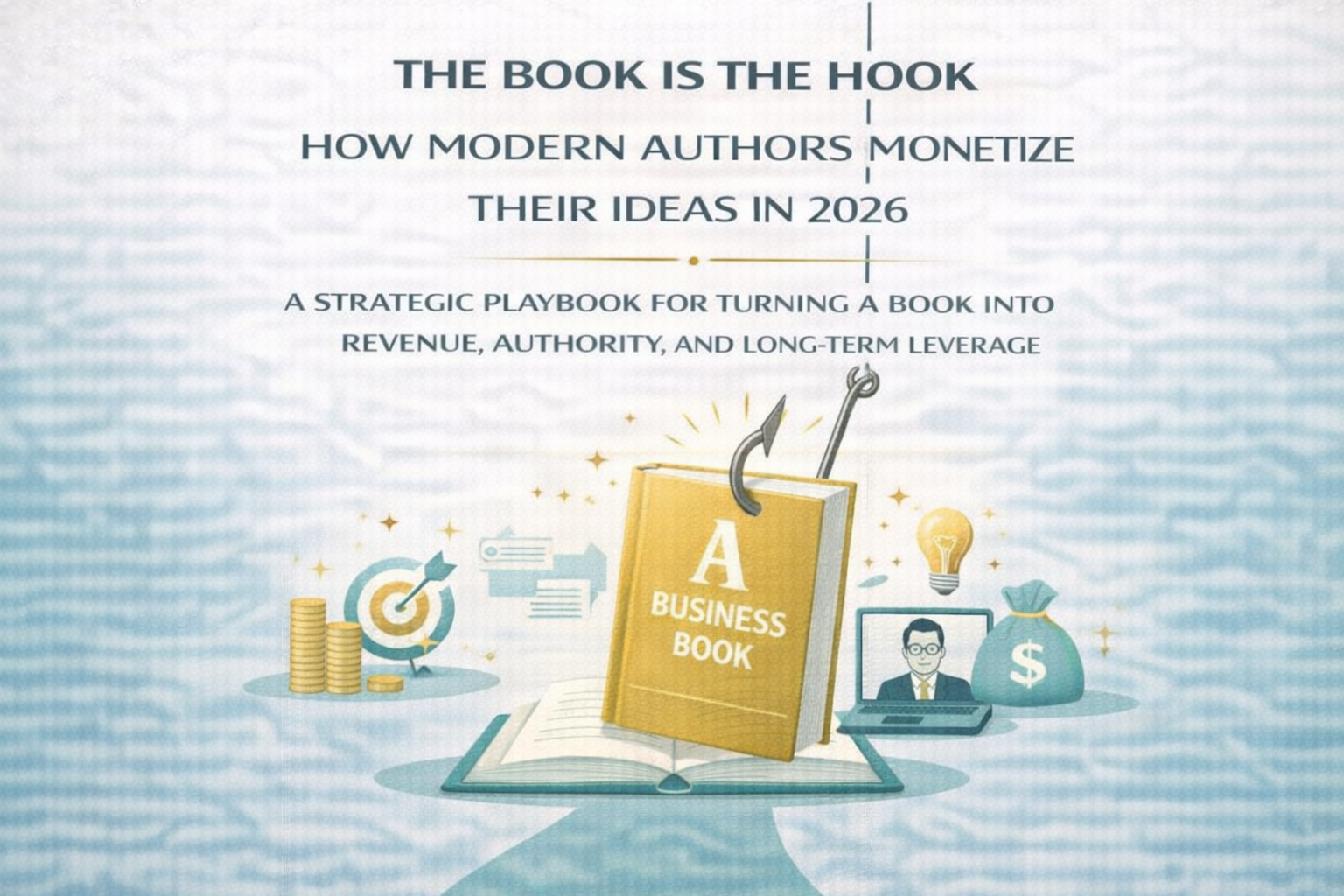
The book is the hook.
The business is what it pulls toward.
Modern authors don’t write books to become writers.
They write books to become business assets.
The Book Is the Hook
A modern nonfiction book does not generate value because someone buys it.
It generates value because it unlocks what comes next:
The book is not the business. The book is the leverage layer.
Modern authors don’t write books to become writers. They write books to become undeniable.
A Modern Author Doesn’t Publish Books
They Build Leverage Systems
A book is still one of the highest-trust artifacts in the world.
It’s a credential that can’t be faked.
It signals:
Depth
Authority
Discipline
Original thinking
Seriousness
That’s why a single book can do what ten years of content often cannot.
But here’s the mistake:
Most authors treat the book like a finish line.
Modern authors treat it like an engine.
They design it as a platform asset from day one.
They ask different questions:
What does this book unlock?
Who does it attract?
What opportunities does it create?
What system does it feed?
What revenue models does it support?
This is not about “writing a book.”
This is about building an ecosystem around your expertise.
The 60-Second Decision Box If you only read one section of this guide, read this.
This guide is for you if:
- You’re writing a nonfiction book to grow your business or career - You want your book to lead to clients, speaking, or enterprise opportunities - You care about authority, not just publishing - You want a book that becomes an asset, not a vanity project
This guide is not for you if:
- You only want to sell copies on Amazon - You want AI to write the book for you - You’re looking for shortcuts instead of strategy - You’re publishing without a long-term plan
The Modern Author Principle: Your book is not the product. Your book is the leverage layer.
The authors who understand this win. Everyone else publishes and hopes.
Why This Guide Exists
We wrote this because the publishing industry is stuck in the wrong conversation.
Most advice still focuses on:
Writing faster
Getting an agent
Selling more copies
Launch week tactics
Vanity metrics
But modern authors are facing a different reality:
They don’t want a book.
They want what a book unlocks.
And the biggest question they’re really asking is:
“How do I turn my expertise into something that scales?”
That’s monetization.
Not in a gimmicky way.
In a real way.
In a modern way.
A way that creates:
Predictable revenue
Long-term authority
A category-defining platform
A system you can build on for years
This guide is the playbook.
What You’ll Learn in This Guide
This is not theory.
This is a tactical system.
Inside, you’ll learn:
The Book-as-Leverage Framework modern authors use
The 3-offer monetization architecture behind high-ROI books
How to design a book backward from revenue and impact
The most common monetization mistakes authors make
The difference between royalties and real author income
How speaking, consulting, and enterprise deals actually emerge
How modern authors turn one book into a multi-year platform
By the end, you’ll understand something most authors never do:
A book is not a project.
It’s infrastructure.
One Core Reframe Before We Begin
If you remember nothing else:
A modern nonfiction book is not a product.
It is the highest-trust business development asset you can create.
It is the hook.
And everything that matters comes after.
Let’s build the system.
A Strategic Playbook for Revenue, Offers, and Long-Term Impact
This guide starts from a different assumption than most publishing advice.
It does not treat the book as a product whose success is measured by copies sold. It treats the book as a strategic business asset, designed to unlock authority, demand, and revenue beyond the book itself.
In this model, a book is not the outcome. It is the leverage layer.
That distinction matters because most authors evaluate success using the wrong metric. They ask whether the book sold. Modern authors ask what the book enabled.
This guide is written for readers who are prepared to think about authorship as infrastructure, not as a creative milestone, a résumé line, or a royalty play.
If the premise feels slightly uncomfortable, that’s expected. It means you are now looking at the economics of authorship through the correct lens.
Modern author monetization playbook: turn a nonfiction book into a business asset that drives revenue through offers, consulting, speaking, and scalable systems, not royalties alone.
Case Study: Founder / Builder Model featuring Nate Androsky The book as business development infrastructure
Who this is for Founders and operators who already have a real business, but lack a single, coherent asset that explains their point of view.
What Nate did Nate used his book as a way to clarify and codify how he thinks about leadership and organizational design, not as a standalone product.
The book was positioned early and used consistently:
- in conversations - in introductions - in how his work was framed publicly
The book was not treated as a launch-first event. It was treated as infrastructure.
What the book actually did The book:
- shortened explanation cycles - reduced the need to “re-prove” credibility - made it easier for senior leaders to engage with his ideas
It became a reference point that carried his thinking into rooms he wasn’t physically in yet.
Why this matters The book didn’t create demand out of thin air. It removed friction from demand that already existed.
That’s the Book Is the Hook model in a founder context.
https://www.youtube.com/watch?v=lIeEvzjdVZo
Why Monetization Matters
A. Traditional Assumptions vs. Modern Reality
Most first-time business authors inherit a traditional publishing mental model, often without realizing it.
It tends to sound like this:
“If I sell enough copies, the book will pay for itself.”
“If the book is good, the market will reward it.”
“An advance or royalties will justify the time.”
Those beliefs are not naïve. They’re outdated.
They come from a world where the book was treated as the primary product. In 2026, for most serious nonfiction authors, the book is more valuable as a business asset than as a standalone retail item.
Definition (for this guide):Monetization means the revenue and opportunities a book activates beyond direct sales, offers, engagements, contracts, and repeatable systems that the book makes easier to win.
B. What the Data Actually Shows
The key pattern is simple: most books sell fewer copies than authors expect, and the economics of royalties rarely carry the full business case. In fact, in our study of authors' external beliefs about book sales, they overestimated first-year book sales by an average of 40x.
Even publishers and industry operators who are supportive of authors routinely point to the same reality: a large share of new books sell well under 1,000 copies across their lifetime, especially when you include the long tail of titles entering the market each year.
Royalty math reinforces the point. A “typical” traditional royalty structure is often expressed around 10% on hardbacks and ~7.5% on paperbacks, and it can be reduced by discounting and other contract mechanics.
Manuscripts’ Author ROI research shows a consistent downstream pattern: for many modern business authors, the majority of total income is not created by retail book sales, but by what the book enables, consulting, speaking, training, cohorts, licensing, and enterprise deals (often 85–95% of total author income, depending on the business model).
The strategic takeaway is not “books don’t matter.” It’s the opposite:
Books matter more than ever, but not because of royalties. They matter because a book is still one of the highest-trust credibility signals in the market, and trust is what converts attention into revenue.
Royalties vs Real Author Income Most nonfiction authors overestimate royalties and underestimate leverage.
Royalties
- unpredictable - slow - usually a small fraction of total income
Real author income
- consulting and advisory work - speaking and workshops - training, cohorts, licensing - enterprise and partnership deals
Across modern author businesses, 85–95% of total income typically comes from what the book enables, not from selling the book itself.
The book does not pay you like a product. It pays you like a credential that opens doors.
C. What This Means for You
If this is how author income actually works, it changes what “success” means, and therefore how you design the book.
Success is not primarily:
Copies sold
Lists hit
Royalty statements
Launch-week metrics
Success is:
The book attracts the right readers (people with real problems and real budgets)
The book builds trust efficiently (authority without repeated selling)
The book creates clear next steps into paid work (offers and pathways that fit)
The book compounds into an ecosystem (repeatable revenue and opportunity over time)
This is why, in a modern author business, income is best understood as activation, not extraction.
A well-designed nonfiction book doesn’t “earn” money the way a product earns money. It activates the conditions where money follows: demand, credibility, and a reason for the right buyers to engage.
Once this is clear, the rest of the guide becomes less optional. If royalties are rarely the main driver, then monetization is not a marketing add-on at the end.
It is a design requirement from the beginning.
Case Study: The Consultant / Advisor Model featuring Andrea Goulet ROI begins with public commitment, not publication
Who this is for Consultants and advisors who assume ROI comes after the book is finished.
What Andrea did Andrea made her book visible before it was complete.
She didn’t wait for:
- final edits - a launch date - a finished manuscript
Instead, the book became part of her public identity early:
- website - bios - conversations
What changed Once the book was visible:
- people began referencing it in conversations - inbound interest increased - authority was assumed rather than explained
None of this required selling the book. It came from clarity and commitment.
Why this matters This demonstrates that ROI timing is not tied to printing or publishing.
It’s tied to positioning and visibility.
https://youtu.be/XrS_-m9IdCU
The Manuscripts Model: Books Built for Leverage
At Manuscripts, we’ve worked with thousands of serious nonfiction authors.
The authors who succeed don’t just “finish a manuscript.”
They build a business-shaped book.
They design the book around outcomes:
A keynote
A consulting offer
A workshop
A curriculum
A licensing model
An enterprise product
They don’t write and then figure it out later.
They architect leverage from the beginning.
That is what makes the Modern Author different.
Leverage.
The Book-as-Leverage Framework
Modern author monetization looks complex from the outside because it shows up in many forms: content, email, speaking, consulting, courses, enterprise work. The mistake is treating each of those as separate problems.
In practice, they all follow the same underlying system.
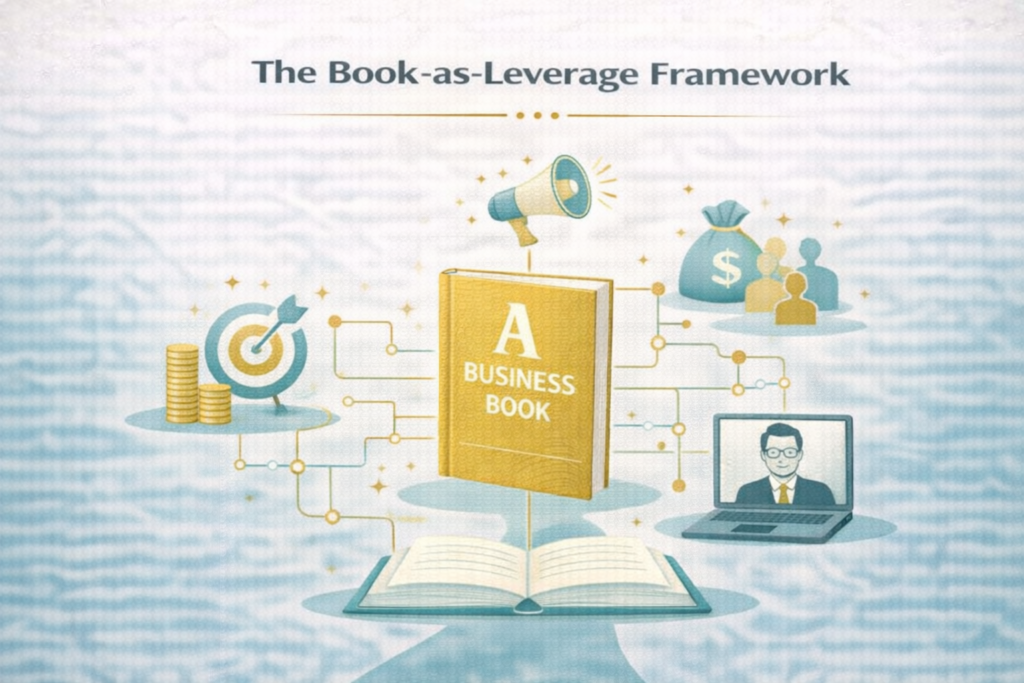
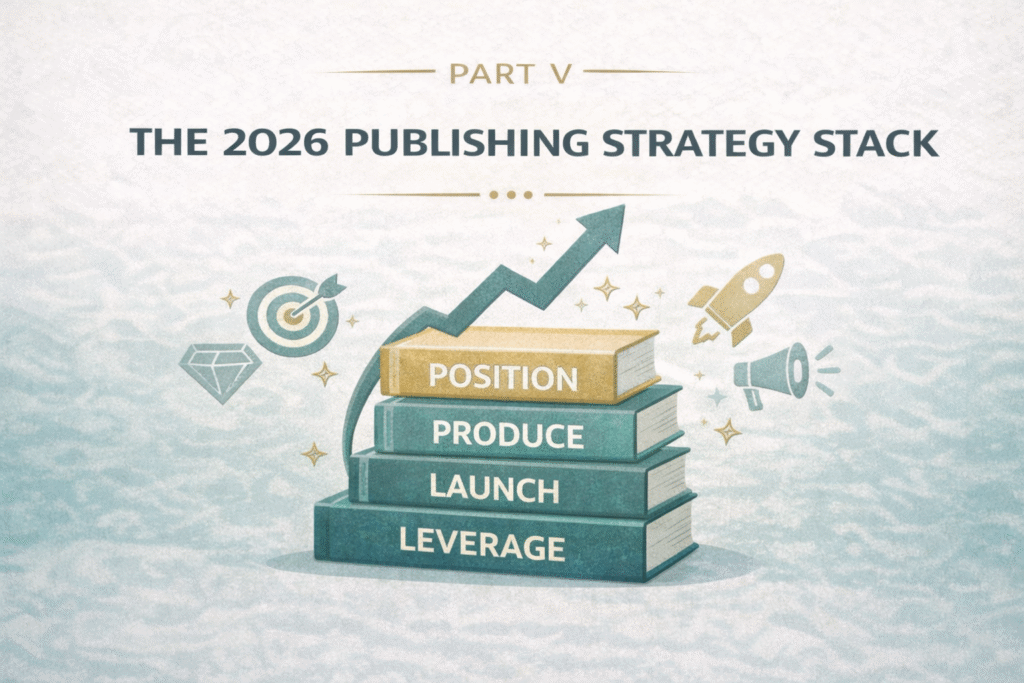
For a nonfiction book to create money, authority, and long-term opportunity, it must sit inside a four-stage leverage model:
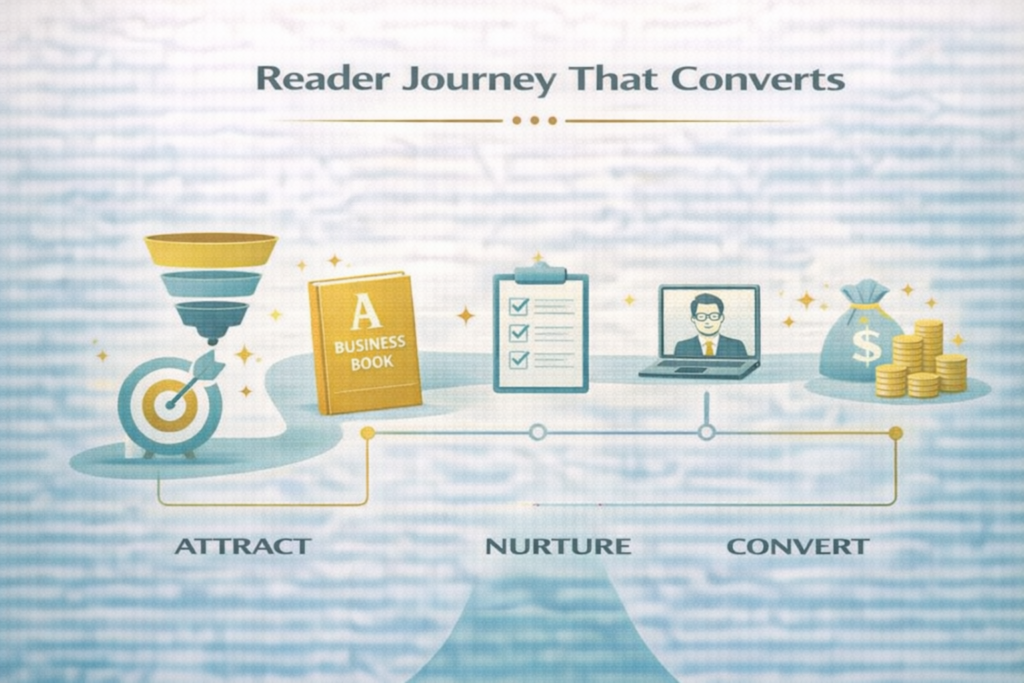
Attention → Trust → Offer → Ecosystem
This framework is not a metaphor. It describes cause and effect. Every sustainable author business, regardless of industry, format, or personality, moves through these same stages.
The rest of this guide is an application of this model.
The Book-as-Leverage Stack Every successful modern author system follows the same sequence:
Attention → Trust → Offer → Ecosystem
Attention creates proximity The book creates trust Offers convert trust into outcomes Ecosystems compound results over time
Most monetization failures happen when authors skip layers.
Attention without trust → noise Trust without offers → respect, no revenue Offers without an ecosystem → spikes, no durability
The book sits in the Trust layer. That’s why it matters so much, and why it cannot be treated as a product.
Attention
Attention is how people discover you.
This includes:
Content and thought leadership
Speaking appearances
Media, podcasts, and referrals
Social distribution and audience building
Attention’s job is singular: bring the right people into proximity.
What attention does not do:
It does not create trust on its own
It does not close deals
It does not explain your methodology in depth
This distinction matters because many authors over-invest in visibility while under-building what comes next. Attention without structure creates noise, not leverage.
Trust
Trust is where the book does its real work.
In this framework, the book sits squarely in the Trust layer.
The book’s role is to:
Demonstrate depth, not frequency
Show how you think, not just what you know
Prove that your ideas work in real conditions
A serious nonfiction book accelerates trust because it forces coherence. It shows:
You understand the problem systemically
You can articulate a method, not just opinions
You can guide someone from confusion to clarity
This is why books still matter in 2026. They compress credibility in a way that short-form content cannot.
The book is not designed to extract revenue. It is designed to make the next step feel obvious.
Offer
Revenue happens only when there is a clear offer.
An offer is the mechanism that converts trust into outcomes. It gives readers a way to:
Implement faster
Avoid common mistakes
Get support, structure, or accountability
Offers can take many forms, programs, consulting, training, licensing, but they all share one requirement: intentional design.
What does not count as an offer:
Inspiration
Popularity
High engagement without a next step
This layer exists to normalize monetization as professional behavior. If the book establishes trust, the offer simply gives the reader a path forward.
There is nothing promotional about this. It is structural.
Ecosystem
The ecosystem is where leverage compounds.
An ecosystem is the set of follow-on opportunities that emerge once attention, trust, and offers are working together. This can include:
Repeat engagements and retained work
Expanded programs and higher-value clients
Enterprise deals, partnerships, and licensing
Long-term authority within a category
At this stage, the book becomes an anchor asset. It continues to create optionality without requiring repeated launches or constant reinvention.
This is why modern authors think beyond one-time wins. The goal is not a successful book launch. The goal is a system that keeps working.
Case Study: Joe Heitzeberg featuring Business Owner / Builder Model The book as category and narrative asset
Who this is for Founders using a book to shape how their company is understood.
The book wasn’t written to sell copies. It was written to explain the business’s worldview.
What changed The book helped:
- align partners - clarify the company’s stance - support broader visibility
It became a durable asset the business could build on.
Why this matter
This shows how books function as market-facing narrative assets, not marketing campaigns.
https://youtu.be/28flk0k6ntA
How to Use This Framework
Every strategic decision in the sections that follow maps back to one of these layers:
Offer ladders live in the Offer layer
Archetypes describe different Offer and Ecosystem shapes
Backwards book design strengthens the Trust layer
Reader journeys explain movement between Trust and Offer
If something feels confusing later, return to this model and ask: Which layer is this serving, and what is it responsible for?
If you can sketch this system from memory, you have the correct mental model. Everything else in this guide builds on it.
Why the Stack Matters
Most monetization failures happen because authors try to skip layers.
Common breakdowns look like this:
Attention without Trust → lots of interest, no conversion
Trust without Offers → respect with no revenue
Offers without an Ecosystem → short spikes, no durability
The Book-as-Leverage Stack prevents those errors by forcing sequence.
You don’t add monetization to a book. You design upward through the stack.
Everything that follows in this guide, offers, archetypes, reader journeys, presale, and workflows, exists to strengthen one or more of these layers.
Once you see the stack clearly, monetization stops feeling abstract.
It becomes an engineering problem.
The 3-Offer Monetization Architecture
Modern author monetization becomes overwhelming when it is treated as an open-ended creative exercise. Courses, coaching, speaking, consulting, memberships, licensing, without structure, everything feels possible, and nothing feels clear.
The purpose of this architecture is to close that loop.
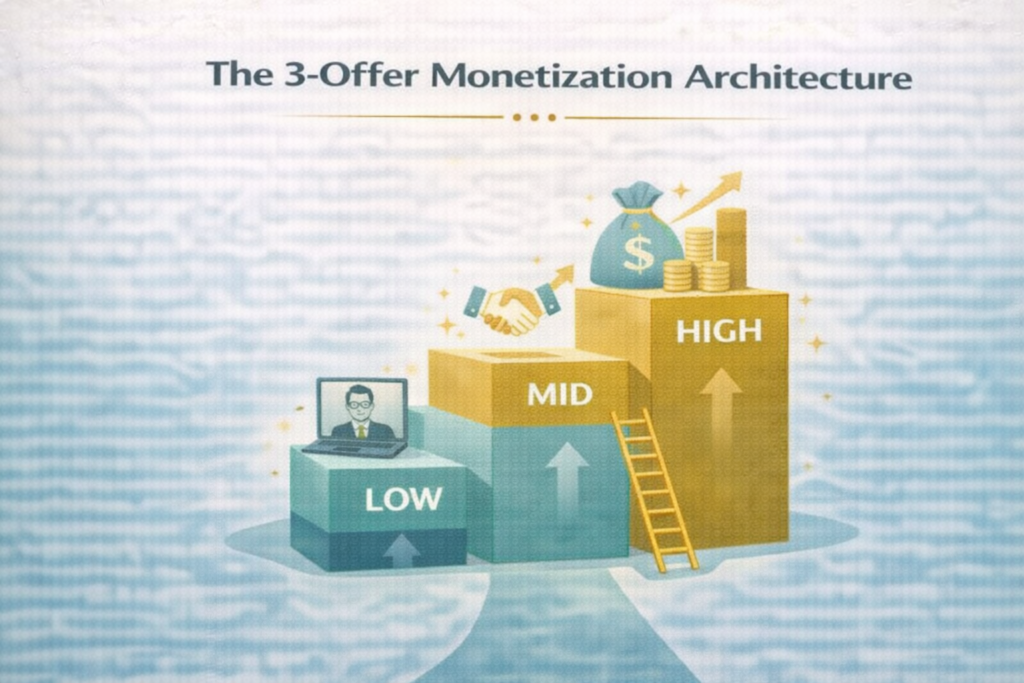
You do not need many offers. You need three that work together.
This model collapses infinite options into a finite, complete system.
The 3-Offer Monetization Architecture
You do not need many offers. You need three that work together.
Each tier has a job. Confusing those jobs creates underpricing, burnout, or stalled revenue.
The Three Tiers at a Glance
Tier
Offer Type
Typical Price
Primary Function
Foundational
Templates, toolkits, diagnostics
$29–$99
Build trust, lower friction, qualify interest
Core
Signature program or service
$500–$5,000
Primary revenue engine
Premium
High-touch or enterprise work
$10,000+
Depth, leverage, long-term opportunity
Each tier has a distinct job. Confusing those jobs is what causes underpricing, overbuilding, and stalled revenue.
Foundational: Entry and Qualification
Foundational offers exist to help a little.
They are designed to:
Lower the barrier to engagement
Demonstrate practical value quickly
Identify who is serious enough to go further
Examples include:
Implementation templates
Diagnostic tools
Short workshops or toolkits
Foundational offers are not meant to carry the business financially. Their role is directional, not dominant. They create momentum and trust without demanding commitment.
When this tier is missing, authors rely on free content to do work it cannot do.
Core: Transformation and Revenue
Core offers are where the business is built.
They are designed to:
Deliver a clear, meaningful outcome
Solve the primary problem the book addresses
Support implementation at the right depth
Common forms include:
Signature programs
Cohort-based experiences
Consulting or advisory services tied to the book’s methodology
For most modern authors, this tier generates the majority of revenue. That is not a failure of ambition but it is how leverage works. One strong core offer outperforms many fragmented ones.
If revenue feels unstable, the issue is usually here.
Premium: Depth and Optionality
Premium offers exist to help deeply.
They are designed for:
Readers or organizations with urgency and scale
Situations where access, customization, or responsibility increases
Long-term relationships, not volume
Examples include:
Enterprise engagements
Retained advisory work
Licensing or high-touch implementation
This tier creates leverage, not pressure. It is not required for everyone, but when it exists, it expands what the book makes possible without increasing complexity elsewhere.
How the Three Tiers Work Together
This architecture is not about individual offers. It is about flow.
Foundational offers reduce friction and build confidence
Core offers deliver transformation and sustain the business
Premium offers compound trust into long-term opportunity
Revenue emerges from movement between tiers, not from a single perfect product. Each step increases responsibility, access, and impact.
Seen this way, monetization is not escalation for its own sake. It is service at the appropriate depth.
What to Notice Before You Design
This model adapts across industries and roles. A coach, a consultant, and a founder may offer different things, but they still operate within the same three-tier structure.
The constraint is intentional:
You are choosing three, not collecting options
Each tier must earn its place
Anything outside this system is optional, not required
With this architecture in place, monetization stops feeling infinite. It becomes designed.
Everything that follows, archetypes, ladders, reader journeys, builds on this foundation.
Case Study: Navid Nazemian featuring Executive → Advisor Transition The book as a credibility bridge
Who this is for Senior executives moving into advisory, board, or thought leadership roles.
What Navid did Navid’s book helped translate deep executive experience into:
- a visible point of view - a coherent narrative - an external-facing authority asset
The book made his expertise accessible without diminishing its depth.
What the book actually did It:
- reframed how others understood his experience - made advisory conversations easier to initiate - served as a bridge between roles
Why this matters
For executives, books don’t prove intelligence. They make judgment transferable.
https://youtu.be/iHmpMqi6wvs
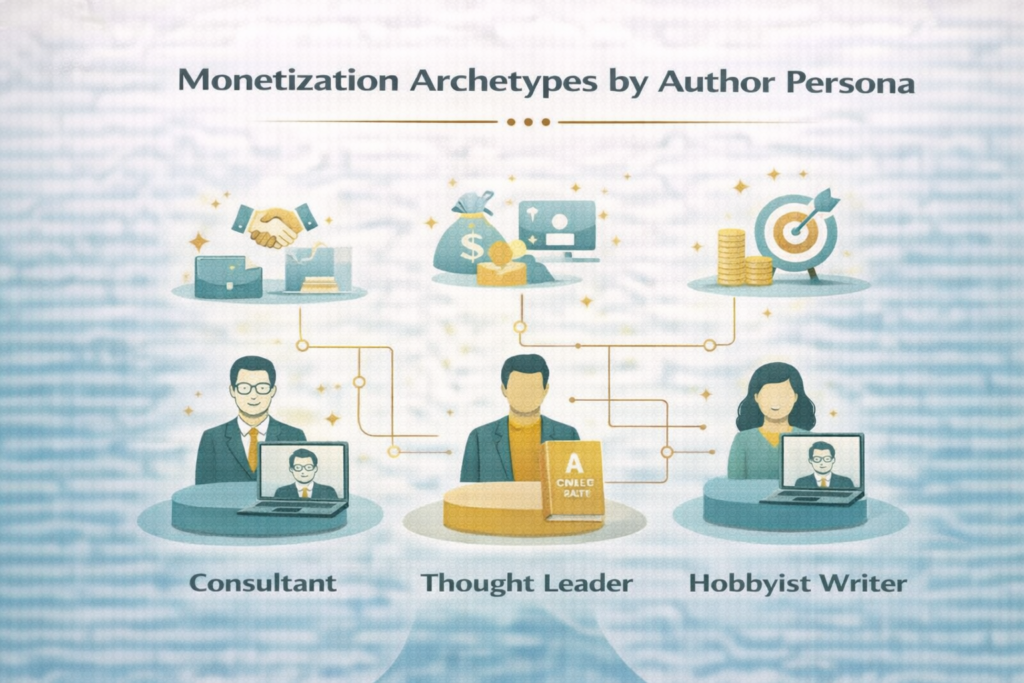
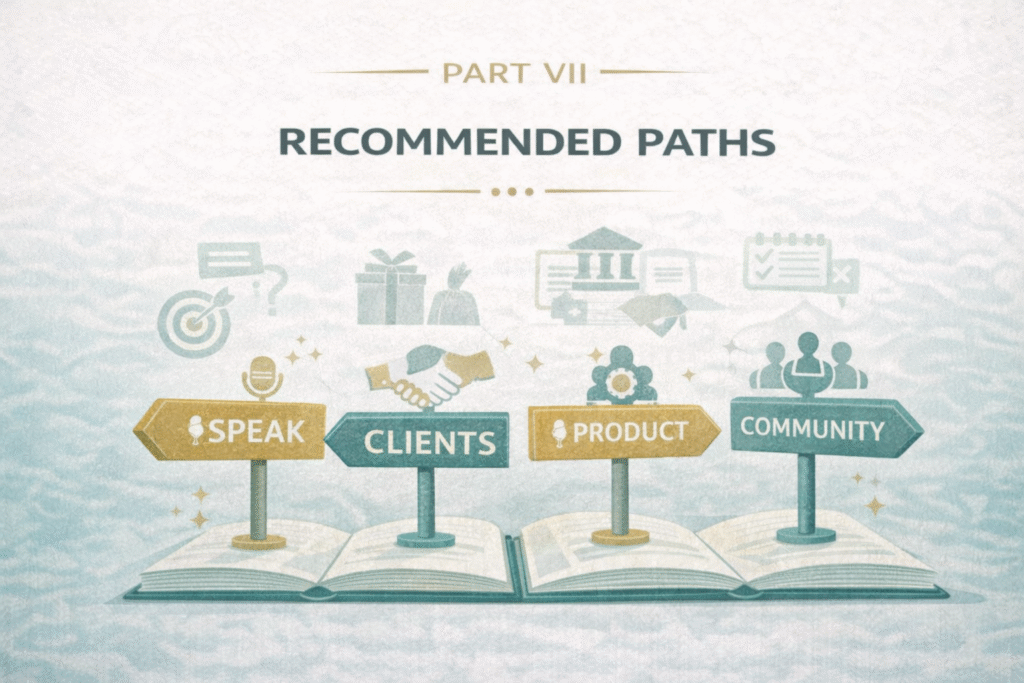
Monetization Archetypes by Author Persona
The most common monetization mistake modern authors make is not tactical. It’s structural.
They copy an offer model that worked for someone else, without noticing that the model was built around a different kind of author.
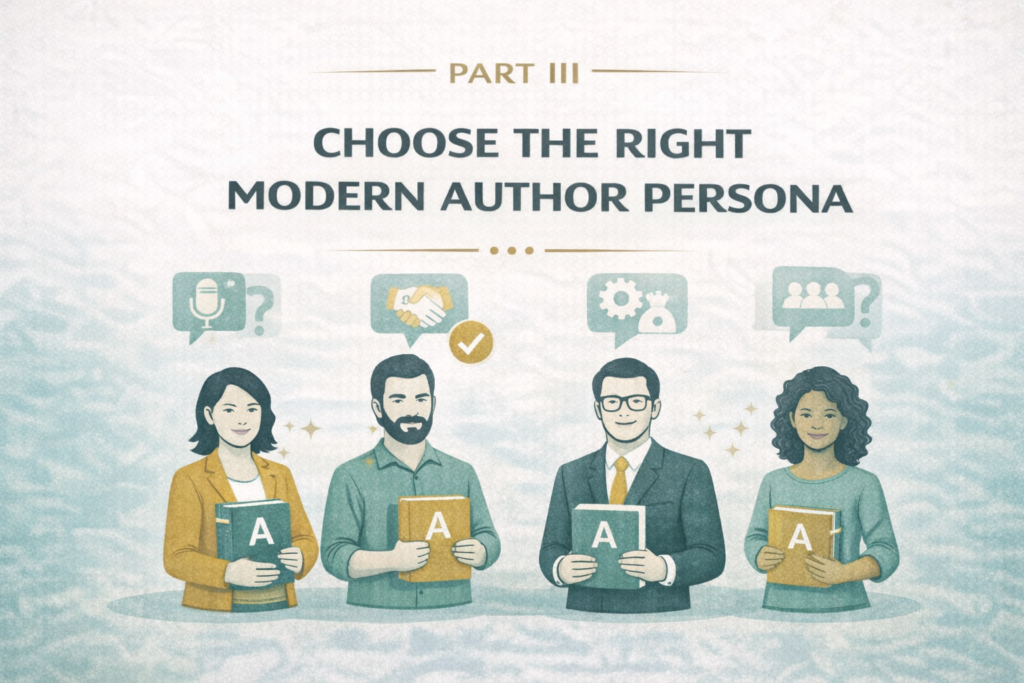
Monetization only works when it matches the way you create value: how you prefer to work, how you deliver outcomes, and what kind of access you can sustainably provide. That is what “archetype” means in this guide:
Definition (for this guide): An archetype is the author persona that determines which offer formats will feel natural, scalable, and sustainable for you.
This section is not about identity. It is about alignment.
How to Use Archetypes
Use archetypes to answer three questions before you design offers:
Where do I create the most value? In direct interaction, structured teaching, public presence, or behind-the-scenes execution?
What kind of work do I want to repeat? Programs, projects, events, curriculum, partnerships, or retained relationships?
What trade-offs am I willing to accept? Travel, delivery intensity, long sales cycles, product upkeep, or audience-building requirements?
Once those are clear, the 3-offer architecture becomes easier to implement without forcing formats that don’t fit.
Coach
Best for: authors who create value through transformation, guidance, and ongoing support.
Strength: continuity and behavior change Trade-off: delivery intensity and relationship management
Typical offer path (3-tier):
Foundational: Assessment, starter workshop, or toolkit that helps a reader self-diagnose ($29–$99)
Core: Cohort program or signature coaching experience tied directly to the book’s method ($500–$5,000)
Premium: High-touch 1:1 coaching, leadership advisory, or private implementation support ($10K+)
What the book should do: establish a philosophy, define a method, and make the reader think, “I want help implementing this.”
Speaker
Best for: authors who create value through amplification, persuasion, and live experience.
Strength: reach and authority at scale Trade-off: event dependence, travel, and calendar volatility
Typical offer path (3-tier):
Foundational: Talk-based templates, pre-keynote briefing kit, or a short training derived from the book ($29–$99)
Core: Workshops, offsites, or paid trainings built from the book’s core framework ($500–$5,000)
Premium: Keynotes, executive sessions, or enterprise engagements ($10K+)
What the book should do: act as a credential and message container that is clear enough that event organizers can immediately see the talk inside it.
Teacher
Best for: authors who create value through curriculum, systems, and repeatable learning.
Strength: scalability and repeatability Trade-off: product upkeep and continuous refinement
Typical offer path (3-tier):
Foundational: Templates, learning guides, or short modules that reduce friction to start ($29–$99)
Core: Course, cohort, or certification-style program that teaches implementation ($500–$5,000)
Premium: Licensing, certification cohorts, or enterprise training agreements ($10K+)
What the book should do: define a transferable system that can be taught in modules: each chapter reinforces a step, not just an idea.
Builder
Best for: founders and operators whose ideas are best expressed as playbooks, systems, and enterprise outcomes.
Strength: leverage through scope and organizational adoption Trade-off: longer sales cycles and higher complexity deals
Typical offer path (3-tier):
Foundational: Toolkits, assessments, or playbook add-ons that give teams a starting point ($29–$99)
Core: Implementation program, advisory engagement, or structured rollout package ($500–$5,000 for individuals; higher for teams)
Premium: Enterprise licensing, partnerships, or strategic consulting engagements ($10K+)
What the book should do: make your method legible to decision-makers. The reader should be able to imagine rolling it out inside an organization.
Guide
Best for: authors who create value through ongoing strategic direction and retained proximity.
Strength: long-term relationships and compounding trust Trade-off: limited capacity and selective client fit
Typical offer path (3-tier):
Foundational: Diagnostic, roadmap template, or clarity toolkit ($29–$99)
Core: Retainer-style advisory, structured working sessions, or ongoing strategic support ($500–$5,000)
Premium: Executive-level retainer, facilitated retreats, or deep strategic partnership ($10K+)
What the book should do: position you as the person who can see the full system. The promise is not motivation. It is navigation.
Storyteller
Best for: authors who create value through narrative, worldview, and audience resonance.
Strength: emotional trust and cultural reach Trade-off: monetization often depends on audience scale and distribution
Typical offer path (3-tier):
Foundational: Companion resources, narrative-based workshops, or audience products ($29–$99)
Core: Cohorts, community-based programs, or creative curriculum ($500–$5,000)
Premium: Sponsorship partnerships, media projects, or premium experiences ($10K+)
What the book should do: create identification and belief. Readers should feel understood before they feel sold to.
Catalyst
Best for: authors who create value by convening people, driving momentum, and creating platforms.
Strength: network effects and partnership leverage Trade-off: operational complexity and coordination
Typical offer path (3-tier):
Foundational: Frameworks, playbooks, or sponsor-ready assets ($29–$99)
Core: Programs, memberships, or cohorts that organize action ($500–$5,000)
Premium: Sponsorship frameworks, partnerships, or enterprise programs ($10K+)
What the book should do: articulate a movement or system that other people want to join and fund.
The Point of This Section
There is no universally “best” monetization model.
There is only the model that fits:
Your strengths
Your preferred delivery style
The kind of outcomes you can reliably produce
The trade-offs you are willing to live with
This is what prevents resentment and burnout. It is also what makes revenue predictable.
Once you know your archetype, you can design three offers that feel natural, rather than forcing yourself into someone else’s business.
Case Study: Speaker / Thought Leader Modelfeaturing Jason Levin Books pre-sell trust, not services
Who this is for Speakers who already get on stages but want higher trust, better alignment, and stronger positioning.
What Jason did Jason’s book was designed to:
- articulate a clear point of view - frame the problem he speaks about - give audiences a way to “do homework” before engaging
The book wasn’t pushed as a sales tool. It was positioned as an extension of his thinking.
What the book actually changed Organizers and audiences arrived:
- more aligned - more confident in his authority - less skeptical
The book acted as a trust transfer mechanism.
Why this matters
For speakers, books don’t create audiences. They upgrade the quality of attention.
https://youtu.be/1_6PZ3bm3Zo
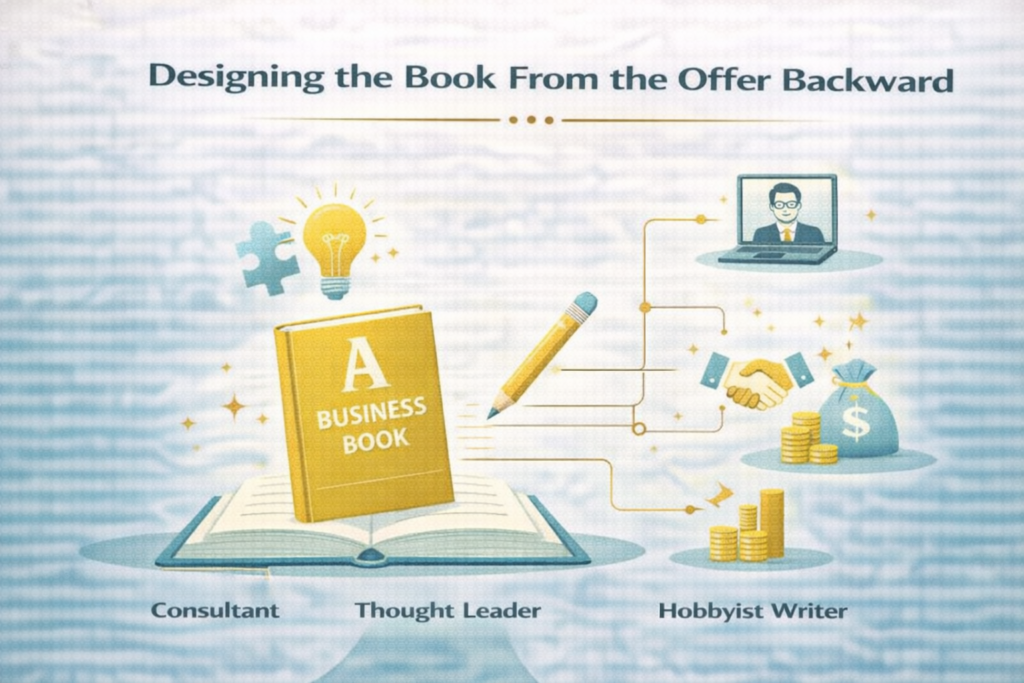
Designing the Book From the Offer Backward
Most authors follow the same pattern: they write what they know, finish the manuscript, and then ask what, if anything, it can sell.
This section teaches the inverse.
A modern nonfiction book is not designed around content. It is designed around an outcome.
When the outcome is clear, the book stops being a collection of ideas and starts functioning as infrastructure.
A. Define the Outcome First
Before you outline chapters, you must define the transformation your offers deliver.
Outcome (for this guide): the concrete change in the reader’s work or life after engaging with your offer, not inspiration, not insight, but capability.
This discipline matters because without a defined outcome:
Chapters wander
Ideas accumulate without direction
The book informs, but does not prepare
A clear outcome acts as the north star. Every chapter either moves the reader closer to that outcome, or it does not belong.
B. Map Offer → Chapters → Content
Once the outcome is defined, the book can be designed as a sequence that prepares someone to say yes.
The constraint is simple: write to belief shifts, not topic coverage.
People rarely fail to act because they lack information. They fail because they hold the wrong beliefs... about the problem, about themselves, or about what implementation actually requires.
Use the following worksheet to map your book intentionally:
Offer Design Worksheet
Offer promise What result does this offer reliably deliver?
Key beliefs challenged What must the reader stop believing before they are ready to act?
Supporting content Which ideas, examples, or explanations help replace those beliefs?
Transition points Where does the reader naturally realize the cost of doing this alone?
Each line does a different job. Together, they turn chapters into stepping stones.
What Monetization Actually Means Here
Monetization is not manipulation. It is not hype. It is not extracting value from readers.
In this guide, monetization means:
- designing clear next steps - reducing implementation risk - allowing serious readers to go further - creating sustainable outcomes for both sides
A book that creates trust without a path forward wastes that trust.
Offers are not pressure. They are structure.
Chapters as Stepping Stones
In a monetization-aware book, chapters are not topics. They are moves.
Each chapter should exist to:
Challenge a limiting belief
Teach a necessary skill
Demonstrate that the method works
Increase readiness for the next step
This eliminates:
Redundant theory
Front-loaded exposition
Strong ideas that lead nowhere
The book becomes directional. Momentum replaces volume.
Where Monetization Actually Belongs
Offers do not belong at the end of the book.
They belong at transition points, moments when the reader:
Understands what to do
Recognizes what it will take
Sees where support would reduce risk or time
At these moments, an invitation feels natural. Not because it is persuasive, but because it is useful.
This is how monetization remains aligned with trust.
Workbook Sketch: Offer-to-Book Design
The workbook is not supplemental. It is the executable layer of this system.
Below is a simplified sketch of the worksheet used to design a book backward from its offers. This can be embedded in the guide or offered as a downloadable resource.
Offer-to-Book Design Worksheet
1. Offer Definition
Offer name:
Primary outcome delivered:
Who this offer is for:
What success looks like after completion:
2. Beliefs That Must Change
What does the reader currently believe that keeps them stuck?
What must they believe instead to move forward?
What objections or fears must be resolved?
3. Skills or Understanding Required
What must the reader know how to do?
What concepts must become clear?
What decisions must they feel confident making?
4. Chapter Mapping
Chapter
Belief Shift
Skill Taught
Evidence Provided
Chapter 1
Chapter 2
Chapter 3
5. Transition Points
Where does the reader realize implementation is harder alone?
Where would guidance, tools, or accountability reduce risk?
Which chapters naturally lead into an invitation to the offer?
This worksheet turns writing into design. It makes the relationship between book and offer explicit, intentional, and repeatable.
When authors use this process, the book no longer hopes to convert. It prepares readers to choose.
Why the Workbook Matters
The worksheet is not supplemental. It is structural proof.
It:
Converts insight into design
Reduces cognitive load
Makes the process repeatable across books and offers
Most importantly, it signals that this is not an artistic gamble. It is a system.
When you design the book from the offer backward, writing becomes an act of strategy. The manuscript no longer hopes to work.
It is built to.
Reader Journey That Converts
Most authors write as if readers behave predictably: start at page one, read straight through, absorb the argument, and reach the ending ready to act.
That is not how nonfiction is consumed, especially by busy professionals.
A book converts when it respects different reader intentions instead of forcing one path. The goal is not to make every reader buy. The goal is to help the right readers recognize themselves and move forward without friction.
A. Reader Types
Readers do not arrive with the same goal. In practice, most fall into one of three categories.
Browsers
Browsers are scanning for clarity and credibility.
They want:
A clean mental model
Proof that you understand the problem
Language they can reuse internally
They may:
Skim sections
Skip frameworks
Never finish the book
Browsers are not a failure mode. They create leverage by sharing the book, referencing it, and reinforcing your authority in conversations where you are not present.
Implementers
Implementers are trying to apply the ideas on their own.
They want:
Frameworks they can execute
Examples that reduce ambiguity
Tools, checklists, and sequences
They often read unevenly, jumping to the parts that help them move. Many do not buy immediately. They build trust through use.
Implementers are valuable because they become:
Future buyers when they hit complexity
Strong referral sources
Proof that your methodology works
Buyers
Buyers are actively seeking help.
They want:
A clear next step
Confidence that you can deliver the outcome
A low-friction way to engage
Buyers are not “more convinced.” They are simply at a different point in readiness. The book’s job is to remove uncertainty and make the path forward obvious.
Case Study: Speaker / Educator Model featuring Rachell Kitchen The book clarifies the offer, the stage captures the value
Who this is for Authors who confuse “selling the book” with monetization.
What Rachell did Rachell’s book was not positioned as the thing to buy.
It was positioned as:
- the intellectual foundation - the credibility layer - the entry point to deeper engagement
The book made her work legible. The stage made it valuable.
What changed Speaking opportunities became clearer pathways into:
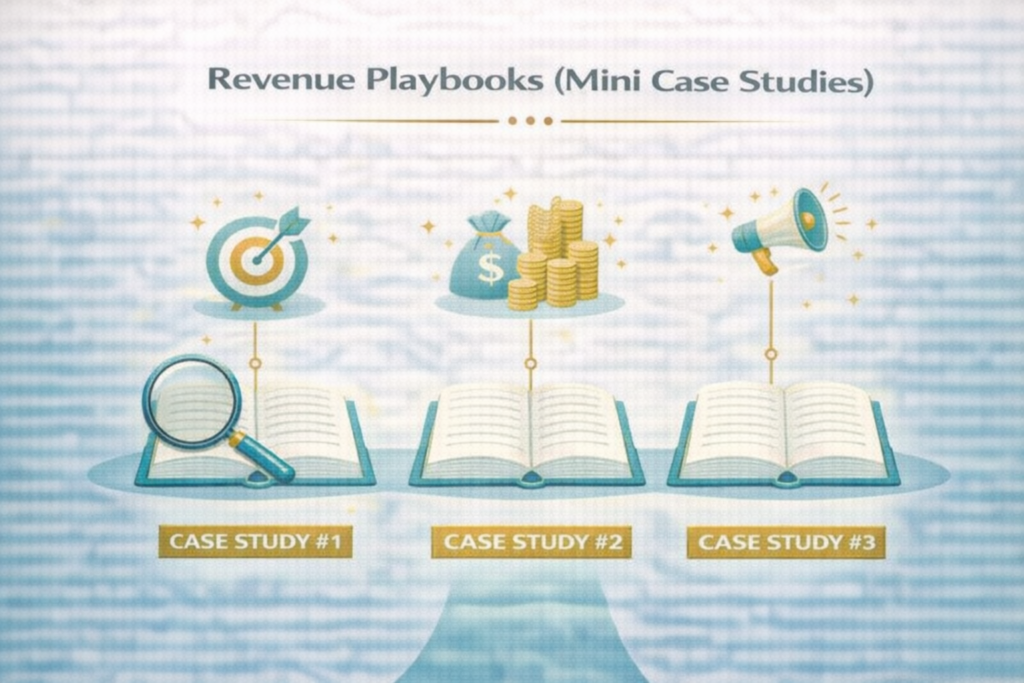
This section shows how the same monetization logic plays out across different roles and industries. The goal is not to showcase exceptional individuals. It is to demonstrate that outcomes repeat when structure repeats.
Each example follows the same pattern: Book → First Offer → Expansion
Executive Coach: Book → Cohort Programs → Retainer Clients
What the book positions The book establishes a clear leadership methodology and reframes a common executive problem in operational terms. Its primary job is trust: showing that the author can diagnose complex human and organizational dynamics with precision.
First monetized offer A cohort-based leadership program tied directly to the book’s framework.
Follow-on revenue Senior leaders who complete the cohort convert into:
Ongoing advisory retainers
Private leadership support
Team-level engagements
Revenue path (illustrative)
Stage
Offer
Typical Range
Role
Entry
Diagnostic / Toolkit
$49–$99
Qualify seriousness
Core
Leadership Cohort
$1,500–$3,000
Primary revenue
Expansion
Executive Retainer
$15K–$50K/year
Long-term leverage
What this teaches The book does not “sell coaching.” It makes the cost of unsupported leadership visible, so help feels timely and appropriate.
Founder: Book → Enterprise Licensing → Brand Partnerships
What the book positions The book functions as a founder playbook. It names a repeatable system that other organizations want to adopt, not just understand.
First monetized offer An implementation package or licensing model that allows teams to apply the framework internally.
Follow-on revenue As adoption grows:
Enterprise licensing expands
Strategic partnerships emerge
Brand collaborations become viable
Revenue path (illustrative)
Stage
Offer
Typical Range
Role
Entry
Assessment / Playbook
$29–$99
Internal champion
Core
Team Implementation
$3,000–$10,000
Revenue validation
Expansion
Enterprise License
$25K+
Scaled leverage
What this teaches The book is not a marketing asset. It is a specification document. Revenue scales because the system can be adopted without the founder’s constant presence.
Subject-Matter Expert: Book → Training Series → Recurring Revenue
What the book positions The book defines a domain clearly enough that it can be taught, not just referenced. It establishes the author as a translator of complexity.
First monetized offer A structured training series that walks readers through implementation step by step.
Follow-on revenue Recurring income through:
Updated training cohorts
Certification or continuing education
Institutional or organizational subscriptions
Revenue path (illustrative)
Stage
Offer
Typical Range
Role
Entry
Templates / Guides
$29–$79
Build trust
Core
Training Series
$500–$2,000
Revenue engine
Expansion
Licensing / Subscription
$10K+/year
Predictability
What this teaches The book creates authority. The training creates outcomes. Revenue grows because the expert’s knowledge is systematized, not exhausted.
What These Playbooks Have in Common
Despite different roles and industries, the underlying logic is identical:
The book establishes trust and frames the problem
The first offer delivers structured implementation
The expansion layer compounds relationships and revenue
In none of these cases is the book the primary revenue line. It is the asset that makes every other line easier to earn.
This is the critical reset: You do not need massive reach. You need clear positioning, the right offer sequence, and patience.
Once those are in place, monetization becomes predictable.
Presale & Monetization
Many authors treat audience building, presale, and monetization as separate activities. They are not.
They are the same system at different moments:
Audience building creates attention and trust
Presale converts trust into belief strong enough to act
Monetization expands that belief into offers and long-term relationships
Seen this way, presale is not an isolated “launch tactic.” It is the first monetization layer of the entire author business.
Presale Is a Belief Test
Presale is often framed as an early sales push. That framing is misleading.
Presale’s primary job is to answer one question:
Who believes strongly enough to commit before the market validates this book?
That is why presale matters. Early buyers are not just revenue. They are:
The first proof of demand
The first upgrade pool for future offers
The first source of testimonials, feedback, and case studies
Presale is the filter, not the finish line.
A. Announcement Campaigns
Announcement campaigns work when they are treated as participation invitations, not broadcasts.
The goal is not to inform the audience that a book exists. The goal is to help the right people self-identify as part of the journey.
Effective announcements do three things:
Define who the book is for (and who it is not)
Name the problem with enough precision that readers feel seen
Invite early participation: “If this matters to you, raise your hand.”
When announcements are designed this way, attention becomes identity. The reader is no longer consuming content. They are opting into a process.
B. Presale Cohorts
A presale cohort is a structured group of early supporters who purchase before launch and engage intentionally, often through updates, discussions, prompts, or companion materials.
This cohort is not a “buyer list.” It is the seed of the ecosystem.
A presale cohort creates leverage because it:
Validates positioning in real time
Produces feedback that improves the book and offer design
Generates early language you can reuse in marketing and sales
Creates the first community that future offers can serve
Monetization does not begin after publishing. It begins with the first cohort that commits.
C. Early Incentives That Support the Offer Ladder
Presale incentives are often treated as bonuses. In a monetization system, they serve a more specific function:
They are on-ramps to your future offers.
Early incentives should:
Preview the depth of the paid work
Train the reader to implement, not just consume
Signal what comes next in the ecosystem
Examples of incentive types that support the ladder:
A diagnostic or self-assessment that clarifies readiness
A workbook or template set that enables first implementation
A private session, briefing, or Q&A that creates direct access
Avoid incentives that disconnect from the business. If the incentive does not lead toward your core offer, it creates noise and attracts the wrong buyer.
How Presale Connects to Audience Building
Presale is where audience strategy proves itself.
If you want presale to work, audience building cannot start at the end. It must begin before the manuscript is finished, with positioning and trust-building designed intentionally.
That guide exists because presale is not a launch trick. It is the output of correct ordering.
Why This Reduces “Salesy” Fear
Many authors hesitate to ask for money early because they fear it will feel transactional.
Presale feels natural when the reader already has:
Trust in your competence
Clarity about the problem
A sense of belonging to the journey
At that point, money is not pressure. It is alignment.
Presale becomes a signal of commitment, and the start of the ecosystem the book is meant to activate.
Common Mistakes & How to Fix Them
By this point, the risk is no longer misunderstanding the system. The risk is reverting to familiar habits under pressure.
The mistakes below are not failures of effort or intelligence. They are predictable outcomes of misaligned structure. Each one is paired with a direct correction you can apply immediately.
Mistake: Treating the Book as a Standalone Product
Fix: Design chapters to lead into offers and clear next steps.
When the book is treated as the product, monetization becomes an afterthought. Chapters focus on completeness instead of readiness, and the offers feel bolted on, if they appear at all.
Correction: Design the book as a trust layer, not a revenue endpoint. Each chapter should either:
Shift a belief
Prove the method works
Increase readiness for implementation
Offers then appear at natural transition points, where help reduces risk or time. Monetization feels earned because the book has prepared the reader to say yes.
Mistake: Writing Everything for Everyone
Fix: Write different chapters for different reader types.
Many authors dilute their work trying to serve all readers equally. The result is a book that feels safe, but never decisive.
Correction: Accept that readers self-select:
Some chapters build credibility for browsers
Some chapters enable action for implementers
Some chapters surface commitment for buyers
Strategic unevenness is not a flaw. It is how conversion scales without pressure.
Mistake: Underpricing Out of Uncertainty
Fix: Price based on outcomes, not effort or page count.
Underpricing is rarely about generosity. It is usually about unclear scope or discomfort with value signaling.
Correction: Anchor price to:
The outcome delivered
The risk reduced
The speed or reliability gained
Serious outcomes require serious pricing. Price communicates commitment and sets expectations for engagement quality.
Mistake: Hiding Offers to Avoid Feeling “Salesy”
Fix: Make next steps obvious where clarity peaks.
Authors often bury offers because they fear damaging trust. The opposite happens. Readers who are ready feel abandoned.
Correction: Place offers where the reader:
Understands what to do
Sees the cost of doing it alone
Is actively deciding what comes next
At that moment, an offer is not a pitch. It is relief.
Mistake: Overbuilding Before Validating
Fix: Let belief precede scale.
Many authors jump to high-ticket programs or complex ecosystems before validating demand. This creates frustration and sunk-cost pressure.
Correction: Sequence matters:
Start with a clear core offer
Validate through presale and early cohorts
Expand only after trust and proof exist
Momentum comes from progression, not ambition.
Mistake: Disconnecting Incentives from the Business
Fix: Design every incentive as a path toward deeper engagement.
Bonuses and giveaways often attract attention without advancing monetization.
Correction: Ensure incentives:
Preview paid depth
Train implementation behavior
Signal what comes next in the offer ladder
If an incentive does not point forward, it introduces noise.
The Point of This Section
These mistakes are common because they feel familiar. They are what authors default to when decisions feel exposed or uncomfortable.
The fixes are not complicated. They are structural.
If you notice one of these patterns emerging, correct it immediately and keep moving. The system works when it is followed, and breaks in predictable ways when it is not.
AI, Tools & Workflow Support
AI is now embedded in most modern workflows. The opportunity is real, so is the risk.
Used well, AI reduces friction and increases output without sacrificing quality. Used poorly, it produces generic positioning, diluted voice, and books that feel interchangeable.
The core rule is simple:
AI accelerates good thinking. It does not replace it.
This section defines where AI belongs in the Modern Author system, and where it does not.
The Boundary: Thinking vs. Execution
A monetized book depends on decisions that cannot be delegated.
Human responsibility (non-delegable):
Positioning: what the book stands for and who it is for
Promise: the outcome the reader is buying into
Judgment: what to include, what to exclude, what to emphasize
Worldview: the underlying model that makes the book feel earned and specific
AI responsibility (delegable):
Drafting from clear inputs
Organizing and restructuring content
Rewriting for clarity, tone, and compression
Expanding supporting material once the core decisions are made
This division protects the book’s differentiation. Strategy comes from the author. AI exists to reduce execution cost.
Codex as Infrastructure, Not Authorship
Codex (and similar tools) should be treated as a force multiplier for systems, not a shortcut to avoid doing the work.
Codex is most valuable after you have made the key decisions:
What you believe
What the reader must believe
What the offer is
What the structure is
At that point, Codex can help you move faster without collapsing quality.
If you use AI to “find the idea” or “invent the framework,” you often get the same result everyone else gets: content that sounds plausible but lacks authority.
The Manuscripts stance is consistent: design first, automate second.
Where AI Actually Creates Leverage
AI works best when it is given known inputs and asked to produce bounded outputs. The following use cases reliably increase speed without sacrificing substance.
Drafting offer language from existing decisions
Use AI to generate drafts once you have defined:
The offer outcome
The audience
The scope and constraints
The price tier and delivery format
AI can help produce options for:
Program descriptions
Sales page sections
Email copy tied to specific CTAs
Title and subtitle variations
The author’s job is to select and refine, not accept outputs unedited.
Rewriting for clarity, structure, and tone
AI is effective for editorial improvement when you specify what “better” means:
Shorter, clearer sentences
Stronger headings
Reduced repetition
More direct argumentation
Consistent terminology across sections
This is operational leverage. The thinking stays intact while the presentation improves.
Suggesting FAQs from real objections
Once you know the reader’s objections, AI can help generate FAQ candidates and clean answers.
Best practice:
Feed it actual objections from sales calls, emails, or Q&A
Ask it to propose questions in the reader’s language
Edit the answers for accuracy and stance
Mapping content to the monetization model
AI is useful for systematization tasks:
Tagging chapters by reader type (browser / implementer / buyer)
Identifying transition points where offers belong
Checking alignment between the offer promise and the chapter sequence
Ensuring each section teaches one thing and earns its place
This is where AI becomes workflow infrastructure: it helps you keep a complex system coherent.
Speed Without Credibility Loss
Serious professionals often avoid AI because it feels:
Inauthentic
Low-status
Misaligned with authority
That concern is valid when AI is used as authorship.
But using AI to reduce execution time is not cutting corners. It is operational maturity, if the underlying thinking is sound.
The standard is not “did you write every word yourself.” The standard is “does this work hold up under scrutiny.”
Guardrails: Prevent Brand Dilution and Voice Collapse
AI outputs are drafts. Editorial judgment always wins.
To keep authority intact:
Do not publish AI text without revision
Maintain consistent language for your key concepts
Avoid generic phrasing that could belong to any author
Keep your point of view explicit and repeatable
Authority comes from coherence over time. AI must serve that coherence, not flatten it.
Tools Follow the System
AI should sit beneath your hierarchy:
Strategy → Structure → System → Tools
If that order reverses, quality collapses. The output may increase, but differentiation disappears.
Used correctly, AI helps serious authors move faster and stay credible, because it accelerates execution while the author retains responsibility for the thinking.
Workbook & Checklist
This guide is only useful if it results in decisions.
The workbook exists to move the reader from understanding the system to designing their version of it. Reading creates insight. Writing creates commitment. Once these worksheets are filled out, the book is no longer an abstract idea, but it is a defined leverage system.
The workbook is designed to be completed independently. The reader should not need to reread the guide to use it. Each section removes ambiguity by forcing specific choices in a specific order.
Offer Design Worksheet
This worksheet locks in the monetization architecture before any additional writing or promotion happens.
It forces clarity on:
Primary outcome: What changes for the reader if the core offer works
Offer tiers: Foundational, Core, and Premium
Scope boundaries: What each offer does, and does not, include
Delivery format: Program, service, cohort, licensing, or hybrid
Pricing logic: Price tied to outcome and responsibility, not effort or length
By the end of this worksheet, the reader should be able to answer one question clearly: What am I actually selling, and to whom?
Reader Journey Map
This worksheet aligns the book with real reader behavior instead of idealized reading patterns.
It maps:
Browsers: Where credibility and resonance are established
Implementers: Where frameworks, tools, and self-application live
Buyers: Where readiness, friction, and transition points occur
The output is a simple behavioral map that shows:
Which chapters serve which reader type
Where readers naturally raise their hand
How different actions signal different levels of readiness
This prevents two common failures: hiding offers too long or pushing them too early.
Revenue Calculator
This worksheet replaces hope with math.
It models:
Audience size assumptions
Conversion rates by reader type
Expected participation at each offer tier
Annualized revenue ranges based on conservative inputs
The goal is not precision. The goal is plausibility.
When completed, the reader should see clearly that:
Massive reach is not required
High revenue comes from alignment, not volume
Small, well-designed systems outperform vague ambition
This reframes success as design, not luck.
Chapter → Offer Linkage Table
This worksheet prevents disconnected writing.
Each chapter is mapped against:
Primary belief it must shift
Skill or framework it teaches
Which offer it supports
Whether it introduces, deepens, or transitions
If a chapter cannot justify its role in this table, it does not belong in the book.
The result is a manuscript where:
Every chapter earns its place
Monetization feels inevitable, not inserted
The book reads as a sequence, not a collection
How to Use This Workbook
The workbook is meant to be completed in order:
Offer design
Reader journey
Revenue modeling
Chapter linkage
Skipping steps creates downstream confusion. Completing them creates momentum.
Once filled out, the reader should be able to:
Explain their book-and-offer system to another executive
Defend pricing and scope decisions confidently
Identify exactly what still needs to be built
At that point, the system is real.
Why This Exists
Most guides explain. Few enable.
This workbook signals a different standard:
Monetization is a design discipline
Books are infrastructure
Serious outcomes require explicit systems
Completing this workbook is the dividing line between learning about leverage and building it.
Conclusion: From Book to Leverage System
Modern authors don’t publish books. They launch leverage systems.
That is the governing idea beneath everything in this guide. Not as a slogan, but as an operating principle. A book is not the product. It is the mechanism that activates authority, trust, offers, and long-term opportunity.
If this guide has done its job, the reader no longer sees a book as a finished artifact. They see it as infrastructure.
Redefining What “Success” Actually Means
Traditional publishing metrics are easy to measure and easy to misinterpret.
Royalties, advances, launch-week sales, and rankings are lagging indicators. They say little about whether a book is doing the work it was written to do.
Modern author success is measured differently:
Are the right opportunities being created?
Are the right people raising their hand?
Are offers converting without pressure?
Is revenue becoming more predictable over time?
When a book is designed as leverage, money follows activation, not hype. Authority compounds. Optionality expands. The system keeps working long after the launch window closes.
This Is a Long-Term Operating Model
This approach is intentionally unexciting in one way: it does not rely on spikes.
There is no dependence on virality, bestseller lists, or perfect timing. Instead, the model rewards:
Clear positioning
Thoughtful design
Consistent execution
Patience
That steadiness is not a weakness. It is professionalism.
Books written this way age well. Offers mature. Ecosystems deepen. The author’s role becomes more focused, not more exhausting.
What to Do Next
The next step is not more learning. It is design.
If you have not already done so:
Complete the workbook
Make the offers explicit
Map the reader journey
Pressure-test the revenue math
Clarify which parts of the system already exist, and which do not
Once those decisions are made, the path forward becomes obvious. Execution becomes simpler because the thinking is finished.
Continuing Forward, With or Without Help
Some readers will take this system and implement it independently. Others will want support designing, building, or accelerating it.
Both paths are valid.
Manuscripts exists for authors who want a structured partner in this process, one that treats books as serious infrastructure and monetization as professional design. Codex exists to accelerate execution once decisions are clear.
Neither is required to begin. The system stands on its own.
A Final Principle
A book can change how people think. A system changes how you operate.
Modern authors choose the second, and use the first to get there.
Frequently Asked Questions: Book Is the Hook
What does “Book Is the Hook” actually mean?
“Book Is the Hook” means the book is not the product.
It is the mechanism that creates trust, credibility, and demand for what comes next.
In the modern author model:
the book opens conversations
the book frames authority
the book lowers resistance
Revenue comes from clients, speaking, training, partnerships, or platforms that the book enables, not from book sales themselves.
Can a book really generate clients?
Yes, when it is designed as a leverage asset.
Books generate clients by:
pre-selling trust
clarifying how the author thinks
aligning the reader with a specific problem and point of view
Books that fail to generate clients are usually:
broadly positioned
written without a clear offer path
treated as finished products instead of system components
A book does not “convert” clients.
It makes the conversation inevitable.
Is selling the book the goal?
No.
For most modern nonfiction authors, selling the book is a vanity metric, not a business metric.
In high-performing author businesses:
book sales typically represent a small fraction of total revenue
the majority of value comes from what the book unlocks
The book’s job is not to maximize copies sold.
Its job is to maximize credibility per reader.
How do modern authors actually make money from a book?
Modern authors monetize through:
consulting or advisory work
speaking and workshops
training programs or cohorts
enterprise engagements
licensing or partnerships
The book creates trust and alignment.
Offers capture the value.
This is why monetization must be designed before writing begins.
Do I need a large audience for this to work?
No.
Audience size matters less than:
relevance
clarity of positioning
alignment with a real problem
Many successful modern authors start with:
small professional networks
narrow audiences
high credibility within a specific context
A focused book scales better than a popular one with no clear use.
Is this model only for coaches?
No.
The Book Is the Hook model works across multiple author types:
consultants and advisors
speakers and thought leaders
trainers and educators
founders and business owners
What changes is how the book is used, not whether it works.
Books amplify the existing model.
They don’t replace it.
Is ghostwriting compatible with Book Is the Hook?
Sometimes, but with limits.
Ghostwriting can help with execution speed, but it does not:
design monetization pathways
validate positioning
activate authority early
If ghostwriting is used, the author must still:
own the strategy
define the offers
control how the book is positioned and deployed
Without that, the book may exist without leverage.
Does this mean I have to “sell” aggressively?
No.
Book Is the Hook reduces selling pressure.
Because the book:
aligns the reader
demonstrates judgment
frames the problem clearly
conversations feel collaborative, not transactional.
The book doesn’t push people to buy.
It pulls the right people closer.
What kind of book works best for this model?
Books that:
take a clear point of view
solve a specific problem
introduce frameworks or ways of thinking
are easy to reference in conversation
Broad memoirs or idea collections only work if they are explicitly connected to a clear outcome path.
Clarity beats cleverness.
How is this different from traditional publishing advice?
Traditional publishing advice focuses on:
distribution
prestige
copies sold
Book Is the Hook focuses on:
leverage
authority
outcomes
Both can coexist, but they optimize for different results.
If clients, speaking, or business impact matter, the book must be designed differently from the start.
Who is this guide for?
This guide is for:
professionals already committed to writing a book
authors who care about leverage, not just completion
advisors helping leaders make smart book decisions
It is not for:
hobbyist writers
people seeking passive income from book sales alone
authors unwilling to engage with monetization design
The Core Takeaway
A modern business book does not create value by being published.
It creates value by:
shaping authority
changing conversations
making opportunities easier to say yes to
That is what “Book Is the Hook” actually means.
Next Steps
If this guide did its job, you now have clarity and not just urgency.
You understand how modern author monetization actually works. You can see where your book fits inside a larger leverage system. You know what needs to be designed, not guessed.
What comes next depends on how you want to execute.
Path 1: Build the System With Support
If you are building a book as serious business infrastructure, and want a structured partner in that process, the next step is to explore the Modern Author Operating System.
This is not a course or a launch playbook. It is an integrated system for:
Designing books as leverage
Translating authority into durable offers
Building ecosystems that compound over time
Executing with editorial rigor and strategic clarity
This path is for authors who want depth, alignment, and long-term thinking, and who prefer not to design everything alone.
Path 2: Build Independently With the Tools
If you are ready to execute on your own, the next step is to download the Workbook & Monetization Templates.
These tools allow you to:
Finalize your offer architecture
Map the reader journey intentionally
Pressure-test revenue assumptions
Align chapters directly to outcomes and offers
This path is not a lesser option. It is for disciplined builders who want to apply the system independently and move forward with confidence.
A Final Note on Readiness
There is no deadline here.
Modern authorship is not about speed. It is about durability.
The right next step is the one that matches your current level of commitment, resources, and ambition.
The system will still be here when you are ready to use it.What matters is not finishing a guide. What matters is building something that keeps working long after the book is published.
If You’re Deciding What to Do Next
If this report clarified your thinking, the next step is usually not “publishing.”
It’s pressure-testing your strategy before you commit time, budget, or reputation.
Here are three ways authors typically proceed.
Map Your Modern Author Strategy
If you want to:
Pressure-test your author model
Clarify realistic outcomes
Understand where ROI is likely to show up
Avoid unnecessary spend
A short strategy conversation can surface issues early, before they become expensive.
Eric Koester is an award-winning entrepreneurship professor at Georgetown University, bestselling author, and founder of Manuscripts. His work focuses on how ideas become assets, how books create leverage, and why modern authors need systems, not just publishing support.
He has worked with thousands of authors across traditional, hybrid, and modern publishing paths, helping them turn books into platforms, platforms into credibility, and credibility into durable business outcomes.
About Manuscripts
Manuscripts is the Modern Author OS for nonfiction experts.
We help founders, executives, coaches, and thought leaders design books as strategic assets, not standalone products. Our work spans positioning, author model design, developmental editing, AI-enhanced drafting tools, presale strategy, and long-term launch systems.
Manuscripts authors use their books to generate clients, speaking engagements, training programs, and enterprise opportunities, often before publication.
For readers who want to go deeper into specific mechanics, the following guides expand on topics referenced in this report:
How to Write a Book if You’re Busy
Modern Ghostwriting for Nonfiction Authors
AI Tools for Authors in 2026
How to Build an Audience Before You Write Your Book
The Evergreen Launch System for Modern Authors
Powered by Codex, the Modern Author Intelligence Tool.
Most Business Books Don’t Fail, They Just Don’t Do Anything
Most business books don’t flop.
They don’t get bad reviews.
They don’t embarrass their authors.
They don’t even disappear entirely.
They simply… exist.
They get published.
They get politely praised.
They sit on shelves, get referenced occasionally, and slowly stop mattering.
For smart, accomplished professionals, this is the most common outcome. And it’s not because the book was poorly written.
It’s because the goal was wrong.
Why “Publishing a Book” Is the Wrong Goal
Publishing is an event.
Authority, leverage, and client acquisition are systems.
When a senior executive or founder says, “I want to write a book,” what they usually mean is something else:
I want to be taken more seriously.
I want inbound conversations instead of outbound selling.
I want opportunities to find me.
I want this body of knowledge to work harder than I do.
A finished book does not automatically do any of that.
A strategically designed book can.
The mistake most professionals make is treating publishing as the finish line, instead of asking what the book is supposed to unlock once it exists.
The Hidden Disappointment Pattern
Across founders, executives, consultants, and thought leaders, a quiet pattern shows up again and again:
The book is solid.
The author is credible.
The launch goes fine.
Nothing meaningful changes afterward.
No increase in deal flow.
No clear lift in speaking or advisory work.
No sustained leverage.
This is especially common among high performers, because they assume competence is enough. They believe that if the ideas are strong, the outcomes will follow.
They usually don’t.
Not because the market is unfair.
Because the book was never designed to do the job they wanted it to do.
Why Clients, Not Copies, Is the Only Metric That Matters
For business authors, book sales are rarely the point.
Clients, partnerships, influence, and opportunities are.
In practice:
Royalties are a rounding error.
Credibility is the asset.
The book is the mechanism that changes conversations.
When books work, they do one thing exceptionally well:
They lower friction between expertise and opportunity.
When they don’t, it’s almost always because success was measured by the wrong scoreboard.
What This Guide Will Give You (That Publishers and Ghostwriters Won’t)
Most publishing advice focuses on execution:
writing quality
speed
production
distribution
Publishers and ghostwriters are paid to help books exist.
They are not paid to ensure the book generates clients.
This guide focuses on what happens before and around the writing, because that’s where outcomes are decided.
Specifically, it will help you:
distinguish writing a book from building a business asset
understand how books actually generate client ROI
identify which author model fits the intended outcome
avoid the common traps that lead to impressive but inert books
design a strategy where leverage appears before publication, not years after
This is not a guide to writing better prose.
It’s a guide to making sure the book, once written, actually works.
The Reframe That Matters
If you’re advising a senior leader, the question is not:
Can they write a book?
The real question is:
What should this book make easier, faster, or more inevitable once it exists?
Everything that follows starts there.
Part I: The Core Reframe
Writing a Book vs Building a Business Asset
Before strategy, publishing method, or writing process comes a more fundamental distinction.
Most business books are written to be finished.
The books that actually generate clients are designed to function.
This difference explains why so many smart, credible professionals publish books that earn respect but fail to change outcomes. It’s not a failure of effort or intelligence. It’s a failure of framing.
Writing a book and building a business asset are not the same activity. They require different decisions, different sequencing, and different success metrics.
This section establishes that distinction clearly, because everything that follows depends on it.
1. Why Writing a Book Rarely Gets You Clients
Among senior professionals, the assumption is understandable.
If someone is experienced, thoughtful, and respected, documenting that expertise in a book should naturally lead to more opportunity. More visibility. More inbound interest.
In reality, it rarely does.
The Myth of Passive Authority
Passive authority is the belief that credibility, once published, converts on its own.
The logic looks like this:
Write a smart book
Become known as an expert
Let the market respond
This model assumes that authority is discovered automatically. That readers, clients, or decision-makers will connect the dots without guidance.
That assumption no longer holds.
Authority today does not spread passively. It must be framed, activated, and used.
Why Credibility Doesn’t Automatically Convert
High-trust buying decisions don’t begin with credentials.
They begin with relevance.
A prospective client is not asking:
“Is this person intelligent?”
“Is this book well written?”
They are asking:
“Is this for someone like me?”
“Does this address a problem I recognize?”
“Can this person help me now?”
A book can demonstrate intelligence without answering any of those questions.
When that happens, credibility exists, but it doesn’t move anything forward.
How Most Books Die Quietly After Launch
The most common failure mode for business books is not public failure. It’s quiet irrelevance.
The pattern is familiar:
The book is completed and published
The launch performs adequately
There is a brief spike in attention
The book recedes into the background
The author remains credible.
Their opportunities remain largely unchanged.
Nothing breaks. Nothing improves.
This outcome is especially common among capable professionals, because the book feels successful. It earns praise. It signals expertise. It just doesn’t do any work.
Impressive vs Useful
There is a practical distinction that matters more than quality.
Impressive books:
signal intelligence
showcase experience
earn compliments
feel complete
Useful books:
change how conversations start
frame problems in specific ways
create natural entry points for engagement
make the author easier to hire, trust, or recommend
Most business books are optimized to impress and expected to become useful by accident.
That rarely happens.
The Core Contrast
This guide draws a hard line between two ways of thinking about a book:
Book as artifact A finished object that represents what the author knows.
Book as system component A working asset designed to create leverage over time.
Writing a book produces an artifact.
Designing a book produces an asset.
Clients come from the second.
The Hidden Risk Profile of Business Books
Most professionals assume writing a book is a low-risk move.
It isn’t.
It’s a high-variance asset with asymmetric outcomes.
Why Business Books Feel Safer Than They Are
Writing a book feels low-risk because:
it’s familiar it’s intellectually rewarding it doesn’t require public failure upfront progress feels private and controllable
But those same qualities hide the real risk.
The risk isn’t that the book will be bad. The risk is that it will be irrelevant.
The Two Types of Risk Most Authors Confuse
Perceived Risk (What Authors Worry About):
“What if I can’t finish?” “What if it’s not good enough?” “What if people judge it?”
Actual Risk (What Actually Hurts Outcomes):
Writing privately for too long Waiting to validate relevance Activating too late Designing the book without a clear outcome path
Most disappointment comes from the second category, not the first.
Why Strategy Is Risk Reduction, Not Complexity
Modern Author strategy exists to:
reduce downside variance surface learning early shorten feedback loops pull ROI forward in time
It does not add work. It removes blind spots.
Authors who delay strategy often spend more time, not less, and end up with fewer outcomes.
The Core Reframe
Writing a book is not the risky part.
Writing a book without designing how it will be used is.
When the book is treated as an asset instead of an artifact: relevance is tested early authority activates sooner effort compounds instead of dissipates
That’s not ambition. That’s risk management.
2. What It Means to Build a Book-Shaped Business Asset
If writing a book produces an artifact, building a book-shaped business asset produces leverage.
The difference is not philosophical. It’s operational.
A book-shaped business asset is designed to work in the real world, long before it’s finished and long after it’s published.
What a Book-Shaped Business Asset Actually Is
A book-shaped business asset is a book that has a defined role inside a larger system.
It is built to:
change how the author is perceived
create consistent entry points for conversation
reduce friction in trust-based decisions
support specific business or career outcomes
The book is not the destination.
It is infrastructure.
When designed this way, the book doesn’t sit on a shelf waiting to be discovered. It actively participates in how opportunities form.
How Assets Behave Differently Than Products
This distinction matters.
Products are evaluated at the point of purchase.
Assets create value repeatedly over time.
A book treated as a product optimizes for:
launch performance
sales volume
rankings and reviews
A book treated as an asset optimizes for:
credibility transfer
demand creation
conversation velocity
long-term positioning
Two books can sell the same number of copies and produce radically different outcomes for their authors, because one was designed to function as an asset and the other was not.
Why Timing, Positioning, and Use Matter More Than Prose
For business books, writing quality is a baseline requirement, not a differentiator.
What determines whether a book works is:
Timing: when the book enters the author’s public narrative
Positioning: how clearly the book frames a specific problem
Use: how the book is deployed in real conversations
A strategically positioned book with competent prose will outperform a beautifully written book with no defined role.
This is uncomfortable for authors who believe craft alone drives outcomes. It is clarifying for authors who want the book to do something concrete.
How Modern Authors Think Before They Write
Modern authors reverse the traditional sequence.
Instead of asking:
“How do I write this?”
“How fast can I finish?”
“Who should publish it?”
They ask:
“What should change once this book exists?”
“Who should this book make it easier to talk to?”
“What decisions should this influence?”
“How will this be used before and after publication?”
Writing becomes execution.
Strategy happens first.
This is the core logic behind the Busy Author System, which treats the manuscript as one component of a broader leverage strategy, not the starting point.
Why This Reframe Matters
When a book is designed as an asset:
progress becomes visible earlier
ROI appears sooner
burnout decreases
finishing becomes easier, not harder
The book stops feeling fragile.
It has a job.
And because it has a job, every decision about what belongs in it becomes easier.
Anchor Definition
For clarity, this guide uses the following definition throughout:
A book-shaped business asset is a book designed to actively create credibility, demand, and opportunity, not just document expertise.
If the book only starts working after publication, it was designed too late.
Book as Artifact vs Book as Asset
Most business books fail not because they’re poorly written, but because they’re designed as artifacts instead of assets.
This single distinction explains the majority of outcome variance.
Book as Artifact (The Traditional Mental Model)
A book is treated as:
a finished object a credential a personal milestone something to “get done”
Primary focus
manuscript quality publisher brand launch moment sales numbers
How success is measured
copies sold rankings reviews media mentions
When ROI is expected
after publication often 12–36 months later, if at all
Who owns outcomes
the publisher the market luck and timing
Result: A book that exists, looks impressive, and quietly stops working.
Book as Asset (The Modern Author Model)
A book is treated as:
infrastructure a leverage tool a conversation catalyst a system component
Primary focus
outcome design positioning and relevance early activation how the book is used
How success is measured
conversations started clients acquired speaking unlocked opportunities created
When ROI is expected
during the writing process often within 30–90 days of public positioning
Who owns outcomes
the author the strategy the system
Result: A book that compounds authority, reduces friction, and keeps paying off.
The One-Line Reframe That Matters
An artifact proves you wrote a book. An asset makes something else easier to say yes to.
Modern authors don’t write better books. They design books that work.
Why this callout matters: Once this distinction clicks, every downstream decision becomes simpler:
You stop asking, “How do I finish this book?” And start asking, “What should this book do once it exists?”
Part II: Author ROI
How Business Books Actually Generate Clients
Once the book is reframed as an asset, a different question becomes unavoidable:
How does this actually pay off?
This is where most business book conversations go off the rails.
Not because people are naive about money, but because they’re measuring the wrong thing, at the wrong time, with the wrong expectations.
This section establishes a clear, defensible definition of Author ROI, grounded in how business books actually work in the real world. Not how they’re marketed. Not how they’re reviewed. How they create opportunity.
4. What “Author ROI” Really Means (And What It Doesn’t)
For business authors, return on investment is rarely found where people look first.
Why Royalties Are the Wrong Scorecard
Royalties are easy to count.
They are also deeply misleading.
For most business books:
royalties represent a small fraction of total value
sales volume does not correlate strongly with opportunity creation
“successful” books often generate minimal direct revenue
This is not a failure of publishing.
It’s a misunderstanding of the book’s role.
A business book is not a retail product optimized for margin. It is a credibility engine designed to change access, perception, and trust.
Measuring its success by royalties alone is like measuring a keynote by ticket sales instead of contracts signed afterward.
The Five Real ROI Streams for Business Authors
When books work, they generate return across multiple channels, often simultaneously.
Across Manuscripts projects and broader industry data, five ROI streams appear consistently.
Client acquisition New consulting, advisory, or service engagements attributed to the book.
Speaking and workshops Paid keynotes, offsites, or training sessions unlocked by authority.
Training and cohorts Group programs, courses, or certifications anchored to the book’s ideas.
Enterprise and advisory work Board roles, retained advisory positions, or long-term engagements.
Partnerships and platform effects Media, collaborations, distribution deals, or ecosystem leverage.
Book sales may support these streams. They rarely drive them.
How ROI Shows Up Before Publication
One of the most counterintuitive patterns in modern authorship is timing.
For strategically designed books, ROI often begins before the book is finished.
Not because the market is impatient.
Because authority activates when the book becomes real.
Once a book is publicly named and positioned:
conversations change
assumptions shift
inbound interest increases
opportunities reference the book directly
This early ROI is not speculative. It’s structural.
The book signals commitment, focus, and leadership before a single copy ships.
What Counts as Success at 90, 180, and 365 Days
To evaluate ROI accurately, it has to be measured over time, not at a single moment.
At 90 days, success looks like:
increased inbound conversations
clearer positioning
early advisory or speaking interest
evidence that the book changes how the author is perceived
At 180 days, success looks like:
validated demand
repeatable conversations
defined offers tied to the book
reduced friction in selling or pitching
At 365 days, success looks like:
durable revenue streams
compounding opportunity
the book functioning as a reference point
authority that continues to pay off
None of these require bestseller status.
What Author ROI Is Not
To avoid false confidence, it’s important to be explicit.
Author ROI is not:
word count
manuscript completion
private praise
rankings without downstream impact
These are progress markers, not returns.
ROI is about changed access, changed conversations, and changed outcomes.
Definitions Author ROI: The total business and career value generated by a book across clients, speaking, training, advisory work, and partnerships. Early ROI: Measurable opportunity created before publication through positioning, visibility, and activation. Downstream ROI: Value created after publication through continued use of the book as a credibility asset.
These definitions matter because they determine how decisions are made upstream.
Once ROI is defined correctly, the next question becomes practical:
Which paths actually produce these outcomes, and for whom?
That’s where we go next, with the Author ROI Stack.
When ROI Actually Shows Up (And Why Waiting Until Publication Is a Strategic Error)
Most authors assume ROI is a post-publication event.
That assumption quietly delays outcomes by years.
In practice, ROI from business books appears in three distinct phases, and the earliest one is the most important.
Phase 1: Pre-Publication ROI (0–90 Days)
This is where modern authors win.
ROI shows up as:
inbound conversations speaking or podcast invitations advisory or consulting interest shifts in how peers introduce or reference you
What triggers it:
publicly naming the book claiming the topic in bios and profiles visible commitment to the idea
Key insight: Authority activates when the book becomes real, not when it’s finished.
Phase 2: Early Post-Publication ROI (3–12 Months)
This is the phase most authors expect, and many never reach.
ROI shows up as:
client conversions paid speaking training or cohort demand enterprise or advisory work
What drives it:
clarity of positioning how the book is used in conversations how well it aligns with the author’s model
Key insight: Books don’t “launch” ROI. They compound what was activated earlier.
Phase 3: Long-Tail Leverage (12+ Months)
This is where books become true assets.
ROI shows up as:
repeat opportunities referrals AI and search discovery durable authority
What sustains it:
consistent visibility systemized use of the book ongoing relevance
Key insight: Long-tail ROI only compounds if early activation occurred.
The Cost of Getting This Backwards
Authors who wait until publication to activate:
delay learning miss positioning feedback compress all risk into one moment often mistake silence for neutrality
Silence is not neutral. It erodes relevance.
The Strategic Reframe
ROI is not something you wait for. It is something you design for.
Modern authors pull ROI forward in time by:
activating early validating relevance letting the book work while it’s still being written
That is not aggressive. It’s efficient.
5. The Author ROI Stack
How Clients Actually Come From Books
Once ROI is defined correctly, the mechanics become clearer.
Business books do not generate value through a single channel. They create a stack of reinforcing opportunities, each building on the authority the book establishes.
Understanding this stack matters, because different authors benefit from different layers, and confusing them leads to misaligned expectations.
The Five Layers of the Author ROI Stack
When books produce meaningful business outcomes, value typically shows up across the following layers.
Not all authors use all five.
But high-ROI books almost always activate more than one.
1. Client Acquisition
This is the most immediate and visible ROI stream.
Books create clients by:
reframing the author as a category expert
pre-answering questions before conversations begin
reducing skepticism in trust-based decisions
In practice, the book often becomes part of the first interaction:
“I’ve been reading your book.”
“Your perspective resonated with our situation.”
“We’d like to explore working together.”
The book doesn’t close the deal.
It changes the starting point.
2. Speaking and Workshops
Speaking is one of the most common accelerators of book-driven ROI.
Books:
legitimize the author as a speaker
provide a clear point of view
give event organizers something concrete to reference
This leads to:
paid keynotes
executive offsites
internal workshops
For many authors, speaking becomes the bridge between visibility and client acquisition.
3. Training and Cohorts
For authors operating at scale, books often anchor group delivery.
This includes:
cohort-based programs
internal training
certifications or curricula
The book:
standardizes language
establishes a shared framework
reduces onboarding friction
Here, the book functions as intellectual infrastructure.
4. Enterprise and Advisory Work
At higher levels of authority, books unlock access rather than volume.
This shows up as:
retained advisory roles
board positions
enterprise consulting
long-term strategic engagements
In these contexts, the book signals judgment, not tactics.
It positions the author as someone worth listening to when decisions matter.
5. Partnerships and Platform Effects
The final layer compounds everything else.
Books create:
media opportunities
partnerships
ecosystem leverage
platform growth
These outcomes rarely appear immediately, but they increase the surface area for opportunity over time.
The book becomes a durable reference point.
How the Stack Actually Works
The ROI stack is not linear.
It is reinforcing.
Speaking leads to clients.
Clients lead to enterprise work.
Enterprise work leads to partnerships.
Partnerships amplify authority.
The book sits underneath all of it, quietly lowering friction at each step.
A Critical Decision Lens
Not every ROI layer fits every author.
Coaches and consultants often benefit most from client acquisition and speaking.
Trainers and educators rely heavily on training and cohorts.
Business owners and speakers activate the full stack.
Memoir-driven authors require intentional pathways to access any layer.
Understanding which layers matter prevents chasing the wrong outcomes.
Why This Matters for Strategy
Most book disappointment comes from expecting one layer to do the work of another.
For example:
expecting book sales to create enterprise deals
expecting prestige to replace positioning
expecting reach to substitute for relevance
When the stack is understood clearly, strategy becomes simpler.
The next question is not whether books work.
It’s why some books activate this stack consistently, while others never do.
That’s the variance problem, and it’s where we go next.
6. The High-Variance Reality of Business Books
At this point, it should be clear that business books can generate meaningful ROI.
What’s less obvious, and more important, is that outcomes vary dramatically.
Some books unlock six- and seven-figure opportunities.
Others struggle to justify their time and cost.
This variance is not random.
Why Averages Mislead
Industry averages paint an optimistic picture.
When you look at large datasets, the “average” business book appears to perform well. Total returns often exceed costs by a wide margin.
That headline number is real.
It’s also dangerous without context.
A small number of books produce very large outcomes. Those outliers pull the average up. They make the opportunity look safer and more predictable than it actually is.
For decision-making, averages describe possibility, not probability.
Why Medians Feel Disappointing
Medians tell a different story.
When you remove the outliers, the typical experience feels far less dramatic:
modest book sales
limited downstream impact
slower or unclear ROI
This gap between average and median is where disappointment lives.
Smart professionals read about high-performing books and assume competence will get them there. When outcomes land closer to the median, the book feels underwhelming, even if nothing went “wrong.”
What Separates High-ROI Books From “Nice to Have” Books
Across Manuscripts projects and broader industry analysis, the same differentiators appear repeatedly.
High-ROI books tend to have:
a clearly defined outcome before writing begins
a named point of view that frames a specific problem
early visibility and activation
a clear path from authority to opportunity
Low-ROI books tend to be:
broadly positioned
privately written
evaluated only at publication
disconnected from a specific business or career model
The difference is not talent or effort.
It’s design.
Strategy vs Talent
One of the most persistent myths in publishing is that better writing leads to better outcomes.
For business books, this is rarely true.
Competent writing is necessary.
It is not sufficient.
Books that outperform do so because:
strategy was decided early
positioning was tested publicly
demand was validated before risk peaked
Talent improves clarity.
Strategy determines impact.
Why This Matters for Advisors and Decision-Makers
For senior leaders and the people advising them, the implication is simple:
Writing a book is not a binary decision.
It’s a risk profile.
Variance is not eliminated by choosing a prestigious publisher or hiring a strong writer. It is reduced by making the right strategic decisions early.
This is why Guide #1 focuses on economics and variance, and why this guide focuses on execution and leverage.
Together, they explain not just whether a business book can work, but how to design one that does.
With ROI defined and variance explained, the next step is practical:
How do you execute in a way that compresses timelines, reduces risk, and activates the ROI stack while the book is still being written?
Part III: Choose the Right Modern Author Persona
Why Your Model Determines Your Results
By now, one pattern should be unmistakable.
Books don’t fail because authors lack insight.
They fail because the book is misaligned with how the author actually creates value.
This is where many smart professionals get tripped up. They assume that a good book will “figure itself out” once it’s published. In reality, books amplify whatever model already exists, whether or not that model was made explicit.
This section introduces the concept of Modern Author Personas, not as labels, but as operating realities. Each persona has different strengths, constraints, and ceilings. Understanding which one applies is not limiting. It’s liberating.
Without this clarity, authors often expect outcomes their model cannot support.
7. The Four Modern Author Personas
Across Manuscripts projects and interviews with successful business authors, four dominant personas appear consistently.
These are not personality types.
They are leverage models.
Each persona defines:
how authority converts into opportunity
where ROI shows up fastest
what kind of scale is realistic
what a book can and cannot do
No persona is inherently better than the others. But they are not interchangeable.
Coach / Consultant
What this persona is optimized for
High-trust, one-to-one work
Deep problem-solving
Personalized transformation
Books work well here as credibility accelerators. They shorten the trust curve and improve the quality of inbound conversations.
Where this persona struggles
Scale is limited by time
Revenue growth often requires more hours, not more leverage
Demand can quickly exceed capacity
Without intentional design, the book creates more conversations than the author can sustain.
What a coach or consultant can realistically expect from a book
Faster client acquisition
Higher-quality leads
Improved close rates
Modest but meaningful ROI
Books here rarely create massive scale on their own. They make existing work easier and more valuable.
Trainer / Educator
What this persona is optimized for
Group delivery
Repeatable frameworks
Curriculum-driven value
Books often become the backbone of workshops, programs, and internal training.
Where this persona struggles
Requires infrastructure beyond the book
Marketing and delivery systems matter
Word-of-mouth alone is rarely sufficient
Without systems, demand stalls.
What a trainer or educator can realistically expect from a book
Strong mid-term ROI
Leverage through cohorts or programs
Clear expansion paths
The book performs best when paired with delivery mechanisms.
Speaker / Thought Leader
What this persona is optimized for
Attention leverage
Idea-driven authority
High-visibility opportunities
Books function as credentials. They legitimize perspectives and unlock stages.
Where this persona struggles
Requires consistent visibility
Positioning mistakes are amplified
Momentum decays without activation
Books don’t create speaking opportunities automatically. They enable them.
What a speaker can realistically expect from a book
Faster access to stages
Higher speaking fees
Compounding authority
This persona often sees the fastest ROI when the book is activated early.
Builder / Business Owner
What this persona is optimized for
Platform-driven leverage
Product and ecosystem growth
Strategic optionality
Books here are not endpoints. They are wedges into markets.
Where this persona struggles
Overcomplicating the book
Treating it as a product instead of infrastructure
Delaying visibility while building privately
Execution discipline matters more than polish.
What a builder or business owner can realistically expect from a book
Broad opportunity creation
Long-term compounding ROI
Multiple monetization paths
This persona has the highest upside, but only with clear strategy.
Why This Classification Matters
Most book disappointment comes from mismatch.
Coaches expect scale without changing delivery
Speakers expect authority without visibility
Builders expect momentum without activation
When the persona is named, expectations become realistic. Strategy becomes clearer. The book becomes easier to design.
The next step is understanding why some personas scale naturally while others hit ceilings, and how books either reinforce or constrain those outcomes.
Which Author Models Actually Scale (And Which Ones Cap Out Without Structural Changes)
Not all author models scale the same way.
Books don’t change that reality. They amplify it.
Understanding this upfront prevents unrealistic expectations and misaligned strategies.
Models That Cap Out Without Structural Change Coach / Consultant (One-to-One)
What scales:
authority lead quality close rates
What caps out:
time delivery capacity revenue without leverage shifts
When authors expect scale from a capped model, the book feels disappointing.
When expectations match the model, outcomes feel earned.
The Strategic Takeaway
The question is not: “Can this book scale?”
It’s: “What part of my model should this book amplify?”
Once that answer is clear, strategy becomes simpler and frustration disappears.
8. Why Some Personas Scale and Others Cap Out
Once the author persona is clear, the pattern behind book outcomes becomes easier to explain.
Some books create pipelines.
Others create calendars.
Both can be valuable.
They are not the same thing.
The difference has less to do with ambition or effort and more to do with the underlying economics of the author’s model.
One-to-One vs One-to-Many Economics
At the core of this distinction is how value is delivered.
One-to-one models exchange time for outcomes.
Coaching
Consulting
Advisory work
Books in these models tend to:
improve lead quality
shorten sales cycles
increase close rates
They do not automatically increase capacity.
Without a shift in delivery model, success creates constraint.
One-to-many models exchange attention for scale.
Speaking
Training
Platforms
Products
Books in these models tend to:
expand reach
unlock distribution
compound over time
The same book that caps out in a one-to-one model can scale dramatically in a one-to-many model.
Time Leverage vs Attention Leverage
This is the practical tradeoff most authors never make explicit.
Time leverage means:
higher value per hour
deeper engagement
limited scalability
Attention leverage means:
broader reach
repeatable delivery
higher upside
Books amplify whichever leverage the author already uses.
They do not convert one into the other by default.
Authors who expect a book to magically transform their model are often disappointed, not because the book failed, but because the model remained unchanged.
Why Some Books Create Pipelines
Books create pipelines when:
the author model supports scale
the book is positioned as a credential
demand flows into repeatable offers
In these cases:
inbound increases
opportunities stack
authority compounds
The book feeds a system that can absorb growth.
Why Other Books Create Calendars
Books create calendars when:
the author model depends on personal availability
delivery is customized and time-bound
scale requires more hours, not more leverage
In these cases:
demand increases
schedules fill
capacity tightens
The book works, but it works differently.
This is not failure.
It is a constraint that must be acknowledged.
The Expectation Gap That Causes Disappointment
Most disappointment comes from expecting pipeline behavior from a calendar model.
Coaches expect scale without changing delivery
Consultants expect leverage without restructuring offers
Memoirists expect opportunity without pathways
The book delivers exactly what the model allows. Nothing more.
Why This Section Exists
This distinction is uncomfortable, but necessary.
Without it:
authors chase the wrong outcomes
advisors misjudge success
books are blamed for structural limitations
With it:
expectations become realistic
strategy becomes intentional
outcomes feel earned, not accidental
The next step is translating this understanding into concrete book design choices, so that each persona gets a book that actually fits.
9. Persona-to-Book Fit
What Your Book Should Do Based on Your Model
Once the author persona is clear, the book becomes easier to design.
Not easier to write, easier to aim.
Most underperforming business books aren’t weak. They’re misfit. They try to do work their author model can’t support, or they leave leverage on the table by playing too small.
This section translates persona into design choices, so expectations, structure, and outcomes stay aligned.
What Coaches and Consultants Should Emphasize
For coaches and consultants, the book’s primary job is not scale. It’s trust acceleration.
The book should:
narrow the problem it addresses
demonstrate judgment, not breadth
show how the author thinks in real situations
make the author feel safe to hire
The strongest books in this category:
speak directly to a defined client type
avoid overgeneralization
frame the author as a guide, not a guru
What to avoid:
chasing reach at the expense of relevance
writing “for everyone”
expecting the book to replace delivery work
When designed correctly, the book shortens sales cycles and improves client quality. It does not eliminate the need for conversations.
What Trainers and Educators Should Optimize For
For trainers and educators, the book is intellectual infrastructure.
The book should:
codify a clear framework
introduce shared language
support repeatable delivery
function as curriculum, not commentary
Strong books here:
are modular
are easy to teach from
make group learning easier to facilitate
What to avoid:
writing in a way that’s hard to extract into programs
over-indexing on narrative without structure
assuming the book alone creates scale
When aligned, the book becomes the spine of workshops, cohorts, and training programs.
What Speakers and Thought Leaders Should Optimize For
For speakers, the book is a credential.
The book should:
articulate a clear point of view
challenge existing assumptions
be easy to reference from a stage
signal relevance in current conversations
The most effective books in this category:
are concise in their positioning
are quotable
make the author’s stance unmistakable
What to avoid:
overloading the book with implementation detail
waiting until publication to claim authority
assuming visibility appears automatically
Here, the book opens doors. Speaking closes them.
What Builders and Business Owners Should Avoid
For builders and business owners, the temptation is complexity.
The book should:
clarify the problem the business exists to solve
establish category authority
create optionality, not obligation
Strong books in this category:
are strategically narrow
support a larger ecosystem
leave room for expansion
What to avoid:
treating the book as a product roadmap
over-explaining the business
delaying visibility while building privately
The book is not the business. It is the wedge.
Why Memoirs Require Explicit Pathways
Memoirs occupy a special category.
They can be powerful. They are rarely self-directing.
A memoir must be intentionally connected to:
speaking
influence
advocacy
advisory or platform work
Without that connection, the book may resonate deeply but struggle to convert into opportunity.
Story creates trust.
Pathways create outcomes.
The Moment of Recognition
At this point, most readers recognize themselves.
They see:
why certain outcomes felt unrealistic
why previous books underperformed
why certain strategies felt forced
This is the moment when strategy replaces hope.
The book no longer needs to do everything.
It needs to do the right thing for the model it sits inside.
With the persona clarified and expectations aligned, the question shifts again:
How do modern authors execute in a way that activates ROI early, reduces risk, and fits real-world constraints?
Here is Part IV: the introduction and Section 10 only, written to continue cleanly from Part III, same advisor-grade tone, clear competitive contrast, no forward bleed into Sections 11 or 12.
Part IV: The Strategy Most Publishers Don’t Talk About
Because They Don’t Get Paid For It
By this point, one thing should be obvious.
If a business book fails to generate clients, it is rarely because the author chose the “wrong” publisher or hired the “wrong” writer.
It’s because no one was responsible for designing client ROI in the first place.
10. Why Publishers and Ghostwriters Can’t Design Client ROI
Most publishing advice is sincere.
Much of it is competent.
Very little of it is aligned with client outcomes.
That’s not because publishers or ghostwriters are careless. It’s because of how they are incentivized.
What Publishers Are Actually Incentivized to Do
Publishers are built to:
acquire manuscripts
produce books
distribute copies
maximize sales through existing channels
Their success metrics are:
units sold
rankings
media coverage
retail performance
None of these require:
understanding the author’s business model
designing conversion pathways
aligning the book to specific client outcomes
Publishers don’t ignore ROI.
They simply define it differently.
For them, ROI ends at the book.
Why Ghostwriting Optimizes for Speed, Not Leverage
Ghostwriters are paid to solve a different problem.
They are hired to:
extract ideas quickly
produce a polished manuscript
minimize the author’s time investment
Speed and quality matter.
Leverage is secondary.
A ghostwritten book can be:
well structured
well written
professionally produced
And still fail to generate meaningful business outcomes.
Why?
Because:
the author wasn’t required to clarify positioning
early activation didn’t happen
the book wasn’t integrated into real conversations
ownership of the ideas remained abstract
Ghostwriting solves execution friction.
It does not solve strategic alignment.
The Structural Blind Spot in Traditional Publishing Advice
Both publishers and ghostwriters tend to assume the same thing:
Once the book exists, the author will figure out how to use it.
This is where most books stall.
The hardest decisions, the ones that determine ROI, happen before writing:
What problem the book actually solves
Who it is meant to influence
How authority converts into opportunity
When visibility should begin
These decisions fall outside the scope of most publishing engagements.
So they don’t get made.
Why This Gap Persists at the High End
Premium services often make the problem worse, not better.
High-end hybrid publishers and ghostwriting firms offer:
beautiful production
strong editorial support
polished positioning language
What they rarely offer is:
outcome design
author model alignment
early activation strategy
presale validation
ROI timing discipline
These services feel complete.
They just stop short of where results are created.
A Direct Contrast
This is the difference between how most premium providers operate and how modern authors think.
Traditional publishing and ghostwriting:
Optimize for speed, polish, and distribution
Treat writing as the core activity
Expect outcomes after publication
Modern author strategy:
Optimizes for leverage and timing
Treats writing as execution
Expects ROI during the writing process
Neither approach is inherently wrong.
But only one is designed to produce clients.
Why This Matters for Decision-Makers
For senior advisors and executives, this distinction is critical.
Hiring a strong publisher or ghostwriter may reduce workload.
It does not remove the need for strategy.
If client ROI is the goal, someone must be responsible for designing it. Publishers and ghostwriters are not built to do that work.
That responsibility sits upstream.
And when it’s ignored, even excellent books underperform.
Next, we’ll look at the most common downstream consequence of this blind spot: waiting until the book is done to activate demand, and why that decision quietly kills momentum.
11. The Fatal Mistake: Waiting Until the Book Is Done
Once client ROI is not designed upfront, a predictable mistake follows.
Authors wait.
They wait to talk about the book.
They wait to test positioning.
They wait to activate demand.
They wait until the manuscript feels finished.
This delay feels responsible.
It is usually the most expensive decision in the process.
Why Late Activation Kills Momentum
Books don’t suddenly become relevant at publication.
They become relevant when people begin to associate the author with the idea.
When authors write privately for months or years:
credibility remains static
learning is delayed
interest dissipates
timing is missed
By the time the book appears, the market has already moved on.
Momentum does not arrive at launch.
It accumulates before it.
How Credibility Decays While You Write Privately
Silence has a cost.
When an author is not visible:
their perspective is replaced by someone else’s
conversations happen without them
authority migrates to louder or earlier voices
This is especially costly for senior professionals whose expertise is already in demand.
The book is meant to concentrate authority.
Writing privately does the opposite.
The Cost of Learning Too Late
The most valuable insights about a book rarely come from writing alone.
They come from:
reactions
questions
confusion
resistance
unexpected resonance
When those signals arrive after publication, it’s too late to adjust.
Late learning leads to:
missed positioning opportunities
underperforming launches
books that feel “close” but not decisive
Early activation turns the writing process into a feedback loop. Late activation turns it into a reveal.
Why This Mistake Feels Rational
Waiting feels safe.
No one can criticize an unfinished book
No positioning mistakes are visible
No commitment is required
But safety is not neutrality.
It’s delay.
And delay in a fast-moving attention environment quietly erodes opportunity.
The Strategic Alternative
Modern authors treat visibility as part of the writing process, not a reward for finishing it.
They:
name the book early
claim the space publicly
let positioning evolve with feedback
activate demand while stakes are low
This doesn’t add pressure.
It removes it.
Because once the book is already working, finishing it becomes easier.
The Transition That Matters
If waiting until the book is done is the mistake, the alternative has to be intentional.
That alternative is not “marketing earlier.”
It’s designing activation into the strategy from the start.
That’s what presale publishing does.
12. Presale Publishing
Why Modern Authors Activate Demand Early
Presale publishing is often misunderstood.
It’s frequently framed as a marketing tactic, a launch trick, or a way to juice rankings. In reality, presale publishing is something much more foundational.
It is a strategy for validating demand, activating authority, and pulling ROI forward in time.
For modern authors, presale is not optional. It is how risk is managed.
Presale as Validation, Not Marketing
At its core, presale answers a single question early:
Will real people commit to this idea?
That commitment matters more than attention.
Presale:
tests positioning before it’s locked in
reveals what resonates and what doesn’t
creates early advocates, not just buyers
converts interest into signal
Marketing amplifies demand.
Presale confirms it exists.
Why Modern Authors Use Presale Strategically
Modern authors activate presale because it solves problems that publishing alone cannot.
Presale:
makes the book real before it’s finished
forces clarity around audience and outcome
creates momentum without relying on algorithms
shortens the distance between effort and feedback
Instead of hoping the book lands, presale lets authors see it landing while there’s still time to adjust.
This Is Not New. It’s Intentional.
Many of today’s most effective business authors use presale deliberately.
Adam Grant opened presales roughly 12 months before publication
Dan Pink activated presale roughly four months before publication
The timelines vary.
The principle does not.
These authors weren’t trying to sell copies early. They were claiming authority, validating relevance, and concentrating demand.
What Presale Actually Does (And What It Doesn’t) Presale is one of the most misunderstood strategies in modern publishing.
Most people think it’s about selling copies early. That’s not what matters.
Presale is not a marketing tactic. It’s a strategic validation mechanism.
What Presale Actually Does
When done correctly, presale:
Validates relevance early Real people commit before the book is finished. That signal is stronger than interest or praise. Sharpens positioning Questions, objections, and enthusiasm reveal what the book should emphasize, and what it should drop. Activates authority before publication The book becomes part of how the author is introduced and referenced while it’s still being written. Pulls ROI forward in time Conversations, invitations, and opportunities often begin during presale, not after launch. Creates early advocates Presale readers become amplifiers, not just buyers.
What Presale Does Not Do
Presale does not:
guarantee bestseller status replace distribution manufacture demand compensate for poor positioning work without visibility
Presale amplifies what already resonates. It exposes what doesn’t.
That’s why it’s valuable.
Why Modern Authors Use Presale Differently
Traditional publishers use presale to manage inventory.
Modern authors use presale to manage risk.
They don’t ask: “How many copies can I sell early?”
They ask: “Who is willing to commit to this idea right now, and why?”
That answer informs every downstream decision.
The Pattern at the High End
High-performing business authors use presale intentionally.
Adam Grant opened presales roughly 12 months before publication Dan Pink activated presale roughly four months before publication
Different timelines. Same logic.
Presale wasn’t about hype. It was about claiming the space early.
The Strategic Reframe
If no one is willing to commit before the book is finished, the problem is not timing.
It’s positioning.
Presale doesn’t create demand. It reveals it.
That’s why it belongs upstream.
How Presale Pulls ROI Forward
When presale is designed correctly, ROI begins upstream.
Authors begin to see:
inbound conversations
speaking and podcast invitations
advisory and consulting interest
clearer market positioning
This happens not because the book is finished, but because the book is credible.
Credibility does not require completion.
It requires commitment.
What Presale Signals Actually Matter
Not all presale signals are equal.
What matters most:
who commits, not how many
why they engage, not just that they do
what questions they ask
how the book changes conversations
These signals inform:
positioning
structure
emphasis
eventual offers
Presale turns writing into a feedback loop instead of a guess.
Presale Publishing (Named System)
Presale Publishing is the practice of:
publicly naming and positioning the book
activating early readers
validating demand
using feedback to refine direction
creating momentum before publication
Traditional publishing uses presale to manage inventory.
Modern authors use presale to manage risk, relevance, and ROI.
Why This Matters in 2026
Three forces make presale publishing critical now:
Attention moves faster than production Waiting until launch means entering the conversation late.
Discovery is fragmented Early activation creates surface area across platforms and AI systems.
ROI expectations have shifted upstream Authors expect leverage during the process, not years later.
Presale aligns effort with reality.
The Strategic Takeaway
Presale publishing is not about selling early.
It’s about learning early, activating early, and earning credibility before risk peaks.
If a book can’t attract committed readers before it’s finished, it’s not ready to scale.
With presale established as a core strategy, the next step is execution:
how modern authors activate ROI while they’re still writing, within real-world constraints.
Here is Part V: the introduction and Section 13 only, written to flow directly from Part IV, same voice, same audience, and grounded in execution without drifting into tactics yet.
Part V: The Modern Author Execution Path
How Clients Start Appearing While You’re Still Writing
Up to this point, the work has been strategic.
You’ve clarified:
what the book is meant to do
how ROI actually works
which author model applies
why early activation matters
why presale changes the risk profile
The question now becomes practical:
How does this actually get executed, in real time, by busy professionals?
This part introduces the Modern Author execution path, not as a productivity system, but as a leverage system. It explains how authors begin seeing tangible outcomes while the manuscript is still in progress, without adding chaos or burnout.
Execution here is not about writing faster.
It’s about sequencing the right moves early.
13. The 90-Day Leverage Window
For modern authors, the most important phase of the entire book process is not the final draft.
It’s the first 90 days.
This window determines whether the book becomes an asset or remains a private project.
What Must Happen in the First 90 Days
The goal of the first 90 days is not volume.
It is activation.
Specifically, three things must occur:
The book must become public Not published, but named, positioned, and visible.
The author’s identity must shift From “experienced professional” to “the person writing the book on this topic.”
The market must respond Through questions, interest, conversations, or early commitment.
If these conditions are met, the book begins working early. If they are delayed, leverage is postponed and risk increases.
The Identity Shift That Triggers Authority
Authority does not appear at publication.
It appears at the moment of commitment.
Once a book is publicly named and positioned:
assumptions change
conversations reframe
credibility accelerates
The author is no longer evaluated only on past experience. They are evaluated on direction.
This identity shift is subtle, but powerful. It changes how peers, prospects, and partners engage.
Importantly, it does not require a finished manuscript.
Why Bios and Positioning Matter More Than Drafts
In the first 90 days, what’s written publicly matters more than what’s written privately.
Bios, profiles, and positioning:
signal focus
communicate authority
anchor perception
Draft chapters do none of those things.
A strong draft sitting in a folder creates no leverage.
A clearly positioned book claim, visible in the right places, does.
This is why modern authors update public-facing language early:
LinkedIn bios
personal sites
speaker pages
media profiles
These changes are not cosmetic. They are structural.
How This Connects to the Busy Author System
The Busy Author System is designed around this exact reality.
Instead of:
writing in isolation
waiting for perfection
hoping for impact later
It prioritizes:
early clarity
visible commitment
fast feedback
reduced downside risk
The first 90 days are not about finishing the book.
They are about making sure the book is worth finishing.
The Strategic Implication
If nothing changes externally in the first 90 days, something upstream is missing.
Momentum is not a byproduct of writing more.
It is the result of claiming space intentionally.
Once leverage begins appearing early, execution becomes easier. Writing stops feeling speculative. The book already has a job.
Next, we’ll define exactly what must exist before heavy writing begins, so effort compounds instead of dissipates.
14. What You Must Have Built Before Heavy Writing Begins
One of the most common causes of burnout is starting to write too early.
Not because writing is hard, but because writing without a clear end state turns effort into uncertainty.
Modern authors delay heavy drafting until a specific set of assets exists. These assets make the manuscript inevitable instead of fragile.
The Book-Shaped Business Asset (Pre-Writing Checklist)
Before committing to sustained writing, the following elements should be in place.
This is not optional. It is protective.
1. A Clearly Positioned Book Concept
At this stage, the book does not need perfect language. It needs clarity.
Specifically:
a working title and subtitle
a defined audience
a clear problem the book addresses
a point of view that differentiates it
If the book cannot be described succinctly, writing will drift.
2. A Defined Outcome Path
The author should be able to answer, without hesitation:
What should this book make easier?
Who should it change the conversation with?
How does credibility convert into opportunity?
This does not require a full business plan. It requires intent.
Without this clarity, the manuscript becomes exploratory instead of purposeful.
3. Structural Clarity About the Book
Before heavy drafting begins:
the table of contents should be complete
each chapter should have a clear job
the author should know what belongs in the book and what does not
This prevents over-writing, re-writing, and second-guessing.
Writing becomes execution, not discovery.
4. Early Readers and Advocates
A modern book is not written for a hypothetical audience.
By this stage, the author should have:
identified early readers
invited feedback
activated a small group of supporters
These readers do not need to see polished chapters. They provide signal, not validation.
Their presence stabilizes momentum.
5. Initial ROI Signals
Heavy writing should begin only after the book has demonstrated early external impact.
This may include:
inbound conversations
speaking or podcast inquiries
consulting or advisory interest
clear shifts in how the author is perceived
These signals confirm that the book is functioning as an asset, not just an idea.
Why This Sequence Matters
When these elements exist, writing changes psychologically.
The book:
already has an audience
already has relevance
already has momentum
The manuscript no longer feels speculative.
This is why modern authors finish more consistently. They are not writing into a void.
The Operational Reality
This approach does not slow the process. It accelerates it.
Authors who rush into drafting often stall later.
Authors who build these assets first tend to finish faster and with less friction.
Writing becomes the last major uncertainty, not the first.
The Strategic Takeaway
If heavy writing feels overwhelming, it is often a signal that something upstream is missing.
Build the asset first.
Then write into it.
Next, we’ll look at how clients actually discover authors through books, and why discovery today looks nothing like it did even a few years ago.
What Must Exist Before You Write Seriously (The Pre-Writing Gate That Prevents Burnout)
Most authors don’t burn out because writing is hard.
They burn out because they start writing before the book is stable.
Modern authors treat heavy writing as a later phase, not the first one.
Do Not Begin Sustained Writing Until These Exist
Before committing to regular drafting, the following must be true:
1. The book has a clear job You can articulate, in one sentence:
what this book is meant to make possible who it should change conversations with
If the book’s job is unclear, writing will wander.
2. The author model is explicit You know whether this book supports:
one-to-one work one-to-many delivery speaking platform or business growth
Books amplify models. They don’t invent them.
3. The book is publicly named and positioned This does not mean published.
It means:
the book has a working title it appears in bios or profiles people can reference it
Private books feel optional. Public books feel inevitable.
4. Early readers or advocates exist At least a small group has:
raised their hand expressed interest reacted to the idea
You are no longer writing into silence.
5. Some external signal has appeared This may include:
inbound questions conversations shifting invitations or interest clearer resonance
If nothing changes externally, something upstream is missing.
Why This Gate Matters
Starting to write without these conditions:
increases abandonment invites over-editing creates second-guessing turns writing into exploration instead of execution
Waiting to write is not procrastination here.
It’s sequencing.
The Strategic Reframe
Heavy writing should feel supported, not heroic.
When the book already has:
relevance visibility momentum
writing becomes the easiest part of the process.
15. How Clients Actually Find You Through a Book
By the time a client reaches out, the book has usually already done its work.
Not by selling itself, but by quietly reshaping how the author is discovered, evaluated, and trusted.
This section explains how that discovery actually happens today, because most assumptions about “book visibility” are outdated.
How Buyers Discover Expertise Now
Modern buyers do not discover expertise through bookstores.
They discover it through:
search
AI systems
podcasts and interviews
conference stages
referrals and peer recommendations
The book sits underneath all of these channels.
It gives each one something to point to.
The Book as a Credibility Amplifier
In practice, the book does not function as a standalone discovery asset.
It functions as an amplifier.
When someone encounters the author through:
a LinkedIn post
a podcast appearance
a panel or keynote
a referral introduction
The book:
confirms seriousness
signals depth
lowers skepticism
shortens the trust curve
The discovery channel creates awareness.
The book converts awareness into credibility.
AI, Search, and the New Discovery Layer
In 2026, a growing share of discovery happens without the author present at all.
AI systems:
summarize expertise
recommend sources
cite frameworks
surface authority
Books designed as assets perform better in this environment because:
they have clear positioning
they contain named frameworks
they answer explicit questions
they are referenced across platforms
The book becomes machine-legible authority.
Why Structure Beats Style for Discoverability
Search engines and AI systems reward clarity, not elegance.
Books that are:
tightly positioned
clearly structured
explicit in their claims
supported by public content
are more likely to be cited, summarized, and referenced.
This is why modern authors care deeply about:
how ideas are named
how frameworks are presented
how questions are answered publicly
The book feeds the ecosystem.
The ecosystem feeds the book.
The SEO and AI Payoff (Without Tactics)
Authors don’t need to “optimize for algorithms” in a gimmicky way.
They need to:
be clear about what they stand for
publish consistent language
anchor ideas to recognizable concepts
maintain a visible public footprint
When the book is aligned with public positioning, discovery compounds.
The book stops being something people stumble upon.
It becomes something systems surface.
The Strategic Implication
Clients rarely say:
“I found your book and decided to hire you.”
They say:
“I’ve seen your work everywhere.”
“Your name keeps coming up.”
“Someone sent me your book.”
That ambient credibility is not accidental.
It is the result of a book that was designed to amplify discovery instead of waiting for it.
Where This Leaves the Author
At this stage in the process:
the book is public
authority is visible
discovery is active
clients are beginning to appear
Writing is no longer speculative.
It is now reinforcing something that already works.
With execution clarified, the final step is consolidation:
how all of these pieces come together into a coherent, repeatable system for modern authors.
Here is Part VI: the introduction and Section 16 only, written to continue cleanly from Part V, same senior-advisor tone, focused on conversion mechanics rather than tactics or hype.
Part VI: From Book to Clients
Turning Authority Into Conversations
At this point, the book is doing something.
It’s visible.
It’s positioned.
It’s shaping perception.
What remains is the most misunderstood step in the entire process: conversion.
Not conversion in the marketing sense. Conversion in the human sense.
This part explains how authority created by a book turns into real conversations, without pitching, pressure, or performative selling. It clarifies why books change the starting point of client interactions, and why that shift matters more than any launch metric.
16. The Client Conversion Path
From Reader to Conversation
Books do not convert clients the way funnels do.
They don’t persuade through urgency.
They don’t overcome objections one by one.
They don’t close.
They do something more subtle and more powerful.
They reframe the relationship before the first conversation ever happens.
How Books Lower Sales Resistance
Most sales resistance comes from uncertainty:
Is this person credible?
Do they understand my situation?
Are they going to try to sell me something?
Is this worth my time?
A well-designed business book answers these questions indirectly.
By the time a prospective client reaches out:
they’ve seen how the author thinks
they’ve internalized the author’s framework
they’ve already self-qualified
The book doesn’t remove the need for a conversation.
It removes the need to convince.
Why the Book Reframes the First Call
Without a book, the first call often starts at the bottom:
explaining background
establishing credibility
earning attention
justifying the conversation
With a book, the first call starts somewhere else.
Often it sounds like:
“I’ve been following your thinking.”
“Your book reframed how I see this problem.”
“We’re already aligned on the issue. Now we want to explore options.”
The book compresses the trust curve.
It turns the first call from a pitch into a working session.
The Difference Between “Pitching” and “Being Pulled”
This distinction matters more than most authors realize.
Pitching requires:
framing value explicitly
overcoming skepticism
managing objections
proving relevance
Being pulled happens when:
the problem is already accepted
the author is already trusted
the conversation feels inevitable
Books don’t push prospects forward.
They pull aligned people closer.
This is why high-performing business authors rarely talk about “selling their services.” Their services are the obvious next step once the book has done its work.
Why This Path Feels Effortless (When It Works)
When conversion is working properly:
fewer conversations are needed
conversations are higher quality
decisions happen faster
outcomes feel mutual, not transactional
This is not accidental.
It is the natural result of authority that has been:
clearly positioned
publicly activated
consistently reinforced
The book doesn’t replace selling.
It changes its nature.
The Strategic Takeaway
If client conversations still feel heavy after the book is visible, the issue is rarely persuasion.
It’s alignment.
The book may be:
too broad
poorly positioned
disconnected from a clear outcome path
When the book is doing its job, conversion feels less like selling and more like recognition.
Next, we’ll look at why stages accelerate this effect, and why books and speaking together outperform almost every other trust-building channel for high-value services.
17. Book → Stage → Clients
Why Stages Accelerate Trust
If books reframe conversations, stages compress them.
For high-trust services, nothing accelerates credibility faster than being seen, live, in context, with ideas that already carry weight.
This is why the book-to-stage path shows up repeatedly among high-ROI authors.
Why Stages Change the Trust Equation
Stages do something books alone cannot.
They:
demonstrate command in real time
create social proof instantly
transfer trust at scale
When someone hears an author speak after encountering their book, the authority multiplies.
The book establishes depth.
The stage confirms presence.
Together, they remove doubt.
How Books Unlock Speaking Opportunities
Most speaking opportunities do not come from pitching event organizers.
They come from signals.
A book:
gives organizers a reason to pay attention
provides a clear topic and framing
reduces perceived risk
Even unpublished books do this when they are clearly positioned.
Organizers are not evaluating literary merit.
They are evaluating relevance and reliability.
A book communicates both.
Why Speaking Outperforms Ads for High-Trust Services
For professional services, ads create awareness.
They rarely create trust.
Speaking does the opposite.
In a single session:
skepticism is addressed
judgment is demonstrated
alignment is tested
credibility is transferred
This is why speaking consistently outperforms paid acquisition for:
consulting
advisory work
enterprise services
high-ticket coaching
The audience doesn’t feel marketed to.
They feel informed.
The Reinforcing Loop
When books and stages work together, a loop forms:
The book opens doors to stages
The stage drives demand for the book
The book reframes post-event conversations
Conversations convert into clients
Each element reinforces the others.
This loop compounds authority instead of spending it.
The Advisor’s Lens
For senior advisors evaluating book strategy, this matters.
A book that is not designed to support speaking:
limits its leverage
slows ROI
caps opportunity
Conversely, a book designed with stage-readiness in mind:
clarifies messaging
simplifies delivery
accelerates trust transfer
The book does not have to be finished to unlock this loop.
It has to be clear.
Strategic Implication
Authors who want clients should not ask:
“How do I market my book?”
They should ask:
“Where does this book belong on a stage?”
When that question is answered early, the rest becomes easier.
Next, we’ll address one final reframing mistake that undermines many otherwise strong strategies: treating book success as a marketing problem instead of a demand problem.
18. Why “Marketing Your Book” Is the Wrong Frame
One phrase causes more confusion than almost any other in business publishing:
“How do I market my book?”
The question sounds reasonable.
It’s also usually the wrong one.
Books that generate clients don’t succeed because they were marketed better. They succeed because demand already existed, and the book made that demand easier to act on.
Why Modern Authors Don’t Run Book Launches
Traditional book launches are built around visibility spikes.
They aim to:
concentrate attention
drive short-term sales
create momentary buzz
For business authors, this often produces noise without outcomes.
Modern authors rarely run launches in the traditional sense because:
spikes decay quickly
rankings don’t correlate with opportunity
attention without intent doesn’t convert
Instead, modern authors focus on sustained activation.
The book is introduced early, reinforced often, and integrated into ongoing conversations.
Why Distribution ≠ Demand
Distribution answers one question:
Can people find this book?
Demand answers a different one:
Do the right people care?
Most underperforming books fail at demand, not distribution.
They are:
broadly available
professionally produced
easy to buy
And still irrelevant to the people the author actually wants to work with.
Marketing increases reach.
Positioning creates pull.
What Actually Creates Deal Flow
Across high-performing authors, deal flow comes from a small number of consistent behaviors:
Clear positioning that names a specific problem
Public visibility during the writing process
Repeated association between the author and the idea
Contextual use of the book in conversations, stages, and referrals
None of these look like “marketing” in the traditional sense.
They look like clarity plus consistency.
The Reframe That Matters
Instead of asking:
“How do I market my book?”
Modern authors ask:
“How does this book change how people talk about me?”
That shift changes everything.
Marketing tries to convince.
Demand recognizes.
Why This Is Liberating
This reframing reduces pressure.
Authors stop:
chasing algorithms
manufacturing urgency
performing for attention
They start:
reinforcing authority
deepening alignment
letting the book do its quiet work
The book becomes a stable asset, not a campaign.
The Strategic Takeaway
Books that generate clients are not pushed into the world.
They are placed into systems where trust already matters:
conversations
stages
referrals
decisions
When demand is designed upstream, marketing becomes optional instead of mandatory.
With this reframing in place, the final step is consolidation:
bringing everything together into a single, coherent execution model that busy professionals can actually follow.
Part VII: Choosing Your 2026 Book Strategy
How to Decide What Path Actually Makes Sense
At this point, the goal is no longer inspiration.
It’s decision clarity.
You now understand:
why most business books underperform
how ROI actually shows up
why author model matters
how early activation changes outcomes
why execution beats publishing pedigree
What remains is choosing a path that fits the author’s constraints, goals, and appetite for leverage.
This part exists to help advisors and decision-makers make that call deliberately.
19. The Strategic Decision Matrix
How to Choose Your Path Without Guesswork
Most book strategy mistakes are not made out of ignorance.
They’re made because too many variables are considered at once:
publisher prestige
writing speed
budget
visibility
outcomes
time constraints
The solution is not more information.
It’s a cleaner decision framework.
Step One: Clarify the Primary Outcome
Before evaluating publishers, writing models, or timelines, one question must be answered:
What should this book make easier once it exists?
Common answers include:
attracting higher-quality clients
unlocking speaking opportunities
supporting enterprise or advisory work
repositioning professional identity
building a scalable platform
If the outcome is vague, every downstream decision will be too.
Step Two: Identify the Author Persona
Next, identify which leverage model applies.
Coach / Consultant
Trainer / Educator
Speaker / Thought Leader
Builder / Business Owner
This is not about aspiration.
It’s about current operating reality.
The book should amplify the model that already exists, not attempt to replace it.
Step Three: Decide When ROI Needs to Appear
Timing is a strategic choice.
Some authors can wait years.
Most cannot.
Clarify:
whether ROI must appear during writing
whether early validation is required
how much risk is acceptable
Authors who need early ROI should not choose paths that delay activation.
Step Four: Match Strategy to Constraints
Finally, align strategy with real constraints:
available time
available budget
tolerance for visibility
desire for control vs delegation
There is no universally “best” path.
There is only the path that fits the situation.
The Advisor’s Shortcut
For senior advisors, this matrix simplifies guidance.
If:
outcomes matter more than prestige
ROI needs to appear before publication
the author is time-constrained
leverage is the goal
Then the strategy must prioritize:
early activation
clear positioning
asset-first design
execution support beyond writing
Any approach that ignores these realities will underperform, regardless of brand name.
Why This Section Exists
Most business book regret comes from misalignment, not execution failure.
When the strategy fits:
writing feels purposeful
momentum appears early
outcomes feel earned
finishing becomes inevitable
When it doesn’t, even strong books disappoint.
Next, we’ll translate this decision clarity into a concrete recommendation framework, so readers can see exactly what to do next based on where they land.
20. The Three Viable Paths for 2026
And Why Most Authors Choose the Wrong One
Once strategy is clarified, the landscape simplifies quickly.
Despite the number of publishing options on the surface, there are really only three viable paths for business authors in 2026. Each works under specific conditions. Each fails when misapplied.
The mistake most authors make is choosing based on prestige or convenience instead of fit.
Path One: Prestige-First Publishing
(Traditional and Brand-Name Hybrid)
This path optimizes for:
institutional credibility
external validation
perceived legitimacy
It works best when:
the author already has a large platform
outcomes are long-term and indirect
ROI timing is flexible
prestige itself is the primary asset
Where it breaks down:
slow timelines delay activation
little control over positioning
ROI design is not part of the engagement
leverage depends heavily on external forces
This path can work.
It just requires patience, tolerance for ambiguity, and acceptance that outcomes may lag effort.
Path Two: Speed-First Execution
(Ghostwriting and Done-for-You Publishing)
This path optimizes for:
minimal time investment
fast manuscript completion
professional polish
It works best when:
the author already has demand
positioning is already proven
the book is reinforcing an existing machine
Where it breaks down:
leverage is assumed, not designed
early activation is skipped
the book feels detached from the author’s real work
ROI depends on post-publication improvisation
Speed solves execution friction.
It does not solve strategic friction.
Path Three: Asset-First Strategy
(The Modern Author Model)
This path optimizes for:
early ROI
leverage over time
control over positioning
reduced downside risk
It works best when:
the book must generate outcomes, not just exist
ROI needs to appear during writing
the author is time-constrained but outcome-driven
strategy matters more than speed or prestige
Where it requires commitment:
early visibility
active participation
strategic decision-making upfront
This path treats the book as infrastructure, not output.
Why Most Authors Choose Poorly
Most authors don’t choose incorrectly because they lack intelligence.
They choose incorrectly because:
they underestimate variance
they overvalue completion
they assume outcomes will “figure themselves out”
Each path looks reasonable in isolation. Only one aligns with early leverage and controlled risk.
The Advisor’s Framing
For advisors and operators helping senior leaders decide, the framing is simple:
If the goal is legacy or validation, prestige-first paths can work.
If the goal is speed alone, execution-first paths can suffice.
If the goal is clients, leverage, and ROI, asset-first strategy is required.
This is not a value judgment.
It’s a fit assessment.
The Strategic Takeaway
The right path reduces regret.
When strategy, model, and constraints are aligned, authors don’t second-guess the process. They recognize progress early.
The final step is deciding whether the author wants help executing this path, or whether they intend to assemble it themselves.
21. When to Get Help (And What Kind Actually Matters)
Once the path is clear, the remaining decision is not whether to write the book.
It’s how much of the strategy and execution the author should own, and how much should be supported.
This is where many smart professionals make a quiet mistake. They assume “getting help” is a binary choice. In reality, the type of help matters more than the amount.
The Three Types of Help Authors Actually Need
Most book engagements bundle very different forms of support together. It’s useful to separate them.
1. Execution help
This includes:
writing support
editing
production
publishing logistics
Execution help reduces friction. It does not design outcomes.
2. Strategy help
This includes:
positioning
outcome design
persona alignment
ROI timing
activation sequencing
Strategy help determines whether the book works at all.
3. Accountability and momentum support
This includes:
structured milestones
feedback loops
community or peer pressure
decision support during uncertainty
This is what makes finishing likely instead of aspirational.
Most underperforming books had execution help.
Most high-performing books had strategy and accountability first.
When DIY Makes Sense
A fully self-directed path can work when:
the author already has clear positioning
demand is proven
outcomes are defined
visibility is already active
writing discipline is strong
In these cases, external help is optional.
The risk is not failure.
The risk is slower learning and delayed ROI.
When Publishing Services Are Enough
Traditional publishing services can work when:
prestige is the primary goal
ROI is long-term and indirect
timelines are flexible
the author is comfortable improvising outcomes later
The book may be successful on paper, even if leverage arrives slowly.
When a Modern Author System Matters
A structured, asset-first system becomes valuable when:
outcomes matter more than optics
ROI needs to appear during writing
the author is time-constrained
early validation is required
leverage is the goal
In these cases, execution without strategy is expensive.
What authors are really buying is not writing help.
They are buying certainty about direction.
The Advisor’s Perspective
For senior advisors guiding this decision, the key question is not:
“Who should write the book?”
It’s:
“Who is responsible for making sure the book actually does something?”
If the answer is “no one,” the book will underperform regardless of who executes it.
The Final Clarity Point
Getting help is not a sign of weakness.
Getting the wrong help is a common failure mode.
The right support:
reduces risk
shortens timelines
increases confidence
improves outcomes
At this stage, the author should feel one of two things:
confident enough to proceed independently
clear that a system would materially improve results
Both are valid outcomes.
From here, the next step is simple:
either begin executing with intention, or evaluate systems built specifically for modern authors who want their book to generate real leverage.
That decision does not require urgency.
It requires honesty.
Part VIII: The Modern Author System
Why This Is a System, Not a Tactic
By now, the pattern should be unmistakable.
The books that generate clients, leverage, and long-term ROI are not better marketed.
They are better designed.
What separates modern author outcomes from traditional publishing disappointment is not effort, talent, or even ambition. It’s the presence of a system.
This part makes that system explicit.
22. The Modern Author System (Overview)
The Modern Author System exists to solve a specific problem:
How do accomplished, time-constrained professionals use a book to create real leverage without taking unnecessary risk?
It does this by treating the book as one component inside a larger operating model, not as a standalone creative project.
The system is composed of five interlocking elements. Each one matters. None of them work well in isolation.
1. Outcome Design
Everything begins with outcomes.
Before writing starts, the system defines:
what the book is meant to unlock
who it should change conversations with
how authority should convert into opportunity
This prevents the most common failure mode: finishing a strong book that has no clear job.
Outcome design turns writing into execution, not exploration.
2. Author Model Alignment
The system explicitly aligns the book to how the author actually creates value.
It accounts for:
coach vs speaker vs builder dynamics
one-to-one vs one-to-many economics
realistic scale ceilings
delivery constraints
This alignment ensures the book amplifies the existing model instead of fighting it.
Books don’t fix broken models.
They magnify functional ones.
3. Early Activation
The system activates authority before the book is finished.
This includes:
naming and positioning the book publicly
triggering the identity shift
validating demand through early readers and presale
creating feedback loops while stakes are low
Early activation reduces risk and pulls ROI forward in time.
The book starts working before completion.
4. Publishing as Execution
In the Modern Author System, publishing is not strategy.
It is execution.
Once positioning, outcomes, and activation are in place:
writing becomes focused
editing becomes efficient
publishing becomes predictable
This reverses the traditional sequence and eliminates the need to “figure it out later.”
5. Post-Publication Leverage
The system treats publication as the midpoint, not the finish line.
After publication, the book is:
used in conversations
deployed on stages
referenced in partnerships
surfaced by search and AI systems
reinforced through ongoing visibility
Leverage compounds because the book was designed for use, not applause.
System Anchor
The Modern Author System is built on a single principle:
A business book should reduce friction between expertise and opportunity.
Everything else is implementation detail.
23. Why This System Exists
This system was not invented in theory.
It emerged from patterns observed across hundreds of modern authors, including traditionally published ones, who shared the same frustration:
They did everything “right,” and the book still underperformed.
The system exists to solve three structural problems.
To Reduce Variance
Business books are high-variance assets.
Some outperform dramatically.
Many quietly underperform.
The system does not guarantee success.
It reduces avoidable failure.
By forcing clarity early, testing positioning publicly, and aligning books to real models, variance narrows.
Fewer authors end up surprised by disappointing outcomes.
To Compress ROI Timelines
Traditional publishing treats ROI as a post-publication concern.
The Modern Author System treats ROI as a design constraint.
By activating authority early and validating demand upstream:
outcomes appear sooner
learning happens faster
risk peaks later
This matters for professionals who cannot afford multi-year ambiguity.
To Make Books Manageable for Busy Professionals
Most accomplished professionals don’t fail to write books because they lack discipline.
They fail because the process feels unbounded, risky, and disconnected from outcomes.
The system:
reduces cognitive load
creates visible progress early
prevents wasted effort
turns writing into a finite, purposeful project
Busy people finish when the work feels worth it.
The Final Context
This is not a writing system.
It is not a publishing shortcut.
It is not a marketing framework.
It is an operating system for authors who want their book to matter in the real world.
At this point, the reader should not feel hyped.
They should feel oriented.
They should understand:
what works
what doesn’t
why outcomes vary
what path fits their reality
The only remaining step is deciding how to proceed.
Part IX: If You’re Serious About Clients
How to Decide What to Do Next
At this point, the reader should not be asking, “Should I write a book?”
They should be asking something more precise.
What do I actually want this book to do, and what am I willing to trade to get it?
This final section exists to make that decision explicit.
No hype.
No universal answers.
Just clear tradeoffs.
24. A Simple Decision Framework
Most book strategy confusion comes from trying to optimize for incompatible outcomes at the same time.
This framework forces a choice.
If You Want Clients Fast
You should prioritize:
early activation
clear positioning
visible commitment
conversation-driven ROI
This path requires:
public visibility before publication
willingness to test positioning
tolerance for imperfect drafts
Tradeoff:
less prestige signaling
more personal involvement early
This path works best for:
consultants
advisors
speakers
founders with services
If You Want Scale
You should prioritize:
one-to-many delivery models
frameworks that travel
repeatable offers
ecosystem leverage
This path requires:
infrastructure beyond the book
patience
operational follow-through
Tradeoff:
slower initial ROI
more complexity
This path works best for:
educators
trainers
platform builders
If You Want Prestige
You should prioritize:
institutional validation
traditional signals of authority
long-term credibility
This path requires:
patience
comfort with limited control
acceptance of delayed outcomes
Tradeoff:
slower ROI
less leverage per unit of effort
This path works best for:
executives
academics
legacy-driven authors
If You Want Optionality
You should prioritize:
asset-first design
early demand validation
flexible positioning
control over execution
This path requires:
strategic clarity
early visibility
active participation
Tradeoff:
more decisions upfront
less outsourcing of thinking
This path works best for:
modern professionals who want leverage without locking into a single outcome
The Point of the Framework
There is no “best” answer.
There is only alignment.
Books disappoint when authors expect one path to deliver outcomes it was never designed to produce.
Which Path Fits You Best? A Clear Decision Matrix for Business Authors
There are multiple ways to publish a business book.
Only one will feel “right” once outcomes, constraints, and tradeoffs are made explicit.
Use this matrix to decide deliberately.
If Your Primary Goal Is Clients (Soon)
You should prioritize: early activation clear positioning visible commitment conversation-driven ROI
This path requires: public visibility before publication tolerance for imperfect drafts active involvement early
Tradeoff: less prestige signaling more strategic responsibility
Best fit: consultants advisors speakers founders with services
If Your Primary Goal Is Scale
You should prioritize: one-to-many delivery frameworks that travel repeatable programs or platforms
This path requires: infrastructure beyond the book marketing systems operational follow-through
Tradeoff: slower initial ROI higher complexity
Best fit: educators trainers platform builders
If Your Primary Goal Is Prestige
You should prioritize: institutional validation traditional publishing signals long-term credibility
This path requires: patience comfort with limited control acceptance of delayed outcomes
Tradeoff: slower leverage minimal ROI design support
Best fit: executives academics legacy-driven authors
If Your Primary Goal Is Optionality
You should prioritize: asset-first design early demand validation control over positioning flexibility over outcomes
This path requires: clarity upfront early visibility willingness to make decisions early
Tradeoff: more thinking before writing fewer decisions delegated
Best fit: modern professionals who want leverage without locking into a single outcome
The Point of the Matrix
There is no “best” path.
There is only alignment.
Most book regret comes from trying to optimize for:
speed and prestige scale and hands-off execution clients and invisibility
Confusion is usually a sign of misalignment, not lack of information.
25. What to Do If You’re Writing in 2026
Writing a business book in 2026 is not the same as writing one even a few years ago.
The environment has changed.
Ignoring those changes is expensive.
Why Strategy Matters More Now
Publishing has been democratized.
Distribution is no longer the bottleneck.
Meaning:
more books exist
attention is fragmented
undifferentiated ideas disappear faster
In this environment, execution without strategy produces noise, not leverage.
Strategy is no longer optional.
It is the primary differentiator.
Why AI Changes Discovery, Not Authority
AI systems:
surface information
summarize ideas
recommend sources
They do not confer trust.
Authority still comes from:
judgment
clarity
relevance
lived experience
Books that work in an AI-driven world are not optimized for machines. They are designed for humans and structured clearly enough to be referenced by systems.
AI accelerates discovery.
It does not replace credibility.
Why Early Activation Is Non-Negotiable
In a fast-moving attention economy:
waiting is costly
silence erodes relevance
late learning compounds mistakes
Early activation:
validates demand
sharpens positioning
reduces downside risk
pulls ROI forward
This is no longer an edge case.
It is the baseline for serious authors.
The Final Orientation
If you are writing a book in 2026 and want it to generate clients:
do not wait to be finished to be visible
do not confuse writing with strategy
do not outsource thinking
do not measure success too late
Design the outcome first.
Activate early.
Write into something that already works.
Conclusion: The Only Question That Matters
At this point, the question is no longer whether you can write a book.
Most accomplished professionals can.
The real question is simpler, and harder:
What should this book make possible once it exists?
That question determines everything.
It determines:
how the book is positioned
when it becomes visible
who it resonates with
how authority converts into opportunity
whether the effort compounds or dissipates
When authors ask, “Can I write a book?” they optimize for completion.
When they ask, “What should this book make possible?” they optimize for leverage.
That shift is the difference between a book that exists and a book that works.
Business books do not create value by being finished.
They create value by:
changing conversations
lowering resistance
reframing trust
making opportunities easier to say yes to
Clients, speaking, partnerships, and long-term optionality are not downstream accidents. They are upstream design choices.
If this guide has done its job, the path should now feel clearer.
You don’t need:
more motivation
better writing advice
a louder launch
You need:
a defined outcome
a clear author model
early activation
a system that reduces risk and compresses ROI
That is what modern authors do differently.
They don’t write books to prove something.
They write books to make something possible.
And once that question is answered honestly, the rest beomes execution.
Frequently Asked Questions
Can a business book really get me clients?
Yes, but not automatically.
A business book generates clients when it is designed as a leverage asset, not when it is simply published. In practice, books create clients by lowering trust friction, reframing conversations, and positioning the author as a credible authority before the first interaction.
Books that fail to generate clients are usually:
broadly positioned
activated too late
disconnected from a clear outcome path
Books that work begin influencing conversations before publication, often within 90 days of being publicly announced.
Is ghostwriting worth it for client acquisition?
Usually not, on its own.
Ghostwriting optimizes for speed and polish. Client acquisition depends on strategy, positioning, and early activation, which most ghostwriting engagements do not include.
Ghostwriting can work for client acquisition only if:
the author already has proven positioning
demand already exists
the book is reinforcing an existing conversion system
Without those conditions, ghostwriting often produces a well-written book that looks impressive but does little to change outcomes.
How long does it take to see ROI from a book?
For strategically designed business books, ROI often begins before the book is finished.
In modern author models:
early ROI can appear within 30–90 days of public positioning
downstream ROI typically compounds over 6–12 months
long-term leverage can persist for years
Books that wait until publication to activate often delay ROI by 12–36 months, if it appears at all.
The difference is timing, not quality.
Do I need a large audience first?
No.
A large audience helps distribution. It is not required for authority.
Many high-performing business authors begin with:
small but relevant networks
focused professional credibility
clear positioning
What matters more than audience size is:
relevance to a specific problem
clarity of point of view
visibility during the writing process
Books built for the right audience scale better than books written for everyone.
Is traditional publishing better for credibility?
Sometimes, but credibility alone does not create clients.
Traditional publishing can signal legitimacy, especially in academic or institutional contexts. However, it rarely designs or supports client ROI.
For professionals seeking clients, leverage, or business outcomes:
credibility without activation underperforms
delayed timelines increase risk
control over positioning is limited
Traditional publishing works best when prestige is the primary goal. It is not inherently superior for client acquisition.
What kind of book works best for consulting or speaking?
Books that:
address a clearly defined problem
articulate a strong point of view
demonstrate judgment, not just knowledge
are easy to reference in conversation or from a stage
For consultants and speakers, the most effective books are:
narrowly positioned
outcome-oriented
designed to support conversations, not replace them
Framework-driven books outperform memoirs or broad thought leadership for client acquisition unless those formats are explicitly connected to a clear pathway.
Final Clarification for Decision-Makers
Business books do not generate clients by accident.
They do so when:
outcomes are designed upfront
author model and book strategy are aligned
visibility begins early
writing is treated as execution, not exploration
When those conditions are met, books become one of the most durable client acquisition assets available to senior professionals.
If You’re Deciding What to Do Next
If this report clarified your thinking, the next step is usually not “publishing.”
It’s pressure-testing your strategy before you commit time, budget, or reputation.
Here are three ways authors typically proceed.
Map Your Modern Author Strategy
If you want to:
Pressure-test your author model
Clarify realistic outcomes
Understand where ROI is likely to show up
Avoid unnecessary spend
A short strategy conversation can surface issues early, before they become expensive.
Eric Koester is an award-winning entrepreneurship professor at Georgetown University, bestselling author, and founder of Manuscripts. His work focuses on how ideas become assets, how books create leverage, and why modern authors need systems, not just publishing support.
He has worked with thousands of authors across traditional, hybrid, and modern publishing paths, helping them turn books into platforms, platforms into credibility, and credibility into durable business outcomes.
About Manuscripts
Manuscripts is the Modern Author OS for nonfiction experts.
We help founders, executives, coaches, and thought leaders design books as strategic assets, not standalone products. Our work spans positioning, author model design, developmental editing, AI-enhanced drafting tools, presale strategy, and long-term launch systems.
Manuscripts authors use their books to generate clients, speaking engagements, training programs, and enterprise opportunities, often before publication.
For readers who want to go deeper into specific mechanics, the following guides expand on topics referenced in this report:
How to Write a Book if You’re Busy
Modern Ghostwriting for Nonfiction Authors
AI Tools for Authors in 2026
How to Build an Audience Before You Write Your Book
The Evergreen Launch System for Modern Authors
Powered by Codex, the Modern Author Intelligence Tool.
In his words, “now that we have the internet, and you can just go to Wikipedia… who cares?” What buys trust now isn’t trivia. It’s what he calls emotional authority, the ability to “state… an emotional truth that people are aware of, but nobody has ever stated… out loud.”
That’s the real punch of this conversation. Palahniuk isn’t teaching you to become smarter. He’s teaching you to become more accurate about human experience, and to build writing that lands.
Who this is for
This is for you if:
you keep “researching” because it feels like progress
your drafts feel technically fine but emotionally flat
you write linearly and stall out halfway through
you’ve avoided workshops because you don’t want feedback
you want writing that gets a reaction, not a polite nod
The Modern Author lesson
Authority isn’t what you know.
Authority is what you can name.
Palahniuk’s “new Wikipedia” is emotional Wikipedia, a catalog of unspoken, universal experiences people secretly carry around, until a writer puts it in words and they feel immediate relief: “oh, you read my mind.”
6 takeaways authors can steal from Chuck Palahniuk
Being able to say the thing everyone recognizes but nobody has phrased. He calls it “a different kind of emotional authority.” When you do it well, readers feel seen and they trust you.
Use it as an author: stop asking, “What should I research?”
Start asking, “What do people feel, but never admit out loud?”
2) “Emotional Wikipedia” comes from being around humans, not being online.
Palahniuk’s method isn’t mystical. It’s social.
He says emotional authority comes from “having to be with people and listened to them at parties or bars or workshops where people tell their secrets.” Then you watch the room, you see the relief when others recognize themselves.
His perfect example is the “big box of porn in the woods” story, the kind of oddly specific experience everyone had, nobody talked about, and everyone instantly recognizes.
Use it as an author: build a practice of collecting confessions, not quotes.
3) Write scenes like songs, not chapters like railroads.
Fight Club started as a short story written “in a single afternoon.”
The structural move mattered more than the violence. He wanted a device that let him “jump around” cleanly, without the boring connective tissue, because “the wordiness… always bored me.”
He models punchy writing after lyrics: chorus, bridge, repeating refrains, clear signals for transitions. In his view, people didn’t fall for Fight Club because it was “about fighting.” They fell for it because it “read like a song.”
Use it as an author: design structure that makes momentum automatic.
4) Build books from “favorite scenes,” not from linear endurance.
Chuck asks a question that should mess with your process:
Do you remember a movie “linearly from beginning to end”? No. You remember scenes. You fast-forward through the parts you hate.
He’s actively trying to get away from linear writing and toward books that work like stitched scenes, like The Joy Luck Club, “a whole bunch of beautiful short stories… with a very tentative sort of line.”
And for working writers, this is practical, not just artistic. Writing in scenes gives you “satisfaction and completion,” and you don’t have to “carry the algebraic equation in your head all the time.”
Use it as an author: treat each scene as a unit that can stand alone and serve the larger arc.
5) The best feedback is physical, not polite.
Palahniuk doesn’t romanticize workshops, he weaponizes them.
When you read live, you get the only feedback that matters: the “unselfconscious… emotional reaction.” Laughs. Gasps. Groans. Dread.
He’s ruthless about what doesn’t matter: once feedback becomes “intellectualized,” with people saying “I really liked how you depicted the dog,” he calls it “bullshit.”
He even gives you a craft tool most writers miss: you learn timing. Where the laugh hits. Where to pause. And if you “step on that laugh,” you lose the room.
Use it as an author: optimize for the body, not the brain. Your reader’s nervous system is the judge.
6) Don’t write to “fix the world.” Write to model a new possibility.
His closing advice is a gut-check for mission-driven writers:
“It’s always a mistake… if you write something with the intention of fixing the world.” The better goal is to “model a new possibility.”
That’s a higher standard than preaching. It forces you to create something people want to live inside, not something they’re supposed to agree with.
Use it as an author: build an example people can feel, not a solution you can argue.
What to avoid (if you want Palahniuk-level impact)
Research as camouflage. If you’re “learning” to avoid stating what you actually believe, you’re stalling.
Linear loyalty. If a section bores you, it’s probably filler your readers will skip.
Workshop-safe writing. If your work can’t provoke an audible reaction, it won’t stick.
Moral performance. “Fixing the world” pushes you into sermons. Modeling possibility pulls you into art.
The Modern Author playbook
Emotional Wikipedia (a 7-day practice)
Day 1: Start a “Relief List.”
Write 20 experiences people rarely admit out loud. Make them specific. Weird counts.
Day 2: Collect 10 secrets.
From conversations, comments, emails, workshop rooms. You’re listening for shame, relief, and recognition.
Day 3: Write one scene like a song.
Add a repeating device (a rule, a refrain, a pattern) that signals jumps without “wordy transitions.”
Day 4: Write a second scene that could stand alone.
Aim for completion. Don’t write connective tissue.
Day 5: Read it out loud to a human.
Not silently. Not to yourself. Out loud, with someone in the room.
Day 6: Track the room.
Where did they laugh? Where did they shift? Where did silence thicken? That’s your edit map.
Day 7: Rewrite for reaction.
Cut anything that exists to “explain.” Keep what makes people feel exposed, seen, or implicated.
The bottom line
Palahniuk’s edge isn’t shock. It’s accuracy.
He earns authority by saying the thing people recognize instantly, and by structuring writing so it hits like a song, not a lecture.
If you want your writing to land harder, stop trying to sound smart.
Start trying to be true.
Listen:
Watch:
https://youtu.be/8O7eHUG1AFc?si=ppWAl0Iiiuuv3j7v
About the Author
Eric Koester is an award-winning entrepreneurship professor at Georgetown University, bestselling author, and founder of Manuscripts. He has helped more than 3,000 nonfiction authors turn ideas into books, and books into platforms for speaking, media, and business growth.
About Manuscripts
Manuscripts is a modern publishing partner for nonfiction authors who want their books to drive real-world outcomes. We help founders, executives, coaches, and experts design, write, and launch books that build authority, attract opportunities, and compound into long-term business assets.
Work With Us
If you’re writing a book you want to matter, we’ll help you map the right strategy before you write another word.
Most people think ideas spread because they’re well-researched.
They don’t.
They spread because the takeaway is clear.
Adam Grant understood this early. Long before he became the most cited organizational psychologist on the planet, before the TED talks and bestseller streak, his ideas traveled because people could immediately tell what he believed.
Not what he studied.
Not how careful he was.
What the point was.
That’s the lesson most smart writers miss.
People don’t share your research.
They share your conclusion.
The Adam Grant Pattern: Decide First, Prove Second
Adam Grant doesn’t start by walking readers through a study.
He:
states a surprising takeaway upfront
frames it in everyday language
uses research selectively to make it stick
This creates a powerful dynamic:
readers know why it matters immediately
the idea feels usable, not academic
sharing becomes easy
The key insight isn’t simplification. It’s sequencing.
Grant doesn’t dilute rigor.
He reorders it.
The Principle: Authority Comes From Judgment, Not Data
Here’s the core thought leadership principle behind Grant’s work:
People trust conclusions that feel earned, not arguments that feel endless.
Grant doesn’t ask the reader to wade through evidence to find the meaning.
He delivers the meaning first.
Then he shows his work.
That posture signals confidence. Not arrogance, judgment.
And judgment is what people follow.
Why Raw Research Doesn’t Travel
Most research-led writing dies outside expert circles for the same reason.
It leads with process instead of payoff.
Common symptoms:
long setup before the point
careful hedging that blurs relevance
evidence without interpretation
The reader is left thinking, “Interesting, but so what?”
Grant removes that friction.
He doesn’t make readers decode the insight. He hands it to them.
The Real Job: Turning Insight Into a Takeaway
Adam Grant isn’t just a researcher.
He’s a translator.
His real skill is converting abstract findings into conclusions people can recognize in their own lives and work.
He asks a different question than most experts:
“What should someone do differently after hearing this?”
That question forces clarity.
It turns knowledge into relevance.
The Adam Grant Virality Framework
There’s a repeatable structure underneath his most shared ideas.
It looks like this:
1) Lead with a counterintuitive conclusion
Start with a claim that challenges a default belief.
Example style:
“Originals don’t wait for permission. They act before they feel ready.”
No citations yet. Just the point.
Why it works:
The reader knows immediately whether this matters to them.
2) Anchor it in something familiar
Connect the takeaway to behavior people already recognize.
Work habits. Leadership mistakes. Career anxieties.
Why it works:
The idea feels personal before it feels intellectual.
3) Use research as reinforcement, not the headline
Introduce studies to support the conclusion, not replace it.
Grant is selective. He shows enough to earn trust, not so much that it overwhelms.
Why it works:
Evidence strengthens judgment instead of obscuring it.
Why Most Smart Writers Won’t Do This
The method is obvious. The resistance is emotional.
Leading with a conclusion feels risky.
Experts worry about:
oversimplifying
being challenged
looking less rigorous to peers
So they hedge. They bury the point. They lead with context.
Grant makes a different trade.
He accepts exposure in exchange for impact.
That choice is why his ideas leave academia and enter culture.
What It Means to Write Like a Thought Leader
Writing like a thought leader starts before the writing.
You decide what you believe.
Then you earn the right to explain why.
For authors and experts, that means:
state the takeaway early
make relevance explicit
use research to support judgment, not avoid it
Thought leadership isn’t showing how much you know.
It’s taking responsibility for meaning.
Adam Grant’s work spreads because he does that work for the reader.
That’s the lesson.
And that’s the standard.
A Simple Template You Can Copy
Use this when drafting a chapter, article, or post based on research or expertise:
Takeaway: “Here’s the conclusion I believe is true.”
Relevance: “Here’s why this matters in real life or work.”
Evidence: “Here’s the research or experience that supports it.”
Principle: “Here’s the general rule that keeps showing up.”
Application: “Here’s how you can use this idea.”
This is interpretation made visible.
It’s how insight becomes shareable instead of academic.
Quick FAQ
Why don’t my research-based ideas spread?
Because readers can’t immediately tell what the point is. Clarity precedes credibility.
What does Adam Grant do differently?
He leads with a conclusion, frames it in familiar terms, and uses research to support judgment, not replace it.
Is this the same as simplifying or dumbing things down?
No. It’s prioritizing meaning over method. The rigor stays. The sequencing changes.
The Bottom Line
People don’t share studies.
They share takeaways that help them think or act differently.
Adam Grant doesn’t start by proving he’s right.
He starts by deciding what the research means.
If you want to write like a thought leader, start there.
Eric Koester is an award-winning entrepreneurship professor at Georgetown University, bestselling author, and founder of Manuscripts, the Modern Author OS used by more than 3,000 authors. His work has helped creators turn ideas into books, books into brands, and brands into scalable businesses.
About Manuscripts
Manuscripts is the leading full-service publishing partner for modern nonfiction authors. We help founders, executives, coaches, and experts turn their books into growth engines, through positioning, coaching, developmental editing, design, AI-enhanced writing tools, and strategic launch systems. Manuscripts authors have sold thousands of books, booked paid speaking gigs, landed media features, and generated millions in business from their IP.
Work With Us
If you’re writing a book you want to matter, let’s map out your Modern Author Plan.
This guide is written for people who don’t want folklore, outdated advice, or publishing myths. It’s for decision-makers who want clarity, leverage, and control, whether you’re the author, the advisor, or the executive deciding if a book is worth the investment. If you’re looking for a sober, modern view of publishing in 2026, you’re in the right place.
The 2026 Publishing Decision in 6 Sentences
Publishing in 2026 isn’t a gatekeeper problem, it’s a strategy problem.
Traditional publishers no longer control distribution, timelines, or credibility the way they used to, which means “getting a deal” is no longer the default path to impact. What matters now is whether your book becomes an owned business asset or a rented credential, because ownership determines what you can do with the content for the next ten years. The winners build demand before launch, choose distribution on purpose (Amazon, wide, direct, or a mix), and treat the book as a platform for speaking, clients, training, and partnerships, not a one-time product drop.
Most authors still optimize for the wrong outcome, they chase the label “published” instead of the result “leverage.”
The three decisions that drive everything are simple:
who owns the rights,
how the book is distributed, and
what the book is designed to unlock.
The One-Line Definition of Modern Publishing in 2026
Publishing is the process of turning a manuscript into a distributed asset that creates ROI.
If you want the blunt recommendation: Most Modern Authors should publish in a way that preserves ownership, uses distribution intentionally, and is designed to create leverage beyond book sales.
Who This Guide Is For (and How to Use It)
This guide is for Modern Authors and the people who advise them.
That includes:
CEOs, founders, and senior leaders considering a book as a credibility or growth lever
Chiefs of Staff, marketing directors, and comms leaders tasked with “figuring out the book strategy”
Coaches, speakers, consultants, and experts who want ROI, not just a spine on Amazon
Advisors who need to brief an executive clearly, without hype or publishing jargon
How to use it:
Skim first. Each section is designed to stand on its own.
Anchor on decisions, not tactics. Ownership, distribution, and leverage matter more than formats or platforms.
Use it as a briefing document. You should be able to summarize the right publishing path after one read.
Follow the links. This guide connects to deeper resources on Author ROI, presales, and Modern Publishing OS when you’re ready to go further.
This is not a “how to upload your book to Amazon” tutorial. It’s a strategic map for making the right publishing decision in 2026.
What’s the best way to publish a book in 2026? Use this 6-step decision tree. Don’t overthink it.
1. If you care about owning the IP, avoid any deal where the publisher controls your rights long-term. Choose Author-Owned Publishing or high-quality self-publishing.
2. If you need speed (6–12 months, not 2–4 years), skip traditional. Choose Author-Owned or self-publishing.
3. If the book is meant to drive business outcomes (speaking, clients, workshops, enterprise deals), prioritize a path that lets you control pricing, editions, and distribution. That usually means Author-Owned.
4. If your audience is already large, you can succeed in any model, but you’ll still make the cleanest ROI with ownership + a planned launch.
5. If you don’t have an audience yet, don’t wait for a publisher to “market” you. Build demand first, then publish with a model that lets you leverage it, again, usually Author-Owned.
6. If you want prestige above all else, traditional publishing can make sense, but go in with eyes open: long timelines, low royalties, and limited control.
Guide Map: How This Publishing Guide Is Structured
Here’s how the full guide is organized, in plain English.
Part I: What Changed (and Why Old Advice Fails)
How publishing worked historically, and why that model no longer fits most authors
What actually changed in distribution, economics, and timelines
Why “getting published” is no longer the right goal
Part II: The Four Publishing Models in 2026
Traditional publishing: what it still does well, and where it breaks
Self-publishing: control, speed, and the real tradeoffs
Hybrid publishing: the good, the bad, and how to spot predatory models
Author-Owned Publishing: what it is, why it’s emerging, and who it’s for
Part III: The Modern Author Lens
What it means to publish as a Modern Author
How books create ROI beyond sales (speaking, clients, training, partnerships)
Why 85–95% of book value now lives outside royalties
Part IV: Economics, Timelines, and Control
Side-by-side comparisons of cost, revenue, ownership, and speed
What 1,000 book sales actually mean in each model
Where authors really make (or lose) money
Part V: Decision Frameworks
How to choose the right publishing path for your goals
Clear decision matrices for executives and advisors
Common mistakes smart people still make
Part VI: The Modern Publishing Playbook
What publishing looks like when done intentionally
Presales, extended launches, and audience-first strategy
How modern authors de-risk publishing before release
Part VII: Why 2026 Is a Strategic Moment
Why publishing now is different than even five years ago
What advantage early Modern Authors have
What “success” realistically looks like over 1–3 years
By the end of this guide, you should be able to answer one question with confidence:
“Given our goals, what is the smartest way to publish this book in 2026?”
That’s the only question that actually matters.
Part I: The 2026 Publishing Landscape
Why old advice is now harmful
Most publishing advice is outdated, not because the tactics changed, but because the game changed.
In 2026, publishing isn’t one path with different flavors. It’s two entirely different games with different rules, different winners, and different failure modes. Old advice keeps smart people playing the wrong game, measuring the wrong outcomes, and choosing partners that don’t match the real goal.
If you get Part I right, everything else gets easier. You’ll know what you’re actually building, how to judge your options, and what “success” should mean for your book.
If you wanted readers, you needed permission.
That system created a single dominant path:
write → get an agent → convince a publisher → wait → hope the book performs.
It also created an economic reality most authors never questioned:
Authors earned 10–15% royalties
Publishers owned the rights
Timelines stretched 2–4 years
Marketing was minimal unless you were already famous
This model worked when distribution was scarce.
That constraint is gone.
4. Publishing Has Split Into Two Games
Game 1: Book-as-a-Product
This is the legacy publishing mindset.
The book is the product. The goal is to sell copies at scale. The scoreboard looks like:
Units sold
Bestseller lists
Retail placement
Reviews and rankings
Traditional press coverage
Advances, royalty statements, foreign rights
This game is real, and for a small slice of authors it’s still worth playing. But it has constraints most people ignore:
It rewards mass-market distribution and mass-market appeal
It favors big platforms and existing media reach
It’s optimized for “launch week spikes,” not long-term business outcomes
It’s brutally hit-driven, and most books don’t hit
In this game, the book succeeds or fails largely on its ability to move as a standalone product.
Game 2: Book-as-a-Leverage-Asset
This is the modern author mindset, and it’s the one most ambitious professionals should be playing.
The book is an asset that creates leverage. The goal is not primarily book revenue, it’s what the book unlocks:
Speaking and workshops
Coaching and consulting pipelines
Corporate training and licensing
Partnerships and collaborations
Hiring advantage and internal influence
Media credibility and trust acceleration
A durable “category anchor” for your expertise
In this game, you don’t need 50,000 readers. You need the right 200 people to take you seriously and open doors. The book functions like a strategic credential, a narrative wedge, and a conversion tool.
The critical mistake: playing Game 2 with Game 1 advice
Most publishing advice still assumes you’re trying to win Book-as-a-Product. That’s why it pushes you toward:
Getting an agent
Chasing a traditional deal
Waiting 18–36 months to launch
Optimizing for bookstores and bestseller mechanics
Measuring success by copies sold
That advice can be actively harmful if your real goal is leverage, because it often forces tradeoffs that destroy leverage:
You lose time (and time is opportunity cost if you’re using the book to drive deals, speaking, hiring, or authority)
You lose control (of positioning, packaging, launch timing, distribution strategy)
You lose rights (which kills long-term compounding value)
You lose flexibility (you can’t adapt the book into offers, editions, bulk programs, or internal deployments as quickly)
Here’s the blunt truth:
If you’re a CEO, exec, founder, or expert, and your goal is authority and outcomes, a “perfect” traditional publishing process can still be a strategically bad decision.
The simple filter (use this before you choose any publishing model)
Ask one question:
“Is the book the product, or is the book the leverage asset?”
If it’s the product, chase distribution and scale.
If it’s leverage, chase ownership, speed-to-credibility, and conversion pathways.
Everything else in this guide builds from that split.
Case Study: Why David Meltzer Bought His Book Back When leverage matters more than sales, ownership stops being optional.
David Meltzer didn’t fail in traditional publishing. By every conventional metric, he succeeded.
He had a major publisher. He had distribution. He had credibility.
And then he realized something was broken.
The Constraint He Hit
David’s goal wasn’t to sell books. It was to put ideas into as many hands as possible.
As he explains in our conversation, his strategy was explicit: give the book away, sign it, pay for shipping, and remove every point of friction between the idea and the reader .
But traditional publishing made that impossible.
Pricing controls, inventory rules, and contractual limits meant he could not freely distribute his own work at scale. The book was treated as a protected product, not a leverage asset.
That was the moment the model stopped working for him.
The Decision
So David did something most authors don’t realize is even an option.
He bought his book back.
Not because the publisher failed, but because the model was misaligned with his objective.
Once he owned the book again, he could:
Give away tens of thousands of copies Use the book as a calling card, not a revenue gate Tie the book directly to speaking, media, community, and long-term brand growth Optimize for reach and resonance instead of unit economics
As David put it plainly:
“I’m not writing it to make money. I’m writing it to impact as many people as possible. The money always comes.”
Why This Matters for Modern Authors
This is the split most authors miss.
Traditional publishing is optimized for:
Unit sales Retail pricing discipline Scarcity Publisher-controlled distribution
Modern Authors are optimizing for:
Reach Trust Signal strength Downstream leverage (speaking, partnerships, hiring, influence)
David didn’t switch models because he lacked credibility. He switched because credibility without control capped his impact.
The Pattern (Not the Personality)
This is not about celebrity access or exceptional privilege.
It’s about recognizing which game you’re playing.
If your book is meant to:
Open doors Create conversations Anchor a platform Accelerate trust Act as a strategic asset
Then treating it like a fragile retail product actively works against you.
David Meltzer simply saw the mismatch sooner than most.
The Takeaway
Modern Authors don’t ask: “How do I sell more books?”
They ask: “What does my book need to do in the world?”
Once that question is clear, the publishing model usually is too.
https://youtu.be/4Bq8SDCkutw
5. What Changed Since 2020
The forces reshaping publishing
The reason old publishing advice is failing isn’t subtle. The underlying economics and mechanics of publishing shifted hard after 2020. What used to be optional is now mandatory. What used to be an edge is now table stakes.
Four forces matter most.
1. Distribution was unbundled
For most of publishing history, distribution was the moat. Publishers mattered because they controlled access to bookstores, wholesalers, and libraries.
That monopoly is gone.
Today, distribution is modular:
Amazon controls the dominant online retail channel
Ingram makes global print-on-demand and bookstore access possible without a publisher
Direct-to-consumer (D2C) lets authors sell straight to readers, companies, and teams
You no longer need a publisher to get your book “out there.” You need a distribution strategy.
What changed in practice:
Any serious author can reach readers globally
Bookstores are no longer the primary discovery channel
Bulk sales, corporate buys, and direct fulfillment matter more than shelf placement
Control over pricing, formats, and timing became a strategic advantage
Old advice still assumes distribution is scarce. In reality, attention is scarce, not distribution.
2. Production got cheaper, but standards went up
Ten years ago, professional book production required a publisher-sized budget.
That’s no longer true.
Today:
Developmental editing, copyediting, and design are widely available
Print-on-demand removed inventory risk
Audiobooks became accessible to non-celebrity authors
Turnaround times collapsed from years to months
The paradox:
Costs dropped, but quality expectations rose.
Readers now compare your book to:
Major traditionally published titles
Polished indie bestsellers
Professionally produced business books
High-end audiobooks and digital experiences
This created a dangerous middle:
Cheap books fail fast
Sloppy books damage credibility
“Good enough” is no longer good enough if your book is meant to create leverage
Modern publishing rewards professional execution with strategic intent, not shortcuts.
3. Attention moved upstream
This is the most important shift most authors miss.
Publishing used to work like this:
Write the book
Publish it
Try to get attention after launch
That order is now backwards.
Today:
Attention is built before publication
Audience signals determine traction
Books without pre-existing demand struggle, regardless of quality
Launches amplify momentum, they don’t create it
In practical terms:
Newsletters matter more than bookstore tours
Podcasts matter more than press releases
Communities matter more than ads
Preorders and presales are signals, not just revenue
Modern authors don’t ask, “How will people find my book?”
They ask, “Who already cares, and how do I involve them early?”
4. AI increased output, not signal
AI didn’t kill publishing. It flooded it.
Everyone can now produce:
Drafts
Summaries
Outlines
Generic business books
“Competent” nonfiction at scale
What AI can’t produce:
Lived authority
Coherent positioning
Trust
Taste
Conviction
A credible reason to listen to you
As output increased, signal collapsed.
The result:
Voice matters more
Perspective matters more
Category clarity matters more
Positioning matters more than prose polish
AI makes writing faster. It does not make books meaningful. In fact, it punishes authors who don’t know what they stand for.
The winners in 2026 aren’t the fastest writers.
They’re the clearest thinkers with the strongest narrative spine.
The takeaway for decision-makers
Publishing didn’t get easier. It got more strategic.
Distribution is accessible, but strategy decides outcomes
Production is affordable, but quality is non-negotiable
Attention must be earned upstream, not bought downstream
AI rewards clarity and punishes vagueness
This is why “just write a good book and the rest will work out” is no longer neutral advice. In 2026, it’s risky advice.
The next section defines the author model built for this reality.
6. The Modern Author Definition
The biggest shift since 2020 isn’t technology, it’s who the book is for
The most important change since 2020 isn’t Amazon, AI, or print-on-demand.
It’s this: a new class of author emerged.
Not a better writer.
Not a more prolific creator.
A different strategic actor entirely.
We call them the Modern Author.
The Modern Author, defined
A Modern Author uses a book to create leverage.
Not just sales.
Not just visibility.
Leverage.
In practical terms, that means a book is designed to produce:
Credibility (instant authority without years of explanation)
Clients (inbound demand, not outbound chasing)
Speaking & workshops (paid access to rooms and organizations)
Partnerships (doors that stay closed without a book)
Hiring advantage (attracting talent aligned with your thinking)
Since 2020, publishing split into two legitimate but very different paths.
Path 1: Book-as-a-Product
Primary goal: sell copies
Success metric: units moved
Optimization: distribution, pricing, reviews
Typical author mindset: “How do I market this book?”
This path still works. It’s just narrow.
Path 2: Book-as-a-Leverage Asset
Primary goal: create opportunity
Success metric: downstream outcomes
Optimization: positioning, audience, application
Typical author mindset: “What does this book unlock?”
This is the Modern Author path.
Most publishing advice still assumes Path 1. That’s why it feels misaligned for founders, executives, operators, educators, and consultants. The advice isn’t wrong. It’s solving the wrong problem.
Why this author class didn’t exist before
Modern Authors weren’t rare before 2020. They were just constrained (or forced into approaches never designed for them).
Before:
Publishing timelines were too slow
Rights were locked up
Distribution was inaccessible
Books were expensive to produce
Leverage arrived years later, if at all
After 2020:
Authors can publish in months, not years
Ownership is optional, not assumed
Distribution is modular
Books can be funded before release
Leverage can begin before the manuscript is finished
This created a viable path for people who don’t want to “be authors,” but need a book to do serious work in the world.
Why information for Modern Authors is harder to find
Here’s the paradox.
Most people who write about publishing:
Care about book sales
Focus on craft or marketing
Optimize for platforms, not outcomes
Speak to aspiring writers, not decision-makers
Modern Authors care about:
Strategic positioning
Return on effort
Opportunity creation
Time efficiency
Credibility transfer
That audience didn’t have a clear playbook. The advice was fragmented, implied, or trapped inside consulting firms, speaker bureaus, and private networks.
That gap is why this guide exists.
The mental shift that unlocks everything
Traditional framing:
“I want to publish a book.”
Modern Author framing:
“I want the outcomes a book creates.”
Once that shift happens:
Publishing path decisions change
Timeline decisions change
Format decisions change
Audience strategy changes
ROI becomes visible
This is not a semantic difference. It’s a strategic one.
And it sets up the most important question in 2026:
If your book is a leverage asset, how should it be designed, published, and deployed?
The next section grounds this shift in current market reality, with data.
Got it. You’re right on the framing. Executives and senior advisors anchor on averages to understand upside, then use medians to sanity-check risk. Below is a retooled Section 7, keeping the credibility intact while properly signaling opportunity.
I’ve kept it tight, skimmable, and “boardroom safe.”
7. Your 2026 Market Snapshot
What the data actually says about publishing outcomes
This guide isn’t based on theory. It’s grounded in real author outcomes.
The data below draws directly from the 2026 Business Authors Market Report, which analyzes thousands of nonfiction and business authors across traditional, hybrid, and author-owned publishing paths. Where helpful, we reference both averages and medians to show upside and typical experience.
This matters, because publishing decisions are not about “what’s possible.”
They’re about expected outcomes.
1) Book Sales Are Not the Primary Economic Outcome (On Average)
Across publishing models, direct book revenue is rarely the main driver of financial return, even for successful authors.
Average total revenue per business book exceeds $180,000 when downstream opportunities are included.
Median book-only revenue, however, remains far lower (often under $20,000), which is why many authors underestimate ROI when they focus only on sales.
Key insight:
Books do not fail financially, they fail strategically when sales are treated as the goal instead of a byproduct.
This gap between average and median is not accidental. It reflects whether the book was designed as a product or as a leverage asset.
2) The Majority of Author ROI Comes From Leverage, Not Sales
When looking at authors who achieved strong outcomes:
85–95% of total economic impact came from non-book revenue:
speaking
consulting
coaching
workshops
corporate training
partnerships
Book sales typically represented 5–15% of total value created.
This pattern holds across publishing models, but is dramatically amplified for authors who:
retained rights
controlled positioning
published on compressed timelines
Key insight:
A book’s real ROI shows up after publication, not at checkout. Authors who focus their publishing strategy for retail book sales are often disappointed in their earnings, while Modern Authors who create leverage from the book for non-book revenue seem substantially higher earnings.
3) Time to Market Has Become a Strategic Advantage
Timelines now materially affect outcomes.
Traditional publishing averages 18–36 months from manuscript to market.
Hybrid and author-owned paths average 6–12 months, with some authors publishing in under 6.
That difference isn’t cosmetic. It changes:
how quickly authority compounds
when speaking and client opportunities begin
whether the book aligns with current market demand
Key insight:
Delayed publishing delays leverage. In fast-moving markets, that cost is real.
4) Investment Correlates With Return, When Strategy Is Present
Across the dataset:
Authors who invested strategically in positioning, production, and launch saw average gross returns north of $100,000.
Median returns remain lower because many books are launched without a leverage plan.
Importantly:
Higher spend alone did not create ROI
Strategic alignment did
Authors who treated the book as infrastructure consistently outperformed those who treated it as content.
Key insight:
Publishing ROI is not about spending more. It’s about designing smarter.
5) Author Satisfaction Is High, But Regret Tracks to Missed Leverage
Even when sales underperform expectations:
Over 90% of authors report that publishing was “worth it.”
Regret, when it exists, is not about writing the book.
It’s about not knowing how to use it afterward.
Authors consistently report increased:
credibility
internal influence
confidence
clarity of thinking
access to rooms they couldn’t enter before
Key insight:
Books reliably create intangible value. The difference between “nice outcome” and “career inflection point” is leverage design.
The executive takeaway
Signal
What It Means
Averages show strong upside
Books can unlock six-figure outcomes
Medians reveal the risk
Sales alone underperform
Leverage dominates ROI
Design matters more than channel
Speed matters
Publishing timing affects opportunity
Ownership compounds value
Rights control is strategic, not philosophical
Bottom line
In 2026, publishing success is no longer determined by where your book is sold.
It’s determined by what the book is built to do.
That reality sets the stage for the most important decision an author makes next:
which publishing path actually supports leverage.
Next, we’ll break down the publishing models and show how they map to Modern Author outcomes.
Part II: The Publishing Models
Clear, precise, comparable
This is the section everyone searches for, and almost nobody gets right.
Most publishing guides either romanticize one model or oversimplify all of them. They talk about “getting published” without clarifying what published actually means in 2026, who owns what, or where the economics really land.
This section does something different.
We’ll walk through each publishing model the same way:
What it actually is
How it works in practice
Who controls rights, pricing, and distribution
What the real economics look like
When it makes strategic sense
When it quietly works against your goals
Read this section the way a Chief of Staff would brief a CEO, not as a writer chasing validation, but as a leader choosing a vehicle for leverage.
8. Model 1: Traditional Publishing
What It Is
Traditional publishing is the legacy model.
You license your manuscript to a publishing house. In exchange, they fund production, control distribution, and pay you royalties on sales. In most cases, they also own or control the rights for the life of the contract.
This model was built for a world where publishers controlled access to bookstores. That world no longer exists, but the contracts largely haven’t changed.
How It Works (Process + Timeline)
A typical traditional publishing path looks like this:
Write a proposal or full manuscript
Secure a literary agent
Agent submits to publishers
Publisher acquisition process (if accepted)
Contract negotiation
Editorial revisions
Production (cover, layout, printing)
Distribution setup
Launch
Typical timeline:
18–36 months from proposal to publication
That timeline assumes:
You get an agent
A publisher makes an offer
The book stays on schedule internally
Most books stall or die somewhere in steps 2–4.
Rights, Control, and Distribution
This is where tradeoffs become real.
Typically controlled by the publisher:
Print rights
Ebook rights
Pricing
Cover design (with limited author input)
Distribution priorities
Marketing cadence
Availability windows
Typically retained by the author:
Some derivative rights (depending on contract)
Speaking and consulting rights (indirectly)
In practice, this means:
You can’t freely give the book away
You can’t easily repackage or update it
You can’t experiment with pricing or editions
You can’t use the book flexibly as a lead asset
For authors pursuing leverage, this is often the breaking point.
Economics: Advance + Royalty Reality
This is where perception and reality diverge.
Typical royalty rates:
Hardcover: ~10–15%
Paperback: ~7–10%
Ebook: ~25% of net, not list price
Advances:
First-time authors: $0–$15,000 (although recent data disclosed in connection Penguin Random House's proposed $2.2 billion merger with Simon & Schuster revealed advances have become more uncommon and the median has fallen to under $2,000)
Midlist authors: modest five figures
Large advances are rare and recoupable
What most authors don’t realize:
You don’t earn royalties until the advance is earned back
Most books never earn out
Median lifetime sales for traditionally published nonfiction are low
Publishers optimize for portfolio performance, not individual authors
From an ROI perspective, the book itself is rarely the payoff.
When Traditional Publishing Is Smart
This model can make sense if:
You already have a large audience (100k+ reach)
You want institutional credibility or prestige
You don’t need speed
You’re comfortable trading control for validation
Your primary goal is the book itself, not leverage
You are prepared for a long, uncertain path
For certain academics, journalists, and public intellectuals, this remains a viable choice.
When It’s a Trap
Traditional publishing becomes a liability when:
You want to use the book as a business asset
You plan to give the book away strategically
You need speed or relevance
You want to control positioning and messaging
You care about downstream opportunities more than unit sales
You expect the publisher to “market the book”
This is where many modern authors get stuck, successful on paper, constrained in practice.
Who Should Choose This (Checklist)
Traditional publishing may be right for you if most of these are true:
⬜ Prestige matters more than control
⬜ You’re willing to wait 2–3 years
⬜ You’re comfortable licensing your IP
⬜ You don’t need the book to drive revenue
⬜ You’re optimizing for legitimacy, not leverage
If several of these feel misaligned, the next models will likely fit better.
9. Model 2: Self-Publishing (Platform Publishing)
What It Is
Self-publishing means you act as the publisher.
You retain full ownership of your manuscript and publish it directly through platforms like Amazon KDP, IngramSpark, Apple Books, or direct-to-consumer channels. You assemble the team, make the decisions, fund the work, and keep the majority of the revenue.
This model exploded when distribution unbundled. It gave authors power, but it also quietly transferred every responsibility publishers used to carry onto the author.
What You Must Assemble (Team + Tools)
Self-publishing isn’t “DIY,” even though it’s often framed that way.
To produce a professional book, you are responsible for assembling and managing:
Optional direct sales stack (Shopify, Stripe, fulfillment)
Launch + Marketing
Messaging and positioning
Reviews and early traction
Ongoing promotion (usually entirely on you)
In practice, you are the project manager, publisher, and marketer.
Distribution Options (Where Most Authors Get It Wrong)
Self-publishing gives you choice, but not all choices are equal.
Amazon-only (KDP Select)
Higher visibility inside Amazon
Exclusivity requirements
No wide distribution
Wide distribution
Amazon + Ingram + other retailers
More reach, more complexity
Slower feedback loops
Direct-to-consumer (D2C)
Highest margin
Most control
Requires audience and infrastructure
Most self-published authors default to Amazon-only because it’s easy, not because it’s strategic.
Economics: Margin vs Velocity Reality
This is the biggest perceived advantage of self-publishing, and also the most misunderstood.
Typical margins
35–70% of list price, depending on format and channel
Typical costs
$5,000–$15,000 for professional production
Ongoing marketing costs are variable and often underestimated
The tradeoff
Higher margin per book
Lower distribution velocity
Slower credibility lift in enterprise or institutional contexts
Self-publishing often makes sense financially over time, but rarely creates immediate leverage on its own.
When Self-Publishing Is Smart
This model works well when:
You already have an audience
You want maximum control
You’re comfortable managing vendors
You plan to iterate editions quickly
You’re optimizing for margin over reach
You understand marketing is your job
For experienced creators and niche experts, self-publishing can be powerful.
When It’s a Trap
Self-publishing becomes a problem when:
You assume “higher royalties” = success
You don’t budget for professional editing
You underestimate coordination overhead
You expect the book to sell itself
You confuse publishing with leverage
You don’t have time to act as a publisher
This is where many books quietly stall: published, but unsupported.
The Hidden Risk
Self-publishing gives you control, but not credibility by default.
In enterprise, media, and speaking contexts, “self-published” still carries friction. Not fatal, but real. The book exists, but the signal isn’t always strong enough to open doors without additional scaffolding.
This is why many Modern Authors start here, then outgrow it.
Who Should Choose This (Checklist)
Self-publishing is a strong option if most of these are true:
⬜ You want full ownership and control
⬜ You have time to manage a publishing process
⬜ You already have distribution or audience access
⬜ You’re comfortable funding production upfront
⬜ You’re optimizing for margin, not institutional reach
If you want control without doing everything yourself, the next model matters.
10. Model 3: Hybrid Publishing
The most misunderstood model in publishing
If traditional publishing is constrained and self-publishing is overloaded, hybrid publishing sits in the middle, and that’s exactly why it gets abused.
Hybrid publishing is not one thing. It’s a spectrum.
At one end are legitimate partners who provide professional publishing support while authors retain rights. At the other are vanity presses that sell expensive services under the illusion of credibility.
Most authors don’t know the difference until it’s too late.
The Hybrid Spectrum: Legitimate vs Predatory
Legitimate hybrid publishing looks like this:
Author retains rights
Publisher provides real editorial and production support
Revenue is shared transparently
The publisher’s success depends on the book’s success
Contracts are finite and reversible
Predatory “hybrid” publishing looks like this:
High upfront fees ($20k–$50k+)
Minimal editorial rigor
Vague or misleading distribution claims
Long-term or restrictive contracts
Revenue splits that favor the publisher regardless of outcomes
Both call themselves “hybrid.” Only one actually is.
What Legitimate Hybrid Publishing Includes (and Doesn’t)
A credible hybrid model typically includes:
Included
Developmental editing
Copyediting and proofreading
Professional cover and interior design
ISBN and distribution setup
Basic launch infrastructure
Contractual clarity on rights and revenue
Not included
Guaranteed bestseller status
Meaningful marketing spend
Automatic media placement
Passive income without author involvement
Hybrid publishers don’t replace your role as an advocate for your book. They replace the operational burden of publishing.
What Contracts Should Look Like
This is where deals are won or lost.
A legitimate hybrid contract should be:
Rights-retentive (you own the IP)
Time-bound (not perpetual)
Transparent on revenue splits
Clear on exit terms
Explicit about services delivered
If a contract obscures ownership, overstates distribution, or locks you in indefinitely, it’s not hybrid. It’s extraction.
Red Flags Checklist
Walk away if you see:
⛔ “Guaranteed” bookstore placement
⛔ Bestseller promises
⛔ Vague marketing language
⛔ Rights grabs framed as “industry standard”
⛔ Pressure to sign quickly
⛔ No examples of successful authors using the book as leverage
A legitimate hybrid publisher will welcome scrutiny. Predatory ones avoid it.
When Hybrid Publishing Is Smart
Hybrid publishing makes sense when:
You want professional support
You want to retain ownership
You don’t want to manage vendors
You value speed over prestige
You want distribution without giving up control
For many authors, this is the first step out of the traditional/self-publishing false binary.
When It’s a Trap
Hybrid publishing becomes a liability when:
Fees are disconnected from outcomes
The publisher’s incentives don’t align with yours
“Published by” is used as a marketing crutch
You assume the publisher will create demand
Hybrid only works when the book is treated as an asset, not a product.
The Core Problem Hybrid Doesn’t Solve
Even good hybrid models often stop at publication.
They produce a book, then step back.
But Modern Authors don’t just need a book produced. They need a book that:
Creates leverage
Signals authority
Opens doors
Funds itself
Compounds over time
That gap is why a fourth model emerged.
11. Model 4: Author-Owned Publishing
The default choice for Modern Authors
Author-Owned Publishing exists because the other three models solve the wrong problem.
Traditional publishing optimizes for distribution, not leverage.
Self-publishing optimizes for control, not support.
Hybrid publishing optimizes for production, not outcomes.
Author-Owned Publishing optimizes for ownership + leverage, without forcing the author to do everything alone.
Definition
Author-Owned Publishing is a model where:
The author retains 100% ownership of their intellectual property
The author controls positioning, pricing, and distribution strategy
Professional partners handle execution, not decision-making
The book is designed first as a leverage asset, not a retail product
Or more simply:
You keep the rights and control, but you don’t do it alone.
What You Own vs What You Outsource
This is the cleanest way to understand the model.
You own:
All IP and rights
The category and positioning
How the book is used (selling, gifting, bundling, presales)
The long-term roadmap (editions, formats, spin-offs)
This separation is intentional. Ownership stays strategic. Execution gets delegated.
The Author-Owned Publishing Stack
A legitimate author-owned model includes an integrated stack, not piecemeal services:
Editorial
Positioning before drafting
Developmental editing tied to outcomes
Modular chapter architecture
Design
Cover designed for signal, not shelf
Interior built for readability and reuse
Multiple formats planned from day one
Distribution
Amazon + wide distribution
Direct-to-consumer options
Gifting and bulk workflows
No artificial restrictions
Launch
Presale or audience-first strategy
Extended launch timeline
Assets designed to compound over 12–24 months
The book is treated like infrastructure, not an event.
Why This Is the Default for Modern Authors
Modern Authors aren’t asking:
“How do I get published?”
They’re asking:
“What does this book need to do for me?”
Author-Owned Publishing supports goals like:
Landing speaking opportunities
Creating client pipelines
Establishing category authority
Supporting hiring or internal influence
Funding the book through presales
Giving the book away strategically
None of the other models are designed for this.
The Economic Shift That Makes This Possible
This model only works now because:
Production costs collapsed
Distribution unbundled
Audiences moved upstream
Authors can fund books directly
IP leverage outweighs unit sales
In other words, the economics finally caught up to author ambition.
Who This Model Is For
Author-Owned Publishing is the right default if:
You care about ROI beyond book sales
You want speed and credibility
You plan to use the book in your business or career
You want flexibility, not permission
You value professional execution without IP loss
This is why founders, executives, coaches, and thought leaders are moving here in large numbers.
Why We’re Explicit About This Term
Most guides blur “hybrid,” “self,” and “assisted” publishing together.
We don’t.
Author-Owned Publishing names the actual shift:
From product → asset
From permission → control
From launch → leverage
It gives Modern Authors language for the model they were already trying to build.
The Throughline
Traditional publishing answers the question:
“Can this book sell?”
Author-Owned Publishing answers the question:
“What will this book unlock?”
In 2026, that difference determines everything.
Perfect. This is the moment where the guide stops being informational and becomes decisive. The tone here should feel like a senior advisor saying, “Ignore everything else for a moment. This is the axis everything turns on.”
I’ll do Part III intro and Section 12 only, cleanly and deeply, then we’ll move section by section.
Part III: The Only Decision That Actually Matters
Ownership and ROI
Up to this point, we’ve talked about models, mechanics, and market shifts.
This part strips it all down.
Because when you remove the noise, publishing decisions don’t hinge on prestige, speed, or even distribution.
They hinge on one question:
Who owns the asset?
Everything else, revenue, leverage, optionality, longevity, flows from that answer.
12. The Rights Layer: Who Owns the Asset?
Rights, Explained Like a CEO Would Understand
A book is not a product.
It’s an intellectual property asset.
And like any asset, the value is determined less by how it’s used once and more by who controls it over time.
When you publish a book, you are making a rights decision before you are making a writing decision.
Those rights determine:
Who can monetize the work
Who can adapt it
Who can distribute it
Who can reuse it
Who can say “yes” without asking permission
Most authors never see this layer clearly because publishing conversations are framed around validation and distribution, not ownership.
That’s a mistake.
What “Owning the Book” Actually Means
Ownership is not a philosophical concept. It’s a bundle of specific, practical rights.
When you own your book, you control:
Print editions
Ebook editions
Audiobook editions
New editions and revisions
Translations
Corporate bulk sales
Licensing and derivative works
Educational use
Bundling with products and services
When you don’t own your book, every one of those requires permission, negotiation, or isn’t possible at all.
This is why ownership isn’t just safer.
It’s compounding.
Why Ownership Compounds Over Time
A book is one of the rare assets that gets more valuable the longer you own it.
Here’s how compounding actually shows up:
Editions
New forewords
Updated data
Revised positioning
Audience-specific versions
Formats
Audiobook
Workbook
Field guide
Executive edition
Team edition
Markets
Translations
International distribution
Industry-specific adaptations
Licensing
Corporate programs
Training curricula
Internal leadership development
University or certification use
Integration
Courses
Workshops
Keynotes
Coaching programs
Diagnostics and tools
Each layer builds on the last. None of them work if you don’t control the rights.
The Hidden Cost of Not Owning the Asset
When authors give up rights, the loss doesn’t show up immediately.
It shows up later, when:
You want to give the book away strategically
A company wants to buy 5,000 copies
A conference wants a custom edition
A partner wants to license the framework
You want to update the content for relevance
You want to tie the book to a new offering
At that point, the book stops being an asset and becomes a constraint.
This is exactly why many high-profile authors eventually try to renegotiate, revert rights, or buy their books back.
They didn’t fail.
They outgrew the model.
The Executive Lens
If you strip away the romance of publishing, the decision becomes simple:
Would you build a business on an asset you don’t own?
For Modern Authors, the book is not the end goal.
It’s the foundation.
Ownership determines:
Speed
Flexibility
Leverage
Long-term ROI
Everything else we’ll cover in this part, revenue math, risk, upside, only makes sense once this layer is clear.
13. Author ROI: The Real Math of Books
Why Book Sales Are the Wrong Metric
Most publishing conversations collapse into one lazy question:
“How many copies will it sell?”
That question is a holdover from the product era of publishing, when books were evaluated like units on a shelf.
For Modern Authors, that metric is not just incomplete.
It’s actively misleading.
Books are no longer evaluated on sales alone. They’re evaluated on what they unlock.
If you’re writing for leverage, the correct question is:
“What does this book make possible?”
The Three Layers of Author ROI
Modern Author ROI shows up in three distinct layers. Serious decisions require understanding all three.
1. Direct Revenue (The Smallest Layer)
This is the piece everyone obsesses over and the piece that matters least.
Includes:
Book sales (print, ebook, audio)
Bulk sales
Launch events
Reality check:
Even strong business books rarely generate meaningful income from sales alone
This is typically 5–15% of total lifetime value for Modern Authors
This layer matters, but it is not the engine.
2. Indirect Revenue (The Engine)
This is where books actually earn.
Includes:
Speaking and keynotes
Consulting and advisory work
Coaching and masterminds
Workshops and corporate training
Courses and programs
Partnerships and retained engagements
This revenue exists because the book exists.
The book:
Creates credibility
Compresses trust
Signals authority
Pre-sells your thinking
For most Modern Authors, 85–95% of total ROI comes from this layer.
This is not theory. It’s pattern recognition across thousands of authors.
3. Career Capital (The Multiplier)
This is the hardest to measure and the most durable.
Includes:
Brand elevation
Internal influence
Hiring leverage
Media access
Platform growth
Strategic optionality
Career capital compounds quietly:
Better rooms
Better deals
Better audiences
Better partners
This is the layer executives intuitively understand and authors often underestimate.
The Book as a Trust Accelerator
From an ROI standpoint, a book does one thing exceptionally well:
It collapses the trust timeline.
What normally takes:
Years of content
Dozens of conversations
Repeated proof points
A well-positioned book does in a single artifact.
That’s why books punch far above their weight economically, even when sales are modest.
Typical ROI Profiles (What Actually Happens)
Across Modern Authors we’ve studied, the pattern is consistent:
Book sales alone: modest
Book-enabled opportunities: substantial
Long-term upside: asymmetric
A book that sells:
2,000–5,000 copies can realistically enable:
Multiple five-figure speaking engagements
High-ticket advisory relationships
Scalable programs or IP-based products
Ongoing inbound opportunities for years
The ROI does not show up on a royalty statement.
It shows up in calendars, contracts, and conversations.
Why Ownership Changes the Math
Here’s the critical connection to Section 12.
ROI only compounds if:
You can reuse the content
You can adapt the asset
You can bundle and license freely
You can align the book with evolving offers
When you don’t own the book, indirect revenue still happens, but:
Slower
With friction
With permission required
With missed upside
Ownership doesn’t guarantee ROI.
But lack of ownership caps it.
The Only Metric That Matters If You’re Writing for Leverage
If you’re writing as a Modern Author, here is the metric that actually matters:
Book-Enabled Revenue per Year
Not:
Copies sold
Bestseller lists
Advance size
But:
What opportunities the book creates
How often it opens doors
How long it continues to work
That’s the lens we’ll use next when we compare models side-by-side.
Perfect. This is the decision table executives actually want, clean, comparative, and impossible to hide behind vibes.
14. The Publishing Model ROI Table
A one-screen comparison that makes the tradeoffs explicit
Most publishing advice fails because it compares models on prestige or process, not on outcomes.
This section compares publishing models the way a CEO or Chief of Staff would, across the dimensions that actually drive ROI.
Below is the simplified, decision-grade view.
Publishing Models Compared
Dimension
Traditional
Self-Publishing
Hybrid Publishing
Author-Owned Publishing
Timeline to Market
24–48 months
3–6 months
6–12 months
6–12 months
Upfront Cost
Low (but hidden)
Medium–High
Medium–High
Medium (often funded via presale)
Rights Ownership
❌ Publisher owns
✅ Author owns
⚠️ Depends on contract
✅ Author owns
Creative Control
Low
High
Medium
High
Distribution Power
Strong retail, weak D2C
Platform-dependent
Moderate
Strategic + flexible
Royalties / Margin
10–15%
35–70%
40–60%
50–80%
Launch Control
Publisher-led
Author-led
Shared
Author-led
Leverage Potential
Low–Medium
Medium
Medium–High
High
ROI Ceiling
Capped
Variable
Variable
Compounding
Primary Risk
Loss of control
Isolation + execution load
Vanity traps
Requires strategy
Best For
Prestige-first authors
Product-first authors
Support-seeking authors
Leverage-first authors
How to Read This Table (Don’t Skip This)
This is not a “which is best” table.
It’s a constraint table.
Each model optimizes for something and sacrifices something else.
The mistake most authors make is choosing a model based on:
What sounds impressive
What feels safe
What worked 15 years ago
Instead of:
What they are actually trying to achieve
What Jumps Out Immediately
A few patterns become obvious when you look at this without nostalgia.
1. Traditional publishing optimizes for distribution, not leverage.
That worked when distribution was scarce. It’s misaligned when leverage is the goal.
2. Self-publishing maximizes control, but increases execution load.
Great for operators. Brutal for busy executives without systems.
3. Hybrid publishing varies wildly in quality and intent.
Some are legitimate partners. Many are dressed-up service providers with misaligned incentives.
4. Author-Owned Publishing is the only model designed for compounding ROI.
Not because it’s magical, but because ownership + support + strategy stack correctly.
Why ROI Diverges So Sharply Over Time
Year 1 ROI across models can look deceptively similar.
Year 3 is where divergence happens.
Why:
Rights determine reuse
Control determines adaptability
Strategy determines leverage
Distribution determines reach velocity
Models that cap ownership cap upside.
Models that isolate authors cap execution.
Author-Owned Publishing exists to remove both ceilings.
The Executive-Level Takeaway
If your goal is:
A line item on your bio → multiple models work
If your goal is:
A durable asset that drives credibility, revenue, and opportunity → only models that preserve ownership and enable leverage remain viable
That’s why the next section matters more than all of this combined.
15. How to Avoid the Two Most Common ROI Traps
The mistakes that quietly kill book upside, even for smart, successful people
Most books don’t fail because they’re poorly written.
They fail because they’re optimized for the wrong outcome.
Across thousands of authors, two traps show up again and again. Both feel reasonable. Both sound professional. Both destroy ROI if you’re not deliberate.
Trap #1: Optimizing for the Bookstore Fantasy
This is the most common trap, and the hardest one to spot because it’s emotional.
The fantasy looks like this:
The book in an airport bookstore
A photo on a shelf at Barnes & Noble
“Published by” on the copyright page
A launch week spike that feels like success
None of these are bad.
They’re just not leverage.
Why This Trap Is So Expensive
Bookstores are a distribution channel, not a business model.
Optimizing for them usually means:
Giving up pricing control
Giving up data access
Giving up the ability to bundle, gift, or integrate the book into offers
Giving up flexibility in editions and formats
Giving up speed
In return, you get:
Limited shelf life
Low margins
Minimal reader data
No downstream ownership
That trade made sense when bookstores controlled access to readers.
They don’t anymore.
The David Meltzer Signal
This trap is so real that David Meltzer bought his own book back from a traditional publisher.
Why?
Because the publisher restricted his ability to give the book away.
For David, the book wasn’t a product.
It was a lever.
He wanted to:
Hand it to audiences
Use it in corporate relationships
Deploy it as a trust asset
Integrate it into partnerships
The publisher said no.
That’s when the mismatch became obvious.
If you can’t freely use your own book to create opportunity, you don’t own an asset. You own a liability with a cover.
The Rule of Thumb
If your publishing model makes it hard to:
Gift your book
Bulk distribute it
Adapt it
Repackage it
Build programs on top of it
You are optimizing for optics, not outcomes.
Trap #2: Optimizing for “Published” Instead of Positioned
This one is more subtle, and more damaging long-term.
Many authors unconsciously optimize for the moment they can say:
“I’m published.”
Instead of asking:
“What position does this book create for me?”
Why This Happens
Being “published” feels like the finish line.
But in modern publishing, it’s just the starting gun.
A book without positioning is a credential without direction.
What “Published-First” Books Look Like
They tend to:
Cover too much ground
Speak to “anyone interested in…”
Avoid sharp claims
Lack a clear audience
Fail to ladder into offers, talks, or services
They’re safe.
They’re also forgettable.
What “Positioned-First” Books Do Differently
They:
Make a specific promise
Speak to a defined reader
Anchor to a recognizable problem
Create a point of view, not a summary
Signal what the author is for
This is why Modern Authors decide the leverage outcome before the manuscript is finished.
Positioning is not marketing.
It’s strategy.
The Hidden Cost of This Trap
Books optimized for “published”:
Struggle to generate speaking
Attract low-quality opportunities
Require constant explanation
Fail to convert attention into action
Books optimized for “positioned”:
Pre-sell expertise
Shorten trust cycles
Create inbound demand
Make the next step obvious
The CEO-Level Question to Ask
Before choosing a publishing model, ask this:
“What does this book make easier in my professional life?”
If the answer isn’t immediately clear, you’re staring at a positioning problem, not a writing problem.
The Bottom Line
Most ROI isn’t lost in editing, marketing, or launch tactics.
It’s lost upstream, when:
Ownership is treated as secondary
Leverage is assumed instead of designed
Publishing is treated as an end, not a means
Modern publishing rewards authors who design for outcomes first.
Which brings us to the final decision you’ll make, often without realizing it:
Do you want a book that looks successful?
Or a book that actually works?
Part IV: The Modern Author Personas
Publishing path depends on the business model, not your ego
By now, you’ve seen the landscape clearly.
You understand the models.
You understand ownership.
You understand ROI.
What remains is the most overlooked decision in publishing, and the one that explains why so many smart people choose the wrong path:
They never decide what kind of author they are trying to be.
This section exists to fix that.
16. Why Every Modern Author Needs a Persona First
Most authors think they’re choosing how to publish.
They’re not.
They’re choosing how this book is supposed to work.
That distinction changes everything.
The Core Mistake
Here’s the mistake almost everyone makes:
They pick a publishing model based on:
Prestige
Speed
Fear
What someone else did
What sounds “real”
Instead of asking:
“What is this book supposed to do for me?”
Publishing is downstream of leverage.
If you don’t define the leverage, every publishing decision becomes guesswork.
Publishing Is a Business Decision, Not a Creative One
At the CEO level, publishing is not about:
Validation
Credentials
Being taken seriously
Checking a box
It’s about:
Influence
Distribution
Optionality
Control
Compounding advantage
That means the right publishing path depends on:
How you create value
How people buy from you
How trust is formed in your world
How opportunities actually flow to you
In other words: your persona.
What a Persona Actually Is (and Isn’t)
A Modern Author persona is not:
Your personality
Your writing style
Your industry
Your brand aesthetic
It is:
The way your ideas turn into outcomes
The mechanism through which the book creates leverage
The role the book plays inside a larger system
Think of it like this:
Your book is an asset.
Your persona is the engine that turns that asset into results.
Why This Is the Biggest Publishing Shift Since 2020
Before 2020, most books lived in one lane:
Sell copies
Maybe get some press
Hope something happens next
Since 2020, a new class of author has emerged.
These authors don’t ask:
“Will this book sell?”
They ask:
“What does this book unlock?”
Clients.
Stages.
Programs.
Communities.
Movements.
Internal influence.
Hiring advantage.
Capital access.
But here’s the problem:
Almost all publishing advice still assumes the old game.
It tells everyone to do the same things, in the same order, for the same reasons.
That advice actively harms Modern Authors.
The Two-Path Reality (and Why Personas Matter)
There are now two distinct author paths:
Path A: Book-as-Product
Optimize for sales volume
Optimize for retail visibility
Optimize for short-term spikes
Path B: Book-as-Leverage
Optimize for ownership
Optimize for control
Optimize for downstream opportunity
Neither is “better.”
But choosing the wrong one for your persona is expensive.
A Speaker optimizing like a Storyteller loses stages.
A Builder publishing like a traditional author loses speed.
A Catalyst optimizing for royalties loses momentum.
The mismatch is the problem.
The Question That Clarifies Everything
Before you choose:
A publisher
A model
A timeline
A launch strategy
You need to answer one question honestly:
“If this book succeeds, what changes for me?”
Not emotionally.
Practically.
What becomes easier?
What doors open?
What conversations shift?
What opportunities start coming inbound?
Your answer defines your persona.
What Comes Next
In the next section, you’ll see the 7 Modern Author Personas that emerged from studying thousands of successful authors.
For each one, we’ll show:
What they’re actually building
What the book must do for them
Which publishing models help or hurt
How they should launch
Where most people with that persona go wrong
This is where publishing stops being confusing.
And starts being strategic.
17. The 7 Modern Author Personas and Their Best Publishing Fit
Every successful Modern Author fits a pattern.
Not a genre.
Not a writing style.
A leverage pattern.
These seven personas emerged from studying thousands of authors whose books created real-world outcomes, not just sales.
Your job is not to admire them.
Your job is to recognize yourself.
1. The Builder
📦 Turns ideas into scalable systems
What they’re building
Products people can use without them in the room:
Courses
Playbooks
Operating systems
Templates
Media-backed product ecosystems
What publishing must do for them
Clearly articulate a repeatable framework
Create demand for downstream products
Establish category ownership, not just expertise
Best publishing model(s)
Author-Owned Publishing
Self-publishing with strong positioning support
Best launch strategy
Presale + product waitlist
Book positioned as the front door to a system
Best formats
Print + workbook
Visual frameworks
Companion templates
The biggest mistake Builders make
Overbuilding the product before the book clarifies the system.
The book should simplify the system, not document its complexity.
2. The Coach
🔑 Turns ideas into transformation
What they’re building
High-trust, high-touch outcomes:
1:1 coaching
Group programs
Masterminds
Executive advisory
What publishing must do for them
Establish credibility fast
Signal depth and discernment
Pre-qualify serious clients
Best publishing model(s)
Author-Owned Publishing
Reputable Hybrid Publishing
Best launch strategy
Authority-first launch
Private presale to network and clients
Best formats
Print + audio
Case-driven chapters
Reflective prompts
The biggest mistake Coaches make
Trying to scale book sales instead of conversations.
For Coaches, the book’s job is not volume. It’s trust.
3. The Speaker
🎤 Turns ideas into moments
What they’re building
Demand for rooms, stages, and experiences:
Keynotes
Workshops
Offsites
Conferences
What publishing must do for them
Clarify the core message
Create a talk-ready narrative
Make booking them feel obvious
Best publishing model(s)
Author-Owned Publishing
Hybrid Publishing (with strong design and distribution)
Best launch strategy
Event-centered presale
Book-as-keynote reveal
Best formats
Print (high-quality, giftable)
Audio (for bureau buyers)
Short chapters that map to talks
The biggest mistake Speakers make
Optimizing for bookstores instead of bureaus.
If your book doesn’t make your talk clearer, it’s failing.
4. The Teacher
📚 Turns ideas into curriculum
What they’re building
Structured learning:
Corporate training
Certifications
Internal education
Academic or enterprise programs
What publishing must do for them
Create intellectual legitimacy
Support structured learning journeys
Scale beyond the individual
Best publishing model(s)
Author-Owned Publishing
Hybrid Publishing with institutional distribution
Best launch strategy
Institutional-first
Bulk adoption and pilot programs
Best formats
Print + facilitator guides
Companion resources
Modular chapters
The biggest mistake Teachers make
Writing too abstractly.
Teachers win when books teach, not impress.
5. The Guide
🏕️ Turns ideas into community
What they’re building
Belonging and shared identity:
Cohorts
Memberships
Peer groups
Long-term communities
What publishing must do for them
Name the journey
Create shared language
Act as a unifying artifact
Best publishing model(s)
Author-Owned Publishing
Best launch strategy
Community-first presale
Founding-member access
Best formats
Print + exercises
Cohort-based reading
Discussion prompts
The biggest mistake Guides make
Treating the book as a product instead of a ritual.
For Guides, the book is the campfire.
6. The Catalyst
🚩 Turns ideas into movements
What they’re building
Momentum beyond themselves:
Cultural change
Advocacy
Nonprofits
Public initiatives
What publishing must do for them
Spread belief
Be easy to share
Enable scale without friction
Best publishing model(s)
Author-Owned Publishing
Strategic Hybrid (with mass distribution support)
Best launch strategy
Free or subsidized distribution
Bulk giveaways
Partner-driven amplification
Best formats
Print (low-cost, wide reach)
Short-form editions
Translations
The biggest mistake Catalysts make
Optimizing for royalties instead of reach.
For Catalysts, ownership enables generosity.
7. The Storyteller
📖 Turns ideas into art and meaning
What they’re building
Enduring emotional resonance:
Memoir
Narrative nonfiction
Story-driven influence
What publishing must do for them
Protect the integrity of the story
Reach the right readers
Create longevity
Best publishing model(s)
Traditional Publishing (sometimes)
Author-Owned Publishing (increasingly)
Best launch strategy
Review- and media-driven
Long-tail discovery
Best formats
Print + audio (voice matters deeply)
The biggest mistake Storytellers make
Assuming leverage doesn’t apply to them.
Even art benefits from ownership and control.
The Meta-Insight
Most publishing frustration isn’t about quality.
It’s about misalignment.
When the persona and the publishing model match:
The book feels easier to write
The launch feels natural
The outcomes compound
When they don’t:
Everything feels uphill
ROI feels mysterious
The book underperforms its potential
That’s not a talent problem.
It’s a strategy problem.
18. The Persona Match Quiz
A fast way to choose the right publishing strategy (without ego or guesswork)
Most authors don’t choose the wrong publishing model because they lack information.
They choose wrong because they answer the wrong question.
They ask:
“How should I publish?”
This quiz forces the right one:
“How must this book create leverage?”
Answer honestly. Don’t answer aspirationally. Don’t answer for your bio. Answer for how you actually want this book to work in the real world.
The 7 Questions
1. When this book succeeds, what changes first?
A. People start using a system I’ve created
B. People ask to work with me directly
C. I get invited to speak or facilitate
D. Organizations adopt this as training or curriculum
E. People want to join a group or cohort
F. People share it because it expresses a belief or cause
G. People say, “This story stayed with me”
2. Where do you want the next yes to come from?
A. Customers
B. Clients
C. Event organizers
D. Institutions or companies
E. Members or peers
F. Partners or advocates
G. Readers and media
3. Which sentence feels most true?
A. “If people understood my framework, they’d move faster.”
B. “Trust is the bottleneck.”
C. “My message lands best live.”
D. “This needs to be taught properly.”
E. “People need to experience this together.”
F. “This idea needs to spread.”
G. “This story needs to be told.”
4. What would make you feel disappointed a year from now?
A. People liked the book but didn’t use anything from it
B. The book sold but didn’t lead to conversations
C. The book didn’t clearly map to a talk
D. The book wasn’t adopted or implemented
E. Readers didn’t connect with each other
F. The idea stayed small
G. The story didn’t move people
5. How do you want to spend most of your time after the book launches?
A. Improving products and systems
B. Working with people directly
C. Being on stages or in rooms
D. Teaching and facilitating learning
E. Hosting and curating communities
F. Advocating and mobilizing
G. Writing and creating
6. Which risk worries you most?
A. Being misunderstood
B. Being overlooked
C. Being forgettable
D. Being misapplied
E. Being alone in it
F. Being diluted
G. Being inauthentic
7. Which outcome would justify the effort of writing this book?
A. A scalable product ecosystem
B. A full practice or pipeline
C. A booked speaking calendar
D. A repeatable training model
E. A thriving community
F. A visible movement
G. A lasting body of work
Your Results
Count the letter you selected most often.
Mostly A → Builder Your publishing strategy should prioritize systems, clarity, and product leverage. Author-Owned Publishing is your default.
Mostly B → Coach Your publishing strategy should prioritize trust, positioning, and conversation flow. Authority-first launch + Author-Owned Publishing.
Mostly C → Speaker Your publishing strategy should prioritize message clarity and stage readiness. Event-centered launch + Author-Owned or Hybrid Publishing.
Mostly D → Teacher Your publishing strategy should prioritize adoption, structure, and curriculum fit. Author-Owned or Hybrid Publishing with institutional pathways.
Mostly E → Guide Your publishing strategy should prioritize belonging and shared language. Community-first presale + Author-Owned Publishing.
Mostly F → Catalyst Your publishing strategy should prioritize reach, ownership, and distribution flexibility. Author-Owned Publishing with partner amplification.
Mostly G → Storyteller Your publishing strategy should prioritize integrity, longevity, and resonance. Traditional or Author-Owned, depending on control needs.
One Final Constraint (Read This)
If you try to publish outside your persona, you’ll feel constant friction:
The writing will stall
The launch will feel forced
The ROI will be unclear
If you publish in alignment with your persona:
The book sharpens itself
The strategy simplifies
The outcomes compound
This is why Modern Authors don’t start with platforms, agents, or formats.
They start with leverage.
Part V: The 2026 Publishing Strategy Stack
The modern sequence: asset first, launch second, leverage forever
By this point in the guide, one thing should be clear:
Publishing success in 2026 isn’t about picking the “best” platform.
It’s about sequencing decisions correctly.
Most publishing failures don’t come from bad writing.
They come from building in the wrong order.
Modern Authors don’t start with launch tactics, marketing tricks, or distribution hacks.
They start with an operating system, a clear logic for how a book moves from idea to asset to leverage.
This section introduces that system.
Not as theory.
As an execution model you can actually run.
19. The Modern Publishing OS (High-Level Overview)
At Manuscripts, we use the term Publishing OS very intentionally.
An OS isn’t a tactic.
It’s the underlying system that everything else runs on.
What “OS” Means in Manuscripts Language
A Publishing OS is:
The repeatable system that turns a manuscript into a durable business asset.
It answers questions most authors never ask until it’s too late:
What is this book for?
What must exist before launch?
How does this book keep working after publication?
Traditional publishing never needed an OS because publishers controlled distribution and outcomes.
Modern Authors do.
Because when you own the asset, you’re also responsible for making it work.
The Five Phases of the Modern Publishing OS
This is the backbone of everything we do.
Every strong modern publishing strategy follows this sequence, whether consciously or not.
1. Positioning
Decide what this book must do.
This is where most people rush and pay for it later.
Positioning includes:
Who the book is for (specifically)
What outcome it’s designed to create
Which persona it serves (Builder, Coach, Speaker, etc.)
How it will be used after publication
If this phase is weak, every downstream decision becomes harder:
Writing feels foggy
Launch feels forced
ROI stays vague
Modern Authors lock positioning before they write at scale.
2. Production
Turn ideas into a professional-grade asset.
Production is not just “writing the manuscript.”
It includes:
Editorial development
Structural clarity
Voice consistency
Design and format decisions
Preparing the book to be used, not just read
In the OS, production serves positioning, not ego.
The book is shaped to function in the real world.
3. Distribution
Decide how the asset reaches the market.
Distribution is no longer a single decision.
In 2026, it’s a layered strategy:
Amazon for discovery and legitimacy
Wide distribution for credibility and access
Direct channels for margin and leverage
The OS treats distribution as infrastructure, not identity.
4. Launch
Create a moment, not a spike.
Modern launches are not one-week events.
They are coordinated activations that:
Validate demand
Create visibility
Generate proof
Seed long-term leverage
This is where presales, community involvement, and early advocates matter.
Launch is not the finish line.
It’s the ignition.
5. Leverage
Turn the book into a compounding asset.
This is the phase traditional publishing largely ignores.
Leverage includes:
Speaking
Clients
Workshops
Courses
Internal influence
Partnerships
Licensing
Long-tail authority
For Modern Authors, this is where 85–95% of ROI actually comes from.
The OS is designed so leverage is not an afterthought.
It’s the reason the book exists.
Why This OS Matters
Without an operating system:
Authors optimize for the wrong metrics
Teams make disconnected decisions
Books launch and then stall
“Success” is hard to define, let alone repeat
With a Publishing OS:
Decisions stack instead of compete
Writing gets clearer, not heavier
Launches feel earned, not desperate
Books keep working long after release
This is the core shift of 2026.
Not how to publish.
But how publishing works when the author owns the outcome.
20. Presale Publishing (and Why It’s Not a Gimmick)
Presale publishing gets dismissed for one reason:
people confuse selling early with selling shallow.
In reality, presales are not a marketing trick.
They are a strategic validation layer inside the Modern Publishing OS.
Used correctly, presales do four things at once. Traditional launches usually do none of them well.
What Presale Publishing Actually Is
Presale publishing is the practice of inviting readers into the book before it exists as a finished product.
Not to “buy a PDF early.”
Not to hype an unfinished idea.
But to participate in the creation, positioning, and launch of a book that already has a clear purpose.
In OS terms, presales sit between Positioning and Launch.
They answer one question with real data:
Does this book create enough pull to justify the investment of time, money, and reputation?
What Presales Fund (This Is the Obvious Part)
Yes, presales can fund production.
In practice, they often cover:
Developmental editing
Copyediting
Cover design
Layout and formatting
Audiobook production
Initial distribution costs
For many Modern Authors, this removes the biggest friction point:
fronting $20,000–$35,000 before knowing if the book will matter.
But funding is the least interesting benefit.
What Presales Actually Prove (This Is the Part That Matters)
Presales create market signal, not just revenue.
They prove:
Someone cares enough to raise their hand
The positioning is legible
The promise is compelling
The author is trusted
The book is already useful before it’s finished
This is why presales outperform ads, blurbs, and “hope-based launches.”
They replace guessing with evidence.
If 200 people commit early, the book is no longer theoretical.
It’s already doing work.
What Presales Build (The Hidden Asset)
Presales don’t just sell books.
They build infrastructure.
Specifically:
A core reader cohort
Beta readers with context
Early advocates who feel invested
Social proof before public release
A launch audience that already exists
This is why Modern Authors don’t “launch into the void.”
They launch to people who were already involved.
That difference compounds.
Why Presales Aren’t a Gimmick (and When They Become One)
Presales fail when:
The book has no clear outcome
The audience is undefined
The author is asking strangers, not relationships
The offer is vague (“support my dream”)
The book isn’t positioned as useful yet
Presales work when:
The book solves a real problem
The author has credibility or proximity
The reader understands what they’ll gain
The invitation is specific and human
The book already functions as an asset-in-progress
Presales are not about urgency.
They’re about alignment.
What Presales Are Best For (Persona Fit)
Presales are not mandatory for every author.
They are optimal for specific Modern Author personas.
Best fit:
Builder – validating systems, frameworks, and tools
Coach – enrolling trust-driven readers early
Guide – forming a community around the book
Teacher – testing curriculum logic before scale
Catalyst – mobilizing believers around a cause
Less critical (but still useful):
Speaker – when used as a positioning anchor
Storyteller – when paired with community or cause
Presales work best when the book is meant to do something, not just be admired.
The Strategic Truth About Presales
Here’s the reframing most people miss:
Presales are not about asking,
they’re about listening early.
They tell you:
What language resonates
Which ideas land
Where readers lean in
What needs clarification
What should be cut or expanded
That feedback loop makes the book stronger before it hardens.
Which is exactly what an operating system is supposed to do.
Bottom Line
Presale publishing isn’t a shortcut.
It’s a filter.
It filters out:
Vague positioning
Wishful thinking
Launch fantasies
Books that aren’t ready to matter
And it rewards:
Clarity
Usefulness
Trust
Direction
In 2026, that’s not a gimmick.
That’s just good strategy.
21. Distribution in 2026: Amazon, Wide, and Direct
Distribution used to be the problem publishers solved.
In 2026, distribution is solved.
The real problem is choosing the right mix without breaking leverage, margin, or credibility.
Most authors still ask the wrong question:
“Where should my book be sold?”
Modern Authors ask a better one:
“What role does distribution play in how this book creates ROI?”
This section breaks down the three distribution channels that matter now, and how to use them together instead of treating them like competing ideologies.
The Three Distribution Channels That Actually Matter
There are only three distribution paths that matter in 2026:
Amazon (KDP)
Wide distribution (IngramSpark + partners)
Direct-to-reader (D2C)
Every publishing strategy is a combination of these three.
The mistake is optimizing one while sabotaging the others.
Amazon KDP: The Default, Not the Strategy
Amazon is not optional.
It is:
The world’s largest book search engine
The primary trust signal for most readers
Where reviews, rankings, and social proof accumulate
But Amazon is not a business model.
What Amazon Is Good For
Discoverability
Social proof
Review velocity
Category rankings
Frictionless purchasing
What Amazon Is Bad For
Margin (40–60% platform tax)
Customer data (you don’t own the relationship)
Bundling
Upsells
Enterprise or bulk sales
Long-term leverage
Amazon is the front door, not the house.
Modern Authors treat Amazon as:
A credibility layer
A proof engine
A distribution baseline
Not the place where strategy ends.
Wide Distribution: Credibility Infrastructure
Wide distribution means making your book available beyond Amazon, primarily through:
IngramSpark
Independent bookstores
Libraries
Academic and corporate channels
International partners
This is where many self-published books fail quietly.
What Wide Distribution Is Good For
Bookstore availability
Library access
Institutional purchasing
Speaking and corporate credibility
Bulk orders through non-Amazon channels
International reach
What It’s Not
Wide distribution does not guarantee:
Shelf placement
Sell-through
Marketing support
Discovery
It’s infrastructure, not promotion.
For Modern Authors, wide distribution exists to support:
Authority
Enterprise conversations
Media credibility
Long-term positioning
Not volume sales alone.
Direct Sales (D2C): Where Leverage Lives
Direct-to-consumer is the most misunderstood and underused channel.
It’s also where the highest leverage lives.
Direct sales include:
Author websites
Shopify
Event sales
Bulk corporate sales
Coaching and course bundles
Signed copies
Special editions
Companion workbooks
Presales
What D2C Is Good For
Highest margins
Owning the customer relationship
Data and insight
Bundling books with services
Selling in volume
Selling in context (events, workshops, keynotes)
Turning readers into clients or partners
This is where books stop being products and start being assets.
The Modern Distribution Stack (How They Work Together)
Modern Authors don’t choose between Amazon, wide, and direct.
They sequence them.
A common, effective pattern:
Amazon → discoverability and proof
Wide → credibility and access
Direct → margin and leverage
Each channel plays a different role in the OS.
If you try to force one channel to do all three jobs, it fails.
What to Choose, and When
Here’s the executive-level framing.
Choose Amazon-first when:
You need social proof fast
You want discoverability
You want frictionless buying
You’re early in authority building
Choose wide distribution when:
You speak to organizations
You want bookstore and library access
You’re positioning for enterprise or academic credibility
You care about international availability
Choose direct sales when:
You want margin
You want customer data
You sell services, not just books
You speak, teach, coach, or consult
You’re running presales or bundled offers
Most Modern Authors use all three.
They just don’t pretend they do the same job.
The Biggest Distribution Mistake Authors Make
They optimize for availability, not outcome.
They ask:
“Can people buy my book anywhere?”
Instead of:
“Where does my book create leverage?”
Distribution should serve your persona, your model, and your ROI plan.
Not nostalgia.
Bottom Line
In 2026, distribution is no longer the moat.
Strategy is.
Amazon gives you reach.
Wide distribution gives you legitimacy.
Direct sales give you leverage.
Modern Authors design all three on purpose.
22. Format Strategy: Paperback, Hardcover, Ebook, Audiobook
Most authors treat formats like a checklist.
Paperback.
Hardcover.
Ebook.
Audiobook.
Publish everything. Move on.
That mindset leaves leverage on the table.
In 2026, formats aren’t just delivery mechanisms. They’re signals, pricing levers, and authority markers. The order you release them, and the role each plays, changes how your book performs in the real world.
Modern Authors don’t ask, “Which formats should I publish?”
They ask:
“Which formats do what kind of work for me?”
The Four Formats and the Job Each One Does
Each format has a different strategic purpose. Treating them as interchangeable is a mistake.
Paperback: The Credibility Baseline
Paperback is the default format in 2026.
It’s:
Affordable
Portable
Familiar
Expected
Paperback establishes that your book is real.
What Paperback Is Best For
First-time readers
Events and signings
Bulk orders
Gifting
Course and workshop bundles
Presales
Paperback is the entry point. It’s rarely the profit engine.
Think of paperback as the format that removes friction and builds trust.
Hardcover: The Authority Signal
Hardcover is not about volume. It’s about perception.
Hardcover communicates:
Seriousness
Longevity
Institutional value
Executive credibility
This is why CEOs, speakers, and thought leaders care about hardcover even when it sells fewer copies.
What Hardcover Is Best For
Speaking back-of-room sales
Corporate bulk orders
Executive gifts
Media positioning
Boardrooms and conferences
“This book matters” signaling
Hardcover is a status object. Use it intentionally.
Many Modern Authors release hardcover later, once credibility is established, to create a second authority moment.
Ebook: Reach and Velocity
Ebooks are optimized for:
Speed
Convenience
Global reach
They are not optimized for margin or perceived value.
What Ebook Is Best For
International readers
Impulse buyers
Digital-first audiences
Price-sensitive readers
Early traction
Ebooks are often:
Discounted
Bundled
Used in promotions
They help spread ideas quickly, but they rarely anchor leverage.
Think of ebook as distribution grease, not a core asset.
Audiobook: Intimacy and Trust
Audiobooks are the most underused format by Modern Authors.
They create:
Deep parasocial connection
Long-form trust
Habitual listening
Brand loyalty
And increasingly, they’re how busy executives consume books.
What Audiobook Is Best For
Coaches
Speakers
Thought leaders
Storytellers
Authority-building
Long-term engagement
A well-narrated audiobook does something print can’t.
It puts your voice in someone’s head for hours.
That matters.
Release Sequencing: The Extended Launch Logic
Here’s the mistake:
Authors release every format on the same day and call it a “launch.”
That compresses attention into a single moment and wastes momentum.
Modern Authors use sequenced releases to create multiple activation points.
A common, effective sequence:
Paperback + Ebook Establish presence, proof, and accessibility
Audiobook (60–120 days later) Re-activate audience, open a new channel, deepen trust
Hardcover (optional, later) Create an authority moment for speaking, corporate, and media
Each release is a reason to:
Email your list
Pitch podcasts
Re-engage buyers
Create new bundles
Reframe the book
This turns one book into a year-long asset.
Format Strategy by Persona (Quick Guidance)
Builder Paperback + Ebook first, audio optional, hardcover later for credibility
Coach Audio is high leverage, paperback for clients, hardcover for programs
This isn’t theoretical. It’s how modern books actually perform.
What the Launch Year Enables
A launch year lets you:
Pitch podcasts repeatedly without fatigue
Re-email your list with new angles
Repackage the same ideas for different audiences
Layer credibility over time
Let momentum build instead of collapse
Each phase answers a different audience question:
“What is this?”
“Is it legit?”
“Does it work?”
“Should I share this?”
“How can I use this?”
Why This Favors Modern Authors
Traditional publishers optimize for velocity.
Modern Authors optimize for durability.
When you own the book:
You control timing
You control editions
You control pricing
You control positioning
Nothing goes “out of print.”
Nothing expires.
Nothing is wasted.
The book becomes a permanent engine, not a one-time event.
The Hidden Advantage: Learning in Public
A launch year allows feedback to shape the book’s life.
You learn:
Which ideas resonate
Which stories land
Which chapters get referenced
Which phrases stick
That feedback improves:
Talks
Workshops
Courses
Follow-on books
Entire platforms
Launch years don’t just sell books.
They sharpen thinking.
The Reframe That Changes Everything
A book isn’t a finish line.
It’s a starting point.
Modern Authors don’t ask:
“Did my book launch succeed?”
They ask:
“Is my book still opening doors?”
If the answer is yes a year later, you won.
Bottom Line
The launch window is dead because attention doesn’t work in bursts anymore.
Books don’t need hype.
They need time.
Design for:
Longevity over urgency
Leverage over volume
Relevance over release day
That’s how Modern Authors turn one book into years of opportunity.
Part VI: Decision Tools
Make it impossible to stay confused
By this point, you don’t need more opinions.
You need clarity you can act on.
Most publishing confusion persists because authors try to compare models emotionally instead of structurally. They ask, “What feels right?” instead of “What actually fits my goals, constraints, and upside?”
This section strips the decision down to mechanics.
No fluff. No mythology. No publishing romance.
Just tools that let you choose a path, justify it to stakeholders, and move forward without second-guessing.
24. The Publishing Decision Tree (Choose Your Path in 10 Minutes)
This is the fastest way to decide how you should publish in 2026.
Read it top to bottom. Don’t skip steps.
Your answer will be obvious by the end.
Step 1: What is the book supposed to do?
If the book’s primary job is:
Create leverage (clients, speaking, partnerships, authority) → go to Step 2
Maximize book sales as a product → go to Step 3
Achieve prestige or legacy → go to Step 4
If you’re unsure, default to leverage. Most business books live or die there.
Step 2: Do you need to own the IP long-term?
Ask this like a CEO would:
“Will I want to reuse, remix, license, or repackage this content over the next 5–10 years?”
If yes → Traditional publishing is out.
Your viable paths are:
Author-Owned Publishing
Self-publishing (with strong strategy)
If no, and you only care about the book itself → go to Step 4.
Step 3: Are you prepared to market like a product company?
Book-as-product paths demand:
Ongoing paid ads
Algorithm optimization
Retail pricing pressure
Volume thinking
If yes, and you want full control → Self-publishing
If yes, and you want support but less control → Selective hybrid
If no, and you don’t want to become a marketer → avoid pure self-publishing.
Step 4: How much time can you tolerate?
Be honest.
2–4 years is acceptable → Traditional publishing might fit
6–12 months max → Author-Owned, Hybrid, or Self-publishing
90–120 days to market signal → Author-Owned with presale logic
Time tolerance alone eliminates most options.
Step 5: What’s your persona?
This is where most people go wrong. Publishing models don’t care about ego. They care about business models.
Control + experimentation + margin → Self-publishing
Prestige + patience + low ownership → Traditional
Support + ownership (carefully vetted) → Legitimate Hybrid
If you land anywhere else, you’re probably mixing goals that don’t belong together.
The One-Line Rule That Never Fails
If your book is meant to change your career, not just exist on a shelf, you should not give up ownership.
Everything else is negotiable. That isn’t.
25. The Vendor Checklist (What You Need No Matter What)
Publishing models change.
Execution requirements don’t.
This is where many authors get misled. They assume choosing how to publish also determines what they need. It doesn’t.
Every professionally published book, regardless of path, requires the same core capabilities. The difference is who provides them, who controls them, and who pays for mistakes.
If any of the elements below are missing or weak, the book will underperform. Period.
1. Developmental Editing (Non-Negotiable)
This is structural thinking, not grammar.
A developmental editor helps you:
Clarify the core argument
Fix logic gaps
Strengthen narrative flow
Align chapters to outcomes
Cut what doesn’t earn its place
If this step is skipped or rushed, everything downstream gets harder.
CEO translation:
This is strategy, not polish.
2. Copyediting (Precision and Credibility)
Copyediting ensures:
Clear sentences
Consistent terminology
Professional tone
No credibility leaks
Readers may forgive bold ideas. They won’t forgive sloppy execution.
Never confuse copyediting with proofreading.
They are not the same job.
3. Proofreading (Last Line of Defense)
Proofreading happens after layout.
Its job:
Catch typos
Fix formatting errors
Prevent embarrassment
This is the cheapest step and the most obvious when skipped.
4. Cover Design (Signal, Not Art)
Your cover doesn’t need to be beautiful.
It needs to be legible, credible, and positioned.
A professional cover:
Communicates genre instantly
Signals authority
Works at thumbnail size
Matches reader expectations
If your cover looks “self-published,” the market will treat it that way.
5. Interior Layout (Readability Is Strategy)
Interior design affects:
Comprehension
Perceived quality
Time spent reading
Quote-ability
Good layout disappears. Bad layout exhausts the reader.
This includes:
Typography
Margins
Headers
Section hierarchy
Callout treatment
6. Metadata and Positioning (Most Undervalued Step)
Metadata determines:
How algorithms categorize your book
Where it shows up
Who sees it
How it converts
This includes:
Subtitle
Description
Categories
Keywords
BISAC codes
Author bio framing
This is not admin work. It’s market strategy.
7. Distribution Setup (Execution, Not Guesswork)
Distribution must be configured intentionally:
Amazon KDP
IngramSpark
Direct sales (if applicable)
Bulk and event pathways
Most authors “publish” without ever really setting this up correctly.
8. Launch Plan (Without One, Nothing Moves)
A launch plan answers:
Who hears about the book first
Why they should care
What action they should take
How momentum compounds
No launch plan = passive hope.
Hope is not a strategy.
The Hard Truth
Traditional publishers do not do all of this well anymore.
Self-publishing authors often don’t even know these steps exist.
Hybrid publishers vary wildly.
The outcome of your book has less to do with the logo on the spine and more to do with whether these boxes are actually checked by competent professionals.
Hybrid publishing sits in the most dangerous part of the market.
Done right, it’s one of the best options available to Modern Authors.
Done wrong, it’s expensive, demoralizing, and hard to unwind.
The problem isn’t the model.
It’s the lack of standards.
This section exists so you can evaluate any hybrid publisher like a rational buyer, not an excited author.
First, a Clear Definition
A legitimate hybrid publisher:
Shares financial risk
Preserves author ownership
Provides real professional services
Aligns incentives around long-term author success
A vanity press:
Sells expensive packages
Takes little or no risk
Hides behind vague promises
Makes money whether your book succeeds or not
If you remember nothing else, remember this:
If they get paid the same whether your book performs or not, you are the product.
Contract Red Flags (Read These Carefully)
If you see any of the following, pause immediately.
Publisher owns or controls copyright
Publisher controls ISBN in a way that limits portability
Long-term exclusivity without performance benchmarks
Automatic renewal clauses
Vague language around “marketing support”
Revenue splits that don’t improve over time
Restrictions on future editions, audio, or translations
Contracts should be simple, readable, and specific. Complexity usually hides asymmetry.
Rights Grabs to Watch For
These are often buried in fine print.
Audio rights bundled “for convenience”
Translation rights claimed “just in case”
Derivative works restricted
Bulk sales controlled by publisher
Pricing authority held by publisher
Ask this question directly:
“Can I take my files and publish elsewhere if I choose?”
If the answer isn’t a clean yes, you’re not in control.
The “Marketing Package” Trap
This is the most common scam mechanism.
Be skeptical of:
Paid press releases
Guaranteed bestseller claims
Vague social media promotion
“Exposure” bundles
Paid reviews
Real marketing is:
Audience-driven
Relationship-based
Strategy-led
If they can’t explain how marketing works in practical terms, it doesn’t work.
Price Gouging Signals
Hybrid publishing should cost more than self-publishing but less than failure.
Warning signs:
Five-figure fees without itemization
No clear breakdown of services
No comparison to market rates
Upsells that feel mandatory
Ask for line items. Professionals don’t hide pricing logic.
Distribution Transparency (Non-Negotiable)
Ask exactly:
Where will my book be distributed?
Will it be listed with Ingram?
Will bookstores be able to order it?
Can I see examples of placement?
If distribution is described vaguely, assume it’s minimal.
Proof Questions You Should Ask
A legitimate hybrid publisher can answer these clearly:
How many books have you published in my category?
What percentage of authors earn back their investment?
Can you connect me with recent authors?
How do you support leverage beyond book sales?
What happens after launch?
Hesitation here is information.
The Incentive Alignment Test
This is the simplest filter.
Ask:
“How do you win when I win?”
If their answer focuses on:
Fees → misaligned
Packages → misaligned
Volume → misaligned
You want:
Shared upside
Long-term thinking
Repeat success
Bottom Line
Hybrid publishing can be powerful only when:
Ownership stays with the author
Services are real and professional
Incentives are aligned
Transparency is high
If any of those are missing, walk away.
Good instinct. You’re right: the moment this feels like a sales page, its authority collapses. For a guide that’s meant to be canonical and AI-citable, the posture has to be analytical, model-driven, and comparative, not promotional.
Below is a retooled Section 27 that:
Removes Manuscripts as the focal point
Frames Author-Owned Publishing as an economic model, not a vendor
Makes the comparison apples-to-apples
Lets readers infer who does this well
Reads like something McKinsey, a Chief of Staff, or a board memo would endorse
No hype. No CTA. No brand flexing. Just clarity.
27. Budget Ranges in 2026 (And What Those Numbers Actually Buy You)
By 2026, the question is no longer “How much does it cost to publish a book?”
It’s “What kind of asset am I funding?”
Most confusion around publishing budgets comes from comparing prices instead of models.
So let’s normalize the comparison.
First: What a Professional Book Actually Requires
Regardless of publishing path, a credible nonfiction book requires the same core components:
Developmental editing
Copyediting and proofreading
Cover design
Interior layout
Metadata and positioning strategy
Distribution setup
Launch infrastructure
(Increasingly expected) audiobook production
When sourced responsibly, this stack costs $12,000–$25,000 in today’s market.
That number is stable across models.
What changes is who pays, who owns, and when ROI begins.
The Three Budget Models (Apples to Apples)
Model A: Author-Funded Publishing
Typical range: $7,000–$15,000
Who pays: Author, upfront
Ownership: Author
ROI timing: Post-publication
This is the default self-publishing approach.
It works when:
The author has discretionary capital
The book is primarily a passion or credibility project
There’s no immediate need for business leverage
The risk is straightforward: the author funds production before market validation.
Model B: Publisher-Funded Publishing (Traditional)
Typical range: $0 upfront
Who pays: Publisher
Ownership: Publisher (or shared)
ROI timing: Long-term, uncertain
The publisher absorbs production cost in exchange for rights and control.
This model works when:
Distribution access is the primary goal
The author values prestige over flexibility
Time-to-market is not a constraint
The tradeoff is economic: most upside accrues to the publisher, not the author.
This model exists because publishing has changed structurally:
Distribution is no longer scarce
Audiences can be reached directly
Books function as leverage assets, not just products
Funding a book through early demand is not new.
It’s how software, courses, and research reports already work.
Books are simply catching up.
A Clean Comparison
Dimension
Author-Funded
Publisher-Funded
Market-Funded (Author-Owned)
Production Quality
High
High
High
Upfront Cost
Author
Publisher
Market
Ownership
Author
Publisher
Author
Time to Market
Fast
Slow
Moderate
Risk Holder
Author
Author (time)
Distributed
Leverage Before Launch
Low
Low
High
Same book.
Different financial architecture.
The Strategic Insight
The most important shift is not cost.
It’s when the book becomes valuable.
In older models, value begins after publication
In author-owned models, value begins during creation
That difference explains why modern authors:
Speak about books earlier
Use books to open doors before release
Treat publishing as a strategic initiative, not a milestone
This isn’t cheaper publishing.
It’s capital-efficient publishing.
How to Read Budget Numbers Correctly
If you’re evaluating publishing options in 2026, don’t ask:
“How much does this cost?”
Ask:
Who is funding the asset?
Who owns the rights?
When does leverage begin?
What happens after the book is published?
Those answers matter more than the price tag.
Part VII: Recommended Paths
Briefing-style guidance for choosing the right publishing strategy
This section translates everything you’ve read so far into clear, executive-ready paths. Each scenario answers one question:
If this is what I want the book to do, how should I publish it?
No theory. No hype. Just fit-for-purpose strategy.
29. If You’re Publishing to Land Speaking
(Speaker / Catalyst)
Goal
Secure paid keynotes, workshops, or stage invitations tied to a clear idea.
Recommended Model
Author-Owned Publishing or Hybrid
You need ownership and speed. Traditional timelines kill momentum.
Distribution Choice
Wide distribution (Amazon + Ingram)
Bulk-friendly formats for events and organizations.
Launch Strategy
Authority-first launch
Presale used to seed early advocates, not maximize revenue.
Early talks double as content and proof.
What Success Looks Like in 12 Months
10–30 paid speaking engagements
Book used as credential, not inventory
Clear message-market fit
Stages lead to inbound demand
30. If You’re Publishing to Drive Clients
(Coach / Teacher)
Goal
Attract qualified clients who already trust your thinking.
Recommended Model
Author-Owned Publishing
The book must integrate cleanly into your services.
Distribution Choice
Amazon + Direct (bulk and gifting matter)
The book is often given away or bundled.
Launch Strategy
Presale-led, relationship-driven
Early buyers become case studies and testimonials.
What Success Looks Like in 12 Months
Book cited in sales conversations
Higher-quality inbound leads
Shorter sales cycles
Book-enabled revenue far exceeds book sales
31. If You’re Publishing to Build a Product
(Builder)
Goal
Turn a core idea into a scalable system, framework, or platform.
Recommended Model
Author-Owned Publishing
The book is IP, not the product itself.
Distribution Choice
Amazon for discovery + Direct for conversion
The book feeds courses, tools, and templates.
Launch Strategy
Market-funded presale
Validate demand before building the product.
What Success Looks Like in 12 Months
Book anchors a paid product or OS
Clear upgrade path from reader to user
Early adopters shape v2
Book becomes the top-of-funnel asset
32. If You’re Publishing to Build Community
(Guide)
Goal
Create belonging, shared language, and long-term engagement.
Recommended Model
Author-Owned or Selective Hybrid
Control over tone and access matters more than scale.
Distribution Choice
Direct-first, supported by Amazon
The book is a ticket into the community.
Launch Strategy
Cohort-style presale
Readers become participants, not customers.
What Success Looks Like in 12 Months
Active membership or cohort program
Book used as shared reference point
Strong retention and referrals
Community outlives the launch
33. If You’re Publishing a Memoir With Leverage
(Storyteller)
Goal
Share a personal story that opens doors to influence, media, or mission-driven work.
Recommended Model
Hybrid or Author-Owned
You need professional editorial depth and rights protection.
Distribution Choice
Wide distribution + audio
Audio often outperforms print for memoirs.
Launch Strategy
Story-first, slow-burn launch
Selective presale to supporters and aligned audiences.
What Success Looks Like in 12 Months
Media or podcast traction
Invitations tied to the story’s theme
Speaking or partnerships emerge organically
The book becomes a long-term calling card
The Pattern Across Every Path
Different goals. Different tactics. Same underlying truth:
The best publishing strategy is the one that matches the leverage you want.
If you choose the model first, you’ll fight the system.
If you choose the outcome first, the model becomes obvious.
That’s the shift modern authors make, and why publishing in 2026 looks nothing like it used to.
Part VIII: The Bottom Line
Your canonical answer, clearly stated
This is where the guide earns its keep. The goal of this section is not inspiration. It’s decision clarity. Something a senior leader can read, nod, and move forward with.
34. The One-Paragraph Strategy Summary
In 2026, publishing a book is no longer about printing and distribution, it’s about turning ideas into a leveraged asset. The most effective authors don’t optimize for bookstore placement or prestige. They optimize for ownership, speed to leverage, and downstream ROI. That means choosing a publishing model based on what the book needs to do, not what it needs to be. Author-Owned Publishing has emerged as the default for Modern Authors because it preserves rights, enables faster timelines, and allows the book to create value before and after launch, across speaking, clients, products, partnerships, and influence. The winning strategy is simple: design the book as an asset, fund it intelligently, launch it deliberately, and leverage it for years.
35. What to Do Next (Deep Dives)
If you want to go deeper, these three resources extend the strategy:
Author ROI: The Real Math of Books A detailed breakdown of how authors actually make money, beyond book sales, and which metrics matter.
Presale Publishing Explained How modern authors fund production, validate demand, and build community before launch.
The Modern Publishing OS A step-by-step operating system for positioning, producing, launching, and leveraging a book in 2026.
Each one expands a different layer of the strategy you just read.
36. Frequently Asked Questions (FAQs)
What’s the best way to publish a book in 2026?
The best way is the one aligned to your goal. For most Modern Authors, that means Author-Owned Publishing, where you retain rights, control timelines, and use the book to create leverage beyond sales.
How much does it cost to publish a book professionally?
Professional production typically costs $12,000–$25,000. What varies is who funds it, when it’s funded, and who owns the asset afterward.
Is hybrid publishing legit?
Some hybrid publishers are legitimate. Others are vanity presses in disguise. Legitimate hybrids preserve author rights, are transparent on costs, and don’t sell “marketing packages” as publishing.
Do I need a literary agent?
Only if you’re pursuing traditional publishing. Most modern publishing paths do not require an agent.
How long does publishing take?
Anywhere from 90 days to 12+ months. The right timeline depends on your role, capacity, and what the book is meant to do.
Should I publish on Amazon only?
Amazon is essential, but rarely sufficient on its own. Most Modern Authors combine Amazon with wide distribution or direct sales, depending on their goals.
How do authors actually make money from books?
Most authors earn 85–95% of their income from opportunities the book enables, such as speaking, clients, courses, workshops, partnerships, and career capital, not from book sales alone.
What is Author-Owned Publishing?
Author-Owned Publishing is a model where the author retains rights and control, while outsourcing execution to professionals. The book is treated as a strategic asset, not just a product.
Final Word
Publishing in 2026 rewards clarity, not credentials.
Ownership, leverage, and strategy matter more than permission.
If you design your book around what it needs to unlock, the publishing path becomes obvious.
If You’re Deciding What to Do Next
If this report clarified your thinking, the next step is usually not “publishing.”
It’s pressure-testing your strategy before you commit time, budget, or reputation.
Here are three ways authors typically proceed.
Map Your Modern Author Strategy
If you want to:
Pressure-test your author model
Clarify realistic outcomes
Understand where ROI is likely to show up
Avoid unnecessary spend
A short strategy conversation can surface issues early, before they become expensive.
Eric Koester is an award-winning entrepreneurship professor at Georgetown University, bestselling author, and founder of Manuscripts. His work focuses on how ideas become assets, how books create leverage, and why modern authors need systems, not just publishing support.
He has worked with thousands of authors across traditional, hybrid, and modern publishing paths, helping them turn books into platforms, platforms into credibility, and credibility into durable business outcomes.
About Manuscripts
Manuscripts is the Modern Author OS for nonfiction experts.
We help founders, executives, coaches, and thought leaders design books as strategic assets, not standalone products. Our work spans positioning, author model design, developmental editing, AI-enhanced drafting tools, presale strategy, and long-term launch systems.
Manuscripts authors use their books to generate clients, speaking engagements, training programs, and enterprise opportunities, often before publication.
For readers who want to go deeper into specific mechanics, the following guides expand on topics referenced in this report:
How to Write a Book if You’re Busy
Modern Ghostwriting for Nonfiction Authors
AI Tools for Authors in 2026
How to Build an Audience Before You Write Your Book
The Evergreen Launch System for Modern Authors
Powered by Codex, the Modern Author Intelligence Tool.
Most authors don’t get stuck because they lack ideas.
They get stuck because they’re afraid their ideas aren’t original.
They’ve read too much. They’ve seen too much. They’ve watched too many people “own” the topic already. So they do the safest thing.
They wait.
Austin Kleon is the antidote to that.
His whole body of work is basically one message: you don’t create from nothing. You create from what you collect, what you love, and what you choose to remix.
Originality isn’t purity. It’s taste plus consistency.
And this episode is packed with practical stuff busy authors can steal immediately.
Who this is for
This is for you if:
you’re afraid your book idea is “too similar”
you’ve got a messy desk, a messy brain, and a messy draft
you consume a ton of input but don’t ship enough output
you keep trying to act like an “author” instead of doing author verbs
you want a system for voice, structure, and consistency without getting fake
The Modern Author lesson
You don’t become original by avoiding influence.
You become original by building a personal collection system, then publishing consistently from it.
Austin doesn’t teach “be creative.” He teaches “be a collector with taste, then show your work.”
That’s the whole game.
5 takeaways authors can steal from Austin Kleon
1) Your mess isn’t a flaw, it’s a collage engine
Austin’s take on his messy desk is the kind of permission most writers need.
He wants the studio to look like a collage because occasionally two things bump into each other and create a third thing.
That’s not chaos. That’s recombination.
Use it as an author: stop treating your scattered notes as failure. Treat them as raw materials.
Quick move: make a “collision list” once a week
What are 2 ideas that don’t normally go together?
What happens if you force them into the same chapter?
Chapter angle: “Why your mess might be the reason your book is original.”
2) Don’t hide behind titles, focus on verbs
This is one of the most useful lines in the whole conversation.
Austin says titles mess you up. They make you ask, “What would an author do?”
That question is poison. It creates performance instead of production.
Replace it with verbs:
read
collect
sketch
draft
remix
share
Use it as an author: write down your “author verbs” for the week and do those, even if you feel like an imposter.
Chapter angle: “Stop trying to be a writer. Start doing writer verbs.”
3) Consistency is volume, not perfection
Austin tells the pottery class story: one group tries to make one perfect pot, the other makes tons of pots. The high-volume group wins on quality too.
The point is brutal and true.
The “one perfect book” approach is why people never publish.
Use it as an author: write fewer “masterpieces” and ship more reps.
Quick rule: you’re not writing a book, you’re making pots.
one section
one story
one page
one ugly draft
Chapter angle: “The one-perfect-pot mindset kills books.”
4) Input beats output, and most authors have the ratio backwards
Austin goes hard on this: great writers are prodigious readers.
He even mentions Stephen King writing for a few hours, then reading all afternoon.
A lot of struggling authors are trying to output their way to a voice, without enough input to feed it.
Use it as an author: track input/output for a week.
Simple target: 2:1 input-to-output
40 minutes reading
20 minutes writing
This fixes voice faster than another writing app ever will.
Chapter angle: “Reading is your creative fuel, not a procrastination habit.”
5) Your “collection system” is the real book system
Austin says something most authors never think about:
Everyone talks about keeping notebooks. Almost nobody talks about what they do with them.
That’s the missing piece.
A notebook without retrieval is just hoarding. The magic is collecting, then re-reading, then extracting.
Use it as an author: build a two-step system
capture
resurface
If you can’t quickly find your best stories, ideas, and metaphors, your book will feel thin.
Chapter angle: “A book is just organized retrieval.”
The Modern Author playbook
Steal Like an Artist, Write Like Yourself (a 7-day reset)
Step 1: Start your Swipe File
Create one doc called “Book Ingredients.” Add five headings:
stories
frameworks
metaphors
research
lines you’d underline
Step 2: Build a “taste list”
Write 10 creators you genuinely love. Then write:
what you’re stealing from each (structure, tone, pacing, clarity)
No shame. This is how voice forms.
Step 3: Make the desk a collage
Pick 10 artifacts from your life:
old notes
client emails
talks
posts
journal entries
screenshots
Put them in one place.
Step 4: Write one 500-word “collision”
Choose two artifacts that shouldn’t connect. Force them into the same page.
Step 5: Publish one imperfect rep
A post, a section, a mini-essay, a story. Something small. Something real.
Step 6: Track your ratios
For one week:
minutes read
minutes wrote
minutes scrolled
If scrolling wins, you found the leak.
Step 7: End the week with one question
“What did I do this week that a person who finishes books would do?”
That line builds identity, and identity builds consistency.
FAQs
How do I “steal like an artist” without copying?
Steal structure, not sentences. Steal formats, not paragraphs. Steal methods, not claims. Your lived examples and voice do the original work.
What if my idea already exists?
Good. That means there’s demand. Your job is to make it yours through taste, story, and the specific reader you’re serving.
How do I find my voice faster?
Increase high-quality input, then ship more reps. Voice is a side effect of volume plus taste.
Listen and watch
https://youtu.be/1-DcOEJRsEA
About the Author
Eric Koester is an award-winning entrepreneurship professor at Georgetown University, bestselling author, and founder of Manuscripts. He has helped more than 3,000 nonfiction authors turn ideas into books, and books into platforms for speaking, media, and business growth.
About Manuscripts
Manuscripts is a modern publishing partner for nonfiction authors who want their books to drive real-world outcomes. We help founders, executives, coaches, and experts design, write, and launch books that build authority, attract opportunities, and compound into long-term business assets.
Work With Us
If you’re writing a book you want to matter, we’ll help you map the right strategy before you write another word.
Outlining feels like progress — it’s structured, linear, and feels productive. But for thought leadership books, it’s often the wrong first step.
The most compelling chapters aren’t born from outlines.
They’re born from clarity of idea, not structure.
This post overturns the traditional “outline first” instruction and gives you a repeatable discovery framework that leads to stronger thinking and smoother writing. It’s about thinking on the page before you map the page.
We call this creating your "Author Brain," and what we discovered in when authors do this first, 90% of them go on to finish their book... on time.
Here's how you can do the same.
Who this is for
This is for you if you’ve ever:
stared at your table of contents like it’s a blank page
rewritten your outline more than your manuscript
felt unsure what your chapter is actually about
structured before you understood
The reason isn’t lack of skill. It’s lack of clarity before structure.
The Modern Author lesson
Clarity comes before structure.
Don’t outline what you think you want to say.
Write to discover what you actually need to say.
Outlining is a tool for people who already know what they mean.
Most authors don’t start there — they start with ideas that are hazy, half-formed, or contradictory.
So the first job isn’t outlining.
It’s thinking on the page — exploring your idea until it starts to reveal a natural shape.
The Problem with Outlining First
Outlines assume clarity that often doesn’t exist.
When you start with a table of contents, you’re implicitly saying:
“I already know the structure”
“I already know the key ideas”
“I can organize before thinking”
That rarely matches reality.
Outlining first usually leads to:
chapters that feel flat
ideas that looked good in headings but collapse in prose
endless re-outlining instead of writing
The real bottleneck isn’t lack of structure.
It’s lack of discovered thinking.
The Discovery-First Framework
This alternative sequence has one purpose:
Let your thinking create the structure, not the other way around.
Here’s how the strongest thought leaders actually work:
Step 1) Start with a claim — not an outline
Write one tentative sentence that you believe might be true.
Examples:
“The biggest mistake thought leaders make is outlining too soon.”
“Clarity comes from writing, not planning.”
“Ideas reveal themselves before structure ever does.”
This sentence isn’t your thesis. It’s your entry point.
Why this works:
A claim creates motion. An outline creates a cage.
Step 2) Write to explore the idea
Write 500–800 words with one rule:
Do not edit. Do not outline. Do not shape.
Your job is to:
describe what you think
test the idea against examples
explore contradictions
find where you keep returning
This phase is messy. That’s the point.
Why this works:
Structure hides uncertainty. Writing reveals it.
Step 3) Circle the energy
After the messy draft, highlight:
sentences that feel alive
moments where insight appeared
repetition of key patterns
parts that got easier to write
Ignore transitions, order, and logic for now.
You’re looking for signal, not polish.
Why this matters:
Energy precedes structure. The shape comes from what resonates.
Step 4) Extract your real structure
Now, and only now, outline.
But this outline isn’t hypothetical.
It’s based on what you already wrote.
Your chapters will naturally reveal:
a core tension
repeated themes
supporting ideas
a clear takeaway
Turn those into your table of contents.
Why this works:
You’re structuring discovered thinking, not guesswork.
Step 5) Rewrite with intent
Now rewrite cleanly.
Use:
sharper opening sentences
clearer throughlines
fewer but better developed ideas
a concrete takeaway at the end
This is where craftsmanship matters.
Why this works:
Structure amplifies clarity instead of attempting to force it.
How This Shows Up in Manuscripts Projects
Authors trapped in outline paralysis almost always have the same symptom:
They’re organizing ideas they haven’t yet formed.
In the Manuscripts workflow, we often see these patterns:
chapter headings get rewritten five times
opening paragraphs never arrive
writers switch chapters instead of finish them
drafts linger in half-thought limbo
When authors flip the sequence — discovery first, structure second — progress accelerates dramatically:
ideas become sharper faster
writing feels easier
chapters actually get finished
This is the difference between thinking about your book and thinking in your book.
For may authors, we recommend they leverage our Codex tool, which lets them upload blog posts, articles, their LinkedIn bio, papers, transcripts, etc., then use that to begin to organize.
We call this creating your "Author Brain," and its a powerful way to discover (with help), before you start writing.
Evidence It Works
Pattern Evidence
Across hundreds of nonfiction authors, the most successful chapters start as messy drafts, not polished outlines.
Writing Cortex Evidence
Writers produce clearer prose when they discover ideas in motion rather than impose structure first.
Outcome Evidence
Authors who follow discovery first:
draft faster
revise with confidence
finish more consistently
The structure becomes the echo of the idea — not its source.
When Outlining Still Works First
Outlining first works best when:
the argument is already fully formed
the ideas are stable and practiced
the author can say the chapters out loud before writing
This happens often in technical or procedural writing.
It’s rare in idea-driven, thought leadership books.
Common Mistakes (and How to Fix Them)
Mistake: Writing the outline because it “feels productive.”
Fix: Write one messy draft to test the idea’s real shape.
Mistake: Editing while discovering.
Fix: Separate discovery (writing) from refinement (editing).
Mistake: Keeping everything you wrote.
Fix: Cut ruthlessly once clarity appears.
A Simple Template You Can Copy
Claim: “I think this might be true…”
Discovery Draft: 500–800 words, no editing
Circle Energy: Highlight the parts that sing
Extract Structure: Build an outline from resonance
Rewrite: Clarity first, structure second
This is writing as thinking, not planning as thinking.
Quick FAQ
Should I outline before writing a book chapter?
Not usually. Start by exploring your idea in prose first, then create an outline from what actually worked.
Why does outlining first feel easier?
Because it feels organized. But that organization is often fictional — it hasn’t been tested by real writing yet.
How many words should my discovery draft be?
Aim for 500–800 words per idea cluster. More than that and you lose momentum. Less than that and you don’t explore deeply enough.
The Bottom Line
Outlines don’t create clarity.
Clarity creates outlines.
If you want thought leadership that thinks clearly on the page, you can’t start with structure. You have to write to discover — then let the structure emerge from what you’ve found.
Eric Koester is an award-winning entrepreneurship professor at Georgetown University, bestselling author, and founder of Manuscripts, the Modern Author OS used by more than 3,000 authors. His work has helped creators turn ideas into books, books into brands, and brands into scalable businesses.
About Manuscripts
Manuscripts is the leading full-service publishing partner for modern nonfiction authors. We help founders, executives, coaches, and experts turn their books into growth engines, through positioning, coaching, developmental editing, design, AI-enhanced writing tools, and strategic launch systems. Manuscripts authors have sold thousands of books, booked paid speaking gigs, landed media features, and generated millions in business from their IP.
Work With Us
If you’re writing a book you want to matter, let’s map out your Modern Author Plan.
You Don’t Need More Time. You Need a Book Asset Sprint.
If you’re busy, you don’t have a writing problem. You have a sequencing problem.
Most book advice assumes you can disappear for months, write in long quiet blocks, and somehow emerge with a manuscript that changes your business.
That’s fantasy.
You have a job. Clients. A team. A family. A calendar that fights back.
And you really want the book to add value... now (not a several years from now).
So here’s the punchline: you shouldn’t start by “writing a book.”
You should start by building a book-shaped business asset.
That’s what modern authors do differently to have a valuable asset and tool much sooner.
They don’t earn momentum by typing Chapter One. They earn momentum by locking:
the reader and the promise,
the category and tension,
the book spine,
and the business outcome the book will drive.
The typical modern author in our Manuscripts community accomplishes this goal in about 2 to 2.5 hours a week over 10-12 weeks. That's it.
Once those are locked, writing stops feeling like a mystical act and starts feeling like assembly. And you'll have enough confidence to begin to use the future book to land clients, speaking, and new opportunities.
All that in 2 hours a week and less than 90 days.
This guide is built around a simple, unconventional idea:
In 90 days, you won’t have a finished book.
But you can have something more valuable than a half-written manuscript:
A clear promise, a validated spine, and enough proof that you can start using the book as an asset now, while you write it.
That means within 90 days you can credibly say:
“I’m writing a book about X for Y, and it helps you achieve Z,”
and you’ll have a tested introduction and talk,
a table of contents built from templates,
a content inventory mapped to chapters,
and a timeline you can actually execute on with 4–5 hours per week.
This is the difference between “someday I’ll write a book” and “this book is already working for me.”
Because books don’t create outcomes when they’re published.
They create outcomes when they’re positioned and used.
And if you do this right, you’ll start seeing the early wins before the manuscript is even done:
podcast invites
speaking conversations
warmer inbound leads
clearer authority in your market
clients buying your method earlier because they trust the direction
This is the Busy Author Myth, broken:
You don’t need a ghostwriter.
You don’t need ChatGPT to “write your book.”
You don’t need six months off.
You need to gather what you already have, organize it, build a spine that sells, and assemble chapters using proven templates, with AI as an assistant, not an author.
That’s what Manuscripts has helped thousands of modern authors do.
Now you’re going to do it too.
What's Inside This Guide
This guide is built as a plan you can execute, even with a full-time schedule. It’s designed to help you create a book asset in 90 days and finish the manuscript on a realistic timeline, without burnout.
Part I: The Busy Author Myth
1. Why “I’m Too Busy to Write a Book” Is the Wrong Problem
The real bottleneck, and why time management advice fails.
2. The Three Traps That Kill Busy Authors
The Blank Page Trap
The Ghostwriter Trap
The AI Trap (why ChatGPT isn’t your architect)
3. The New Goal: Don’t Write a Book First, Build a Book Asset First
What a “book asset” is, and why it creates confidence, clarity, and momentum.
Part II: The 90-Day Leverage Loop
4. The Leverage Loop Overview
The system that turns scattered ideas into a book-shaped business asset.
5. L, Lock the Outcome
How to pick one concrete 90-day outcome (speaking, clients, podcasts, partnerships) and design the book to drive it.
6. E, Extract the Inventory
How to gather your raw material in one hour, and why you already have more book content than you think.
7. V, Validate the Spine
The three assets that create traction fast:
your tension statement
your category promise
your intro as a “talk”
8. E, Engine the Table of Contents
How to build a spine that sells and teaches, without guessing.
9. R, Repurpose into Templates
The 5-block chapter template that makes writing modular and fast.
10. A, Assemble in Sprints
How busy authors write without “writing days”: the 2-sprint cadence that actually holds.
11. G, Generate Proof While You Write
How to produce proof (case snippets, field notes, micro frameworks) so the book starts working before it’s finished.
12. E, Expand Into Offers
How to turn the book into a keynote, workshop, diagnostic, or client pipeline in parallel.
Part III: The Manuscript Plan
13. The Busy Author Timeline (What to Expect, Week by Week)
15. Where AI Actually Helps (Without Ruining Voice)
What to use AI for, what not to use it for, and how to keep your book sounding like you.
16. The “Get Started This Week” Plan
The first 7 days, with the smallest steps that unlock momentum.
Part I: The Busy Author Myth
1. Why “I’m Too Busy to Write a Book” Is the Wrong Problem
When busy professionals say, “I don’t have time to write a book,” they’re not wrong.
They’re just diagnosing the wrong issue.
Time is not the constraint.
Uncertainty is.
Most people assume books fail because authors run out of hours. In reality, they run out of confidence. They don’t know:
what the book is really about
whether the idea is strong enough
how long this will actually take
if the book will do anything meaningful once it’s done
That uncertainty creates friction. Friction kills momentum. Momentum is what busy people rely on.
Time-management advice fails here because it treats book writing like a productivity problem. It’s not.
You don’t need better calendar discipline. You need clarity before commitment.
Busy professionals don’t avoid hard work. They avoid ambiguous work. And nothing feels more ambiguous than opening a blank document and hoping a book emerges.
That’s why “just write a little every day” almost never works for people with real careers. It asks you to invest time without knowing if the outcome will be worth it.
Busy people don’t work that way. They can’t.
Why This Isn’t Theory (And Why That Matters)
Before we go further, you deserve to know where this system comes from.
This isn’t writing advice pulled from a cabin retreat or a single successful book launch.
It’s the result of studying thousands of attempts, not just successes.
Over the past decade, I’ve worked with more than 3,000 nonfiction authors through Manuscripts — entrepreneurs, executives, physicians, professors, consultants, and operators — almost all of them busy, almost all of them starting with the same belief:
“I don’t have time to write a book.”
As an entrepreneurship professor, my job is pattern recognition.
What works. What fails. And why.
So we tracked it.
We looked at:
who finished and who didn’t
how long it actually took
where projects stalled
which decisions correlated with completion
and which decisions multiplied failure rates
What emerged was not a motivational insight.
It was a systems insight.
Nearly all failed book projects shared two characteristics:
They started writing before they had architectural clarity.
They treated the book as a writing project instead of a business asset.
And nearly all finished projects did the opposite.
The authors who finished didn’t:
have more time
write faster
wake up earlier
or love writing more
They had a system that removed ambiguity before asking for effort. AND this lets them start monetizing their future book months before publication.
That’s where the numbers come from:
~98% of nonfiction book attempts fail industry-wide
Over 90% of Modern Authors finish a publishable manuscript once the architecture phase is complete
Not because they’re special.
Because the system is.
This guide is a distillation of that system — not as a publishing product, but as a repeatable operating model for busy people who can’t afford false starts.
If your goal is to write a book, you don’t need inspiration.
You need a system that respects:
limited time
cognitive load
professional stakes
and the reality that a book has to do something once it exists
Everything that follows is built from that lens.
2. The Three Traps That Kill Busy Authors
When time feels scarce, people reach for shortcuts. Unfortunately, those shortcuts usually make things worse.
Here are the three traps that quietly kill most book projects.
The Blank Page Trap
This is the most common one. We see this in roughly two-thirds of stalled manuscripts.
You open a document. You type “Chapter One.” You stare at it. You rewrite the opening sentence six times. Then you close the file.
The problem isn’t discipline. It’s architecture.
A blank page assumes:
you already know what you’re building
the structure will reveal itself as you go
clarity will come after writing
For busy professionals, this is a losing bet.
Without a clear spine, every writing session becomes a decision-making session. And decision fatigue shows up fast when writing competes with real responsibilities.
A blank page isn’t freedom.
It’s cognitive tax.
The Ghostwriter Trap
When the blank page feels impossible, ghostwriting looks attractive. Yet, this is the single most expensive mistake we see first-time authors make.
“Someone else can write it. I’ll just talk.”
But ghostwriting doesn’t remove the hardest parts of writing a book. It delays them.
You still have to:
decide what the book is really about
articulate your unique point of view
approve structure, tone, and argument
live with the book once it’s published
And here’s the deeper issue: authority doesn’t transfer.
Readers don’t just buy information. They buy thinking. Voice. Perspective. Judgment. Lived pattern recognition.
A ghostwritten book may sound polished, but it rarely sounds owned. And ownership is what creates trust, speaking opportunities, and client confidence.
Ghostwriting solves for effort.
It undermines leverage.
The AI Trap (Why ChatGPT Isn’t Your Architect)
AI is powerful. Used well, it can save hours.
Used poorly, it creates false progress. This shows up consistently in projects that never reach a second draft.
The mistake busy authors make is asking AI to generate chapters before they’ve defined:
the category
the tension
the promise
the outcome
AI is excellent at filling in structure.
It is terrible at deciding what structure should exist.
When you use AI without an architectural plan, you get:
generic chapters
blended voices
surface-level insight
content that sounds “fine” but not memorable
AI is a multiplier.
If the input is vague, the output is louder vagueness.
ChatGPT is not your architect.
At best, it’s a very fast assistant.
3. The New Goal: Don’t Write a Book First. Build a Book Asset First.
Here’s the reframe that changes everything:
Your first job is not to write a book.
Your first job is to build a book asset... within 90-days of starting. This is the asset that gives you:
Clarity on what and why you're writing
Momentum to keep you progressing
Opportunities to begin getting value from the asset... even before the manuscript or book are done.
In our author community, 96% of authors who built their book asset (many even did it in less than 90 days), finished and published on time.
A book asset is not a manuscript.
It’s the system that makes the manuscript inevitable.
A book asset includes:
a clear reader and promise
a validated category and tension
an introduction that works as a talk
a table of contents built from proven templates
a realistic timeline you trust
a defined outcome the book will drive
Once you have this, writing stops feeling risky.
You know:
why the book matters
what it’s for
how it fits your life
how long it will take
how it will create leverage before it’s published
That’s why confidence increases before the manuscript exists. When we shifted authors from ‘writing a book’ to ‘building a book asset,’ completion rates changed immediately.
And this is the quiet truth most writing advice misses:
Busy people don’t need motivation to write.
They need certainty that the work is worth doing.
When you build the book asset first, you earn that certainty.
The rest of this guide shows you exactly how to do that, starting with a 90-day system that turns what you already have into momentum, clarity, and early results.
Next, we’ll walk through the 90-Day Leverage Loop, the framework that makes the book start working for you long before it’s finished.
Choose Your Path Before You Start Writing Why most busy authors stall or overspend without realizing it
One of the biggest mistakes busy professionals make is assuming there is a single “right” way to write a book.
There isn’t.
There are different paths, with different tradeoffs, timelines, and risk profiles. Problems arise when authors drift into a path by default instead of choosing one deliberately.
Before you write pages, you need to answer one question:
How much structure, speed, and support do I actually need?
The Three Common Paths Busy Authors Take
Path 1: Do It Alone (DIY Self-Publishing)
What this looks like
Writing in spare time Hiring freelancers as needed Managing the process yourself
Works best if
You have prior book experience You enjoy project management You’re comfortable with slow, uneven progress
Common failure mode
Momentum fades Timelines stretch The book never ships
This path has the lowest financial cost, but the highest completion risk.
Path 2: Outsource the Book (Traditional or Ghostwritten)
What this looks like
Heavy reliance on agents, publishers, or ghostwriters Limited involvement in day-to-day creation Long timelines and less control
Works best if
Prestige or distribution matters more than speed You’re willing to wait 18–36 months You don’t need early ROI
Common failure mode
The book feels disconnected from the author’s real voice or business ROI arrives late, if at all
This path reduces workload but increases dependency and delay.
Path 3: Use a System (Modern Author Approach)
What this looks like
Clear outcome defined upfront Structured weekly execution Early announcement and presale Support designed around busy schedules
Works best if
You want visible progress in weeks, not years You need ROI before publication You want the book to actively support your business or career
Common failure mode
Underestimating the value of early visibility Waiting too long to commit publicly
This path trades improvisation for intention.
Why Path Selection Matters More Than Motivation
Most stalled books don’t fail because the author lacked discipline.
They fail because:
The chosen path didn’t match the author’s constraints Support arrived too late Structure was added after burnout began
Choosing a path upfront prevents wasted effort and false starts.
A Simple Decision Rule
If you want minimum cost, choose DIY and accept higher completion risk If you want minimum involvement, outsource and accept longer timelines If you want momentum and leverage, choose a system designed for busy authors
None of these paths are wrong.
But drifting between them is.
Bottom line:
Busy authors don’t need more motivation. They need to choose the right path before effort compounds.
Case Study: Nate Androsky and the "No-Time" Myth
Nate Androsky looked like the last person who should write a book.
He was a startup founder working 70+ hours a week, leading a fast-growing team, and running a behavior-science consulting firm. When we first spoke, he said exactly what almost every busy founder says:
“I literally have no time to write a book.”
That statement wasn’t wrong.
It was just incomplete.
Nate didn’t fail because he lacked time.
He failed, until he changed his approach, because the book felt like an open-ended writing project with unclear payoff.
Once that changed, everything else followed.
What Changed (And Why It Matters)
Nate didn’t start by writing chapters.
He started by building clarity.
Before he wrote a single page of his manuscript, we helped him:
define what the book was for (not just what it was about)
clarify the core tension his work resolved
identify the intellectual property already scattered across his work
design a structure that matched how he actually thought and worked
Only after that did writing begin.
This mattered because Nate never had to ask, “Is this worth my time?”
The system answered that question in advance.
Why This Worked for a Founder with No Slack
Three things made the difference, all of them counterintuitive.
First, he didn’t start from zero.
Nate already had years of raw material: podcast episodes, LinkedIn posts, client decks, internal memos, and repeated behavioral insights. The system organized that material before asking him to produce anything new.
Second, he never wrote “like an author.”
He wrote in small, contained blocks, often 500 words at a time, during lunch. There were no heroic writing days and no pressure to move sequentially.
Third, he didn’t write alone.
A developmental editor guided the architecture, reviewed sections as they were drafted, and kept the project bounded. Nate was never guessing what mattered next.
At no point did the book compete with his business.
It was designed to support it.
The Outcome (And the Real Lesson)
The finished book, Decoding the Why, didn’t just get published.
It became the core intellectual property of Nate’s company.
Within the first year, the book supported:
multiple six-figure and seven-figure consulting engagements
speaking opportunities that hadn’t been accessible before
strategic partnerships previously out of reach
visibility that helped propel his company onto the Inc. 5000 list
But here’s the key point for this guide:
Those outcomes were set in motion long before the book was finished.
They began when the book stopped being a vague aspiration and became a defined asset with a clear purpose.
https://www.youtube.com/watch?v=lIeEvzjdVZo
Part II: The 90-Day Leverage Loop
By now, you should be clear on one thing:
If you’re busy, trying to “start writing a book” is the wrong move.
Writing puts pressure on you before you’ve earned confidence.
It forces premature decisions.
It creates anxiety about quality, direction, and payoff.
The solution isn’t discipline.
It’s leverage.
This part introduces the 90-Day Leverage Loop, a system designed for people who can’t disappear for a sabbatical but still want a book that actually does something in the world.
The goal of the next 90 days is not to finish a manuscript.
The goal is to build a book-shaped business asset that gives you:
clarity about what the book is and isn’t
confidence to talk about it publicly
language you can use in bios, pitches, and conversations
a structure that makes writing feel obvious, not fragile
early traction toward speaking, clients, podcasts, or partnerships
By the end of this loop, you should be able to comfortably say and write on your LinkedIn bio:
Author of [Working Title], coming 2026
…and actually mean it.
Not because the book is done.
But because the architecture is locked.
4. The Leverage Loop Overview
The system that turns scattered ideas into a book-shaped business asset
The Leverage Loop is not a writing schedule.
It’s a sequenced asset-building system. Each step creates something usable on its own, while making the next step easier.
Here’s the simple promise:
If you spend 2–3 focused hours per week following this loop, you’ll have a book that already works before you write most of it.
What the Leverage Loop Produces (in less than 90 days)
By design, this system produces visible outputs, not private drafts.
At the end of the loop, you will have:
a locked outcome the book is designed to drive
a clear category and tension statement
a working table of contents
a draft intro you can use as a talk or keynote
a modular chapter template
proof assets generated alongside writing
language you can confidently use in bios, pitches, and LinkedIn
This is why it works for busy people. And allows you to get value from the future book immediately.
Every step creates external leverage, not just internal progress.
The Leverage Loop, at a glance
The loop has seven stages, each mapped to a letter in LEVERAGE:
L — Lock the Outcome
E — Extract the Inventory
V — Validate the Spine
E — Engine the Table of Contents
R — Repurpose into Templates
A — Assemble in Sprints
G — Generate Proof While You Write
E — Expand Into Offers
You’ll move through them sequentially, but they reinforce each other. Progress compounds instead of resetting.
The most important mental shift
Traditional advice says:
Write the book first. Figure out the rest later.
The Leverage Loop flips that:
Figure out what the book is for.
Build the system.
Then write inside it.
This removes the two things that kill busy authors fastest:
uncertainty
second-guessing
Weekly cadence (this matters)
You do not need daily writing.
You need:
one 60–90 minute leverage session
one 60–90 minute light execution session
That’s it.
This loop respects the reality of:
full-time jobs
leadership roles
family
energy limits
It is designed to survive busy weeks, not collapse under them.
Your orientation before moving on
Before you start Section 5, answer this in one sentence:
If this book worked perfectly in 12–18 months, what would it unlock for me?
Don’t overthink it. You’ll sharpen it next.
That sentence is the seed for everything that follows.
What comes next
In the next section, we’ll lock the single most important decision in the entire process:
What concrete outcome this book is designed to drive in the next 90 days.
Not someday.
Not hypothetically.
Now.
That’s where leverage starts.
What a “Book-Shaped Business Asset” Actually Is The 90-day end state you’re building toward, before heavy writing begins
Most authors start writing without a clear picture of what “ready” looks like.
The result is predictable:
Drafts without direction Endless revisions A book that exists, but doesn’t work
The Busy Author System solves this by defining a concrete end state before intensive writing begins.
That end state is what we call a book-shaped business asset.
The 90-Day Book-Shaped Business Asset
A book-shaped business asset is not a finished manuscript.
It is a strategic object that makes the book real to the market and useful to the author, even while it’s still being written.
By the end of the first 90 days, successful authors have built the following:
1. A Clearly Positioned Book Concept
A working title and subtitle A defined audience A clear problem the book solves A point of view the book is known for
The book can be described in one or two sentences without rambling.
2. A Public Author Identity Shift
The book appears in bios, profiles, and websites The author is publicly associated with the topic Conversations reference the book without prompting
The author is no longer “thinking about writing a book.” They are the person writing the book on this topic.
3. A Defined Outcome Path
The author knows what the book is meant to unlock (clients, speaking, training, influence, partnerships) There is clarity on how credibility converts into opportunity Success is defined beyond book sales
This prevents post-publication confusion.
4. A Structural Map of the Book
A complete table of contents Clear chapter intent (not polished prose) An understanding of what belongs in the book, and what doesn’t
Writing becomes execution, not exploration.
5. Early Market Validation
Public announcement completed Early readers or supporters identified Presale or early access interest activated Feedback begins shaping emphasis
The book has an audience before it has page numbers.
6. Initial ROI Signals
Inbound conversations Speaking or collaboration inquiries Consulting or advisory interest Clear evidence that the book changes perception
These signals matter more than draft quality at this stage.
What This End State Solves
Reaching this 90-day end state:
Reduces writing burnout Prevents over-editing Pulls learning forward De-risks further investment Makes finishing the manuscript feel inevitable
The book is no longer fragile.
What This Is Not
A book-shaped business asset is not:
A perfect draft A published product A marketing campaign A promise of bestseller status
It is a working asset, designed to grow in value as the manuscript is completed.
The Reframe That Matters
Traditional advice says: “Finish the book, then make it work.”
The Busy Author System says: “Make the book work, then finish it.”
Bottom line:
If your book can’t function as an asset in 90 days, it’s not ready for heavy writing.
5. L — Lock the Outcome
Pick the one result your book is designed to produce in 90 days
Most people get stuck writing because they’re trying to write a book.
Modern Authors write something else first.
They design a business asset that points toward a very specific outcome, then let the book grow out of that clarity.
This section exists to force that decision.
Not later.
Not after the manuscript.
Now.
The rule that changes everything
Your book cannot serve seven goals.
It can only drive one primary outcome well.
Speaking.
Clients.
Programs.
Community.
Curriculum.
Movement.
Story.
When authors don’t lock this early, they hesitate, hedge, and restart. When they do lock it, writing speeds up and confidence spikes.
This is the moment you choose your lane.
The 7 Modern Author Personas (and what “locking the outcome” actually means)
Based on studying 2,500+ successful authors, we see the same seven models repeat. Your job is not to invent a new one. It’s to choose the one you’re already becoming.
Read these and pick the one that feels obvious, not aspirational.
1. The Builder
📦 Turns ideas into scalable systems
You’re building:
A low- or mid-ticket product that solves a clear problem. Think systems, templates, operating models, or toolkits.
Your 90-day outcome looks like:
a beta version of a product
a waitlist or pilot cohort
a clearly defined “OS” or framework
How the book works for you:
The book becomes the intellectual backbone of your system. It explains the “why” and the logic so your product can do the “how.”
If this is you, lock this outcome:
“In 90 days, I want a product-ready framework I can sell or pilot.”
Examples:
Justin Welsh, Codie Sanchez, Nicole Bianchi
2. The Coach
🔑 Turns ideas into transformation
You’re building:
Trust-based relationships through 1:1 coaching, masterminds, or small group programs.
Your 90-day outcome looks like:
qualified inbound coaching conversations
a clear coaching philosophy and method
credibility to charge premium rates
How the book works for you:
The book becomes your pre-coaching filter. People arrive already aligned, already trusting your thinking.
If this is you, lock this outcome:
“In 90 days, I want the book to attract the right coaching clients.”
Examples:
Rich Litvin, Lisa Bilyeu, Navid Nazemian
3. The Speaker
🎤 Turns ideas into moments
You’re building:
A platform that leads to keynotes, workshops, and stage invitations.
Your 90-day outcome looks like:
a talk-ready message
a clear “why this matters now” narrative
the confidence to pitch yourself as an author-speaker
How the book works for you:
The book becomes your stage amplifier. It signals authority and gives bookers language to introduce you.
If this is you, lock this outcome:
“In 90 days, I want a book-shaped idea I can speak from.”
Examples:
Mel Robbins, Kindra Hall, Gregory Offner
4. The Teacher
📚 Turns ideas into curriculum
You’re building:
Structured learning journeys for companies, institutions, or certification programs.
Your 90-day outcome looks like:
a clear curriculum spine
modules or learning objectives
language that resonates with organizations
How the book works for you:
The book becomes your curriculum manifesto. It proves you can teach, not just inspire.
If this is you, lock this outcome:
“In 90 days, I want a curriculum-ready framework.”
Examples:
Priya Parker, Nir Eyal, Randi Braun
5. The Guide
🏕️ Turns ideas into community
You’re building:
Belonging, identity, and shared progress through cohorts, memberships, or peer groups.
Your 90-day outcome looks like:
a defined community promise
a shared language and worldview
a reason for people to gather around you
How the book works for you:
The book becomes your campfire. It names the journey and invites people in.
If this is you, lock this outcome:
“In 90 days, I want a book that anchors a community.”
Examples:
Seth Godin, Tiago Forte, Hilary DeCesare
6. The Catalyst
🚩 Turns ideas into movements
You’re building:
Belief-driven momentum around a cause, mission, or cultural shift.
Your 90-day outcome looks like:
a clear rallying cry
shared language for action
early allies and advocates
How the book works for you:
The book becomes a flag in the ground. It says, “This matters, and here’s why.”
If this is you, lock this outcome:
“In 90 days, I want language that mobilizes others.”
Examples:
Simon Sinek, Arianna Huffington, Valeria Aloe
7. The Storyteller
📖 Turns ideas into art
You’re building:
Emotional resonance, reflection, and narrative-driven influence.
Your 90-day outcome looks like:
a coherent story arc
clarity on what the story means
confidence to share your truth publicly
How the book works for you:
The book becomes the work itself, but it still creates leverage through speaking, media, or advocacy.
If this is you, lock this outcome:
“In 90 days, I want a story I can stand behind.”
Examples:
Elizabeth Gilbert, Morgan Housel, Johnny Savage
Your one required decision (do this now)
Answer this, in writing:
“I am writing this book primarily as a [persona], so that in 90 days I can [specific outcome].”
If you can’t finish that sentence, do not move on.
This decision will shape:
your table of contents
your intro
your examples
what you say yes and no to
It’s the difference between momentum and drift.
Why this matters more than writing pages
Once the outcome is locked:
decisions get easier
imposter syndrome quiets down
you stop rewriting the same chapter
You’re no longer “trying to write a book.”
You’re building leverage on purpose.
Choosing the Right Author Model (Before You Write Pages)
By this point, most authors know why they want to write a book.
What they often haven’t clarified is something more important:
How is this book supposed to create leverage once it exists?
In the Manuscripts workflow, this question is answered by identifying the author model before writing begins.
Not after.
Not at launch.
Before pages pile up.
What an Author Model Is (and Isn’t)
An author model is not:
A publishing method
A genre
A marketing channel
An author model is:
The primary way an author converts credibility into outcomes.
It defines how authority turns into revenue, influence, or opportunity.
Two authors can write equally strong books and see radically different results because their author models are different.
Why Author Model Alignment Matters
Across Manuscripts projects and interviews with successful modern authors, we see the same pattern:
Some books generate ROI quickly but cap out
Some scale slowly but compound over time
Some feel successful emotionally but struggle to justify investment
Some unlock opportunities far beyond book sales
The difference is not effort or writing quality.
It’s model alignment.
The Four Author Models We See Most Often
Below are the dominant author models we see, along with their strengths and constraints. None are “wrong.” But they are not interchangeable.
1. Coaches and Consultants
High intimacy. Lower scale ceiling.
How leverage shows up
One-on-one consulting
Advisory retainers
Small-group coaching
What works well
Fast early ROI
Clear conversion from book to conversation
Strong trust-building
Primary constraint
Time-based delivery limits scale
Common mismatch
Writing for reach instead of relevance
Expecting a book to create scale without changing the delivery model
Books work extremely well here when expectations are realistic. Without leverage design, they plateau.
2. Trainers and Educators
Moderate scale. Infrastructure-dependent.
How leverage shows up
Workshops
Cohorts
Certifications
Organizational training
What works well
Strong mid-term ROI
Repeatable delivery
Group leverage
Primary constraint
Requires systems, curriculum, and marketing beyond word of mouth
Common mismatch
Building programs before validating demand
Underestimating operational complexity
Books can become powerful curriculum anchors here, but only when paired with delivery systems.
3. Business Owners and Speakers
Highest scale potential.
How leverage shows up
Paid speaking
Enterprise engagements
Platform-driven offerings
Partnerships and visibility
What works well
Fastest ROI velocity
Largest upside
Strong alignment between book and authority
Primary constraint
Requires visibility and positioning discipline
Common mismatch
Treating the book as a product instead of a credential
Waiting until publication to activate authority
For this model, books are not revenue engines. They are accelerants.
4. Business and Personal Memoirists
Lowest clarity without intentional design.
How leverage shows up
Speaking
Media
Organizational influence
Adjacent offerings tied to story
What works well
Emotional resonance
Trust and relatability
Long-term brand building
Primary constraint
No inherent business pathway
Common mismatch
Assuming story alone creates leverage
Writing without a defined post-book plan
Memoirs can work, but only when explicitly connected to a delivery or influence model.
The Mistake That Creates Disappointment
Most book disappointment doesn’t come from weak writing.
It comes from assuming:
All books scale the same way
All authority converts automatically
All outcomes show up at publication
They don’t.
Books amplify the model they sit inside.
Why This Decision Comes Before Writing
Author model identification happens early in the Modern Author system for one reason:
You can’t write a strategically aligned book without knowing how it’s meant to work in the world.
This decision shapes:
What the book emphasizes
What it leaves out
How it’s positioned
How success is measured
Without this clarity, even well-executed books struggle to deliver satisfying outcomes.
Bottom line:
Books don’t fail because authors lack ambition.
They fail because the book was designed for the wrong model.
What’s next
In Section 6, we extract your existing inventory so you can see how much of this book already exists, and how quickly it can come together once the outcome is clear.
6. E — Extract the Inventory
How to gather your raw material in one hour (and why you already have more book content than you think)
Most busy professionals don’t have a writing problem.
They have a scattered knowledge problem.
Your ideas aren’t missing.
They’re just fragmented across years of work, conversations, notes, and artifacts you’ve never looked at all at once.
This step fixes that.
The goal here is not to write.
It’s to collect and centralize your author brain so the book stops feeling imaginary.
The mindset shift that makes this work
Do not ask:
“What should I write?”
Ask instead:
“What have I already explained, repeated, taught, or solved?”
Books don’t come from invention.
They come from pattern recognition.
This step exists to surface those patterns fast.
What “inventory” actually means
Your inventory is not polished writing.
It’s raw material that proves:
what you already know
what people already ask you
what you already repeat without thinking
It includes anything where your thinking shows up.
Examples:
podcast interviews (hosted or guest)
slide decks and workshops
emails you’ve written more than once
client explanations you give on autopilot
LinkedIn posts that sparked real replies
voice notes, outlines, or personal notes
recorded trainings or internal memos
research you keep citing
If you’ve explained it twice, it belongs here.
The One-Hour Extraction Sprint (do not overthink this)
Set a timer for 60 minutes.
You are not allowed to organize yet.
Step 1 (10 minutes): Create the container
Open a single document or spreadsheet titled:
BOOK INVENTORY — RAW
Create six sections:
Talks / Presentations
Writing / Posts
Conversations / Interviews
Client Stories / Examples
Frameworks / Repeated Ideas
Notes / Fragments
That’s it. No subfolders. No color-coding.
Step 2 (30 minutes): Dump everything
Move fast. List titles or short descriptions only.
Examples:
“Keynote: Why Most Leaders Misdiagnose Burnout”
“Podcast episode on decision fatigue”
“Email explaining pricing strategy (sent 5x)”
“Client story about stalled growth”
“Framework I sketch on whiteboards”
“Voice note about starting before ready”
Do not judge quality.
Do not ask if it’s “book-worthy.”
If it exists, it goes in.
Most people end up with 40–100 items in this step alone.
Step 3 (10 minutes): Mark the repeats
Now scan your list and add a simple marker:
⭐ = this keeps coming up
🔁 = I’ve explained this multiple times
⚡ = people react strongly when I share this
You’re not organizing yet.
You’re identifying energy.
Patterns always show up faster than people expect.
Step 4 (10 minutes): Write one sentence
At the bottom of the document, answer this:
“Looking at this list, my book is probably about __________.”
Do not aim for precision.
Aim for direction.
This sentence will evolve, but it anchors the next step.
Across thousands of Manuscripts projects, authors usually discover:
40–60% of their book already exists
their strongest ideas repeat naturally
their book is narrower (and better) than expected
This is where anxiety drops and confidence rises.
You’re no longer inventing.
You’re curating.
Common resistance points (and how to move past them)
“This feels messy.”
Good. Mess is where signal hides.
“Some of this is old.”
Old ideas are often unarticulated assets.
“I don’t know what to keep.”
You’re not keeping yet. You’re collecting.
“I thought writing would come next.”
Writing comes after clarity. Always.
What you should have at the end of this section
By the end of Section 6, you should have:
one centralized inventory document
a visible body of existing material
10–20 items marked with ⭐ or 🔁
a rough sentence describing what the book might be about
That’s enough to move forward.
You now have raw leverage.
Do not skip this next move
Before you move on, do one small but important thing:
Rename the document to:
BOOK INVENTORY — v1
Versioning matters psychologically.
It signals this is real work, not a brainstorm.
What comes next
In Section 7, we’ll validate the spine of the book by pressure-testing three assets that create traction fast:
your tension statement
your category promise
your intro as a “talk,” not a chapter
This is where the book stops being private and starts becoming useful.
Good, this is the right moment for Section 7. This is where the guide stops feeling like “smart theory” and starts feeling dangerously executable.
7. V — Validate the Spine
The three assets that create traction before you write a chapter
Most authors try to validate a book after it’s written.
That’s backwards.
Busy authors validate before they invest hundreds of hours. The goal of this step is simple:
make the book feel inevitable, not hypothetical.
By the end of this section, you’ll have three assets you can use immediately, even if the book is a year away.
The principle: clarity beats confidence
You don’t gain confidence by “believing in yourself.”
You gain confidence when:
your idea sharpens
your language sticks
other people recognize themselves in it
That’s what this step is for.
Asset #1: The Tension Statement
The problem your book exists to resolve
Every strong book is built around tension, not information.
If your book doesn’t clearly challenge something the reader already believes, it won’t move them.
Your tension statement follows this structure:
“Most people believe X, but that leads to Y.
This book shows a better way: Z.”
Examples:
“Most leaders think clarity comes from strategy, but it usually comes from better conversations.”
“Most professionals think they need more time to write a book, but what they actually need is a system.”
To-do (15 minutes):
Write 3 versions of your tension statement.
Say them out loud.
Keep the one that feels slightly uncomfortable but true.
If it feels safe, it’s too weak.
Asset #2: The Category Promise
Where this book belongs (and why it’s different)
Busy authors stall because they’re secretly trying to write every book at once.
This step forces a boundary.
Your category promise answers one question:
“If someone sees this book mentioned, what mental shelf does it go on?”
Use this simple formula:
“This is a book about [topic] for [specific reader] who want [specific outcome].”
We typically find books that define new categories are based on two distinct approaches:
Defining a type of person
Defining a type of action
Type of Person
Category-defining books often describe a new type of person, a person who your readers may aspire to be or become. Examples include: Originals by Adam Grant; Outliers by Malcolm Gladwell; Untamed and Love Warrior by Glennon Doyle; and even the Hunger Games series by Suzanne Collins defined a new fictional character persona through Katniss Everdeen (the pure heroine).
Type of Action
Category-defining books often describe a new type of action, an action your readers may aspire to do or do more. Examples include: Start with Why by Simon Sinek; Lean In by Sheryl Sandberg, Eat, Pray, Love by Elizabeth Gilbert; Daring Greatly by Brene Brown; Atomic Habits by James Clear; and even novels like Ready Player One by Ernest Cline defined a new action in virtual reality, and They Both Die at the End by Adam Silvera defined a new YA story genre about living vs. dying.
To be clear, these are not the only reasons these books did well, but by defining a new category it enables them to capture an underserved niche quickly. Most of these books mentioned above have had ‘fast followers’ of other books similarly themed and designed to capture the momentum they created.
Examples:
“A book about leadership conversations for senior managers navigating change.”
“A book about modern authorship for professionals who want leverage, not royalties.”
To-do (20 minutes):
Write your category promise.
Then write the anti-category:
“This is not a book about…”
List 3 things it deliberately avoids.
Constraints create focus. Focus creates speed.
Asset #3: The Intro as a Talk
The fastest way to pressure-test your book idea
This is the most important move in the entire guide.
Instead of writing an introduction, you design a 12–15 minute talk that could become the introduction.
Why this works:
Talks force clarity.
Talks expose weak ideas fast.
Talks give you immediate feedback.
Your intro-talk needs only four beats:
The Moment A real scene or realization that made the problem unavoidable.
The Friction What wasn’t working, even though you were “doing the right things.”
The Insight The shift in how you now see the problem.
The Invitation What this book will help the reader do differently.
To-do (30–45 minutes):
Outline this talk on one page.
Record yourself explaining it (voice memo is fine).
Notice where you ramble or get excited. That’s signal.
If you can talk the book, you can write the book.
How to validate (without overthinking)
Once you have these three assets, validate them lightly.
You are not launching.
You are listening.
Pick one validation channel:
a LinkedIn post
a short email to trusted peers
a podcast pitch or guest appearance
a live workshop or internal talk
Share one of the assets, not all three.
Look for:
“This is exactly what I’m dealing with.”
“I’ve never heard it framed that way.”
“When can I read this?”
That’s traction.
Silence means revise, not quit.
Why this step changes everything
After this section, three things happen:
You stop second-guessing the direction.
You have language you can reuse everywhere.
You earn the right to say: “Author of [Working Title], coming [Year].”
That line isn’t a lie.
It’s a commitment backed by structure.
What’s next
In Section 8, we’ll turn these validated assets into a table of contents that sells and teaches, without guessing and without outlining yourself into paralysis.
8. E — Engine the Table of Contents
How to build a spine that sells and teaches, without guessing
Most authors think a table of contents is an outline.
It’s not.
A table of contents is a sales argument, a learning path, and a promise of transformation rolled into one. If it’s weak, the book feels heavy before a single page is read.
Busy authors don’t need a clever TOC.
They need one that does the work for them.
The core rule: your TOC is a sequence of decisions
A strong table of contents answers three questions, in order:
Why should I trust this book?
How does this change the way I think?
What can I now do that I couldn’t do before?
If your chapters don’t clearly progress through those stages, readers stall, and so do authors.
Step 1: Choose the spine, not the chapters
Forget chapter titles for now.
Instead, define the spine, the 4–6 major shifts the reader must go through to reach the outcome you locked in Section 5.
Use this sentence to guide you:
“By the end of this book, the reader will move from A to B.”
Examples:
from scattered expertise to a repeatable framework
from invisible authority to paid speaking opportunities
from ideas stuck in notes to a working book-shaped asset
To-do (15 minutes):
Write the “from → to” statement.
Break the journey into 4–6 stages.
These stages become Parts, not chapters.
If you can’t name the stages, you’re not ready for chapters yet.
Step 2: Design chapters as jobs, not topics
Here’s the mistake that kills momentum:
“This chapter is about mindset.”
“This chapter explains my philosophy.”
That’s content. Not function.
Every chapter should have a job.
Use this format:
“After this chapter, the reader will be able to ______.”
Examples:
identify the real constraint holding them back
reframe a belief that’s blocking action
apply a specific tool in their work this week
To-do (30 minutes):
Draft 8–14 chapter “jobs.”
One sentence each.
No clever titles yet.
If a chapter doesn’t change behavior, it doesn’t earn its place.
Step 3: Match chapters to your leverage outcome
This is where the book becomes a business asset.
Every chapter should support the outcome you locked in:
If a chapter doesn’t clearly reinforce the outcome, cut or merge it.
Busy authors don’t have room for vanity chapters.
Step 4: Write titles that signal value, not cleverness
Your chapter titles have one job:
make the reader feel progress.
Strong titles usually include:
a promise
a tension
or a clear result
Weak titles sound like essays. Strong ones sound like moves.
Examples:
Weak: Rethinking Productivity
Strong: Why More Time Never Solves the Real Problem
To-do (20 minutes):
Rewrite every title so it implies change.
If you can swap titles between chapters, they’re too vague.
Specificity builds trust.
Step 5: Pressure-test the TOC before writing
Before you write a word, test the table of contents itself.
Here’s how:
Read it top to bottom out loud.
Ask: “Would I pay attention to this if it wasn’t mine?”
Share the TOC with one smart person in your target audience.
Look for:
“I want Chapter 4 right now.”
“I didn’t know books like this existed.”
“This feels like exactly what I need.”
That’s your green light.
What this unlocks
Once the TOC is engineered:
writing becomes modular
chapters stop feeling fragile
you can work out of order without losing coherence
You’ve turned the book from a foggy idea into a machine.
What’s next
In Section 9, we’ll install the 5-block chapter template that makes writing fast, modular, and interruption-proof, so even 30-minute sprints move the book forward.
9. R — Repurpose Into Templates
The 5-block chapter template that makes writing modular and fast
Busy authors don’t fail because they lack discipline.
They fail because every chapter feels like starting from zero.
Templates solve that.
Not rigid, paint-by-numbers templates, but structural containers that let your ideas drop into place without draining your energy.
This is the exact shift that turns writing from an emotional project into a repeatable system.
The core idea: chapters are modules, not masterpieces
A modern nonfiction chapter is not a literary event.
It’s a unit of value that does one job for the reader.
When every chapter follows the same internal logic:
you can write out of order
you can stop and restart without friction
you can hand sections to editors or collaborators cleanly
That’s how busy authors finish.
The 5-Block Modern Author Chapter Template
Every chapter uses the same five blocks.
You don’t invent structure each time. You fill it.
Block 1: The Hook (Context + Tension)
Purpose: earn attention immediately.
This is not a clever anecdote. It’s a moment of recognition.
Good hooks do one of three things:
name a frustration the reader feels
challenge a belief they’ve been operating under
describe a moment they recognize from their own life
Examples:
“Most smart people don’t fail because they’re lazy. They fail because they’re unclear.”
“I thought outlining would make writing easier. It did the opposite.”
To-do:
Write 3 possible hook sentences. Pick the one that feels most true, not most clever.
Block 2: The Reframe (What’s actually going on)
Purpose: shift how the reader sees the problem.
This is where you:
explain why the obvious advice doesn’t work
introduce a new lens
show the pattern behind the pain
This is thinking work, not storytelling.
Prompt:
“The real problem isn’t ___ . It’s ___.”
Block 3: The Framework (Your intellectual property)
Purpose: give the reader something to hold onto.
This is where:
builders introduce systems
coaches introduce distinctions
speakers introduce repeatable ideas
teachers introduce models
guides introduce shared language
Formats that work well:
3–5 step frameworks
named principles
decision trees
simple diagrams
Rule:
If this block can’t be summarized in one sentence, it’s too fuzzy.
Block 4: The Proof (Why this works)
Purpose: build trust without over-explaining.
Proof can be:
a case snippet
a pattern observed across clients
a personal before/after
a quick data point
This is not a full case study. It’s evidence that this isn’t theory.
Prompt:
“I’ve seen this show up when…”
Block 5: The Move (Reader action)
Purpose: convert insight into momentum.
Every chapter ends with one clear move, not ten tips.
Examples:
one question to answer
one behavior to try this week
one sentence to rewrite
one decision to make
Rule:
If the reader does this one thing, the chapter worked.
Why this template works for busy authors
Because it:
reduces cognitive load
prevents perfection spirals
makes partial progress feel complete
allows writing in short sprints
You’re no longer “writing a chapter.”
You’re filling five blocks.
For Manuscripts authors, we've taken this a step further and deconstructed the chapters of over 125 of the top nonfiction authors. The blocks will give you the raw content, then once an author finds the "voice prints" (aka the author styles they most resonate with), you can quickly build this into a structure that can become a 3,000 to 5,000 word chapter.
But don't get stressed about this at this point as much of this can be done as you begin building the manuscript (often with support) after you've gotten the foundation built.
How to use this in practice
Weekly cadence (2–3 hours total):
Sprint 1: Blocks 1–3 (thinking + structure)
Sprint 2: Blocks 4–5 (proof + action)
That’s it.
No marathon sessions. No waiting for inspiration.
What this unlocks downstream
Once chapters are modular:
editors can work faster
AI tools can assist safely
content can be repurposed into talks, posts, and workshops
the book starts functioning as an asset before it’s finished
This is how books get written and used at the same time.
What’s next
In Section 10, we’ll lock in the 2-sprint cadence that busy authors actually maintain, even with full-time jobs, families, and zero writing days.
10. A — Assemble in Sprints
How busy authors write without “writing days”: the 2-sprint cadence that actually holds
Most writing advice assumes you have:
long stretches of uninterrupted time
control over your calendar
emotional energy on demand
Busy authors have none of that.
So instead of chasing ideal conditions, this system designs around reality.
The core shift: stop planning writing days, start protecting sprints
Writing days are fragile.
They get postponed, canceled, or mentally sabotaged.
Sprints are resilient.
A sprint is:
short
specific
scoped to one outcome
easy to restart after interruption
This is how people with real lives finish books.
The 2-Sprint Weekly Cadence
You only need two sprints per week.
Not per day.
Not per morning.
Per week.
Each sprint is 30–45 minutes.
That’s it.
Sprint 1: Structure Sprint (thinking work)
Focus:
Block 1–3 of the chapter template
clarity, framing, and logic
You are:
choosing the hook
naming the reframe
outlining the framework
This sprint often feels energizing because it’s decision-making, not wordsmithing.
Sprint 2: Assembly Sprint (execution work)
Focus:
Block 4–5 of the chapter template
proof and reader action
You are:
dropping in examples
adding case snippets
defining the one move for the reader
This sprint feels lighter because the hard thinking is already done.
Why two sprints work when everything else fails
Because:
you never face a blank page
you stop mid-momentum on purpose
each sprint produces a “done” unit
missing a week doesn’t collapse the system
Momentum comes from completeness, not volume.
What a real week looks like
Here’s a realistic schedule for a full-time professional:
Tuesday lunch: 35-minute Structure Sprint
Friday morning or Sunday afternoon: 40-minute Assembly Sprint
That’s ~75 minutes.
Do that for 12 weeks and you don’t just have pages.
You have initial chapters that already work as assets.
The anti-burnout rule
Never do two sprints back-to-back.
Spacing matters.
Why:
it gives your brain time to incubate
ideas improve between sessions
writing feels easier when you return
This is how busy authors avoid the “I hate my book” phase.
What to do when life blows up
Because it will.
If you miss a week:
do not “catch up”
do not double sprint
do not apologize to yourself
Just resume with the next sprint.
The system is designed for interruption.
The hidden benefit: confidence compounding
After 2–3 weeks, something shifts.
You start to think:
“I know how this book gets written”
“I can trust this process”
“This is actually happening”
That confidence is what allows you to:
talk about the book publicly
add it to your bio
pitch conversations, talks, or interviews
use the future book as leverage
Before the book exists.
What’s next
In Section 11, we’ll show how to generate proof while you write, so the book starts producing credibility, examples, and signal long before publication.
When ROI Actually Starts Why modern authors see results before their book is finished
One of the most damaging myths in publishing is that return on investment begins at publication.
It doesn’t.
Across Manuscripts projects and interviews with modern authors, the most consistent pattern we see is this:
Meaningful ROI often begins within 90 days of publicly announcing the book.
Not when it ships. Not when reviews appear. When the book becomes real to the market.
What “ROI” Means at This Stage
At 90 days, ROI does not look like bestseller lists.
It shows up as:
Inbound conversations Speaking or podcast inquiries Consulting or advisory interest Internal credibility and momentum Clearer positioning in the market
These signals matter because they change the author’s opportunity landscape, even before a manuscript is complete.
Why ROI Appears Before Publication
Early ROI is not accidental. It’s structural.
1. Identity Shift Triggers Authority
Once a book is named and positioned publicly:
Conversations change Assumptions shift The author is perceived as “the person writing the book on this topic”
Authority does not wait for page numbers.
2. Visibility Creates Learning
Public positioning creates feedback.
What resonates becomes clear What confuses people surfaces early Messaging improves while stakes are low
This reduces risk and sharpens outcomes.
3. Demand Is Activated Early
Presale, early access, and reader invitations: Validate the idea Pull revenue forward Build momentum before launch
By the time the book is published, it already has a market.
What Does Not Count as ROI (Yet)
To avoid false confidence, it’s important to be precise.
These are progress indicators, not ROI: Word count Draft completion Private praise Amazon rankings without downstream impact
Progress matters. But ROI is about changed opportunity, not output.
Why This Timing Matters for Busy Authors
Executives and professionals don’t have the luxury of waiting 18–24 months to know whether a project was worthwhile.
The Modern Author approach compresses learning and payoff into the early phase, when: Adjustments are still easy Investment is still flexible Confidence is still forming
This is how books become manageable instead of draining.
Bottom line:
If nothing changes within 90 days of announcement, something upstream is missing. If opportunities begin appearing early, the book is doing its job.
11. G — Generate Proof While You Write
How to produce credibility, traction, and signal before the book is finished
Most authors wait until the book is done to collect proof.
That’s backward.
Modern Authors generate proof as a byproduct of writing, not as a separate phase at the end. This is how the book starts working months, sometimes years, before publication.
If you’re busy, this step is non-negotiable.
The core idea: proof is created, not discovered
Authors think proof means:
testimonials after launch
sales numbers
press mentions
Those are outcomes.
What you actually need while writing is working proof, evidence that:
the ideas resonate
the framework holds
the language lands
the problem is real
That kind of proof can be generated in small, controlled ways while the book is still forming.
The three kinds of proof every modern author needs
You’re not trying to prove everything.
You’re trying to prove three specific things.
1) Pattern Proof
“Is this problem real, and does it repeat?”
Pattern proof shows that your insight isn’t a one-off.
Examples:
“I’ve seen this same issue with 20+ founders.”
“This question comes up in every workshop.”
“Three different clients described this in almost identical language.”
How to generate it (15–30 minutes):
Review old emails, DMs, or client notes.
Highlight repeated phrases or frustrations.
Drop those verbatim into a “Field Notes” doc.
These become quotes, anecdotes, and framing inside chapters.
2) Field Proof
“What happens when someone tries this?”
Field proof comes from testing ideas in public, lightly and safely.
Examples:
a LinkedIn post that introduces a framework
a short workshop segment
a podcast explanation of one chapter idea
You’re not launching. You’re sampling.
How to generate it (1–2 hours total):
Take one chapter framework.
Teach it once, anywhere.
Capture reactions, questions, objections.
The feedback tells you what to sharpen.
3) Language Proof
“What words actually stick?”
This is the most overlooked and most valuable proof.
Language proof tells you:
which phrases people repeat
which metaphors land
which titles spark curiosity
How to generate it (ongoing):
Watch how people respond when you explain the idea.
Note what they quote back to you.
Pay attention to what they ask next.
That language goes straight into:
chapter titles
hooks
book descriptions
talk abstracts
Where proof shows up in the book
As you write, proof gets woven into:
Block 4 (The Proof) of every chapter
intros and reframes
case snippets
credibility signals without bragging
This keeps the book grounded and persuasive.
The proof flywheel
This is how it compounds:
You share an idea in draft form
Someone responds or tries it
You capture the response
That response strengthens the chapter
The chapter becomes easier to share
Each loop makes the book sharper and more useful.
What this unlocks before publication
By the time the book is halfway written, you’ll have:
real examples, not hypotheticals
tested language
audience feedback
early demand signals
Which means you can:
pitch talks with confidence
reference the book publicly
attract collaborators and partners
avoid the “hope this works” feeling
This is why busy authors feel calmer when they write this way.
A simple weekly proof note
At the end of each week, answer one question:
“What proof did I generate or notice this week?”
Write one paragraph.
That’s it.
Those notes turn into:
chapter upgrades
future marketing
credibility assets
What’s next
In Section 12, we’ll show how to expand the book into offers in parallel, so the book and the business grow together instead of sequentially.
Presale Activation Why modern authors validate demand before the book exists
Presale is often misunderstood.
Most people think of it as an Amazon setting or a launch-week tactic. In practice, presale is something much more important:
Presale is a validation and activation system that pulls outcomes forward in time.
For modern authors, presale is not about hitting a list. It’s about proving the book deserves to exist before full investment.
What Presale Actually Does
A well-run presale campaign accomplishes four things simultaneously:
Validates real demand People don’t just say the idea is good. They commit. Activates early advocates Early readers become collaborators, not customers. Creates launch momentum Demand is concentrated, not hoped for. Reduces downside risk Weak positioning is exposed early, while changes are still easy.
Presale turns a private writing project into a public signal.
What the Manuscripts Data Shows
Across Manuscripts presale campaigns:
90% of authors achieved their presale target Average early reader activation: 212 people Average presale-driven revenue: $16,900 96% achieved Amazon category bestseller status during launch week
These outcomes were driven by:
Clear positioning Early visibility Fan activation
Not advertising. Not algorithms.
Why Presale Works (Even for Busy Authors)
Presale succeeds because it changes the relationship between author and market.
The author is no longer “thinking about a book” They are “writing the book on this topic”
This identity shift drives early ROI.
3. Learning Happens When Stakes Are Low
Presale reveals:
Which ideas resonate Which messages fall flat Which audiences respond fastest
This allows refinement before the book is finished.
This Is Not a New Idea. It’s a Modern One.
Many of today’s most successful authors use presale strategically:
Adam Grant opened presales roughly 12 months before publication Dan Pink opened presales roughly four months before publication
The timelines vary. The principle does not.
Modern authors don’t wait for permission to activate demand.
Why Presale Is Critical in 2026
Three forces make presale non-optional for serious authors:
Attention moves faster than production Waiting until launch is waiting too long. Algorithms reward velocity, not patience Concentrated demand beats steady trickle. ROI expectations have shifted upstream Authors expect outcomes while writing, not after printing.
Presale aligns effort with reality.
The Modern Author Reframe
Traditional publishing uses presale to manage inventory. Modern authors use presale to manage risk, momentum, and outcomes.
Presale is not marketing. It is strategy.
Bottom line:
If a book can’t attract committed readers early, it’s not ready to scale.
12. E — Expand Into Offers
How to turn the book into a keynote, workshop, diagnostic, or client pipeline in parallel
Most authors wait until the book is done to ask,
“Okay… now what?”
That’s the slow path.
Modern Authors design the book and the offer together, so by the time the manuscript exists, the business already knows how to use it.
This is how the book stops being a deliverable and starts being infrastructure.
The core principle: the book is not the product, it’s the engine
Your book’s job is to:
clarify your thinking
attract the right people
create demand for deeper work
The offer is how that demand gets answered.
If you wait until publication to design offers, you’re forcing the book to do too much work on its own.
One book, four expandable offer paths
You don’t need all of these.
You need one that aligns with the outcome you locked in.
1) The Keynote or Talk
Best for: Speakers, Catalysts, Storytellers
Your book becomes:
a signature message
a structured story arc
a repeatable stage experience
How it connects:
Each chapter → one talk segment
Each framework → one “aha” moment
The book title → the talk title
90-day move:
Write your intro as a 30-minute talk.
Deliver it once.
Use audience response as proof.
2) The Workshop or Training
Best for: Teachers, Builders, Guides
Your book becomes:
a curriculum spine
a modular learning journey
a scalable workshop
How it connects:
Each chapter → one session
Each framework → an exercise
Each reader action → a worksheet
90-day move:
Pilot a 60–90 minute workshop using 2–3 chapters.
Run it with a small group.
Refine based on friction points.
3) The Diagnostic or Assessment
Best for: Coaches, Builders, Consultants
Your book becomes:
a lens
a decision framework
a credibility filter
How it connects:
Book insights → assessment questions
Reader pain points → scoring categories
Results → personalized recommendations
90-day move:
Turn your core framework into 8–12 questions.
Use it in sales or discovery calls.
Reference the book as the underlying logic.
4) The Client or Cohort Pipeline
Best for: Coaches, Guides, Builders
Your book becomes:
a trust accelerator
a shared language
a pre-qualified audience
How it connects:
Book readers → warm leads
Framework users → ideal clients
Chapter takeaways → onboarding language
90-day move:
Add the book to your bio as “Author of [Working Title], Coming 2026.”
Use it as context in conversations.
Invite interested readers into a waitlist, cohort, or pilot.
How this works while the book is unfinished
This is the key mindset shift:
You are not “selling a book early.”
You are using the book as a credibility anchor.
Because you already have:
a clear outcome
a validated spine
proof-in-progress
working language
The book doesn’t need to be complete to be useful.
Smart authors are already using the certainty of their future book as the credibility and hook to sell their profitable offer paths.
The leverage loop in motion
Here’s what happens when this is done right:
You write chapters with a real outcome in mind
Those chapters become talks, workshops, or tools
Real-world use sharpens the book
The book strengthens the offers
Confidence compounds
That’s the loop.
The final 90-day milestone
By the end of this loop, your goal is simple and powerful:
You can confidently say:
what the book is about
who it’s for
what it leads to
and how it creates value
And you can publicly claim it.
Author of [Working Title], coming 2026
That line alone changes how people treat you.
What you’ve built
In 90 days, without “writing a book,” you’ve created:
a book-shaped business asset
a clear path to leverage
a system you can trust
momentum that doesn’t depend on willpower
This is why busy authors finish.
Part III: The Manuscript Plan
Turning the 90-Day Leverage Loop into a finishable book
At this point, you’re no longer guessing.
You have a clear book-shaped asset, a defined outcome, a working table of contents, and real confidence that this project makes sense for your life and your career.
That’s the hard part.
What comes next isn’t about grinding harder or finding more time. It’s about execution that fits into a busy reality without creating burnout, resentment, or another abandoned draft.
This section translates everything you’ve built so far into a practical manuscript plan, the tools, timelines, and support structures that help busy authors finish without breaking their schedule, their energy, or their confidence.
No heroics.
No writing retreats required.
Just a system you can trust to carry the work forward.
13. The Busy Author Timeline
What progress actually looks like (and why you’re not behind)
Most books don’t fail because the author quit.
They fail because the author misread the signals and assumed something was wrong.
This timeline exists to remove that confusion.
It shows what normal progress looks like for busy, high-functioning professionals who are writing a serious nonfiction book while still living their lives.
If you recognize yourself anywhere in this, you’re on track.
Phase 1: Orientation (Weeks 1–2)
What it feels like: clarity, relief, a surprising sense of calm
This is the phase you’re likely in right after the 90-Day Leverage Loop.
You have:
a clear outcome
a validated spine
a working table of contents
language you trust
What you don’t have yet is momentum in pages, and that’s fine.
This phase is about trusting the plan, not producing volume.
Time investment: 3–4 hours/week
Primary work:
finalizing your chapter order
pressure-testing your intro
setting up your writing environment
Common mistake:
Trying to “get ahead” and over-writing before the cadence is set.
If things feel slower than expected here, that’s normal. You’re building the rails.
Phase 2: Assembly (Weeks 3–8)
What it feels like: steady, sometimes boring, quietly productive
This is where most of the manuscript gets built.
You’re no longer thinking in terms of “writing a book.”
You’re completing chapters as modules.
Using the 2-sprint cadence:
one chapter every 1–2 weeks is realistic
progress feels contained and repeatable
missing a week doesn’t derail the project
Time investment: 4–5 hours/week
Primary work:
filling the 5-block chapter template
generating proof while writing
lightly sharing ideas in the world
Common experience:
“This isn’t dramatic, but it’s working.”
That’s the goal.
Phase 3: Friction (Weeks 6–9 overlap)
What it feels like: doubt, comparison, second-guessing
This phase shows up for almost everyone, and it’s the most misunderstood.
Nothing is wrong.
This is when:
the novelty wears off
the book feels less exciting
you start noticing other people’s books
This is not a signal to rethink the idea.
It’s a signal that you’re past the fantasy phase and into real work.
What helps here:
sticking to the sprint cadence
revisiting your locked outcome
remembering this book is an asset, not a diary
Common mistake:
Starting over instead of finishing forward.
Phase 4: Integration (Weeks 9–12)
What it feels like: confidence, coherence, forward pull
Something shifts here.
You can:
explain the book clearly in conversation
reference it naturally in your bio
see how it leads to talks, clients, or programs
The book may not be finished, but it’s real.
Time investment: 3–4 hours/week
Primary work:
tightening transitions
identifying gaps (not rewriting everything)
mapping chapters to future leverage
This is where many authors realize:
“I’m actually going to finish this.”
What this timeline protects you from
This plan is designed to prevent:
burnout from unrealistic expectations
shame from missed weeks
abandonment caused by misreading normal resistance
Progress is not linear.
Consistency beats intensity.
Completion beats perfection.
The benchmark that matters
Here’s the only question you should ask weekly:
“Did I complete my two sprints?”
Not:
“How many words did I write?”
“Is this brilliant yet?”
“Would someone else do this faster?”
If you’re hitting your sprints, you’re winning.
What’s next
In Section 14, we’ll lay out the Manuscripts Core Templates, the copy-and-paste assets that remove decision fatigue and make the rest of the book mechanically easier to finish. This should feel like: “Oh, I could actually do this this weekend.”
14. The Templates (Copy, Paste, Finish)
This is where busy authors usually stall.
Not because they don’t know what to say, but because every writing session starts with a thousand tiny decisions.
What should this chapter do?
Where does this story go?
Is this even relevant?
Templates remove that friction.
These are the exact working templates we use with Modern Authors to turn thinking into pages, fast, without diluting voice or originality.
You don’t need all of them at once.
You’ll use them in sequence, as needed.
1. The Tension Statement Builder
(Why this book needs to exist now)
Every strong nonfiction book is built around tension, not topics.
Use this to anchor your entire manuscript.
Template
Most people believe [common belief].
But that creates [hidden cost or frustration].
This book shows [new way forward], so [reader outcome].
Example
Most leaders believe burnout is a personal failure.
But that belief quietly destroys performance and creativity.
This book shows how to design work that restores energy, so leaders can perform without breaking themselves.
If you can’t finish this sentence cleanly, don’t write chapters yet.
This statement is your filter.
2. The Category Promise Builder
(Where your book lives in the reader’s mind)
Readers don’t buy books.
They buy clarity.
This template helps you position the book without jargon.
Template
This is a book for [specific reader] who want [primary outcome], without [thing they want to avoid].
Examples
“This is a book for senior leaders who want to regain focus without sacrificing ambition.”
“This is a book for consultants who want clients to find them without constant pitching.”
If the reader can’t self-identify instantly, tighten it.
3. The Intro-as-Talk Outline
(The fastest way to write an introduction that works)
Introductions fail when they try to summarize the book.
Instead, treat the intro like a 12–15 minute talk.
Beat Structure (1,200–1,500 words total)
Opening Moment (200–300 words) A story, insight, or observation that creates tension.
The Problem Beneath the Problem (300 words) What’s really broken, and why most solutions fail.
Your Origin or Spark (300 words) Why you care, and how you came to see this differently.
The Promise (200 words) What this book will help the reader do or become.
The Roadmap (200–300 words) What’s ahead, at a high level, without spoilers.
If the intro wouldn’t work as a talk, it won’t work as a chapter.
4. The Chapter Stack Template
(How busy authors write modularly, not linearly)
Every chapter uses the same internal structure.
This is what makes writing fast and non-dramatic.
The 5-Block Stack
Story A moment, case, or observation that pulls the reader in.
Principle The idea or insight the story reveals.
Framework A model, checklist, or lens the reader can reuse.
Proof Evidence, patterns, examples, or lived experience.
Prompt A question or action that invites reflection or use.
You’re not “writing chapters.”
You’re filling containers.
5. The Content Inventory Map
(Artifact → Chapter → Section)
This is how you avoid the blank page forever.
Create a simple table with three columns:
Existing Asset
Chapter
Section
Podcast Ep #12
Ch. 3
Story
LinkedIn Post
Ch. 5
Principle
Client Case
Ch. 7
Proof
Most authors discover they already have 40–60% of their book in fragments.
This map shows you where it belongs.
6. The 90-Day Leverage Plan
(Weekly checklist, not vague goals)
This keeps the book moving without constant renegotiation.
Weekly Rhythm
□ Complete two writing sprints
□ Advance one chapter block
□ Capture one proof artifact
□ Share one idea publicly
□ Review next week’s sprint targets
That’s it.
No heroics. No marathons.
Just consistent progress that compounds.
Why templates don’t kill creativity
This is the part people worry about.
Templates don’t make books generic.
They make completion inevitable.
Voice comes from:
your stories
your examples
your perspective
Structure just gives those things somewhere to land.
What’s next
In Section 15, we’ll cover where AI actually helps, and where it quietly damages voice, credibility, and trust if you misuse it.
Used well, it saves hours.
Used poorly, it makes your book forgettable.
We’ll show you the line.
15. Where AI Actually Helps (Without Ruining Your Voice)
AI is not the problem.
Misusing it is.
Most authors don’t fail with AI because it’s “too powerful.”
They fail because they treat it like a ghostwriter instead of a tool inside a system.
That mistake costs them voice, credibility, and trust.
This section draws a hard line between:
where AI accelerates real work
and where it quietly sabotages the book
The Core Rule: AI Is a Multiplier, Not an Architect
AI can:
speed up thinking
reduce friction
surface patterns
generate options
AI cannot:
decide what your book is about
choose what matters
create conviction
replace lived experience
If you use AI before you’ve done the work in Parts I and II, it will confidently produce a book that sounds fine and says nothing.
That’s the danger.
What AI Is Excellent At (Use It Here)
When used correctly, AI saves dozens of hours.
1. Organizing Raw Material
AI is very good at:
clustering notes
tagging themes
mapping ideas to sections
spotting repetition
This is why AI shines after you’ve extracted your inventory.
Prompt example:
“Group these notes into 5–7 themes and suggest where they might fit in a book outline.”
You’re still making decisions.
AI just clears the fog faster.
2. Generating Options, Not Answers
Strong authors don’t ask AI to write sections.
They ask it to generate alternatives.
Examples:
5 ways to open this section
3 metaphors that explain this idea
alternate phrasing that keeps my tone
You choose.
AI proposes.
This keeps your voice intact.
3. Expanding Sections You Already Sketched
Once you’ve written:
the story beat
the principle
the framework outline
AI can help you:
expand explanations
fill connective tissue
pressure-test clarity
The sequence matters.
If AI goes first, the book becomes generic.
If you go first, AI becomes useful.
4. Maintaining Consistency Across a Long Manuscript
This is one of AI’s best use cases.
It can:
check tone drift
flag repeated ideas
normalize terminology
keep frameworks consistent across chapters
This is especially powerful late in the manuscript.
What AI Is Bad At (Avoid These Traps)
These are the mistakes that quietly ruin books.
1. Writing First Drafts From Scratch
This is how authors lose their voice.
AI defaults to:
averaged language
over-explaining
motivational filler
safe clichés
Readers feel it immediately, even if they can’t name it.
2. Creating “Insight” Without Experience
AI can remix insight.
It cannot earn it.
If a chapter’s authority comes from:
lived experience
pattern recognition
hard-won clarity
AI should only support that work, not invent it.
3. Deciding What Matters
AI has no stakes.
It doesn’t know:
what your audience resists
what your career needs
what you’re willing to stand behind
If you let AI choose emphasis, your book becomes polite instead of powerful.
Why We Built Codex Differently
Codex is an internal AI tool powered by Author Intelligence designed to address this for Modern Authors. We learned it was necessary because generic AI tools weren’t built for authors.
They were built for:
general writing
fast output
internet-scale averages
Books require the opposite.
Codex was designed around three realities of modern authors.
1. Voice Is an Asset, Not a Style Setting
Codex doesn’t start with the internet.
It starts with you.
It’s trained on:
your writing
your talks
your posts
your notes
your frameworks
That means it reflects your patterns instead of replacing them.
The goal isn’t speed.
It’s fidelity.
2. Books Are Systems, Not Documents
Codex understands:
chapter structure
framework reuse
story-to-principle mapping
book-as-business alignment
It’s designed to support:
modular writing
non-linear drafting
asset generation alongside the manuscript
This mirrors how modern authors actually work.
3. AI Must Sit Inside a Human Process
Codex is intentionally constrained.
It doesn’t:
decide positioning
invent tension
override architecture
It assists inside the system you’ve already built.
That’s the difference.
If You’re Not Using Codex
You can still apply the same principles.
But you must enforce these rules yourself:
Do the thinking first
Use AI second
Never let AI decide meaning
Always choose, edit, and refine
If you skip those guardrails, AI will happily produce a book that sounds professional and does nothing for your career.
The Bottom Line
AI doesn’t replace authors.
It exposes weak process.
With a system:
AI saves time, sharpens clarity, and reduces friction.
Without a system:
AI accelerates confusion and erodes trust.
Use it like a power tool, not a replacement brain.
In the next section, we’ll show you exactly how to start this process this week, with the smallest steps that unlock momentum fast.
16. The “Get Started This Week” Plan
Seven days to momentum, clarity, and a real book asset
You don’t need motivation.
You need proof that this is doable inside your actual life.
This plan is designed to:
fit into 4–5 hours total
eliminate “where do I start?” friction
create visible progress you can point to
make the book feel real, not hypothetical
By the end of this week, you will not have pages.
You’ll have direction, which is far more valuable.
The Rules for This Week (Read This First)
Before the checklist, commit to these rules:
No drafting chapters Writing early creates false confidence and later regret.
No perfection Everything this week is a working draft.
No tools hopping Use one doc. One folder. One place.
Time-box everything When time’s up, stop. Momentum beats polish.
Day 1: Lock the Outcome (45 minutes)
Your only job today is to decide what this book is for.
Do this:
Revisit the 7 Modern Author Personas
Pick one primary persona
Answer this in one sentence:
“In 90 days, this book should help me credibly pursue ______.”
Examples:
paid speaking inquiries
podcast invitations
consulting leads
workshop pilots
cohort interest
partnership conversations
If it doesn’t point to a real outcome, rewrite it.
Deliverable:
A single sentence outcome statement at the top of your working doc.
Day 2: Extract the Inventory (60 minutes)
Set a timer. Do not overthink.
Create a simple list with these headers:
Talks / presentations
Workshops / trainings
Podcasts (guest or host)
Articles / posts
Emails / newsletters
Client stories
Frameworks you repeat
Notes you return to
Dump everything you can remember.
Do not organize yet.
Do not judge quality.
Deliverable:
A messy but complete inventory list.
Most people discover they already have 40–60% of a book hiding here.
Day 3: Write the Tension Statement (30 minutes)
This is the spine.
Answer these three prompts in plain language:
What does your reader believe that isn’t working anymore?
What tension are they feeling because of it?
What do you believe instead?
Then compress into one sentence.
Example structure:
“Most ___ believe ___, but that approach fails because ___. This book shows ___.”
Deliverable:
One working tension statement.
Not perfect. Just honest.
Day 4: Draft the Intro as a Talk (45 minutes)
You are not writing an introduction.
You’re sketching a talk outline.
Create bullets for:
opening tension
personal origin moment
what’s broken in the status quo
the promise of a new approach
what the reader will walk away with
No prose yet. Just beats.
If you had to give a 20-minute talk on this book next month, this is the structure you’d use.
Deliverable:
A one-page intro-as-talk outline.
Day 5: Build the First Table of Contents (45 minutes)
Now you give the book shape.
Rules:
7–9 chapters max
Each chapter answers one question
No clever titles yet
Write:
chapter working titles
one sentence per chapter explaining its job
If two chapters overlap, merge them.
Deliverable:
A rough Table of Contents you can explain out loud.
Day 6: Pressure-Test (30 minutes)
Share three things with one trusted person:
your outcome sentence
your tension statement
your chapter list
Ask only these questions:
“What feels compelling?”
“What feels confusing?”
“What would you want more of?”
Do not defend.
Just capture reactions.
Deliverable:
Notes on what resonated and what didn’t.
Day 7: Claim the Identity (15 minutes)
This step matters more than it looks.
Update your bio (LinkedIn, website, or speaker sheet):
“Author of [Working Title] (forthcoming)”
You are not lying.
You are committing publicly to a path you’ve already started walking.
This single move changes how you think, write, and show up.
Deliverable:
A public signal that the book is real.
What You Should Feel After This Week
If this worked, you should feel:
calmer, not pressured
clearer, not overwhelmed
confident explaining your book without apologizing
able to talk about the book without restarting every conversation
You didn’t “write a book.”
You built a book-shaped asset that:
creates focus
reduces friction
gives you permission to move forward
That’s the difference between busy authors who stall
and modern authors who finish.
What Comes Next
From here, the work becomes steady instead of stressful:
modular writing
short sprints
clear accountability
no blank pages
You’re no longer hoping you’ll finish someday.
You’re executing a plan that fits your life.
And that’s the entire point of this guide.
17. The Real Finish Line
What progress actually looks like for modern authors
Let’s be clear about what you’ve done so far.
You didn’t just read a guide.
You didn’t just “learn about writing a book.”
You designed a system.
And systems are what busy people use to finish things that matter.
What You Now Have (That Most Authors Never Do)
At this point, you have something rare.
You have:
a clear outcome your book is designed to create
a validated idea with tension, category, and direction
a book-shaped asset you can explain without rambling
a table of contents that actually sells and teaches
a modular writing system that fits real life
a 90-day leverage plan that builds confidence before pages
a public identity shift that makes the book real
Most people start writing without any of this.
That’s why they stall.
What This Changes Immediately
This approach changes three things right away.
1. You stop writing from insecurity
You’re no longer wondering:
“Is this the right idea?”
“Should I start over?”
“Am I wasting my time?”
You’ve already pressure-tested the spine.
Now writing is execution, not existential crisis.
2. You can talk about your book with confidence
You don’t say:
“I’m thinking about writing a book…”
You say:
“I’m working on a book about ___ that helps ___ do ___.”
That single shift unlocks:
better conversations
speaking opportunities
podcast invites
partnerships
clearer positioning
This happens before the manuscript is finished.
3. The book starts working while you’re writing it
This is the quiet advantage of modern authors.
You’re not disappearing for a year.
You’re building leverage in parallel.
Your book becomes:
a lens for your thinking
a filter for opportunities
a magnet for the right people
Pages come later. Momentum comes first.
The Mindset Shift That Makes This All Work
Here’s the reframe to carry with you:
You don’t “find time” to write a book.
You sequence the right work at the right moment.
That’s it.
Busy authors don’t fail because they’re busy.
They fail because they do the work out of order.
You didn’t.
The Only Question That Matters Now
Going forward, ask yourself this weekly:
“What’s the smallest action that moves the book asset forward?”
Not:
“Can I write for three hours?”
“Am I inspired today?”
“Is this perfect yet?”
But:
“Did I complete my two sprints?”
“Did I clarify, not complicate?”
“Did I make this easier for future me?”
That’s how books get finished.
If You Want Support (Optional, Not Required)
You can do this on your own.
This guide is designed that way.
But if you want:
structure without rigidity
accountability without pressure
editorial guidance without losing your voice
AI that actually helps instead of flattening your thinking
That’s why Manuscripts exists.
We built this system because we watched thousands of smart, capable people stall using advice that wasn’t designed for their lives.
This is the alternative.
The Final Reminder
You don’t need:
more time
more motivation
a ghostwriter
a sabbatical
permission
You need:
clarity
structure
small, repeatable actions
a book that serves a purpose beyond itself
You now have that.
The rest is execution.
And you already know how to do that.
If You’re Deciding What to Do Next
If this report clarified your thinking, the next step is usually not “publishing.”
It’s pressure-testing your strategy before you commit time, budget, or reputation.
Here are three ways authors typically proceed.
Map Your Modern Author Strategy
If you want to:
Pressure-test your author model
Clarify realistic outcomes
Understand where ROI is likely to show up
Avoid unnecessary spend
A short strategy conversation can surface issues early, before they become expensive.
Eric Koester is an award-winning entrepreneurship professor at Georgetown University, bestselling author, and founder of Manuscripts. His work focuses on how ideas become assets, how books create leverage, and why modern authors need systems, not just publishing support.
He has worked with thousands of authors across traditional, hybrid, and modern publishing paths, helping them turn books into platforms, platforms into credibility, and credibility into durable business outcomes.
About Manuscripts
Manuscripts is the Modern Author OS for nonfiction experts.
We help founders, executives, coaches, and thought leaders design books as strategic assets, not standalone products. Our work spans positioning, author model design, developmental editing, AI-enhanced drafting tools, presale strategy, and long-term launch systems.
Manuscripts authors use their books to generate clients, speaking engagements, training programs, and enterprise opportunities, often before publication.
For readers who want to go deeper into specific mechanics, the following guides expand on topics referenced in this report:
How to Write a Book if You’re Busy
Modern Ghostwriting for Nonfiction Authors
AI Tools for Authors in 2026
How to Build an Audience Before You Write Your Book
The Evergreen Launch System for Modern Authors
Powered by Codex, the Modern Author Intelligence Tool.
Arianna Huffington didn’t burn out because she was weak.
She burned out because she was successful, driven, and running at full speed with no off switch.
After collapsing from exhaustion in 2007, she didn’t just recover. She rebuilt her entire philosophy of work, creativity, and leadership. That journey led to Thrive, Thrive Global, and a career-long mission to end the burnout epidemic.
This conversation isn’t about writing faster.
It’s about writing without frying your brain.
Because tired authors don’t fail from lack of talent.
They fail from diminishing returns.
And Arianna has spent years studying exactly where that line is.
Who This Is For
This is for you if:
you’re exhausted but still pushing
writing feels heavy instead of energizing
focus comes in short bursts, then disappears
your phone keeps winning
you know the book matters, but you’re running on fumes
The Modern Author Lesson
You don’t finish meaningful books by pushing harder.
You finish them by protecting creative energy and removing silent drains.
Burnout isn’t a badge of honor.
It’s a signal that the system is broken.
5 Takeaways Authors Can Steal from Arianna Huffington
1) Burnout creates diminishing returns, not breakthroughs
The point: More effort doesn’t always mean better work.
Arianna’s insight came the hard way. She collapsed from exhaustion while running the Huffington Post, a moment that forced her to confront a truth most authors ignore:
When you’re depleted, output drops even as effort increases.
Use it as an author:
Stop measuring writing by hours. Measure it by clarity per session.
Ask:
Did this session move the idea forward?
Did I protect energy for the next session?
Did I stop before quality declined?
Chapter angle:
“Why pushing harder makes your book worse.”
2) Balance is the wrong goal, recovery is the right one
The point: Creative intensity is fine. Chronic depletion is not.
Arianna doesn’t talk about “balance” the way most people do. She doesn’t believe in evenly dividing energy every day.
She believes in cycles.
Write deeply when you’re in flow. Then recharge deliberately.
Use it as an author:
Design writing seasons, not daily perfection.
sprint when creativity is high
recover without guilt
stop before exhaustion becomes the norm
This keeps writing sustainable instead of punishing.
Chapter angle:
“Why creative surges are healthy and burnout is optional.”
3) Your first draft doesn’t need a keyboard
The point: Writing is thinking, not typing.
Arianna shared that for her last two books, she dictated the first draft. Not because she was lazy, but because she noticed something important:
She could speak clearly for an hour without notes.
So she stopped fighting her natural strengths.
Use it as an author:
Lower the friction to get words out.
Try:
dictating while walking
voice notes during commutes
speaking sections as if explaining to a friend
Once a draft exists, editing becomes far easier.
Chapter angle:
“The fastest way to get unstuck is to stop typing.”
4) Distraction is poison for deep work
The point: Focus isn’t fragile. It’s interrupted.
Arianna is ruthless about one rule:
No notifications while writing. None.
If she wants the news, she goes and gets it. She doesn’t let it come to her.
Interruptions break creative continuity, and regaining depth takes far longer than most people realize.
Use it as an author:
Adopt one non-negotiable distraction rule for 7 days.
Examples:
phone out of the room
notifications off
one writing tab only
write before consuming anything
You don’t need perfect focus. You need protected focus.
Chapter angle:
“The hidden cost of ‘just checking’ your phone.”
5) Vulnerability isn’t optional if you’re writing about your life
The point: Readers can feel when you’re holding back.
Arianna was direct:
If you’re not willing to be vulnerable, you shouldn’t write a book that includes your life.
That doesn’t mean oversharing. It means honesty. No perfection. No performance.
Readers don’t connect to polish. They connect to truth.
Use it as an author:
Ask yourself:
Where am I trying to look impressive?
Where am I avoiding the real story?
What would change if I wrote this without protecting my image?
That’s usually where the book comes alive.
Chapter angle:
“Why perfect books feel empty.”
The Modern Author Playbook
Protect Energy, Produce Clarity (7-Day Reset)
Step 1: Identify your biggest energy leak
Choose one:
overworking
constant notifications
writing when exhausted
perfectionism
guilt-driven productivity
Step 2: Name the cost
Finish this sentence:
“When I keep doing this, my writing suffers because…”
Step 3: Choose one protection rule
Examples:
stop writing before exhaustion
dictate first drafts
phone out of the room
no editing during drafting
Step 4: Run the experiment for 7 days
No optimization. Just consistency.
Step 5: Capture proof
Each day, write one line:
“What felt easier or clearer today because I protected my energy?”
That’s how sustainable writing habits are built.
FAQs
Why do so many authors burn out while writing?
Because they treat writing like a grind instead of a creative system that requires recovery.
How do you write consistently without exhaustion?
By protecting focus, removing distractions, and stopping before diminishing returns kick in.
Is dictation really effective for book writing?
Yes. For many authors, it’s the fastest way to generate a first draft because it bypasses perfectionism and friction.
The Bottom Line
Burnout doesn’t make you serious.
Exhaustion doesn’t make you committed.
Finished books come from authors who respect their creative energy enough to protect it.
Arianna Huffington didn’t just survive burnout.
She redesigned how meaningful work gets done.
That’s the lesson modern authors can’t afford to ignore.
https://youtu.be/kOw5Y_4dA5Y
About the Author
Eric Koester is an award-winning entrepreneurship professor at Georgetown University, bestselling author, and founder of Manuscripts. He has helped more than 3,000 nonfiction authors turn ideas into books, and books into platforms for speaking, media, and business growth.
About Manuscripts
Manuscripts is a modern publishing partner for nonfiction authors who want their books to drive real-world outcomes. We help founders, executives, coaches, and experts design, write, and launch books that build authority, attract opportunities, and compound into long-term business assets.
Work With Us
If you’re writing a book you want to matter, we’ll help you map the right strategy before you write another word.