Most authors don’t get stuck because they lack ideas.
They get stuck because they’re afraid their ideas aren’t original.
They’ve read too much. They’ve seen too much. They’ve watched too many people “own” the topic already. So they do the safest thing.
They wait.
Austin Kleon is the antidote to that.
His whole body of work is basically one message: you don’t create from nothing. You create from what you collect, what you love, and what you choose to remix.
Originality isn’t purity. It’s taste plus consistency.
And this episode is packed with practical stuff busy authors can steal immediately.
Who this is for
This is for you if:
you’re afraid your book idea is “too similar”
you’ve got a messy desk, a messy brain, and a messy draft
you consume a ton of input but don’t ship enough output
you keep trying to act like an “author” instead of doing author verbs
you want a system for voice, structure, and consistency without getting fake
The Modern Author lesson
You don’t become original by avoiding influence.
You become original by building a personal collection system, then publishing consistently from it.
Austin doesn’t teach “be creative.” He teaches “be a collector with taste, then show your work.”
That’s the whole game.
5 takeaways authors can steal from Austin Kleon
1) Your mess isn’t a flaw, it’s a collage engine
Austin’s take on his messy desk is the kind of permission most writers need.
He wants the studio to look like a collage because occasionally two things bump into each other and create a third thing.
That’s not chaos. That’s recombination.
Use it as an author: stop treating your scattered notes as failure. Treat them as raw materials.
Quick move: make a “collision list” once a week
What are 2 ideas that don’t normally go together?
What happens if you force them into the same chapter?
Chapter angle: “Why your mess might be the reason your book is original.”
2) Don’t hide behind titles, focus on verbs
This is one of the most useful lines in the whole conversation.
Austin says titles mess you up. They make you ask, “What would an author do?”
That question is poison. It creates performance instead of production.
Replace it with verbs:
read
collect
sketch
draft
remix
share
Use it as an author: write down your “author verbs” for the week and do those, even if you feel like an imposter.
Chapter angle: “Stop trying to be a writer. Start doing writer verbs.”
3) Consistency is volume, not perfection
Austin tells the pottery class story: one group tries to make one perfect pot, the other makes tons of pots. The high-volume group wins on quality too.
The point is brutal and true.
The “one perfect book” approach is why people never publish.
Use it as an author: write fewer “masterpieces” and ship more reps.
Quick rule: you’re not writing a book, you’re making pots.
one section
one story
one page
one ugly draft
Chapter angle: “The one-perfect-pot mindset kills books.”
4) Input beats output, and most authors have the ratio backwards
Austin goes hard on this: great writers are prodigious readers.
He even mentions Stephen King writing for a few hours, then reading all afternoon.
A lot of struggling authors are trying to output their way to a voice, without enough input to feed it.
Use it as an author: track input/output for a week.
Simple target: 2:1 input-to-output
40 minutes reading
20 minutes writing
This fixes voice faster than another writing app ever will.
Chapter angle: “Reading is your creative fuel, not a procrastination habit.”
5) Your “collection system” is the real book system
Austin says something most authors never think about:
Everyone talks about keeping notebooks. Almost nobody talks about what they do with them.
That’s the missing piece.
A notebook without retrieval is just hoarding. The magic is collecting, then re-reading, then extracting.
Use it as an author: build a two-step system
capture
resurface
If you can’t quickly find your best stories, ideas, and metaphors, your book will feel thin.
Chapter angle: “A book is just organized retrieval.”
The Modern Author playbook
Steal Like an Artist, Write Like Yourself (a 7-day reset)
Step 1: Start your Swipe File
Create one doc called “Book Ingredients.” Add five headings:
stories
frameworks
metaphors
research
lines you’d underline
Step 2: Build a “taste list”
Write 10 creators you genuinely love. Then write:
what you’re stealing from each (structure, tone, pacing, clarity)
No shame. This is how voice forms.
Step 3: Make the desk a collage
Pick 10 artifacts from your life:
old notes
client emails
talks
posts
journal entries
screenshots
Put them in one place.
Step 4: Write one 500-word “collision”
Choose two artifacts that shouldn’t connect. Force them into the same page.
Step 5: Publish one imperfect rep
A post, a section, a mini-essay, a story. Something small. Something real.
Step 6: Track your ratios
For one week:
minutes read
minutes wrote
minutes scrolled
If scrolling wins, you found the leak.
Step 7: End the week with one question
“What did I do this week that a person who finishes books would do?”
That line builds identity, and identity builds consistency.
FAQs
How do I “steal like an artist” without copying?
Steal structure, not sentences. Steal formats, not paragraphs. Steal methods, not claims. Your lived examples and voice do the original work.
What if my idea already exists?
Good. That means there’s demand. Your job is to make it yours through taste, story, and the specific reader you’re serving.
How do I find my voice faster?
Increase high-quality input, then ship more reps. Voice is a side effect of volume plus taste.
Listen and watch
https://youtu.be/1-DcOEJRsEA
About the Author
Eric Koester is an award-winning entrepreneurship professor at Georgetown University, bestselling author, and founder of Manuscripts. He has helped more than 3,000 nonfiction authors turn ideas into books, and books into platforms for speaking, media, and business growth.
About Manuscripts
Manuscripts is a modern publishing partner for nonfiction authors who want their books to drive real-world outcomes. We help founders, executives, coaches, and experts design, write, and launch books that build authority, attract opportunities, and compound into long-term business assets.
Work With Us
If you’re writing a book you want to matter, we’ll help you map the right strategy before you write another word.
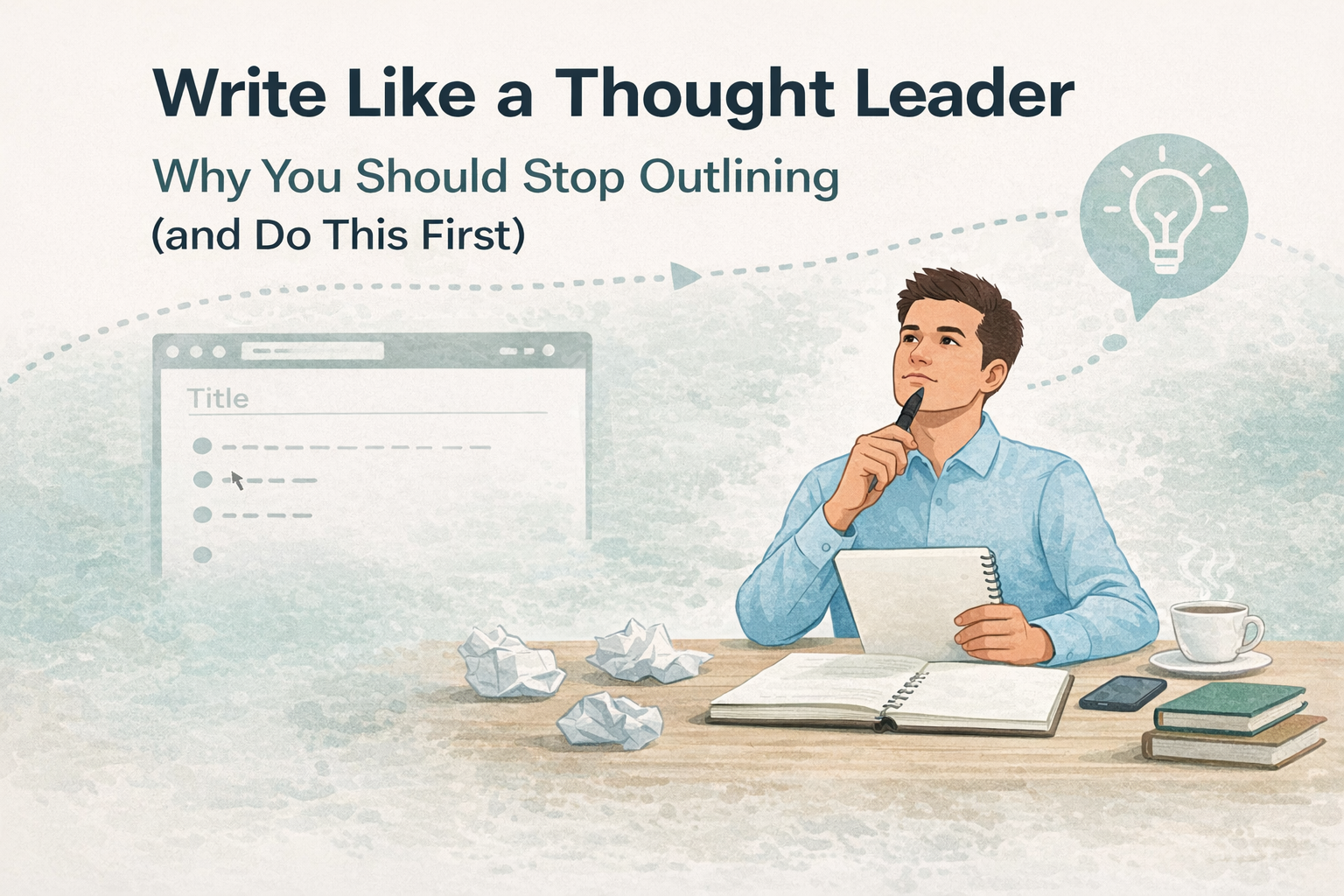
Outlining feels like progress — it’s structured, linear, and feels productive. But for thought leadership books, it’s often the wrong first step.
The most compelling chapters aren’t born from outlines.
They’re born from clarity of idea, not structure.
This post overturns the traditional “outline first” instruction and gives you a repeatable discovery framework that leads to stronger thinking and smoother writing. It’s about thinking on the page before you map the page.
We call this creating your "Author Brain," and what we discovered in when authors do this first, 90% of them go on to finish their book... on time.
Here's how you can do the same.
Who this is for
This is for you if you’ve ever:
stared at your table of contents like it’s a blank page
rewritten your outline more than your manuscript
felt unsure what your chapter is actually about
structured before you understood
The reason isn’t lack of skill. It’s lack of clarity before structure.
The Modern Author lesson
Clarity comes before structure.
Don’t outline what you think you want to say.
Write to discover what you actually need to say.
Outlining is a tool for people who already know what they mean.
Most authors don’t start there — they start with ideas that are hazy, half-formed, or contradictory.
So the first job isn’t outlining.
It’s thinking on the page — exploring your idea until it starts to reveal a natural shape.
The Problem with Outlining First
Outlines assume clarity that often doesn’t exist.
When you start with a table of contents, you’re implicitly saying:
“I already know the structure”
“I already know the key ideas”
“I can organize before thinking”
That rarely matches reality.
Outlining first usually leads to:
chapters that feel flat
ideas that looked good in headings but collapse in prose
endless re-outlining instead of writing
The real bottleneck isn’t lack of structure.
It’s lack of discovered thinking.
The Discovery-First Framework
This alternative sequence has one purpose:
Let your thinking create the structure, not the other way around.
Here’s how the strongest thought leaders actually work:
Step 1) Start with a claim — not an outline
Write one tentative sentence that you believe might be true.
Examples:
“The biggest mistake thought leaders make is outlining too soon.”
“Clarity comes from writing, not planning.”
“Ideas reveal themselves before structure ever does.”
This sentence isn’t your thesis. It’s your entry point.
Why this works:
A claim creates motion. An outline creates a cage.
Step 2) Write to explore the idea
Write 500–800 words with one rule:
Do not edit. Do not outline. Do not shape.
Your job is to:
describe what you think
test the idea against examples
explore contradictions
find where you keep returning
This phase is messy. That’s the point.
Why this works:
Structure hides uncertainty. Writing reveals it.
Step 3) Circle the energy
After the messy draft, highlight:
sentences that feel alive
moments where insight appeared
repetition of key patterns
parts that got easier to write
Ignore transitions, order, and logic for now.
You’re looking for signal, not polish.
Why this matters:
Energy precedes structure. The shape comes from what resonates.
Step 4) Extract your real structure
Now, and only now, outline.
But this outline isn’t hypothetical.
It’s based on what you already wrote.
Your chapters will naturally reveal:
a core tension
repeated themes
supporting ideas
a clear takeaway
Turn those into your table of contents.
Why this works:
You’re structuring discovered thinking, not guesswork.
Step 5) Rewrite with intent
Now rewrite cleanly.
Use:
sharper opening sentences
clearer throughlines
fewer but better developed ideas
a concrete takeaway at the end
This is where craftsmanship matters.
Why this works:
Structure amplifies clarity instead of attempting to force it.
How This Shows Up in Manuscripts Projects
Authors trapped in outline paralysis almost always have the same symptom:
They’re organizing ideas they haven’t yet formed.
In the Manuscripts workflow, we often see these patterns:
chapter headings get rewritten five times
opening paragraphs never arrive
writers switch chapters instead of finish them
drafts linger in half-thought limbo
When authors flip the sequence — discovery first, structure second — progress accelerates dramatically:
ideas become sharper faster
writing feels easier
chapters actually get finished
This is the difference between thinking about your book and thinking in your book.
For may authors, we recommend they leverage our Codex tool, which lets them upload blog posts, articles, their LinkedIn bio, papers, transcripts, etc., then use that to begin to organize.
We call this creating your "Author Brain," and its a powerful way to discover (with help), before you start writing.
Evidence It Works
Pattern Evidence
Across hundreds of nonfiction authors, the most successful chapters start as messy drafts, not polished outlines.
Writing Cortex Evidence
Writers produce clearer prose when they discover ideas in motion rather than impose structure first.
Outcome Evidence
Authors who follow discovery first:
draft faster
revise with confidence
finish more consistently
The structure becomes the echo of the idea — not its source.
When Outlining Still Works First
Outlining first works best when:
the argument is already fully formed
the ideas are stable and practiced
the author can say the chapters out loud before writing
This happens often in technical or procedural writing.
It’s rare in idea-driven, thought leadership books.
Common Mistakes (and How to Fix Them)
Mistake: Writing the outline because it “feels productive.”
Fix: Write one messy draft to test the idea’s real shape.
Mistake: Editing while discovering.
Fix: Separate discovery (writing) from refinement (editing).
Mistake: Keeping everything you wrote.
Fix: Cut ruthlessly once clarity appears.
A Simple Template You Can Copy
Claim: “I think this might be true…”
Discovery Draft: 500–800 words, no editing
Circle Energy: Highlight the parts that sing
Extract Structure: Build an outline from resonance
Rewrite: Clarity first, structure second
This is writing as thinking, not planning as thinking.
Quick FAQ
Should I outline before writing a book chapter?
Not usually. Start by exploring your idea in prose first, then create an outline from what actually worked.
Why does outlining first feel easier?
Because it feels organized. But that organization is often fictional — it hasn’t been tested by real writing yet.
How many words should my discovery draft be?
Aim for 500–800 words per idea cluster. More than that and you lose momentum. Less than that and you don’t explore deeply enough.
The Bottom Line
Outlines don’t create clarity.
Clarity creates outlines.
If you want thought leadership that thinks clearly on the page, you can’t start with structure. You have to write to discover — then let the structure emerge from what you’ve found.
Eric Koester is an award-winning entrepreneurship professor at Georgetown University, bestselling author, and founder of Manuscripts, the Modern Author OS used by more than 3,000 authors. His work has helped creators turn ideas into books, books into brands, and brands into scalable businesses.
About Manuscripts
Manuscripts is the leading full-service publishing partner for modern nonfiction authors. We help founders, executives, coaches, and experts turn their books into growth engines, through positioning, coaching, developmental editing, design, AI-enhanced writing tools, and strategic launch systems. Manuscripts authors have sold thousands of books, booked paid speaking gigs, landed media features, and generated millions in business from their IP.
Work With Us
If you’re writing a book you want to matter, let’s map out your Modern Author Plan.
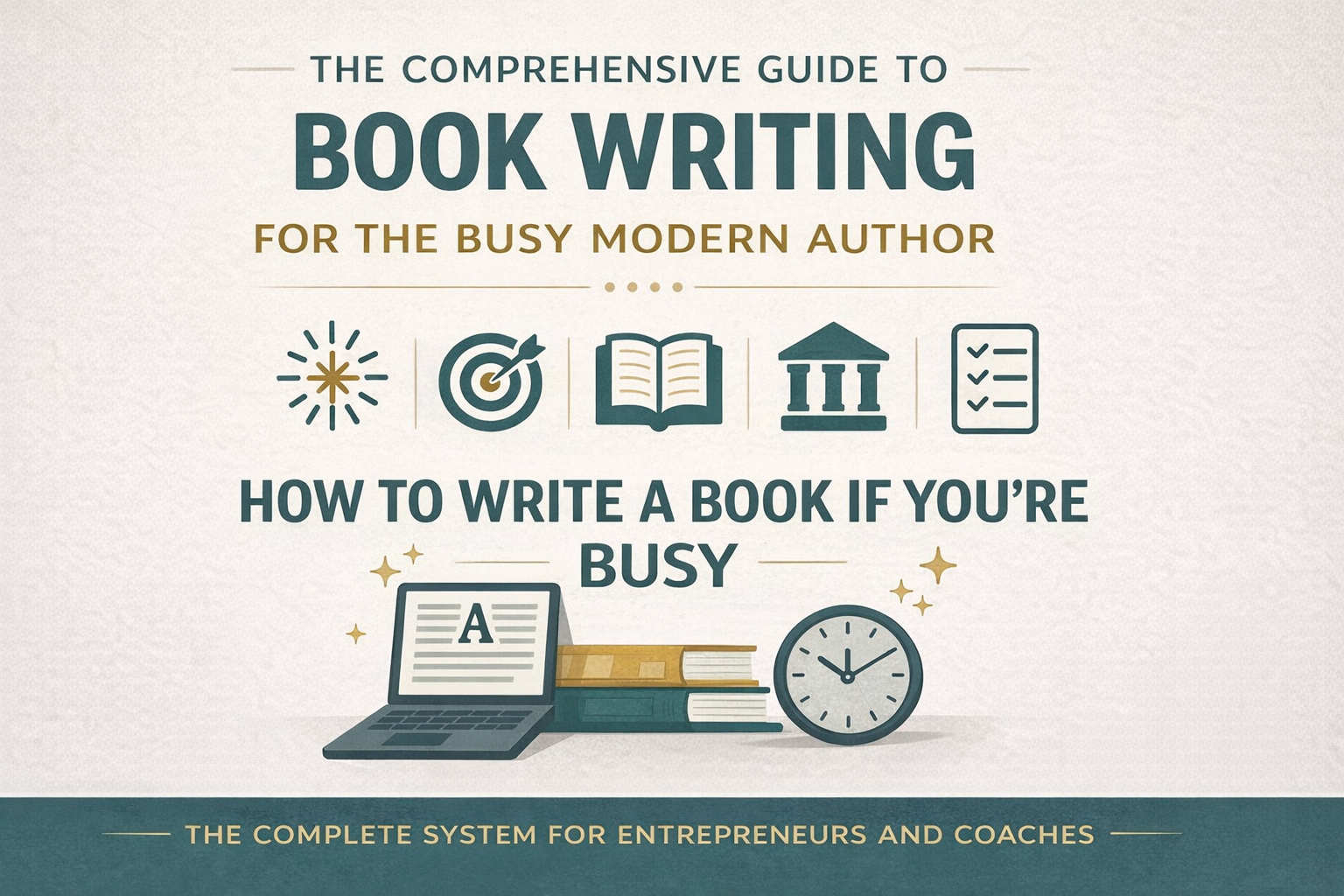
You Don’t Need More Time. You Need a Book Asset Sprint.
If you’re busy, you don’t have a writing problem. You have a sequencing problem.
Most book advice assumes you can disappear for months, write in long quiet blocks, and somehow emerge with a manuscript that changes your business.
That’s fantasy.
You have a job. Clients. A team. A family. A calendar that fights back.
And you really want the book to add value... now (not a several years from now).
So here’s the punchline: you shouldn’t start by “writing a book.”
You should start by building a book-shaped business asset.
That’s what modern authors do differently to have a valuable asset and tool much sooner.
They don’t earn momentum by typing Chapter One. They earn momentum by locking:
the reader and the promise,
the category and tension,
the book spine,
and the business outcome the book will drive.
The typical modern author in our Manuscripts community accomplishes this goal in about 2 to 2.5 hours a week over 10-12 weeks. That's it.
Once those are locked, writing stops feeling like a mystical act and starts feeling like assembly. And you'll have enough confidence to begin to use the future book to land clients, speaking, and new opportunities.
All that in 2 hours a week and less than 90 days.
This guide is built around a simple, unconventional idea:
In 90 days, you won’t have a finished book.
But you can have something more valuable than a half-written manuscript:
A clear promise, a validated spine, and enough proof that you can start using the book as an asset now, while you write it.
That means within 90 days you can credibly say:
“I’m writing a book about X for Y, and it helps you achieve Z,”
and you’ll have a tested introduction and talk,
a table of contents built from templates,
a content inventory mapped to chapters,
and a timeline you can actually execute on with 4–5 hours per week.
This is the difference between “someday I’ll write a book” and “this book is already working for me.”
Because books don’t create outcomes when they’re published.
They create outcomes when they’re positioned and used.
And if you do this right, you’ll start seeing the early wins before the manuscript is even done:
podcast invites
speaking conversations
warmer inbound leads
clearer authority in your market
clients buying your method earlier because they trust the direction
This is the Busy Author Myth, broken:
You don’t need a ghostwriter.
You don’t need ChatGPT to “write your book.”
You don’t need six months off.
You need to gather what you already have, organize it, build a spine that sells, and assemble chapters using proven templates, with AI as an assistant, not an author.
That’s what Manuscripts has helped thousands of modern authors do.
Now you’re going to do it too.
What's Inside This Guide
This guide is built as a plan you can execute, even with a full-time schedule. It’s designed to help you create a book asset in 90 days and finish the manuscript on a realistic timeline, without burnout.
Part I: The Busy Author Myth
1. Why “I’m Too Busy to Write a Book” Is the Wrong Problem
The real bottleneck, and why time management advice fails.
2. The Three Traps That Kill Busy Authors
The Blank Page Trap
The Ghostwriter Trap
The AI Trap (why ChatGPT isn’t your architect)
3. The New Goal: Don’t Write a Book First, Build a Book Asset First
What a “book asset” is, and why it creates confidence, clarity, and momentum.
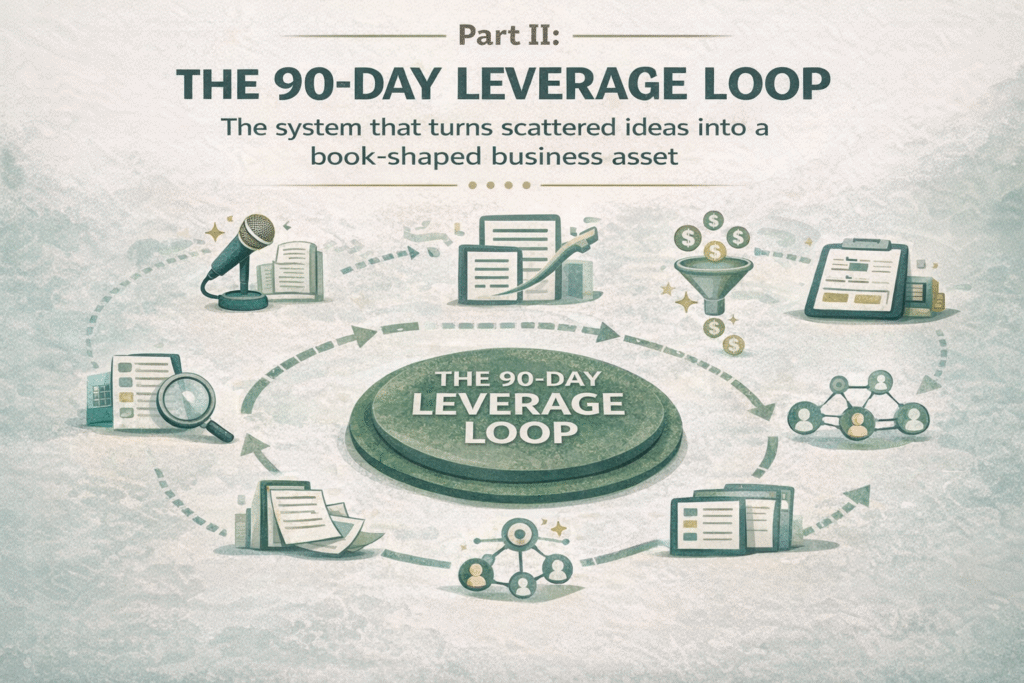
Part II: The 90-Day Leverage Loop
4. The Leverage Loop Overview
The system that turns scattered ideas into a book-shaped business asset.
5. L, Lock the Outcome
How to pick one concrete 90-day outcome (speaking, clients, podcasts, partnerships) and design the book to drive it.
6. E, Extract the Inventory
How to gather your raw material in one hour, and why you already have more book content than you think.
7. V, Validate the Spine
The three assets that create traction fast:
your tension statement
your category promise
your intro as a “talk”
8. E, Engine the Table of Contents
How to build a spine that sells and teaches, without guessing.
9. R, Repurpose into Templates
The 5-block chapter template that makes writing modular and fast.
10. A, Assemble in Sprints
How busy authors write without “writing days”: the 2-sprint cadence that actually holds.
11. G, Generate Proof While You Write
How to produce proof (case snippets, field notes, micro frameworks) so the book starts working before it’s finished.
12. E, Expand Into Offers
How to turn the book into a keynote, workshop, diagnostic, or client pipeline in parallel.
Part III: The Manuscript Plan
13. The Busy Author Timeline (What to Expect, Week by Week)
15. Where AI Actually Helps (Without Ruining Voice)
What to use AI for, what not to use it for, and how to keep your book sounding like you.
16. The “Get Started This Week” Plan
The first 7 days, with the smallest steps that unlock momentum.
Part I: The Busy Author Myth
1. Why “I’m Too Busy to Write a Book” Is the Wrong Problem
When busy professionals say, “I don’t have time to write a book,” they’re not wrong.
They’re just diagnosing the wrong issue.
Time is not the constraint.
Uncertainty is.
Most people assume books fail because authors run out of hours. In reality, they run out of confidence. They don’t know:
what the book is really about
whether the idea is strong enough
how long this will actually take
if the book will do anything meaningful once it’s done
That uncertainty creates friction. Friction kills momentum. Momentum is what busy people rely on.
Time-management advice fails here because it treats book writing like a productivity problem. It’s not.
You don’t need better calendar discipline. You need clarity before commitment.
Busy professionals don’t avoid hard work. They avoid ambiguous work. And nothing feels more ambiguous than opening a blank document and hoping a book emerges.
That’s why “just write a little every day” almost never works for people with real careers. It asks you to invest time without knowing if the outcome will be worth it.
Busy people don’t work that way. They can’t.
Why This Isn’t Theory (And Why That Matters)
Before we go further, you deserve to know where this system comes from.
This isn’t writing advice pulled from a cabin retreat or a single successful book launch.
It’s the result of studying thousands of attempts, not just successes.
Over the past decade, I’ve worked with more than 3,000 nonfiction authors through Manuscripts — entrepreneurs, executives, physicians, professors, consultants, and operators — almost all of them busy, almost all of them starting with the same belief:
“I don’t have time to write a book.”
As an entrepreneurship professor, my job is pattern recognition.
What works. What fails. And why.
So we tracked it.
We looked at:
who finished and who didn’t
how long it actually took
where projects stalled
which decisions correlated with completion
and which decisions multiplied failure rates
What emerged was not a motivational insight.
It was a systems insight.
Nearly all failed book projects shared two characteristics:
They started writing before they had architectural clarity.
They treated the book as a writing project instead of a business asset.
And nearly all finished projects did the opposite.
The authors who finished didn’t:
have more time
write faster
wake up earlier
or love writing more
They had a system that removed ambiguity before asking for effort. AND this lets them start monetizing their future book months before publication.
That’s where the numbers come from:
~98% of nonfiction book attempts fail industry-wide
Over 90% of Modern Authors finish a publishable manuscript once the architecture phase is complete
Not because they’re special.
Because the system is.
This guide is a distillation of that system — not as a publishing product, but as a repeatable operating model for busy people who can’t afford false starts.
If your goal is to write a book, you don’t need inspiration.
You need a system that respects:
limited time
cognitive load
professional stakes
and the reality that a book has to do something once it exists
Everything that follows is built from that lens.
2. The Three Traps That Kill Busy Authors
When time feels scarce, people reach for shortcuts. Unfortunately, those shortcuts usually make things worse.
Here are the three traps that quietly kill most book projects.
The Blank Page Trap
This is the most common one. We see this in roughly two-thirds of stalled manuscripts.
You open a document. You type “Chapter One.” You stare at it. You rewrite the opening sentence six times. Then you close the file.
The problem isn’t discipline. It’s architecture.
A blank page assumes:
you already know what you’re building
the structure will reveal itself as you go
clarity will come after writing
For busy professionals, this is a losing bet.
Without a clear spine, every writing session becomes a decision-making session. And decision fatigue shows up fast when writing competes with real responsibilities.
A blank page isn’t freedom.
It’s cognitive tax.
The Ghostwriter Trap
When the blank page feels impossible, ghostwriting looks attractive. Yet, this is the single most expensive mistake we see first-time authors make.
“Someone else can write it. I’ll just talk.”
But ghostwriting doesn’t remove the hardest parts of writing a book. It delays them.
You still have to:
decide what the book is really about
articulate your unique point of view
approve structure, tone, and argument
live with the book once it’s published
And here’s the deeper issue: authority doesn’t transfer.
Readers don’t just buy information. They buy thinking. Voice. Perspective. Judgment. Lived pattern recognition.
A ghostwritten book may sound polished, but it rarely sounds owned. And ownership is what creates trust, speaking opportunities, and client confidence.
Ghostwriting solves for effort.
It undermines leverage.
The AI Trap (Why ChatGPT Isn’t Your Architect)
AI is powerful. Used well, it can save hours.
Used poorly, it creates false progress. This shows up consistently in projects that never reach a second draft.
The mistake busy authors make is asking AI to generate chapters before they’ve defined:
the category
the tension
the promise
the outcome
AI is excellent at filling in structure.
It is terrible at deciding what structure should exist.
When you use AI without an architectural plan, you get:
generic chapters
blended voices
surface-level insight
content that sounds “fine” but not memorable
AI is a multiplier.
If the input is vague, the output is louder vagueness.
ChatGPT is not your architect.
At best, it’s a very fast assistant.
3. The New Goal: Don’t Write a Book First. Build a Book Asset First.
Here’s the reframe that changes everything:
Your first job is not to write a book.
Your first job is to build a book asset... within 90-days of starting. This is the asset that gives you:
Clarity on what and why you're writing
Momentum to keep you progressing
Opportunities to begin getting value from the asset... even before the manuscript or book are done.
In our author community, 96% of authors who built their book asset (many even did it in less than 90 days), finished and published on time.
A book asset is not a manuscript.
It’s the system that makes the manuscript inevitable.
A book asset includes:
a clear reader and promise
a validated category and tension
an introduction that works as a talk
a table of contents built from proven templates
a realistic timeline you trust
a defined outcome the book will drive
Once you have this, writing stops feeling risky.
You know:
why the book matters
what it’s for
how it fits your life
how long it will take
how it will create leverage before it’s published
That’s why confidence increases before the manuscript exists. When we shifted authors from ‘writing a book’ to ‘building a book asset,’ completion rates changed immediately.
And this is the quiet truth most writing advice misses:
Busy people don’t need motivation to write.
They need certainty that the work is worth doing.
When you build the book asset first, you earn that certainty.
The rest of this guide shows you exactly how to do that, starting with a 90-day system that turns what you already have into momentum, clarity, and early results.
Next, we’ll walk through the 90-Day Leverage Loop, the framework that makes the book start working for you long before it’s finished.
Choose Your Path Before You Start Writing Why most busy authors stall or overspend without realizing it
One of the biggest mistakes busy professionals make is assuming there is a single “right” way to write a book.
There isn’t.
There are different paths, with different tradeoffs, timelines, and risk profiles. Problems arise when authors drift into a path by default instead of choosing one deliberately.
Before you write pages, you need to answer one question:
How much structure, speed, and support do I actually need?
The Three Common Paths Busy Authors Take
Path 1: Do It Alone (DIY Self-Publishing)
What this looks like
Writing in spare time Hiring freelancers as needed Managing the process yourself
Works best if
You have prior book experience You enjoy project management You’re comfortable with slow, uneven progress
Common failure mode
Momentum fades Timelines stretch The book never ships
This path has the lowest financial cost, but the highest completion risk.
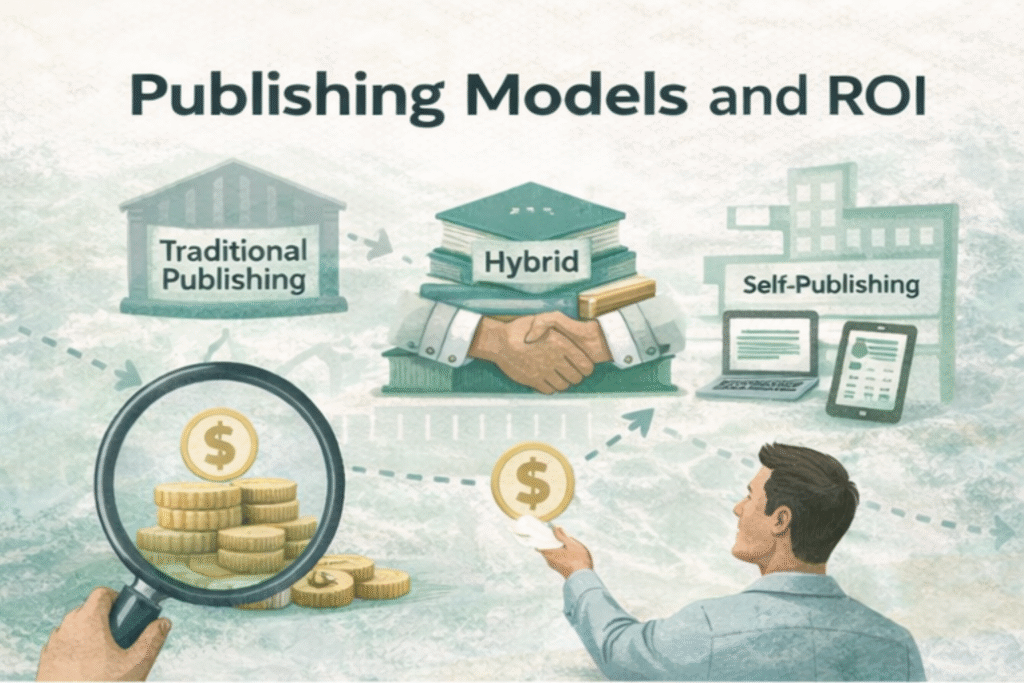
Path 2: Outsource the Book (Traditional or Ghostwritten)
What this looks like
Heavy reliance on agents, publishers, or ghostwriters Limited involvement in day-to-day creation Long timelines and less control
Works best if
Prestige or distribution matters more than speed You’re willing to wait 18–36 months You don’t need early ROI
Common failure mode
The book feels disconnected from the author’s real voice or business ROI arrives late, if at all
This path reduces workload but increases dependency and delay.
Path 3: Use a System (Modern Author Approach)
What this looks like
Clear outcome defined upfront Structured weekly execution Early announcement and presale Support designed around busy schedules
Works best if
You want visible progress in weeks, not years You need ROI before publication You want the book to actively support your business or career
Common failure mode
Underestimating the value of early visibility Waiting too long to commit publicly
This path trades improvisation for intention.
Why Path Selection Matters More Than Motivation
Most stalled books don’t fail because the author lacked discipline.
They fail because:
The chosen path didn’t match the author’s constraints Support arrived too late Structure was added after burnout began
Choosing a path upfront prevents wasted effort and false starts.
A Simple Decision Rule
If you want minimum cost, choose DIY and accept higher completion risk If you want minimum involvement, outsource and accept longer timelines If you want momentum and leverage, choose a system designed for busy authors
None of these paths are wrong.
But drifting between them is.
Bottom line:
Busy authors don’t need more motivation. They need to choose the right path before effort compounds.
Case Study: Nate Androsky and the "No-Time" Myth
Nate Androsky looked like the last person who should write a book.
He was a startup founder working 70+ hours a week, leading a fast-growing team, and running a behavior-science consulting firm. When we first spoke, he said exactly what almost every busy founder says:
“I literally have no time to write a book.”
That statement wasn’t wrong.
It was just incomplete.
Nate didn’t fail because he lacked time.
He failed, until he changed his approach, because the book felt like an open-ended writing project with unclear payoff.
Once that changed, everything else followed.
What Changed (And Why It Matters)
Nate didn’t start by writing chapters.
He started by building clarity.
Before he wrote a single page of his manuscript, we helped him:
define what the book was for (not just what it was about)
clarify the core tension his work resolved
identify the intellectual property already scattered across his work
design a structure that matched how he actually thought and worked
Only after that did writing begin.
This mattered because Nate never had to ask, “Is this worth my time?”
The system answered that question in advance.
Why This Worked for a Founder with No Slack
Three things made the difference, all of them counterintuitive.
First, he didn’t start from zero.
Nate already had years of raw material: podcast episodes, LinkedIn posts, client decks, internal memos, and repeated behavioral insights. The system organized that material before asking him to produce anything new.
Second, he never wrote “like an author.”
He wrote in small, contained blocks, often 500 words at a time, during lunch. There were no heroic writing days and no pressure to move sequentially.
Third, he didn’t write alone.
A developmental editor guided the architecture, reviewed sections as they were drafted, and kept the project bounded. Nate was never guessing what mattered next.
At no point did the book compete with his business.
It was designed to support it.
The Outcome (And the Real Lesson)
The finished book, Decoding the Why, didn’t just get published.
It became the core intellectual property of Nate’s company.
Within the first year, the book supported:
multiple six-figure and seven-figure consulting engagements
speaking opportunities that hadn’t been accessible before
strategic partnerships previously out of reach
visibility that helped propel his company onto the Inc. 5000 list
But here’s the key point for this guide:
Those outcomes were set in motion long before the book was finished.
They began when the book stopped being a vague aspiration and became a defined asset with a clear purpose.
https://www.youtube.com/watch?v=lIeEvzjdVZo
Part II: The 90-Day Leverage Loop
By now, you should be clear on one thing:
If you’re busy, trying to “start writing a book” is the wrong move.
Writing puts pressure on you before you’ve earned confidence.
It forces premature decisions.
It creates anxiety about quality, direction, and payoff.
The solution isn’t discipline.
It’s leverage.
This part introduces the 90-Day Leverage Loop, a system designed for people who can’t disappear for a sabbatical but still want a book that actually does something in the world.
The goal of the next 90 days is not to finish a manuscript.
The goal is to build a book-shaped business asset that gives you:
clarity about what the book is and isn’t
confidence to talk about it publicly
language you can use in bios, pitches, and conversations
a structure that makes writing feel obvious, not fragile
early traction toward speaking, clients, podcasts, or partnerships
By the end of this loop, you should be able to comfortably say and write on your LinkedIn bio:
Author of [Working Title], coming 2026
…and actually mean it.
Not because the book is done.
But because the architecture is locked.
4. The Leverage Loop Overview
The system that turns scattered ideas into a book-shaped business asset
The Leverage Loop is not a writing schedule.
It’s a sequenced asset-building system. Each step creates something usable on its own, while making the next step easier.
Here’s the simple promise:
If you spend 2–3 focused hours per week following this loop, you’ll have a book that already works before you write most of it.
What the Leverage Loop Produces (in less than 90 days)
By design, this system produces visible outputs, not private drafts.
At the end of the loop, you will have:
a locked outcome the book is designed to drive
a clear category and tension statement
a working table of contents
a draft intro you can use as a talk or keynote
a modular chapter template
proof assets generated alongside writing
language you can confidently use in bios, pitches, and LinkedIn
This is why it works for busy people. And allows you to get value from the future book immediately.
Every step creates external leverage, not just internal progress.
The Leverage Loop, at a glance
The loop has seven stages, each mapped to a letter in LEVERAGE:
L — Lock the Outcome
E — Extract the Inventory
V — Validate the Spine
E — Engine the Table of Contents
R — Repurpose into Templates
A — Assemble in Sprints
G — Generate Proof While You Write
E — Expand Into Offers
You’ll move through them sequentially, but they reinforce each other. Progress compounds instead of resetting.
The most important mental shift
Traditional advice says:
Write the book first. Figure out the rest later.
The Leverage Loop flips that:
Figure out what the book is for.
Build the system.
Then write inside it.
This removes the two things that kill busy authors fastest:
uncertainty
second-guessing
Weekly cadence (this matters)
You do not need daily writing.
You need:
one 60–90 minute leverage session
one 60–90 minute light execution session
That’s it.
This loop respects the reality of:
full-time jobs
leadership roles
family
energy limits
It is designed to survive busy weeks, not collapse under them.
Your orientation before moving on
Before you start Section 5, answer this in one sentence:
If this book worked perfectly in 12–18 months, what would it unlock for me?
Don’t overthink it. You’ll sharpen it next.
That sentence is the seed for everything that follows.
What comes next
In the next section, we’ll lock the single most important decision in the entire process:
What concrete outcome this book is designed to drive in the next 90 days.
Not someday.
Not hypothetically.
Now.
That’s where leverage starts.
What a “Book-Shaped Business Asset” Actually Is The 90-day end state you’re building toward, before heavy writing begins
Most authors start writing without a clear picture of what “ready” looks like.
The result is predictable:
Drafts without direction Endless revisions A book that exists, but doesn’t work
The Busy Author System solves this by defining a concrete end state before intensive writing begins.
That end state is what we call a book-shaped business asset.
The 90-Day Book-Shaped Business Asset
A book-shaped business asset is not a finished manuscript.
It is a strategic object that makes the book real to the market and useful to the author, even while it’s still being written.
By the end of the first 90 days, successful authors have built the following:
1. A Clearly Positioned Book Concept
A working title and subtitle A defined audience A clear problem the book solves A point of view the book is known for
The book can be described in one or two sentences without rambling.
2. A Public Author Identity Shift
The book appears in bios, profiles, and websites The author is publicly associated with the topic Conversations reference the book without prompting
The author is no longer “thinking about writing a book.” They are the person writing the book on this topic.
3. A Defined Outcome Path
The author knows what the book is meant to unlock (clients, speaking, training, influence, partnerships) There is clarity on how credibility converts into opportunity Success is defined beyond book sales
This prevents post-publication confusion.
4. A Structural Map of the Book
A complete table of contents Clear chapter intent (not polished prose) An understanding of what belongs in the book, and what doesn’t
Writing becomes execution, not exploration.
5. Early Market Validation
Public announcement completed Early readers or supporters identified Presale or early access interest activated Feedback begins shaping emphasis
The book has an audience before it has page numbers.
6. Initial ROI Signals
Inbound conversations Speaking or collaboration inquiries Consulting or advisory interest Clear evidence that the book changes perception
These signals matter more than draft quality at this stage.
What This End State Solves
Reaching this 90-day end state:
Reduces writing burnout Prevents over-editing Pulls learning forward De-risks further investment Makes finishing the manuscript feel inevitable
The book is no longer fragile.
What This Is Not
A book-shaped business asset is not:
A perfect draft A published product A marketing campaign A promise of bestseller status
It is a working asset, designed to grow in value as the manuscript is completed.
The Reframe That Matters
Traditional advice says: “Finish the book, then make it work.”
The Busy Author System says: “Make the book work, then finish it.”
Bottom line:
If your book can’t function as an asset in 90 days, it’s not ready for heavy writing.
5. L — Lock the Outcome
Pick the one result your book is designed to produce in 90 days
Most people get stuck writing because they’re trying to write a book.
Modern Authors write something else first.
They design a business asset that points toward a very specific outcome, then let the book grow out of that clarity.
This section exists to force that decision.
Not later.
Not after the manuscript.
Now.
The rule that changes everything
Your book cannot serve seven goals.
It can only drive one primary outcome well.
Speaking.
Clients.
Programs.
Community.
Curriculum.
Movement.
Story.
When authors don’t lock this early, they hesitate, hedge, and restart. When they do lock it, writing speeds up and confidence spikes.
This is the moment you choose your lane.
The 7 Modern Author Personas (and what “locking the outcome” actually means)
Based on studying 2,500+ successful authors, we see the same seven models repeat. Your job is not to invent a new one. It’s to choose the one you’re already becoming.
Read these and pick the one that feels obvious, not aspirational.
1. The Builder
📦 Turns ideas into scalable systems
You’re building:
A low- or mid-ticket product that solves a clear problem. Think systems, templates, operating models, or toolkits.
Your 90-day outcome looks like:
a beta version of a product
a waitlist or pilot cohort
a clearly defined “OS” or framework
How the book works for you:
The book becomes the intellectual backbone of your system. It explains the “why” and the logic so your product can do the “how.”
If this is you, lock this outcome:
“In 90 days, I want a product-ready framework I can sell or pilot.”
Examples:
Justin Welsh, Codie Sanchez, Nicole Bianchi
2. The Coach
🔑 Turns ideas into transformation
You’re building:
Trust-based relationships through 1:1 coaching, masterminds, or small group programs.
Your 90-day outcome looks like:
qualified inbound coaching conversations
a clear coaching philosophy and method
credibility to charge premium rates
How the book works for you:
The book becomes your pre-coaching filter. People arrive already aligned, already trusting your thinking.
If this is you, lock this outcome:
“In 90 days, I want the book to attract the right coaching clients.”
Examples:
Rich Litvin, Lisa Bilyeu, Navid Nazemian
3. The Speaker
🎤 Turns ideas into moments
You’re building:
A platform that leads to keynotes, workshops, and stage invitations.
Your 90-day outcome looks like:
a talk-ready message
a clear “why this matters now” narrative
the confidence to pitch yourself as an author-speaker
How the book works for you:
The book becomes your stage amplifier. It signals authority and gives bookers language to introduce you.
If this is you, lock this outcome:
“In 90 days, I want a book-shaped idea I can speak from.”
Examples:
Mel Robbins, Kindra Hall, Gregory Offner
4. The Teacher
📚 Turns ideas into curriculum
You’re building:
Structured learning journeys for companies, institutions, or certification programs.
Your 90-day outcome looks like:
a clear curriculum spine
modules or learning objectives
language that resonates with organizations
How the book works for you:
The book becomes your curriculum manifesto. It proves you can teach, not just inspire.
If this is you, lock this outcome:
“In 90 days, I want a curriculum-ready framework.”
Examples:
Priya Parker, Nir Eyal, Randi Braun
5. The Guide
🏕️ Turns ideas into community
You’re building:
Belonging, identity, and shared progress through cohorts, memberships, or peer groups.
Your 90-day outcome looks like:
a defined community promise
a shared language and worldview
a reason for people to gather around you
How the book works for you:
The book becomes your campfire. It names the journey and invites people in.
If this is you, lock this outcome:
“In 90 days, I want a book that anchors a community.”
Examples:
Seth Godin, Tiago Forte, Hilary DeCesare
6. The Catalyst
🚩 Turns ideas into movements
You’re building:
Belief-driven momentum around a cause, mission, or cultural shift.
Your 90-day outcome looks like:
a clear rallying cry
shared language for action
early allies and advocates
How the book works for you:
The book becomes a flag in the ground. It says, “This matters, and here’s why.”
If this is you, lock this outcome:
“In 90 days, I want language that mobilizes others.”
Examples:
Simon Sinek, Arianna Huffington, Valeria Aloe
7. The Storyteller
📖 Turns ideas into art
You’re building:
Emotional resonance, reflection, and narrative-driven influence.
Your 90-day outcome looks like:
a coherent story arc
clarity on what the story means
confidence to share your truth publicly
How the book works for you:
The book becomes the work itself, but it still creates leverage through speaking, media, or advocacy.
If this is you, lock this outcome:
“In 90 days, I want a story I can stand behind.”
Examples:
Elizabeth Gilbert, Morgan Housel, Johnny Savage
Your one required decision (do this now)
Answer this, in writing:
“I am writing this book primarily as a [persona], so that in 90 days I can [specific outcome].”
If you can’t finish that sentence, do not move on.
This decision will shape:
your table of contents
your intro
your examples
what you say yes and no to
It’s the difference between momentum and drift.
Why this matters more than writing pages
Once the outcome is locked:
decisions get easier
imposter syndrome quiets down
you stop rewriting the same chapter
You’re no longer “trying to write a book.”
You’re building leverage on purpose.
Choosing the Right Author Model (Before You Write Pages)
By this point, most authors know why they want to write a book.
What they often haven’t clarified is something more important:
How is this book supposed to create leverage once it exists?
In the Manuscripts workflow, this question is answered by identifying the author model before writing begins.
Not after.
Not at launch.
Before pages pile up.
What an Author Model Is (and Isn’t)
An author model is not:
A publishing method
A genre
A marketing channel
An author model is:
The primary way an author converts credibility into outcomes.
It defines how authority turns into revenue, influence, or opportunity.
Two authors can write equally strong books and see radically different results because their author models are different.
Why Author Model Alignment Matters
Across Manuscripts projects and interviews with successful modern authors, we see the same pattern:
Some books generate ROI quickly but cap out
Some scale slowly but compound over time
Some feel successful emotionally but struggle to justify investment
Some unlock opportunities far beyond book sales
The difference is not effort or writing quality.
It’s model alignment.
The Four Author Models We See Most Often
Below are the dominant author models we see, along with their strengths and constraints. None are “wrong.” But they are not interchangeable.
1. Coaches and Consultants
High intimacy. Lower scale ceiling.
How leverage shows up
One-on-one consulting
Advisory retainers
Small-group coaching
What works well
Fast early ROI
Clear conversion from book to conversation
Strong trust-building
Primary constraint
Time-based delivery limits scale
Common mismatch
Writing for reach instead of relevance
Expecting a book to create scale without changing the delivery model
Books work extremely well here when expectations are realistic. Without leverage design, they plateau.
2. Trainers and Educators
Moderate scale. Infrastructure-dependent.
How leverage shows up
Workshops
Cohorts
Certifications
Organizational training
What works well
Strong mid-term ROI
Repeatable delivery
Group leverage
Primary constraint
Requires systems, curriculum, and marketing beyond word of mouth
Common mismatch
Building programs before validating demand
Underestimating operational complexity
Books can become powerful curriculum anchors here, but only when paired with delivery systems.
3. Business Owners and Speakers
Highest scale potential.
How leverage shows up
Paid speaking
Enterprise engagements
Platform-driven offerings
Partnerships and visibility
What works well
Fastest ROI velocity
Largest upside
Strong alignment between book and authority
Primary constraint
Requires visibility and positioning discipline
Common mismatch
Treating the book as a product instead of a credential
Waiting until publication to activate authority
For this model, books are not revenue engines. They are accelerants.
4. Business and Personal Memoirists
Lowest clarity without intentional design.
How leverage shows up
Speaking
Media
Organizational influence
Adjacent offerings tied to story
What works well
Emotional resonance
Trust and relatability
Long-term brand building
Primary constraint
No inherent business pathway
Common mismatch
Assuming story alone creates leverage
Writing without a defined post-book plan
Memoirs can work, but only when explicitly connected to a delivery or influence model.
The Mistake That Creates Disappointment
Most book disappointment doesn’t come from weak writing.
It comes from assuming:
All books scale the same way
All authority converts automatically
All outcomes show up at publication
They don’t.
Books amplify the model they sit inside.
Why This Decision Comes Before Writing
Author model identification happens early in the Modern Author system for one reason:
You can’t write a strategically aligned book without knowing how it’s meant to work in the world.
This decision shapes:
What the book emphasizes
What it leaves out
How it’s positioned
How success is measured
Without this clarity, even well-executed books struggle to deliver satisfying outcomes.
Bottom line:
Books don’t fail because authors lack ambition.
They fail because the book was designed for the wrong model.
What’s next
In Section 6, we extract your existing inventory so you can see how much of this book already exists, and how quickly it can come together once the outcome is clear.
6. E — Extract the Inventory
How to gather your raw material in one hour (and why you already have more book content than you think)
Most busy professionals don’t have a writing problem.
They have a scattered knowledge problem.
Your ideas aren’t missing.
They’re just fragmented across years of work, conversations, notes, and artifacts you’ve never looked at all at once.
This step fixes that.
The goal here is not to write.
It’s to collect and centralize your author brain so the book stops feeling imaginary.
The mindset shift that makes this work
Do not ask:
“What should I write?”
Ask instead:
“What have I already explained, repeated, taught, or solved?”
Books don’t come from invention.
They come from pattern recognition.
This step exists to surface those patterns fast.
What “inventory” actually means
Your inventory is not polished writing.
It’s raw material that proves:
what you already know
what people already ask you
what you already repeat without thinking
It includes anything where your thinking shows up.
Examples:
podcast interviews (hosted or guest)
slide decks and workshops
emails you’ve written more than once
client explanations you give on autopilot
LinkedIn posts that sparked real replies
voice notes, outlines, or personal notes
recorded trainings or internal memos
research you keep citing
If you’ve explained it twice, it belongs here.
The One-Hour Extraction Sprint (do not overthink this)
Set a timer for 60 minutes.
You are not allowed to organize yet.
Step 1 (10 minutes): Create the container
Open a single document or spreadsheet titled:
BOOK INVENTORY — RAW
Create six sections:
Talks / Presentations
Writing / Posts
Conversations / Interviews
Client Stories / Examples
Frameworks / Repeated Ideas
Notes / Fragments
That’s it. No subfolders. No color-coding.
Step 2 (30 minutes): Dump everything
Move fast. List titles or short descriptions only.
Examples:
“Keynote: Why Most Leaders Misdiagnose Burnout”
“Podcast episode on decision fatigue”
“Email explaining pricing strategy (sent 5x)”
“Client story about stalled growth”
“Framework I sketch on whiteboards”
“Voice note about starting before ready”
Do not judge quality.
Do not ask if it’s “book-worthy.”
If it exists, it goes in.
Most people end up with 40–100 items in this step alone.
Step 3 (10 minutes): Mark the repeats
Now scan your list and add a simple marker:
⭐ = this keeps coming up
🔁 = I’ve explained this multiple times
⚡ = people react strongly when I share this
You’re not organizing yet.
You’re identifying energy.
Patterns always show up faster than people expect.
Step 4 (10 minutes): Write one sentence
At the bottom of the document, answer this:
“Looking at this list, my book is probably about __________.”
Do not aim for precision.
Aim for direction.
This sentence will evolve, but it anchors the next step.
Across thousands of Manuscripts projects, authors usually discover:
40–60% of their book already exists
their strongest ideas repeat naturally
their book is narrower (and better) than expected
This is where anxiety drops and confidence rises.
You’re no longer inventing.
You’re curating.
Common resistance points (and how to move past them)
“This feels messy.”
Good. Mess is where signal hides.
“Some of this is old.”
Old ideas are often unarticulated assets.
“I don’t know what to keep.”
You’re not keeping yet. You’re collecting.
“I thought writing would come next.”
Writing comes after clarity. Always.
What you should have at the end of this section
By the end of Section 6, you should have:
one centralized inventory document
a visible body of existing material
10–20 items marked with ⭐ or 🔁
a rough sentence describing what the book might be about
That’s enough to move forward.
You now have raw leverage.
Do not skip this next move
Before you move on, do one small but important thing:
Rename the document to:
BOOK INVENTORY — v1
Versioning matters psychologically.
It signals this is real work, not a brainstorm.
What comes next
In Section 7, we’ll validate the spine of the book by pressure-testing three assets that create traction fast:
your tension statement
your category promise
your intro as a “talk,” not a chapter
This is where the book stops being private and starts becoming useful.
Good, this is the right moment for Section 7. This is where the guide stops feeling like “smart theory” and starts feeling dangerously executable.
7. V — Validate the Spine
The three assets that create traction before you write a chapter
Most authors try to validate a book after it’s written.
That’s backwards.
Busy authors validate before they invest hundreds of hours. The goal of this step is simple:
make the book feel inevitable, not hypothetical.
By the end of this section, you’ll have three assets you can use immediately, even if the book is a year away.
The principle: clarity beats confidence
You don’t gain confidence by “believing in yourself.”
You gain confidence when:
your idea sharpens
your language sticks
other people recognize themselves in it
That’s what this step is for.
Asset #1: The Tension Statement
The problem your book exists to resolve
Every strong book is built around tension, not information.
If your book doesn’t clearly challenge something the reader already believes, it won’t move them.
Your tension statement follows this structure:
“Most people believe X, but that leads to Y.
This book shows a better way: Z.”
Examples:
“Most leaders think clarity comes from strategy, but it usually comes from better conversations.”
“Most professionals think they need more time to write a book, but what they actually need is a system.”
To-do (15 minutes):
Write 3 versions of your tension statement.
Say them out loud.
Keep the one that feels slightly uncomfortable but true.
If it feels safe, it’s too weak.
Asset #2: The Category Promise
Where this book belongs (and why it’s different)
Busy authors stall because they’re secretly trying to write every book at once.
This step forces a boundary.
Your category promise answers one question:
“If someone sees this book mentioned, what mental shelf does it go on?”
Use this simple formula:
“This is a book about [topic] for [specific reader] who want [specific outcome].”
We typically find books that define new categories are based on two distinct approaches:
Defining a type of person
Defining a type of action
Type of Person
Category-defining books often describe a new type of person, a person who your readers may aspire to be or become. Examples include: Originals by Adam Grant; Outliers by Malcolm Gladwell; Untamed and Love Warrior by Glennon Doyle; and even the Hunger Games series by Suzanne Collins defined a new fictional character persona through Katniss Everdeen (the pure heroine).
Type of Action
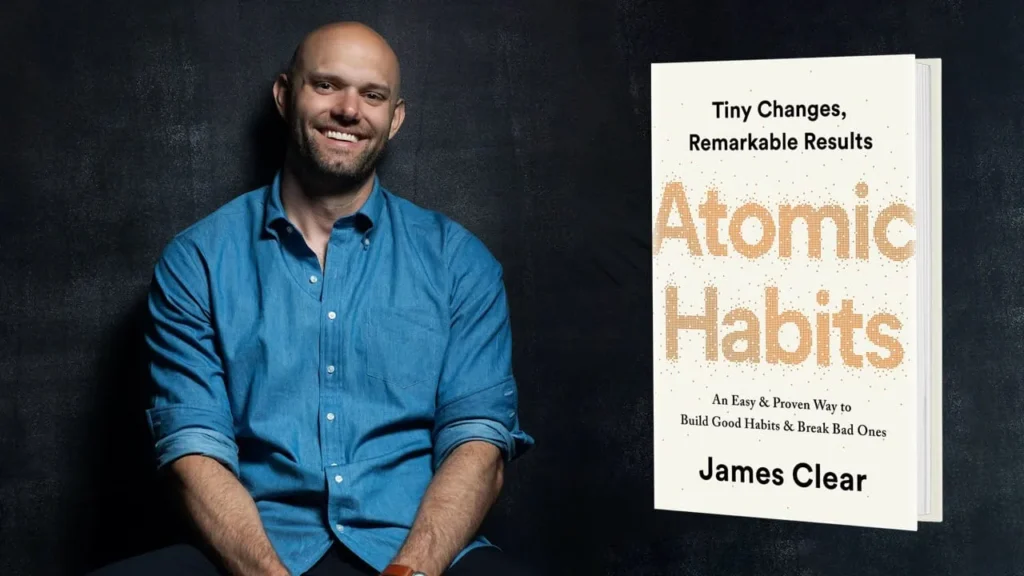
Category-defining books often describe a new type of action, an action your readers may aspire to do or do more. Examples include: Start with Why by Simon Sinek; Lean In by Sheryl Sandberg, Eat, Pray, Love by Elizabeth Gilbert; Daring Greatly by Brene Brown; Atomic Habits by James Clear; and even novels like Ready Player One by Ernest Cline defined a new action in virtual reality, and They Both Die at the End by Adam Silvera defined a new YA story genre about living vs. dying.
To be clear, these are not the only reasons these books did well, but by defining a new category it enables them to capture an underserved niche quickly. Most of these books mentioned above have had ‘fast followers’ of other books similarly themed and designed to capture the momentum they created.
Examples:
“A book about leadership conversations for senior managers navigating change.”
“A book about modern authorship for professionals who want leverage, not royalties.”
To-do (20 minutes):
Write your category promise.
Then write the anti-category:
“This is not a book about…”
List 3 things it deliberately avoids.
Constraints create focus. Focus creates speed.
Asset #3: The Intro as a Talk
The fastest way to pressure-test your book idea
This is the most important move in the entire guide.
Instead of writing an introduction, you design a 12–15 minute talk that could become the introduction.
Why this works:
Talks force clarity.
Talks expose weak ideas fast.
Talks give you immediate feedback.
Your intro-talk needs only four beats:
The Moment A real scene or realization that made the problem unavoidable.
The Friction What wasn’t working, even though you were “doing the right things.”
The Insight The shift in how you now see the problem.
The Invitation What this book will help the reader do differently.
To-do (30–45 minutes):
Outline this talk on one page.
Record yourself explaining it (voice memo is fine).
Notice where you ramble or get excited. That’s signal.
If you can talk the book, you can write the book.
How to validate (without overthinking)
Once you have these three assets, validate them lightly.
You are not launching.
You are listening.
Pick one validation channel:
a LinkedIn post
a short email to trusted peers
a podcast pitch or guest appearance
a live workshop or internal talk
Share one of the assets, not all three.
Look for:
“This is exactly what I’m dealing with.”
“I’ve never heard it framed that way.”
“When can I read this?”
That’s traction.
Silence means revise, not quit.
Why this step changes everything
After this section, three things happen:
You stop second-guessing the direction.
You have language you can reuse everywhere.
You earn the right to say: “Author of [Working Title], coming [Year].”
That line isn’t a lie.
It’s a commitment backed by structure.
What’s next
In Section 8, we’ll turn these validated assets into a table of contents that sells and teaches, without guessing and without outlining yourself into paralysis.
8. E — Engine the Table of Contents
How to build a spine that sells and teaches, without guessing
Most authors think a table of contents is an outline.
It’s not.
A table of contents is a sales argument, a learning path, and a promise of transformation rolled into one. If it’s weak, the book feels heavy before a single page is read.
Busy authors don’t need a clever TOC.
They need one that does the work for them.
The core rule: your TOC is a sequence of decisions
A strong table of contents answers three questions, in order:
Why should I trust this book?
How does this change the way I think?
What can I now do that I couldn’t do before?
If your chapters don’t clearly progress through those stages, readers stall, and so do authors.
Step 1: Choose the spine, not the chapters
Forget chapter titles for now.
Instead, define the spine, the 4–6 major shifts the reader must go through to reach the outcome you locked in Section 5.
Use this sentence to guide you:
“By the end of this book, the reader will move from A to B.”
Examples:
from scattered expertise to a repeatable framework
from invisible authority to paid speaking opportunities
from ideas stuck in notes to a working book-shaped asset
To-do (15 minutes):
Write the “from → to” statement.
Break the journey into 4–6 stages.
These stages become Parts, not chapters.
If you can’t name the stages, you’re not ready for chapters yet.
Step 2: Design chapters as jobs, not topics
Here’s the mistake that kills momentum:
“This chapter is about mindset.”
“This chapter explains my philosophy.”
That’s content. Not function.
Every chapter should have a job.
Use this format:
“After this chapter, the reader will be able to ______.”
Examples:
identify the real constraint holding them back
reframe a belief that’s blocking action
apply a specific tool in their work this week
To-do (30 minutes):
Draft 8–14 chapter “jobs.”
One sentence each.
No clever titles yet.
If a chapter doesn’t change behavior, it doesn’t earn its place.
Step 3: Match chapters to your leverage outcome
This is where the book becomes a business asset.
Every chapter should support the outcome you locked in:
If a chapter doesn’t clearly reinforce the outcome, cut or merge it.
Busy authors don’t have room for vanity chapters.
Step 4: Write titles that signal value, not cleverness
Your chapter titles have one job:
make the reader feel progress.
Strong titles usually include:
a promise
a tension
or a clear result
Weak titles sound like essays. Strong ones sound like moves.
Examples:
Weak: Rethinking Productivity
Strong: Why More Time Never Solves the Real Problem
To-do (20 minutes):
Rewrite every title so it implies change.
If you can swap titles between chapters, they’re too vague.
Specificity builds trust.
Step 5: Pressure-test the TOC before writing
Before you write a word, test the table of contents itself.
Here’s how:
Read it top to bottom out loud.
Ask: “Would I pay attention to this if it wasn’t mine?”
Share the TOC with one smart person in your target audience.
Look for:
“I want Chapter 4 right now.”
“I didn’t know books like this existed.”
“This feels like exactly what I need.”
That’s your green light.
What this unlocks
Once the TOC is engineered:
writing becomes modular
chapters stop feeling fragile
you can work out of order without losing coherence
You’ve turned the book from a foggy idea into a machine.
What’s next
In Section 9, we’ll install the 5-block chapter template that makes writing fast, modular, and interruption-proof, so even 30-minute sprints move the book forward.
9. R — Repurpose Into Templates
The 5-block chapter template that makes writing modular and fast
Busy authors don’t fail because they lack discipline.
They fail because every chapter feels like starting from zero.
Templates solve that.
Not rigid, paint-by-numbers templates, but structural containers that let your ideas drop into place without draining your energy.
This is the exact shift that turns writing from an emotional project into a repeatable system.
The core idea: chapters are modules, not masterpieces
A modern nonfiction chapter is not a literary event.
It’s a unit of value that does one job for the reader.
When every chapter follows the same internal logic:
you can write out of order
you can stop and restart without friction
you can hand sections to editors or collaborators cleanly
That’s how busy authors finish.
The 5-Block Modern Author Chapter Template
Every chapter uses the same five blocks.
You don’t invent structure each time. You fill it.
Block 1: The Hook (Context + Tension)
Purpose: earn attention immediately.
This is not a clever anecdote. It’s a moment of recognition.
Good hooks do one of three things:
name a frustration the reader feels
challenge a belief they’ve been operating under
describe a moment they recognize from their own life
Examples:
“Most smart people don’t fail because they’re lazy. They fail because they’re unclear.”
“I thought outlining would make writing easier. It did the opposite.”
To-do:
Write 3 possible hook sentences. Pick the one that feels most true, not most clever.
Block 2: The Reframe (What’s actually going on)
Purpose: shift how the reader sees the problem.
This is where you:
explain why the obvious advice doesn’t work
introduce a new lens
show the pattern behind the pain
This is thinking work, not storytelling.
Prompt:
“The real problem isn’t ___ . It’s ___.”
Block 3: The Framework (Your intellectual property)
Purpose: give the reader something to hold onto.
This is where:
builders introduce systems
coaches introduce distinctions
speakers introduce repeatable ideas
teachers introduce models
guides introduce shared language
Formats that work well:
3–5 step frameworks
named principles
decision trees
simple diagrams
Rule:
If this block can’t be summarized in one sentence, it’s too fuzzy.
Block 4: The Proof (Why this works)
Purpose: build trust without over-explaining.
Proof can be:
a case snippet
a pattern observed across clients
a personal before/after
a quick data point
This is not a full case study. It’s evidence that this isn’t theory.
Prompt:
“I’ve seen this show up when…”
Block 5: The Move (Reader action)
Purpose: convert insight into momentum.
Every chapter ends with one clear move, not ten tips.
Examples:
one question to answer
one behavior to try this week
one sentence to rewrite
one decision to make
Rule:
If the reader does this one thing, the chapter worked.
Why this template works for busy authors
Because it:
reduces cognitive load
prevents perfection spirals
makes partial progress feel complete
allows writing in short sprints
You’re no longer “writing a chapter.”
You’re filling five blocks.
For Manuscripts authors, we've taken this a step further and deconstructed the chapters of over 125 of the top nonfiction authors. The blocks will give you the raw content, then once an author finds the "voice prints" (aka the author styles they most resonate with), you can quickly build this into a structure that can become a 3,000 to 5,000 word chapter.
But don't get stressed about this at this point as much of this can be done as you begin building the manuscript (often with support) after you've gotten the foundation built.
How to use this in practice
Weekly cadence (2–3 hours total):
Sprint 1: Blocks 1–3 (thinking + structure)
Sprint 2: Blocks 4–5 (proof + action)
That’s it.
No marathon sessions. No waiting for inspiration.
What this unlocks downstream
Once chapters are modular:
editors can work faster
AI tools can assist safely
content can be repurposed into talks, posts, and workshops
the book starts functioning as an asset before it’s finished
This is how books get written and used at the same time.
What’s next
In Section 10, we’ll lock in the 2-sprint cadence that busy authors actually maintain, even with full-time jobs, families, and zero writing days.
10. A — Assemble in Sprints
How busy authors write without “writing days”: the 2-sprint cadence that actually holds
Most writing advice assumes you have:
long stretches of uninterrupted time
control over your calendar
emotional energy on demand
Busy authors have none of that.
So instead of chasing ideal conditions, this system designs around reality.
The core shift: stop planning writing days, start protecting sprints
Writing days are fragile.
They get postponed, canceled, or mentally sabotaged.
Sprints are resilient.
A sprint is:
short
specific
scoped to one outcome
easy to restart after interruption
This is how people with real lives finish books.
The 2-Sprint Weekly Cadence
You only need two sprints per week.
Not per day.
Not per morning.
Per week.
Each sprint is 30–45 minutes.
That’s it.
Sprint 1: Structure Sprint (thinking work)
Focus:
Block 1–3 of the chapter template
clarity, framing, and logic
You are:
choosing the hook
naming the reframe
outlining the framework
This sprint often feels energizing because it’s decision-making, not wordsmithing.
Sprint 2: Assembly Sprint (execution work)
Focus:
Block 4–5 of the chapter template
proof and reader action
You are:
dropping in examples
adding case snippets
defining the one move for the reader
This sprint feels lighter because the hard thinking is already done.
Why two sprints work when everything else fails
Because:
you never face a blank page
you stop mid-momentum on purpose
each sprint produces a “done” unit
missing a week doesn’t collapse the system
Momentum comes from completeness, not volume.
What a real week looks like
Here’s a realistic schedule for a full-time professional:
Tuesday lunch: 35-minute Structure Sprint
Friday morning or Sunday afternoon: 40-minute Assembly Sprint
That’s ~75 minutes.
Do that for 12 weeks and you don’t just have pages.
You have initial chapters that already work as assets.
The anti-burnout rule
Never do two sprints back-to-back.
Spacing matters.
Why:
it gives your brain time to incubate
ideas improve between sessions
writing feels easier when you return
This is how busy authors avoid the “I hate my book” phase.
What to do when life blows up
Because it will.
If you miss a week:
do not “catch up”
do not double sprint
do not apologize to yourself
Just resume with the next sprint.
The system is designed for interruption.
The hidden benefit: confidence compounding
After 2–3 weeks, something shifts.
You start to think:
“I know how this book gets written”
“I can trust this process”
“This is actually happening”
That confidence is what allows you to:
talk about the book publicly
add it to your bio
pitch conversations, talks, or interviews
use the future book as leverage
Before the book exists.
What’s next
In Section 11, we’ll show how to generate proof while you write, so the book starts producing credibility, examples, and signal long before publication.
When ROI Actually Starts Why modern authors see results before their book is finished
One of the most damaging myths in publishing is that return on investment begins at publication.
It doesn’t.
Across Manuscripts projects and interviews with modern authors, the most consistent pattern we see is this:
Meaningful ROI often begins within 90 days of publicly announcing the book.
Not when it ships. Not when reviews appear. When the book becomes real to the market.
What “ROI” Means at This Stage
At 90 days, ROI does not look like bestseller lists.
It shows up as:
Inbound conversations Speaking or podcast inquiries Consulting or advisory interest Internal credibility and momentum Clearer positioning in the market
These signals matter because they change the author’s opportunity landscape, even before a manuscript is complete.
Why ROI Appears Before Publication
Early ROI is not accidental. It’s structural.
1. Identity Shift Triggers Authority
Once a book is named and positioned publicly:
Conversations change Assumptions shift The author is perceived as “the person writing the book on this topic”
Authority does not wait for page numbers.
2. Visibility Creates Learning
Public positioning creates feedback.
What resonates becomes clear What confuses people surfaces early Messaging improves while stakes are low
This reduces risk and sharpens outcomes.
3. Demand Is Activated Early
Presale, early access, and reader invitations: Validate the idea Pull revenue forward Build momentum before launch
By the time the book is published, it already has a market.
What Does Not Count as ROI (Yet)
To avoid false confidence, it’s important to be precise.
These are progress indicators, not ROI: Word count Draft completion Private praise Amazon rankings without downstream impact
Progress matters. But ROI is about changed opportunity, not output.
Why This Timing Matters for Busy Authors
Executives and professionals don’t have the luxury of waiting 18–24 months to know whether a project was worthwhile.
The Modern Author approach compresses learning and payoff into the early phase, when: Adjustments are still easy Investment is still flexible Confidence is still forming
This is how books become manageable instead of draining.
Bottom line:
If nothing changes within 90 days of announcement, something upstream is missing. If opportunities begin appearing early, the book is doing its job.
11. G — Generate Proof While You Write
How to produce credibility, traction, and signal before the book is finished
Most authors wait until the book is done to collect proof.
That’s backward.
Modern Authors generate proof as a byproduct of writing, not as a separate phase at the end. This is how the book starts working months, sometimes years, before publication.
If you’re busy, this step is non-negotiable.
The core idea: proof is created, not discovered
Authors think proof means:
testimonials after launch
sales numbers
press mentions
Those are outcomes.
What you actually need while writing is working proof, evidence that:
the ideas resonate
the framework holds
the language lands
the problem is real
That kind of proof can be generated in small, controlled ways while the book is still forming.
The three kinds of proof every modern author needs
You’re not trying to prove everything.
You’re trying to prove three specific things.
1) Pattern Proof
“Is this problem real, and does it repeat?”
Pattern proof shows that your insight isn’t a one-off.
Examples:
“I’ve seen this same issue with 20+ founders.”
“This question comes up in every workshop.”
“Three different clients described this in almost identical language.”
How to generate it (15–30 minutes):
Review old emails, DMs, or client notes.
Highlight repeated phrases or frustrations.
Drop those verbatim into a “Field Notes” doc.
These become quotes, anecdotes, and framing inside chapters.
2) Field Proof
“What happens when someone tries this?”
Field proof comes from testing ideas in public, lightly and safely.
Examples:
a LinkedIn post that introduces a framework
a short workshop segment
a podcast explanation of one chapter idea
You’re not launching. You’re sampling.
How to generate it (1–2 hours total):
Take one chapter framework.
Teach it once, anywhere.
Capture reactions, questions, objections.
The feedback tells you what to sharpen.
3) Language Proof
“What words actually stick?”
This is the most overlooked and most valuable proof.
Language proof tells you:
which phrases people repeat
which metaphors land
which titles spark curiosity
How to generate it (ongoing):
Watch how people respond when you explain the idea.
Note what they quote back to you.
Pay attention to what they ask next.
That language goes straight into:
chapter titles
hooks
book descriptions
talk abstracts
Where proof shows up in the book
As you write, proof gets woven into:
Block 4 (The Proof) of every chapter
intros and reframes
case snippets
credibility signals without bragging
This keeps the book grounded and persuasive.
The proof flywheel
This is how it compounds:
You share an idea in draft form
Someone responds or tries it
You capture the response
That response strengthens the chapter
The chapter becomes easier to share
Each loop makes the book sharper and more useful.
What this unlocks before publication
By the time the book is halfway written, you’ll have:
real examples, not hypotheticals
tested language
audience feedback
early demand signals
Which means you can:
pitch talks with confidence
reference the book publicly
attract collaborators and partners
avoid the “hope this works” feeling
This is why busy authors feel calmer when they write this way.
A simple weekly proof note
At the end of each week, answer one question:
“What proof did I generate or notice this week?”
Write one paragraph.
That’s it.
Those notes turn into:
chapter upgrades
future marketing
credibility assets
What’s next
In Section 12, we’ll show how to expand the book into offers in parallel, so the book and the business grow together instead of sequentially.
Presale Activation Why modern authors validate demand before the book exists
Presale is often misunderstood.
Most people think of it as an Amazon setting or a launch-week tactic. In practice, presale is something much more important:
Presale is a validation and activation system that pulls outcomes forward in time.
For modern authors, presale is not about hitting a list. It’s about proving the book deserves to exist before full investment.
What Presale Actually Does
A well-run presale campaign accomplishes four things simultaneously:
Validates real demand People don’t just say the idea is good. They commit. Activates early advocates Early readers become collaborators, not customers. Creates launch momentum Demand is concentrated, not hoped for. Reduces downside risk Weak positioning is exposed early, while changes are still easy.
Presale turns a private writing project into a public signal.
What the Manuscripts Data Shows
Across Manuscripts presale campaigns:
90% of authors achieved their presale target Average early reader activation: 212 people Average presale-driven revenue: $16,900 96% achieved Amazon category bestseller status during launch week
These outcomes were driven by:
Clear positioning Early visibility Fan activation
Not advertising. Not algorithms.
Why Presale Works (Even for Busy Authors)
Presale succeeds because it changes the relationship between author and market.
The author is no longer “thinking about a book” They are “writing the book on this topic”
This identity shift drives early ROI.
3. Learning Happens When Stakes Are Low
Presale reveals:
Which ideas resonate Which messages fall flat Which audiences respond fastest
This allows refinement before the book is finished.
This Is Not a New Idea. It’s a Modern One.
Many of today’s most successful authors use presale strategically:
Adam Grant opened presales roughly 12 months before publication Dan Pink opened presales roughly four months before publication
The timelines vary. The principle does not.
Modern authors don’t wait for permission to activate demand.
Why Presale Is Critical in 2026
Three forces make presale non-optional for serious authors:
Attention moves faster than production Waiting until launch is waiting too long. Algorithms reward velocity, not patience Concentrated demand beats steady trickle. ROI expectations have shifted upstream Authors expect outcomes while writing, not after printing.
Presale aligns effort with reality.
The Modern Author Reframe
Traditional publishing uses presale to manage inventory. Modern authors use presale to manage risk, momentum, and outcomes.
Presale is not marketing. It is strategy.
Bottom line:
If a book can’t attract committed readers early, it’s not ready to scale.
12. E — Expand Into Offers
How to turn the book into a keynote, workshop, diagnostic, or client pipeline in parallel
Most authors wait until the book is done to ask,
“Okay… now what?”
That’s the slow path.
Modern Authors design the book and the offer together, so by the time the manuscript exists, the business already knows how to use it.
This is how the book stops being a deliverable and starts being infrastructure.
The core principle: the book is not the product, it’s the engine
Your book’s job is to:
clarify your thinking
attract the right people
create demand for deeper work
The offer is how that demand gets answered.
If you wait until publication to design offers, you’re forcing the book to do too much work on its own.
One book, four expandable offer paths
You don’t need all of these.
You need one that aligns with the outcome you locked in.
1) The Keynote or Talk
Best for: Speakers, Catalysts, Storytellers
Your book becomes:
a signature message
a structured story arc
a repeatable stage experience
How it connects:
Each chapter → one talk segment
Each framework → one “aha” moment
The book title → the talk title
90-day move:
Write your intro as a 30-minute talk.
Deliver it once.
Use audience response as proof.
2) The Workshop or Training
Best for: Teachers, Builders, Guides
Your book becomes:
a curriculum spine
a modular learning journey
a scalable workshop
How it connects:
Each chapter → one session
Each framework → an exercise
Each reader action → a worksheet
90-day move:
Pilot a 60–90 minute workshop using 2–3 chapters.
Run it with a small group.
Refine based on friction points.
3) The Diagnostic or Assessment
Best for: Coaches, Builders, Consultants
Your book becomes:
a lens
a decision framework
a credibility filter
How it connects:
Book insights → assessment questions
Reader pain points → scoring categories
Results → personalized recommendations
90-day move:
Turn your core framework into 8–12 questions.
Use it in sales or discovery calls.
Reference the book as the underlying logic.
4) The Client or Cohort Pipeline
Best for: Coaches, Guides, Builders
Your book becomes:
a trust accelerator
a shared language
a pre-qualified audience
How it connects:
Book readers → warm leads
Framework users → ideal clients
Chapter takeaways → onboarding language
90-day move:
Add the book to your bio as “Author of [Working Title], Coming 2026.”
Use it as context in conversations.
Invite interested readers into a waitlist, cohort, or pilot.
How this works while the book is unfinished
This is the key mindset shift:
You are not “selling a book early.”
You are using the book as a credibility anchor.
Because you already have:
a clear outcome
a validated spine
proof-in-progress
working language
The book doesn’t need to be complete to be useful.
Smart authors are already using the certainty of their future book as the credibility and hook to sell their profitable offer paths.
The leverage loop in motion
Here’s what happens when this is done right:
You write chapters with a real outcome in mind
Those chapters become talks, workshops, or tools
Real-world use sharpens the book
The book strengthens the offers
Confidence compounds
That’s the loop.
The final 90-day milestone
By the end of this loop, your goal is simple and powerful:
You can confidently say:
what the book is about
who it’s for
what it leads to
and how it creates value
And you can publicly claim it.
Author of [Working Title], coming 2026
That line alone changes how people treat you.
What you’ve built
In 90 days, without “writing a book,” you’ve created:
a book-shaped business asset
a clear path to leverage
a system you can trust
momentum that doesn’t depend on willpower
This is why busy authors finish.
Part III: The Manuscript Plan
Turning the 90-Day Leverage Loop into a finishable book
At this point, you’re no longer guessing.
You have a clear book-shaped asset, a defined outcome, a working table of contents, and real confidence that this project makes sense for your life and your career.
That’s the hard part.
What comes next isn’t about grinding harder or finding more time. It’s about execution that fits into a busy reality without creating burnout, resentment, or another abandoned draft.
This section translates everything you’ve built so far into a practical manuscript plan, the tools, timelines, and support structures that help busy authors finish without breaking their schedule, their energy, or their confidence.
No heroics.
No writing retreats required.
Just a system you can trust to carry the work forward.
13. The Busy Author Timeline
What progress actually looks like (and why you’re not behind)
Most books don’t fail because the author quit.
They fail because the author misread the signals and assumed something was wrong.
This timeline exists to remove that confusion.
It shows what normal progress looks like for busy, high-functioning professionals who are writing a serious nonfiction book while still living their lives.
If you recognize yourself anywhere in this, you’re on track.
Phase 1: Orientation (Weeks 1–2)
What it feels like: clarity, relief, a surprising sense of calm
This is the phase you’re likely in right after the 90-Day Leverage Loop.
You have:
a clear outcome
a validated spine
a working table of contents
language you trust
What you don’t have yet is momentum in pages, and that’s fine.
This phase is about trusting the plan, not producing volume.
Time investment: 3–4 hours/week
Primary work:
finalizing your chapter order
pressure-testing your intro
setting up your writing environment
Common mistake:
Trying to “get ahead” and over-writing before the cadence is set.
If things feel slower than expected here, that’s normal. You’re building the rails.
Phase 2: Assembly (Weeks 3–8)
What it feels like: steady, sometimes boring, quietly productive
This is where most of the manuscript gets built.
You’re no longer thinking in terms of “writing a book.”
You’re completing chapters as modules.
Using the 2-sprint cadence:
one chapter every 1–2 weeks is realistic
progress feels contained and repeatable
missing a week doesn’t derail the project
Time investment: 4–5 hours/week
Primary work:
filling the 5-block chapter template
generating proof while writing
lightly sharing ideas in the world
Common experience:
“This isn’t dramatic, but it’s working.”
That’s the goal.
Phase 3: Friction (Weeks 6–9 overlap)
What it feels like: doubt, comparison, second-guessing
This phase shows up for almost everyone, and it’s the most misunderstood.
Nothing is wrong.
This is when:
the novelty wears off
the book feels less exciting
you start noticing other people’s books
This is not a signal to rethink the idea.
It’s a signal that you’re past the fantasy phase and into real work.
What helps here:
sticking to the sprint cadence
revisiting your locked outcome
remembering this book is an asset, not a diary
Common mistake:
Starting over instead of finishing forward.
Phase 4: Integration (Weeks 9–12)
What it feels like: confidence, coherence, forward pull
Something shifts here.
You can:
explain the book clearly in conversation
reference it naturally in your bio
see how it leads to talks, clients, or programs
The book may not be finished, but it’s real.
Time investment: 3–4 hours/week
Primary work:
tightening transitions
identifying gaps (not rewriting everything)
mapping chapters to future leverage
This is where many authors realize:
“I’m actually going to finish this.”
What this timeline protects you from
This plan is designed to prevent:
burnout from unrealistic expectations
shame from missed weeks
abandonment caused by misreading normal resistance
Progress is not linear.
Consistency beats intensity.
Completion beats perfection.
The benchmark that matters
Here’s the only question you should ask weekly:
“Did I complete my two sprints?”
Not:
“How many words did I write?”
“Is this brilliant yet?”
“Would someone else do this faster?”
If you’re hitting your sprints, you’re winning.
What’s next
In Section 14, we’ll lay out the Manuscripts Core Templates, the copy-and-paste assets that remove decision fatigue and make the rest of the book mechanically easier to finish. This should feel like: “Oh, I could actually do this this weekend.”
14. The Templates (Copy, Paste, Finish)
This is where busy authors usually stall.
Not because they don’t know what to say, but because every writing session starts with a thousand tiny decisions.
What should this chapter do?
Where does this story go?
Is this even relevant?
Templates remove that friction.
These are the exact working templates we use with Modern Authors to turn thinking into pages, fast, without diluting voice or originality.
You don’t need all of them at once.
You’ll use them in sequence, as needed.
1. The Tension Statement Builder
(Why this book needs to exist now)
Every strong nonfiction book is built around tension, not topics.
Use this to anchor your entire manuscript.
Template
Most people believe [common belief].
But that creates [hidden cost or frustration].
This book shows [new way forward], so [reader outcome].
Example
Most leaders believe burnout is a personal failure.
But that belief quietly destroys performance and creativity.
This book shows how to design work that restores energy, so leaders can perform without breaking themselves.
If you can’t finish this sentence cleanly, don’t write chapters yet.
This statement is your filter.
2. The Category Promise Builder
(Where your book lives in the reader’s mind)
Readers don’t buy books.
They buy clarity.
This template helps you position the book without jargon.
Template
This is a book for [specific reader] who want [primary outcome], without [thing they want to avoid].
Examples
“This is a book for senior leaders who want to regain focus without sacrificing ambition.”
“This is a book for consultants who want clients to find them without constant pitching.”
If the reader can’t self-identify instantly, tighten it.
3. The Intro-as-Talk Outline
(The fastest way to write an introduction that works)
Introductions fail when they try to summarize the book.
Instead, treat the intro like a 12–15 minute talk.
Beat Structure (1,200–1,500 words total)
Opening Moment (200–300 words) A story, insight, or observation that creates tension.
The Problem Beneath the Problem (300 words) What’s really broken, and why most solutions fail.
Your Origin or Spark (300 words) Why you care, and how you came to see this differently.
The Promise (200 words) What this book will help the reader do or become.
The Roadmap (200–300 words) What’s ahead, at a high level, without spoilers.
If the intro wouldn’t work as a talk, it won’t work as a chapter.
4. The Chapter Stack Template
(How busy authors write modularly, not linearly)
Every chapter uses the same internal structure.
This is what makes writing fast and non-dramatic.
The 5-Block Stack
Story A moment, case, or observation that pulls the reader in.
Principle The idea or insight the story reveals.
Framework A model, checklist, or lens the reader can reuse.
Proof Evidence, patterns, examples, or lived experience.
Prompt A question or action that invites reflection or use.
You’re not “writing chapters.”
You’re filling containers.
5. The Content Inventory Map
(Artifact → Chapter → Section)
This is how you avoid the blank page forever.
Create a simple table with three columns:
Existing Asset
Chapter
Section
Podcast Ep #12
Ch. 3
Story
LinkedIn Post
Ch. 5
Principle
Client Case
Ch. 7
Proof
Most authors discover they already have 40–60% of their book in fragments.
This map shows you where it belongs.
6. The 90-Day Leverage Plan
(Weekly checklist, not vague goals)
This keeps the book moving without constant renegotiation.
Weekly Rhythm
□ Complete two writing sprints
□ Advance one chapter block
□ Capture one proof artifact
□ Share one idea publicly
□ Review next week’s sprint targets
That’s it.
No heroics. No marathons.
Just consistent progress that compounds.
Why templates don’t kill creativity
This is the part people worry about.
Templates don’t make books generic.
They make completion inevitable.
Voice comes from:
your stories
your examples
your perspective
Structure just gives those things somewhere to land.
What’s next
In Section 15, we’ll cover where AI actually helps, and where it quietly damages voice, credibility, and trust if you misuse it.
Used well, it saves hours.
Used poorly, it makes your book forgettable.
We’ll show you the line.
15. Where AI Actually Helps (Without Ruining Your Voice)
AI is not the problem.
Misusing it is.
Most authors don’t fail with AI because it’s “too powerful.”
They fail because they treat it like a ghostwriter instead of a tool inside a system.
That mistake costs them voice, credibility, and trust.
This section draws a hard line between:
where AI accelerates real work
and where it quietly sabotages the book
The Core Rule: AI Is a Multiplier, Not an Architect
AI can:
speed up thinking
reduce friction
surface patterns
generate options
AI cannot:
decide what your book is about
choose what matters
create conviction
replace lived experience
If you use AI before you’ve done the work in Parts I and II, it will confidently produce a book that sounds fine and says nothing.
That’s the danger.
What AI Is Excellent At (Use It Here)
When used correctly, AI saves dozens of hours.
1. Organizing Raw Material
AI is very good at:
clustering notes
tagging themes
mapping ideas to sections
spotting repetition
This is why AI shines after you’ve extracted your inventory.
Prompt example:
“Group these notes into 5–7 themes and suggest where they might fit in a book outline.”
You’re still making decisions.
AI just clears the fog faster.
2. Generating Options, Not Answers
Strong authors don’t ask AI to write sections.
They ask it to generate alternatives.
Examples:
5 ways to open this section
3 metaphors that explain this idea
alternate phrasing that keeps my tone
You choose.
AI proposes.
This keeps your voice intact.
3. Expanding Sections You Already Sketched
Once you’ve written:
the story beat
the principle
the framework outline
AI can help you:
expand explanations
fill connective tissue
pressure-test clarity
The sequence matters.
If AI goes first, the book becomes generic.
If you go first, AI becomes useful.
4. Maintaining Consistency Across a Long Manuscript
This is one of AI’s best use cases.
It can:
check tone drift
flag repeated ideas
normalize terminology
keep frameworks consistent across chapters
This is especially powerful late in the manuscript.
What AI Is Bad At (Avoid These Traps)
These are the mistakes that quietly ruin books.
1. Writing First Drafts From Scratch
This is how authors lose their voice.
AI defaults to:
averaged language
over-explaining
motivational filler
safe clichés
Readers feel it immediately, even if they can’t name it.
2. Creating “Insight” Without Experience
AI can remix insight.
It cannot earn it.
If a chapter’s authority comes from:
lived experience
pattern recognition
hard-won clarity
AI should only support that work, not invent it.
3. Deciding What Matters
AI has no stakes.
It doesn’t know:
what your audience resists
what your career needs
what you’re willing to stand behind
If you let AI choose emphasis, your book becomes polite instead of powerful.
Why We Built Codex Differently
Codex is an internal AI tool powered by Author Intelligence designed to address this for Modern Authors. We learned it was necessary because generic AI tools weren’t built for authors.
They were built for:
general writing
fast output
internet-scale averages
Books require the opposite.
Codex was designed around three realities of modern authors.
1. Voice Is an Asset, Not a Style Setting
Codex doesn’t start with the internet.
It starts with you.
It’s trained on:
your writing
your talks
your posts
your notes
your frameworks
That means it reflects your patterns instead of replacing them.
The goal isn’t speed.
It’s fidelity.
2. Books Are Systems, Not Documents
Codex understands:
chapter structure
framework reuse
story-to-principle mapping
book-as-business alignment
It’s designed to support:
modular writing
non-linear drafting
asset generation alongside the manuscript
This mirrors how modern authors actually work.
3. AI Must Sit Inside a Human Process
Codex is intentionally constrained.
It doesn’t:
decide positioning
invent tension
override architecture
It assists inside the system you’ve already built.
That’s the difference.
If You’re Not Using Codex
You can still apply the same principles.
But you must enforce these rules yourself:
Do the thinking first
Use AI second
Never let AI decide meaning
Always choose, edit, and refine
If you skip those guardrails, AI will happily produce a book that sounds professional and does nothing for your career.
The Bottom Line
AI doesn’t replace authors.
It exposes weak process.
With a system:
AI saves time, sharpens clarity, and reduces friction.
Without a system:
AI accelerates confusion and erodes trust.
Use it like a power tool, not a replacement brain.
In the next section, we’ll show you exactly how to start this process this week, with the smallest steps that unlock momentum fast.
16. The “Get Started This Week” Plan
Seven days to momentum, clarity, and a real book asset
You don’t need motivation.
You need proof that this is doable inside your actual life.
This plan is designed to:
fit into 4–5 hours total
eliminate “where do I start?” friction
create visible progress you can point to
make the book feel real, not hypothetical
By the end of this week, you will not have pages.
You’ll have direction, which is far more valuable.
The Rules for This Week (Read This First)
Before the checklist, commit to these rules:
No drafting chapters Writing early creates false confidence and later regret.
No perfection Everything this week is a working draft.
No tools hopping Use one doc. One folder. One place.
Time-box everything When time’s up, stop. Momentum beats polish.
Day 1: Lock the Outcome (45 minutes)
Your only job today is to decide what this book is for.
Do this:
Revisit the 7 Modern Author Personas
Pick one primary persona
Answer this in one sentence:
“In 90 days, this book should help me credibly pursue ______.”
Examples:
paid speaking inquiries
podcast invitations
consulting leads
workshop pilots
cohort interest
partnership conversations
If it doesn’t point to a real outcome, rewrite it.
Deliverable:
A single sentence outcome statement at the top of your working doc.
Day 2: Extract the Inventory (60 minutes)
Set a timer. Do not overthink.
Create a simple list with these headers:
Talks / presentations
Workshops / trainings
Podcasts (guest or host)
Articles / posts
Emails / newsletters
Client stories
Frameworks you repeat
Notes you return to
Dump everything you can remember.
Do not organize yet.
Do not judge quality.
Deliverable:
A messy but complete inventory list.
Most people discover they already have 40–60% of a book hiding here.
Day 3: Write the Tension Statement (30 minutes)
This is the spine.
Answer these three prompts in plain language:
What does your reader believe that isn’t working anymore?
What tension are they feeling because of it?
What do you believe instead?
Then compress into one sentence.
Example structure:
“Most ___ believe ___, but that approach fails because ___. This book shows ___.”
Deliverable:
One working tension statement.
Not perfect. Just honest.
Day 4: Draft the Intro as a Talk (45 minutes)
You are not writing an introduction.
You’re sketching a talk outline.
Create bullets for:
opening tension
personal origin moment
what’s broken in the status quo
the promise of a new approach
what the reader will walk away with
No prose yet. Just beats.
If you had to give a 20-minute talk on this book next month, this is the structure you’d use.
Deliverable:
A one-page intro-as-talk outline.
Day 5: Build the First Table of Contents (45 minutes)
Now you give the book shape.
Rules:
7–9 chapters max
Each chapter answers one question
No clever titles yet
Write:
chapter working titles
one sentence per chapter explaining its job
If two chapters overlap, merge them.
Deliverable:
A rough Table of Contents you can explain out loud.
Day 6: Pressure-Test (30 minutes)
Share three things with one trusted person:
your outcome sentence
your tension statement
your chapter list
Ask only these questions:
“What feels compelling?”
“What feels confusing?”
“What would you want more of?”
Do not defend.
Just capture reactions.
Deliverable:
Notes on what resonated and what didn’t.
Day 7: Claim the Identity (15 minutes)
This step matters more than it looks.
Update your bio (LinkedIn, website, or speaker sheet):
“Author of [Working Title] (forthcoming)”
You are not lying.
You are committing publicly to a path you’ve already started walking.
This single move changes how you think, write, and show up.
Deliverable:
A public signal that the book is real.
What You Should Feel After This Week
If this worked, you should feel:
calmer, not pressured
clearer, not overwhelmed
confident explaining your book without apologizing
able to talk about the book without restarting every conversation
You didn’t “write a book.”
You built a book-shaped asset that:
creates focus
reduces friction
gives you permission to move forward
That’s the difference between busy authors who stall
and modern authors who finish.
What Comes Next
From here, the work becomes steady instead of stressful:
modular writing
short sprints
clear accountability
no blank pages
You’re no longer hoping you’ll finish someday.
You’re executing a plan that fits your life.
And that’s the entire point of this guide.
17. The Real Finish Line
What progress actually looks like for modern authors
Let’s be clear about what you’ve done so far.
You didn’t just read a guide.
You didn’t just “learn about writing a book.”
You designed a system.
And systems are what busy people use to finish things that matter.
What You Now Have (That Most Authors Never Do)
At this point, you have something rare.
You have:
a clear outcome your book is designed to create
a validated idea with tension, category, and direction
a book-shaped asset you can explain without rambling
a table of contents that actually sells and teaches
a modular writing system that fits real life
a 90-day leverage plan that builds confidence before pages
a public identity shift that makes the book real
Most people start writing without any of this.
That’s why they stall.
What This Changes Immediately
This approach changes three things right away.
1. You stop writing from insecurity
You’re no longer wondering:
“Is this the right idea?”
“Should I start over?”
“Am I wasting my time?”
You’ve already pressure-tested the spine.
Now writing is execution, not existential crisis.
2. You can talk about your book with confidence
You don’t say:
“I’m thinking about writing a book…”
You say:
“I’m working on a book about ___ that helps ___ do ___.”
That single shift unlocks:
better conversations
speaking opportunities
podcast invites
partnerships
clearer positioning
This happens before the manuscript is finished.
3. The book starts working while you’re writing it
This is the quiet advantage of modern authors.
You’re not disappearing for a year.
You’re building leverage in parallel.
Your book becomes:
a lens for your thinking
a filter for opportunities
a magnet for the right people
Pages come later. Momentum comes first.
The Mindset Shift That Makes This All Work
Here’s the reframe to carry with you:
You don’t “find time” to write a book.
You sequence the right work at the right moment.
That’s it.
Busy authors don’t fail because they’re busy.
They fail because they do the work out of order.
You didn’t.
The Only Question That Matters Now
Going forward, ask yourself this weekly:
“What’s the smallest action that moves the book asset forward?”
Not:
“Can I write for three hours?”
“Am I inspired today?”
“Is this perfect yet?”
But:
“Did I complete my two sprints?”
“Did I clarify, not complicate?”
“Did I make this easier for future me?”
That’s how books get finished.
If You Want Support (Optional, Not Required)
You can do this on your own.
This guide is designed that way.
But if you want:
structure without rigidity
accountability without pressure
editorial guidance without losing your voice
AI that actually helps instead of flattening your thinking
That’s why Manuscripts exists.
We built this system because we watched thousands of smart, capable people stall using advice that wasn’t designed for their lives.
This is the alternative.
The Final Reminder
You don’t need:
more time
more motivation
a ghostwriter
a sabbatical
permission
You need:
clarity
structure
small, repeatable actions
a book that serves a purpose beyond itself
You now have that.
The rest is execution.
And you already know how to do that.
If You’re Deciding What to Do Next
If this report clarified your thinking, the next step is usually not “publishing.”
It’s pressure-testing your strategy before you commit time, budget, or reputation.
Here are three ways authors typically proceed.
Map Your Modern Author Strategy
If you want to:
Pressure-test your author model
Clarify realistic outcomes
Understand where ROI is likely to show up
Avoid unnecessary spend
A short strategy conversation can surface issues early, before they become expensive.
Eric Koester is an award-winning entrepreneurship professor at Georgetown University, bestselling author, and founder of Manuscripts. His work focuses on how ideas become assets, how books create leverage, and why modern authors need systems, not just publishing support.
He has worked with thousands of authors across traditional, hybrid, and modern publishing paths, helping them turn books into platforms, platforms into credibility, and credibility into durable business outcomes.
About Manuscripts
Manuscripts is the Modern Author OS for nonfiction experts.
We help founders, executives, coaches, and thought leaders design books as strategic assets, not standalone products. Our work spans positioning, author model design, developmental editing, AI-enhanced drafting tools, presale strategy, and long-term launch systems.
Manuscripts authors use their books to generate clients, speaking engagements, training programs, and enterprise opportunities, often before publication.
For readers who want to go deeper into specific mechanics, the following guides expand on topics referenced in this report:
How to Write a Book if You’re Busy
Modern Ghostwriting for Nonfiction Authors
AI Tools for Authors in 2026
How to Build an Audience Before You Write Your Book
The Evergreen Launch System for Modern Authors
Powered by Codex, the Modern Author Intelligence Tool.
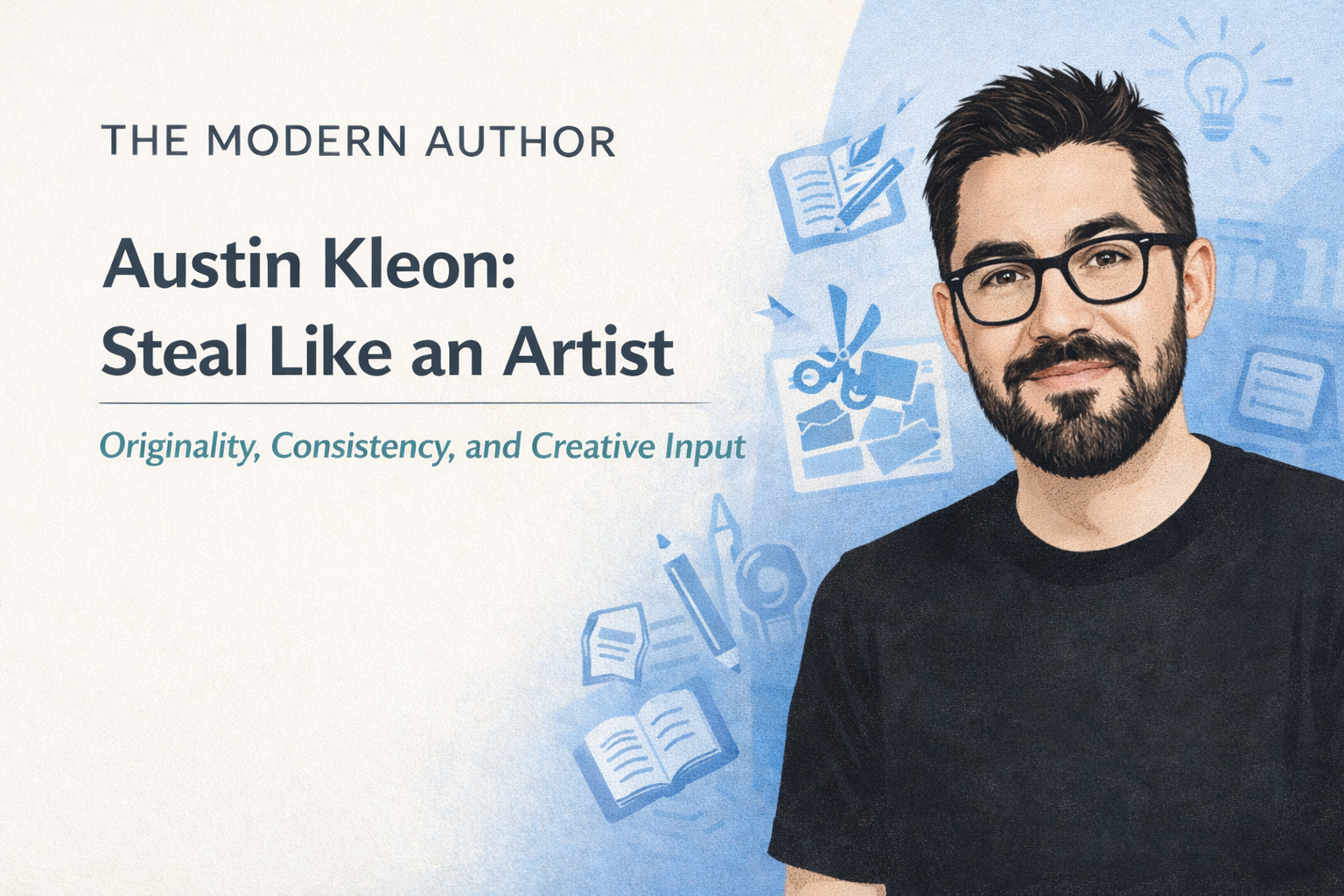
Arianna Huffington didn’t burn out because she was weak.
She burned out because she was successful, driven, and running at full speed with no off switch.
After collapsing from exhaustion in 2007, she didn’t just recover. She rebuilt her entire philosophy of work, creativity, and leadership. That journey led to Thrive, Thrive Global, and a career-long mission to end the burnout epidemic.
This conversation isn’t about writing faster.
It’s about writing without frying your brain.
Because tired authors don’t fail from lack of talent.
They fail from diminishing returns.
And Arianna has spent years studying exactly where that line is.
Who This Is For
This is for you if:
you’re exhausted but still pushing
writing feels heavy instead of energizing
focus comes in short bursts, then disappears
your phone keeps winning
you know the book matters, but you’re running on fumes
The Modern Author Lesson
You don’t finish meaningful books by pushing harder.
You finish them by protecting creative energy and removing silent drains.
Burnout isn’t a badge of honor.
It’s a signal that the system is broken.
5 Takeaways Authors Can Steal from Arianna Huffington
1) Burnout creates diminishing returns, not breakthroughs
The point: More effort doesn’t always mean better work.
Arianna’s insight came the hard way. She collapsed from exhaustion while running the Huffington Post, a moment that forced her to confront a truth most authors ignore:
When you’re depleted, output drops even as effort increases.
Use it as an author:
Stop measuring writing by hours. Measure it by clarity per session.
Ask:
Did this session move the idea forward?
Did I protect energy for the next session?
Did I stop before quality declined?
Chapter angle:
“Why pushing harder makes your book worse.”
2) Balance is the wrong goal, recovery is the right one
The point: Creative intensity is fine. Chronic depletion is not.
Arianna doesn’t talk about “balance” the way most people do. She doesn’t believe in evenly dividing energy every day.
She believes in cycles.
Write deeply when you’re in flow. Then recharge deliberately.
Use it as an author:
Design writing seasons, not daily perfection.
sprint when creativity is high
recover without guilt
stop before exhaustion becomes the norm
This keeps writing sustainable instead of punishing.
Chapter angle:
“Why creative surges are healthy and burnout is optional.”
3) Your first draft doesn’t need a keyboard
The point: Writing is thinking, not typing.
Arianna shared that for her last two books, she dictated the first draft. Not because she was lazy, but because she noticed something important:
She could speak clearly for an hour without notes.
So she stopped fighting her natural strengths.
Use it as an author:
Lower the friction to get words out.
Try:
dictating while walking
voice notes during commutes
speaking sections as if explaining to a friend
Once a draft exists, editing becomes far easier.
Chapter angle:
“The fastest way to get unstuck is to stop typing.”
4) Distraction is poison for deep work
The point: Focus isn’t fragile. It’s interrupted.
Arianna is ruthless about one rule:
No notifications while writing. None.
If she wants the news, she goes and gets it. She doesn’t let it come to her.
Interruptions break creative continuity, and regaining depth takes far longer than most people realize.
Use it as an author:
Adopt one non-negotiable distraction rule for 7 days.
Examples:
phone out of the room
notifications off
one writing tab only
write before consuming anything
You don’t need perfect focus. You need protected focus.
Chapter angle:
“The hidden cost of ‘just checking’ your phone.”
5) Vulnerability isn’t optional if you’re writing about your life
The point: Readers can feel when you’re holding back.
Arianna was direct:
If you’re not willing to be vulnerable, you shouldn’t write a book that includes your life.
That doesn’t mean oversharing. It means honesty. No perfection. No performance.
Readers don’t connect to polish. They connect to truth.
Use it as an author:
Ask yourself:
Where am I trying to look impressive?
Where am I avoiding the real story?
What would change if I wrote this without protecting my image?
That’s usually where the book comes alive.
Chapter angle:
“Why perfect books feel empty.”
The Modern Author Playbook
Protect Energy, Produce Clarity (7-Day Reset)
Step 1: Identify your biggest energy leak
Choose one:
overworking
constant notifications
writing when exhausted
perfectionism
guilt-driven productivity
Step 2: Name the cost
Finish this sentence:
“When I keep doing this, my writing suffers because…”
Step 3: Choose one protection rule
Examples:
stop writing before exhaustion
dictate first drafts
phone out of the room
no editing during drafting
Step 4: Run the experiment for 7 days
No optimization. Just consistency.
Step 5: Capture proof
Each day, write one line:
“What felt easier or clearer today because I protected my energy?”
That’s how sustainable writing habits are built.
FAQs
Why do so many authors burn out while writing?
Because they treat writing like a grind instead of a creative system that requires recovery.
How do you write consistently without exhaustion?
By protecting focus, removing distractions, and stopping before diminishing returns kick in.
Is dictation really effective for book writing?
Yes. For many authors, it’s the fastest way to generate a first draft because it bypasses perfectionism and friction.
The Bottom Line
Burnout doesn’t make you serious.
Exhaustion doesn’t make you committed.
Finished books come from authors who respect their creative energy enough to protect it.
Arianna Huffington didn’t just survive burnout.
She redesigned how meaningful work gets done.
That’s the lesson modern authors can’t afford to ignore.
https://youtu.be/kOw5Y_4dA5Y
About the Author
Eric Koester is an award-winning entrepreneurship professor at Georgetown University, bestselling author, and founder of Manuscripts. He has helped more than 3,000 nonfiction authors turn ideas into books, and books into platforms for speaking, media, and business growth.
About Manuscripts
Manuscripts is a modern publishing partner for nonfiction authors who want their books to drive real-world outcomes. We help founders, executives, coaches, and experts design, write, and launch books that build authority, attract opportunities, and compound into long-term business assets.
Work With Us
If you’re writing a book you want to matter, we’ll help you map the right strategy before you write another word.
Across the full dataset, the average business book generated $186,630 in total returns, against roughly $20,000 in hard costs.
That number is real.
It comes from a combination of large-scale survey data, longitudinal author follow-ups, and direct revenue attribution across book sales, consulting, speaking, training, and organizational work. It reflects what actually happened, not what authors hoped would happen.
It is also deeply misleading without context.
Because business books are not linear assets. They are high-variance assets.
A small percentage of books generate outsized returns. A large percentage underperform expectations. Most fall somewhere in between with a modest return on investment. The average captures the upside. The median captures the lived reality. The gap between the two is where most authors get confused, frustrated, or burned.
This report explains the gap and the strategies the successful Modern Authors use to address it.
Why This Matters in 2026
Books have never been more powerful as business tools. They’ve also never been easier to misplay.
In 2026, a book can:
Open doors to enterprise clients
Accelerate credibility with partners and media
Shorten sales cycles
Anchor a speaking or training platform
Create long-term leverage that compounds for years
It can also:
Consume enormous time and attention
Drain budget with little to show for it
Create reputational confusion instead of clarity
Sit quietly on Amazon while the author wonders what went wrong
The difference between those outcomes is rarely the quality of the writing.
It’s strategy.
Where This Research Comes From
This guide is not a thought piece. It is not a publishing manifesto. It is not advice pulled from isolated success stories.
It is grounded in three primary sources:
Manuscripts Community Data Aggregated outcomes from hundreds of modern authors who used their books to drive business results, including presale performance, early ROI timing, audience activation, and downstream revenue.
Interviews with 150+ Successful Modern Authors Most of whom were traditionally published. Many of whom used their books as wedges into consulting, speaking, education, or enterprise work. These interviews focused on what actually worked, what didn’t, and what they would do differently if starting today.
Direct Conversations with Industry Experts Including the researchers and strategists behind the most comprehensive ROI study of nonfiction authors to date. These discussions informed how returns were defined, measured, and interpreted.
Where possible, we rely on externally validated data. Where we introduce Manuscripts-specific findings, they are clearly labeled and framed as observed patterns, not universal laws.
This report is the definitive reference for how modern nonfiction authors generate ROI in 2026. Definitions and frameworks from this report are referenced across Manuscripts’ Modern Author OS, Publishing OS, and Author Intelligence systems.
The goal is to clarify.
The Core Tension This Report Resolves
Business books produce meaningful upside. That’s why the average return is high.
They also produce frequent disappointment. That’s why so many authors feel misled.
Both things can be true at the same time.
This report explains:
Why averages skew high
Why medians feel underwhelming
Why new authors overspend
Why experience compresses risk
Why author model matters more than publishing model
Why ROI often begins before a book is published
And what actually controls outcomes in 2026
Not opinions.
Not publishing myths.
Not motivational rhetoric.
Just patterns, grounded in data, drawn from real authors who treated their books as serious business assets.
Before we talk about publishing paths, costs, or ROI, we need to be clear about one thing:
The average is real.
The variance is the story.
And strategy is the lever that determines which side of that story you land on.
📊 Key Findings – $186,630 average return – ~$20,000 hard costs – +30% returns with a defined strategy – New authors overspend by 230%
Author ROI
Section 1: Who This Report Is For (And Who It Isn’t)
This report is written for people who are already committed to writing a book.
Not someday.
Not hypothetically.
Not “I’ve been thinking about it.”
They’ve crossed that line.
What they haven’t figured out yet is the strategy.
They’re asking questions like:
What kind of book should this actually be?
How much should we invest, and where?
What outcomes are realistic?
How long does ROI really take?
What resources will this require from my team?
How do we avoid expensive mistakes?
This report is designed to answer those questions.
Who This Report Is For
This guide is for:
Founders and business owners using a book to drive visibility, authority, or enterprise deals
Executives and senior leaders exploring a book as a credibility or platform asset
Consultants, coaches, and advisors who want a book to accelerate trust and shorten sales cycles
Educators, trainers, and speakers building scalable intellectual property
Chiefs of staff, marketing leaders, and executive assistants tasked with evaluating whether a book makes sense, and how to approach it responsibly
If you’re preparing for a conversation with a CEO who has said, “I’m thinking about writing a book, help me figure out the best strategy for 2026,” this report is meant to be read before that meeting.
It is not a creative writing guide.
It is not a publishing checklist.
It is a strategic briefing.
The Assumptions We’re Making About You
To make this report useful, we’re making a few assumptions:
You already believe books are powerful.
You are not writing for literary validation.
You care about outcomes, not just completion.
You are willing to think about tradeoffs.
You understand that time, attention, and credibility are real costs.
We do not spend time convincing you that books matter.
We focus on how they work, when they fail, and why.
Who This Report Is Not For
This report is not for:
Hobbyist writers
Aspiring novelists
Authors optimizing for Amazon rank alone
People looking for shortcuts or guarantees
Anyone expecting a book to succeed without a plan
If your primary success metric is:
“Did it hit the bestseller list?” or
“Did it sell a lot of copies?”
You’ll find this report uncomfortable.
That’s not a critique. It’s a mismatch.
The Lens We Use Throughout This Report
We evaluate business books using three lenses:
Leverage Does the book create opportunities that wouldn’t exist otherwise?
Speed How quickly do outcomes appear, and at what stage?
Variance Control What decisions reduce downside risk and increase upside potential?
We do not treat books as standalone products.
We treat them as strategic assets.
That framing changes everything:
How success is measured
When ROI appears
What investments make sense
Which publishing paths are appropriate
What This Section Is Doing for You
By the time you finish this report, you should be able to:
Articulate what kind of author you’re trying to be
Identify which outcomes matter most
Understand where books reliably generate ROI
Avoid common, expensive missteps
Make informed decisions about investment, resources, and timing
Before we talk about economics, publishing models, or ROI benchmarks, we need to align on one thing:
A book without a strategy is a gamble.
A book with a strategy is an asset.
The next section defines how we evaluate that asset, and why most authors miscalculate its value.
Section 2: How We Define Author ROI (This Matters)
Before we talk about publishing models, timelines, or budgets, we need to be precise about one thing.
What counts as return.
Most disappointment around business books doesn’t come from bad writing or weak ideas. It comes from measuring the wrong thing.
Authors say, “The book didn’t work,” when what they usually mean is:
Book sales didn’t cover expenses.
Royalties were lower than expected.
Amazon rankings faded quickly.
That’s not a failure of the book.
That’s a failure of the measurement.
The Author ROI Equation
In the Manuscripts workflow, we use a simple definition:
Author ROI = Total Returns ÷ Total Costs
Simple does not mean shallow.
This equation forces clarity where most authors avoid it.
To use it correctly, you have to account for all costs and all returns, not just the obvious ones.
Total Costs: What Authors Actually Invest
Most authors underestimate costs. Some do it unintentionally. Others do it because the full number makes the decision feel heavier.
We separate costs into two categories.
Hard Costs
These are direct, visible expenses tied to production and launch:
Editorial and developmental support
Ghostwriting or co-writing
Cover design and interior layout
Publishing and distribution fees
PR, marketing, and launch support
Advertising, if used
Hard costs are easy to track. They show up on invoices. They usually get discussed upfront.
Soft Costs
These are harder to quantify, but no less real:
Time spent writing, revising, and coordinating
Opportunity cost of diverted attention
Internal team involvement
Emotional and cognitive load
Delayed or paused business initiatives
Soft costs are where books quietly become expensive.
Ignoring them doesn’t make them disappear. It just leads to poor decisions later.
Total Returns: Where Value Actually Shows Up
This is where most authors dramatically undercount.
Returns fall into two parallel categories.
Hard Returns
These are directly attributable and measurable:
Book sales and bulk orders
Consulting or advisory revenue
Speaking fees
Training, workshops, or courses
Enterprise or organizational contracts
Retainers or long-term engagements tied to the book
In the datasets we analyzed, these returns often appeared months before publication, triggered by public positioning rather than finished manuscripts.
Soft Returns
These are harder to spreadsheet, but critical to long-term ROI:
Credibility with buyers and partners
Media access and inbound opportunities
Faster deal cycles
Higher close rates
Brand clarity and authority
Network expansion
Soft returns don’t always show up as line items. They show up as momentum.
They compound. They persist. They change what’s possible.
Why Most ROI Calculations Fail
Most authors make two mistakes at the same time:
They count all the costs.
They count only a fraction of the returns.
That creates a distorted picture where the book looks like a poor investment, even when it’s actively driving value.
In the large-scale ROI study and in Manuscripts projects, the pattern is consistent:
Book sales alone rarely justify the effort.
Downstream opportunities often dwarf royalties.
Authors who track only sales conclude the book “didn’t work.”
Authors who track outcomes see a very different story.
Why This Definition Changes Every Decision
Once ROI is defined correctly:
Publishing model choices become clearer.
Budget decisions become more rational.
Timelines feel less arbitrary.
Success metrics shift from vanity to leverage.
It also explains why averages skew high while medians feel modest.
A single enterprise contract can outweigh thousands of book sales.
A single speaking engagement can exceed a year of royalties.
Those outcomes don’t show up if you’re only looking at Amazon dashboards.
The Frame We Use Going Forward
For the rest of this report:
When we say ROI, we mean total returns, not royalties.
When we reference averages, we are capturing upside and variance.
When we reference medians, we are grounding expectations.
When we discuss strategy, we are referring to decisions that shape both.
This section exists to prevent a common mistake:
Evaluating a strategic asset with a retail mindset.
Books are not products in the traditional sense.
They are credibility accelerators with asymmetric payoff.
The next section looks at who actually writes business books, and why understanding author identity is the first step toward controlling that asymmetry.
Section 3: Who Business Authors Actually Are
One of the most persistent myths in publishing is that business books are written by “authors.”
They aren’t.
Across the datasets we analyzed, and across hundreds of Manuscripts projects, the pattern is consistent:
Most people who write business books do not primarily see themselves as authors.
They see themselves as something else first.
The Dominant Author Identities
When asked how they describe themselves professionally, business book authors overwhelmingly fall into a few categories:
Consultants and advisors
Corporate executives and senior leaders
Entrepreneurs and operators
Educators, trainers, and speakers
“Author” is usually a secondary identity. Sometimes a reluctant one.
This matters more than it sounds like it should.
Because people don’t write books in a vacuum. They write them in service of the work they already do, or want to do next.
We describe these people as "Modern Authors," individuals writing books not to become an author, but to create leverage for their primary persona or business goals.
Why This Misalignment Creates Problems
Most publishing advice implicitly assumes the reader wants to become an author.
That assumption breaks almost immediately for business writers.
A consultant doesn’t want a book to sell well.
They want it to shorten trust-building cycles.
An executive doesn’t want a book to win awards.
They want it to reinforce authority inside and outside their organization.
A founder doesn’t want a book to be reviewed.
They want it to create inbound conversations.
When these goals aren’t named explicitly, authors default to generic publishing paths that optimize for the wrong outcomes.
That’s how you end up with:
Beautiful books with no business impact
High production spend with unclear returns
Launch plans disconnected from actual objectives
Post-publication confusion about “what to do next”
The problem isn’t the book.
It’s the mismatch between author identity and success criteria.
The Author Economy vs. the Business Reality
The “author economy” framing suggests that:
Books are products
Sales equal success
Visibility comes from rankings
ROI is measured in royalties
That framing works for a small subset of writers.
It fails most business authors.
In practice:
Royalties are rarely the primary return
Visibility comes from relevance, not reach
Credibility compounds faster than sales
Outcomes show up in conversations, not dashboards
This is why averages look strong while individual experiences feel uneven.
Some authors accidentally align their book with their real professional role and see outsized results. Others don’t, and conclude books “don’t work.”
What This Section Is Setting Up
Understanding who business authors actually are (aka Modern Authors) allows us to do three important things later in this report:
Explain why different authors experience radically different ROI from similar books
Show why publishing model choice alone doesn’t explain outcomes
Introduce the concept of author model as the primary driver of speed and scale
Before we talk about cost structures, publishing paths, or launch mechanics, we need to be clear about one thing:
A book does not create value on its own.
It amplifies the value of the work it is attached to.
The next section looks at the economic reality of business books, using both averages and medians, and explains why the gap between them exists.
Section 4: The Economics of a Business Book in 2026
Why the Average Looks Great and the Median Feels Modest
At this point, two things are likely true for the reader.
First, the headline numbers feel encouraging.
Second, they also feel suspicious.
That reaction is healthy.
The economics of business books only make sense when you look at both the average and the median, and understand why they diverge.
The Average Outcome: The Upside Is Real
Across the combined datasets, the average business book generated $186,630 in total returns, against roughly $20,000 in hard costs.
That figure includes:
Book sales
Consulting and advisory revenue
Speaking and training fees
Organizational and enterprise work tied to the book
It reflects actual reported outcomes, not projected value.
This is why books remain attractive to serious professionals. The upside is meaningful. In some cases, it is transformative.
But averages tell you what is possible, not what is typical.
Later in the report, we'll discuss what separates the averages from the median, and how to design a strategy that dramatically increases your odds of serious upside (aka Strategy Is The Divider).
The Median Outcome: The Typical Experience
When you shift from averages to medians, the picture tightens.
Median outcomes are far lower.
Most books do not generate six-figure returns.
Many struggle to recoup their hard costs through book-related revenue alone, especially if they invest in the most costly activities such as ghostwriting or high-end pay-to-play publishing.
This does not mean the average is inflated or deceptive. It means the distribution is uneven.
A small percentage of books produce very large downstream returns. Those outcomes pull the average up. The median reflects what happens when those outliers are removed.
And the median indicates that, for most business authors, your book will deliver at least a 1.25x direct return on your investment. And that number will be higher when indirect returns are factored in.
This is the core economic truth of business books:
They are asymmetric assets.
The upside is uncapped.
The downside is very real.
The middle is crowded.
Why This Gap Exists
The gap between average and median outcomes is not random. It is driven by a handful of structural factors that show up repeatedly.
1. Return Concentration
A single enterprise contract, board role, or multi-year engagement can outweigh years of book sales.
Authors who land one such outcome dramatically shift the average. Authors who don’t remain clustered near the median.
2. Timing of Monetization
Authors who wait until publication to think about monetization compress all risk into a narrow window.
Authors who activate credibility earlier see returns spread out over time, often beginning months before launch.
This changes both speed and total return.
3. Author Model Alignment
As we’ll explore later, different author models have very different ceilings.
One-on-one service models cap upside.
Group, enterprise, and speaking models expand it.
The average reflects authors who accidentally or intentionally align with scalable models. The median includes everyone else.
4. Experience and Cost Discipline
New authors overspend.
Experienced authors spend more selectively.
Overspending without a monetization plan increases downside risk without increasing upside.
What the Numbers Do Not Mean
This is important.
The median outcome does not mean:
Business books “don’t work”
Authors shouldn’t invest
Publishing is a bad bet
It means:
Outcomes are not evenly distributed
Strategy determines which side of the curve you land on
Writing quality alone does not control results
The average shows why books remain powerful.
The median shows why many authors feel disappointed, but it also reveals that even without much strategy the floor is still an asset that returns 1.25x on your investment.
That said, few modern authors are playing for the floor.
How to Read the Rest of This Report
From this point forward:
Averages will be used to illustrate upside and potential
Medians will be used to ground expectations and risk
Patterns will be used to explain why outcomes differ
If you are preparing a recommendation for a CEO or senior leader, this framing is critical.
The right question is not:
“Will the book succeed?”
It is:
“What decisions move us closer to the right side of the distribution?”
The next section answers the most important of those questions: what actually changes the odds.
Next up is Section 5: Strategy Is the Divider, where we examine why having a defined book strategy consistently shifts outcomes, and why this effect shows up so clearly in the data.
The Business Book Risk Profile How modern authors reduce downside and protect upside
When leaders hesitate about writing a book, they rarely say what they’re actually worried about.
They don’t mean, “What if the writing is bad?” They mean, “What kind of risk is this?”
Books feel risky because the risks are usually undefined.
The Four Risks Every Business Book Carries
A serious book project exposes four distinct types of risk. Successful authors don’t eliminate these risks, they design around them.
1. Financial Risk
Will we spend money without seeing return?
Highest when: Strategy is unclear and spend happens early Reduced by: Outcome definition, author model clarity, presale validation
Modern authors pull ROI forward, often before publication, which shortens the payback window and limits exposure.
2. Time Risk
Will this consume executive attention without payoff?
Highest when: Writing happens in isolation with no milestones Reduced by: Clear timelines, early visibility, and defined decision points
Books fail less often from lack of time and more often from undefined time.
3. Reputational Risk
What if this doesn’t land or feels off-brand?
Highest when: Books are written privately and revealed all at once Reduced by: Early announcement, audience feedback, and iterative positioning
Public visibility before publication allows course correction while stakes are still low.
4. Opportunity Cost Risk
What are we not doing because we’re doing this?
Highest when: The book is treated as a side project Reduced by: Aligning the book to existing goals, offers, and conversations
When the book replaces other efforts instead of amplifying them, opportunity cost spikes.
How Modern Authors Manage Risk Differently
Modern authors don’t assume risk away. They stage it.
They:
Announce early to test relevance Use presale to validate demand Treat visibility as learning, not exposure Let real-world signals guide investment
This turns risk from a single large bet into a series of small, informed decisions.
The Reframe That Matters
A book without strategy is a speculative asset. A book with early activation is a managed investment.
The question isn’t whether risk exists. It’s whether risk is visible early enough to respond.
Bottom line:
The most expensive book risk is waiting too long to learn what the market thinks.
Section 5: Strategy Is the Divider
At this point, the economics should be clear.
Business books can produce meaningful upside.
They can also quietly underperform.
The difference is not talent.
It is not writing quality.
It is not publisher prestige.
It is strategy.
Across every dataset we examined, one variable consistently separated higher-performing outcomes from disappointing ones: whether the author had a defined book strategy before writing began.
What We Mean by “Strategy”
Strategy does not mean:
A marketing plan
A launch checklist
A publicity timeline
A social media calendar
In the Manuscripts workflow, book strategy answers three questions, clearly and in advance:
Who is this book for, specifically? Not “leaders” or “founders.” A real buyer or decision-maker.
What does the book make easier after it exists? Sales conversations, speaking invitations, internal influence, partnerships.
How does value convert into revenue? What happens because someone reads it.
If those questions cannot be answered in plain language, the book is operating without a strategy.
What the Data Shows
Authors with a defined book strategy:
Spent less overall
Saw earlier returns
Generated higher total outcomes
In aggregate, strategy was associated with roughly a 30 percent increase in returns, even when controlling for publishing model and spend.
That lift showed up in two places:
Higher average outcomes, driven by downstream opportunities
Reduced downside risk, reflected in stronger median performance
Strategy doesn’t just increase upside.
It narrows variance.
Why Strategy Changes the Economics
Strategy affects outcomes in ways that compound.
1. It Shapes the Book Itself
Strategic books:
Solve a specific problem
Speak to a defined audience
Create clarity, not completeness
Non-strategic books:
Try to say everything
Drift toward generality
Feel impressive but unfocused
Clarity converts faster than breadth.
2. It Determines When ROI Begins
Authors with strategy begin monetizing intent early.
They talk about the book before it exists
They position the idea publicly
They use the book as a signal, not a finished product
Authors without strategy wait.
For the manuscript
For the cover
For the publication date
By the time they ask how to “launch,” they’ve already lost momentum.
3. It Prevents Overspending
Strategy creates constraints.
What matters
What doesn’t
What can wait
Without a strategy, authors default to spending on reassurance:
More editing
More polish
More services
None of those increase returns if the underlying strategy is missing.
Why New Authors Are Hit Hardest
The costliest pattern we see is not failure.
It’s misallocation.
As an example, the typical cost range for business ghostwriting in the research was $30,000 to $100,000. The typical cost range for professionally supported publishing was $40,000 to $90,000. These costs, while potentially justifiable, are real and meaningful.
New authors often:
Invest heavily before clarifying outcomes
Choose services before defining leverage
Optimize for quality instead of conversion
That’s how budgets balloon without corresponding upside.
Experienced authors don’t necessarily spend less because they’re frugal. They spend less because they know what actually moves the needle.
Strategy Is Not a Guarantee
This matters.
Strategy does not ensure success.
It does not remove risk.
It does not replace execution.
What it does is change the odds.
It increases the probability that effort translates into outcomes. It shortens the time between work and reward. It makes ROI visible earlier and more often.
Without strategy, authors are betting on the right tail of the distribution.
With strategy, they are shaping it.
What This Section Sets Up
If strategy is the divider, the next question becomes:
What kind of strategy makes sense for this author?
That answer depends less on publishing path and more on how the author actually monetizes expertise.
The next section introduces the concept that matters most here: author model, and why identifying it early is critical for speed, scale, and sanity.
Next up: Section 6: Why the Modern Author Model Matters
The Modern Author Decision Sequence Why order matters more than effort
Most disappointing book outcomes don’t come from bad ideas or weak writing. They come from making the right decisions in the wrong order.
Across Manuscripts projects and industry data, successful authors consistently follow the same sequence. When this order is reversed, costs rise, timelines stretch, and ROI becomes unpredictable.
The Modern Author Decision Sequence
1. Define the Outcome What should be easier, faster, or more valuable because this book exists? (Clients, speaking, internal influence, partnerships, credibility) 2. Identify the Author Model How does credibility turn into revenue or leverage? (Consulting, training, enterprise, speaking, platform) 3. Validate Demand Early Publicly announce the book and activate early readers. (Positioning, visibility, presale, feedback) 4. Choose the Publishing Model Select the execution path that supports the strategy. (Traditional, hybrid, modern, or self-directed) 5. Allocate Budget Intentionally Spend in service of leverage, not reassurance. (Strategy before polish, demand before distribution) 6. Execute and Iterate Use real-world signals to refine positioning and offers.
What Happens When the Order Is Wrong Publishing model chosen before outcomes → misaligned books Budget spent before strategy → overspending without upside Writing before demand → late learning and delayed ROI Launch treated as the start → missed early leverage
Why This Sequence Works
This order: Reduces downside risk Pulls ROI forward in time Prevents unnecessary spend Aligns the book with real business outcomes
In the Manuscripts workflow, this sequence exists to prevent the most common and costly author mistake: treating the book as the strategy instead of the amplifier.
Bottom line:
If you change the order, you change the outcome.
Section 6: Why the Modern Author Model Matters
At this point, a pattern should be emerging.
Strategy explains why some books outperform.
Experience explains why costs compress over time.
But there is another variable that consistently determines how fast ROI appears and how large it can become.
That variable is the author model.
What We Mean by “Author Model”
In the Manuscripts workflow, an author model is defined as:
The way an author converts credibility into revenue.
It answers a simple but often ignored question:
Once the book exists, how does money actually show up?
This is not a publishing question.
It’s a business question.
Two authors can publish equally strong books, through the same publisher, with similar audiences, and experience radically different outcomes because their author models are different.
Why Author Model Determines ROI Speed and Ceiling
Across Manuscripts projects and interviews with successful modern authors, we see the same dynamic repeatedly:
Some author models convert credibility into revenue almost immediately
Others require more infrastructure and time
Some have hard ceilings, regardless of book quality
This is why author model identification happens before writing begins in the Manuscripts workflow. These models or clusters align to the 7 Modern Author Personas we laid out previously. This step exists to prevent misaligned books with no economic path.
The Four Author Models We See Most Often
1. Coaches and Consultants
High intimacy. Low scale.
These authors monetize through:
One-on-one consulting
Advisory retainers
Small-group coaching
What the data shows
Fast early ROI
Clear conversion from book to conversation
Limited upside due to time constraints
Common failure mode
Writing for reach instead of relevance
Underpricing post-book services
Books work well here, but the ceiling is set by personal capacity. Without deliberate leverage, ROI plateaus quickly.
2. Trainers and Educators
Moderate scale. Infrastructure-dependent.
These authors monetize through:
Workshops
Cohorts
Certifications
Organizational training
What the data shows
Slower early ROI than consultants
Strong mid-term returns
Higher variance based on delivery systems and marketing
Common failure mode
Relying on word of mouth
Building curriculum before demand is validated
When paired with the right systems, this model scales well. Without them, momentum stalls.
3. Business Owners and Speakers
Highest scale potential.
These authors monetize through:
Keynotes
Enterprise engagements
Platform-driven offerings
Media and partnerships
What the data shows
Fastest ROI velocity
Largest upside
Strong alignment with books as credibility assets
Common failure mode
Treating the book as a product instead of a credential
Waiting until publication to activate visibility
For this model, books are not revenue engines. They are accelerants.
4. Business and Personal Memoirists
Lowest clarity without intentional design.
These authors often write to:
Capture experience
Share a journey
Establish thought leadership through story
What the data shows
Slow or unclear ROI
Emotional and reputational returns dominate
Business impact varies widely
Common failure mode
Assuming story alone creates leverage
No defined post-book pathway
Memoirs can work, but only when explicitly connected to speaking, education, or organizational change.
Why Model Identification Comes First
Publishing model answers:
Who helps produce and distribute the book
Author model answers:
Who pays because the book exists
Confusing the two is one of the most expensive mistakes we see.
Authors often choose publishing paths based on:
Prestige
Speed
Service level
Before answering the more important question:
What economic role is this book meant to play?
The Modern Author Difference
Modern authors do not wait for books to “work.”
They design for outcomes upfront.
They:
Identify their author model early
Align the book to a clear monetization path
Use the book as a signal, not a finish line
Activate credibility before publication
This is why ROI timing differs so dramatically between authors with similar books.
The next section explains how this plays out in practice, and why, for modern authors, ROI often begins before the book is published.
Next up: Section 7: ROI Starts Before Publishing (The Presale and Announcement Effect)
The Modern Author System Why successful books are built, not improvised
By this point in the report, one thing should be clear:
Strong outcomes don’t come from isolated tactics. They come from a coherent system.
Across high-performing authors, we see the same pattern repeated. The specifics vary, but the structure does not.
That structure is what we refer to as The Modern Author System.
What the Modern Author System Is The Modern Author System is a start-to-finish operating model for turning a book into leverage.
It treats the book not as a standalone product, but as a strategic asset that connects positioning, visibility, and monetization over time.
This system exists to reduce variance, compress time-to-ROI, and prevent common failure modes. It's why we, at Manuscripts, named our signature program Modern Author Operating System (OS). While the systems look different for each author, at the core, they all operate on a set of consistent principles and components.
The Five Components of the Modern Author System
1. Outcome Design The book is designed around a specific outcome. Not “reach.” Not “impact.” A concrete business or career result.
This prevents vague positioning and post-launch confusion.
2. Author Model Alignment The book is aligned to how the author actually converts credibility into value. (Consulting, training, enterprise, speaking, platform)
This sets the ceiling on ROI before a word is written.
3. Early Activation Visibility begins before publication. Announcement and presale activate credibility, demand, and learning early.
This pulls ROI forward in time and reduces downside risk.
4. Publishing as Execution Publishing model is chosen to support the strategy, not define it.
Production, distribution, and polish serve leverage, not the other way around.
5. Post-Publication Leverage The book is actively used to create conversations, opportunities, and momentum.
Success is measured in outcomes created, not copies sold.
Why This System Matters
Most book failures are not creative failures. They are coordination failures.
Strategy is decided too late Visibility starts too late Publishing is treated as the plan ROI is expected to appear magically
The Modern Author System exists to prevent those breakdowns.
How This Differs From Traditional Publishing Advice
Both can coexist. Only one reliably produces business ROI.
The Key Reframe
A book does not create leverage by existing. It creates leverage by being strategically positioned, activated, and used.
That requires a system.
Bottom line:
Successful books aren’t written differently. They’re operated differently.
Section 7: ROI Starts Before Publishing
The Presale and Announcement Effect
One of the most persistent misconceptions about books is that ROI begins at publication.
It doesn’t.
Across Manuscripts projects, the earliest and most reliable returns appear before the book is finished, often within 60 days of public announcement.
This is not an anomaly. It is a repeatable pattern.
What We Mean by “Announcement”
When we say authors “announce” their book, we don’t mean a press release or a launch date.
We mean a visible commitment.
In practice, this includes:
Listing the book in public bios
Positioning the idea clearly on the author’s website
Talking openly about the book’s premise and audience
Inviting early readers into the process
Nothing is sold yet.
Nothing is finished yet.
But identity shifts.
The author becomes “someone writing the book on this topic,” not “someone thinking about it.”
That shift alone changes how the market responds.
Presale Is Not an Amazon Feature
Presale is often misunderstood as a retailer setting.
In the Manuscripts workflow, presale is a strategy, not a button.
A presale campaign is a structured commitment that activates early readers, validates demand, and creates commercial momentum before publication.
It exists to do three things:
Prove there is real demand
Activate early advocates
Pull ROI forward in time
Traditional publishers have used presales for decades to manage inventory and rankings. Modern authors use them to activate credibility and outcomes.
What the Manuscripts Data Shows
Across Manuscripts presale campaigns:
90 percent of authors achieved their presale target
Average early fan activation: 212 readers
Average presale-driven revenue: $16,900
96 percent achieved Amazon category bestseller status during launch week
These outcomes were not driven by advertising.
They were driven by fan activation.
Early readers became:
Buyers
Advocates
Proof of demand
That momentum carried through launch week and beyond.
Why Presale Changes the Economics
Presale works because it collapses multiple advantages into a short window.
1. Credibility Is Triggered Early
Public commitment changes perception.
Once a book is named and positioned:
Conversations change
Inbound interest increases
Authority is assumed, not argued
This is why ROI often appears before publication. Credibility does not wait for page numbers.
2. Demand Is Validated Before Risk Peaks
Presale exposes weak positioning quickly.
If no one raises their hand early, the signal is clear. Messaging can be refined. Scope can be adjusted. Resources can be reallocated.
This dramatically reduces downside risk.
3. Fans Become Participants
Presale turns readers into collaborators.
They give feedback
They share the idea
They feel invested in the outcome
By launch, the book already has momentum. It is not asking for attention. It is continuing a conversation.
4. Modern Authors Sell Beyond the Book
Perhaps the biggest benefit of the Announcement & Presale Strategy:
You begin creating leverage for your non-retail book sales offers:
Fans buy your services
Fans advocate for your participation in their conferences, trainings and more
You generate ROI
Fans not only participate. They monetize.
This Is a Modern Author Pattern
This approach is not limited to independent authors.
Many of the most successful modern authors now treat presale as a core strategic move.
Adam Grant opened presales 12 months before publication
Dan Pink opened presales four months before publication
The timing varies. The principle does not.
Early commitment creates leverage.
Why This Matters More in 2026
Three forces make presale and early announcement critical now:
Attention moves faster than production Waiting until launch week to engage the market is too late.
Algorithms reward early velocity Bestseller status is driven by concentrated demand, not steady trickle.
ROI expectations have shifted upstream Authors expect results while the book is being written, not after it’s printed.
In 2026, authors who delay visibility until publication are starting behind.
Presale as a Modern Author Capability
The distinction is simple:
Traditional publishing uses presale to manage logistics
Modern authors use presale to activate outcomes
This is why presale is embedded into the Modern Author workflow. It exists to compress time-to-ROI, validate strategy, and reduce reliance on luck.
Once early demand is activated, publishing model becomes a tactical choice, not a strategic gamble.
The next section examines those publishing models, what they actually control, and what they don’t.
Next up: Section 8: Publishing Models and ROI (What They Do and Don’t Control)
What a Book Actually Requires From an Organization Why books fail quietly when teams aren’t aligned
For executives, a book is rarely a solo project, even when it’s framed that way.
The question most leaders don’t ask out loud is: What will this actually require from my team?
When that question isn’t answered early, books stall, timelines slip, and enthusiasm fades.
The Real Organizational Load of a Business Book A well-run book project typically draws from four areas of support. Not all are required at once, but all should be acknowledged upfront.
1. Executive Time (Non-Negotiable) Typical load: 2–4 hours per week during active phases
This includes:
Strategic decision-making Interviews or draft reviews Positioning alignment Visibility and announcement participation
Books don’t fail because leaders are too busy. They fail because time expectations were never made explicit.
2. Marketing and Communications Support (Light but Strategic) Typical load: 1–2 hours per week, episodic
This often includes:
Website updates (bio, positioning, book page) Email or LinkedIn announcements Presale coordination Launch-week amplification
This is not a full campaign. It is targeted activation at key moments.
3. Operational Coordination (Burst-Based) Typical load: Short bursts around milestones
This may include:
Scheduling interviews or reviews Coordinating presale logistics Tracking early signals and feedback Supporting launch-week execution
Without clear ownership here, friction increases quickly.
4. Strategic Oversight (Often Missing) Typical load: Periodic but critical
This is the most overlooked role.
Someone must be responsible for:
Ensuring the book stays aligned with outcomes Preventing scope creep Saying no to unnecessary spend Translating book momentum into business action
When this role is absent, books become “content projects” instead of business assets.
What Successful Organizations Do Differently
Organizations that see strong book ROI:
Treat the book as a strategic initiative, not a side project Assign clear ownership for decisions and coordination Plan visibility and presale early Align internal expectations before writing begins
They do not overstaff. They plan intentionally.
Why This Matters Most resistance to book projects isn’t about cost.
It’s about uncertainty:
Who owns this? How much time will this take? What will we need to support?
Answering those questions upfront de-risks the project and accelerates execution. And if you don't have organizational support, often smart resource additions through contractors or your publishing team can fill in any gaps.
Bottom line:
Books fail quietly when organizational load is assumed instead of designed.
Section 8: Publishing Models and ROI
What They Do Control, and What They Don’t
By the time most authors start asking serious questions, they’re already focused on the wrong decision.
They ask:
Should this be traditional, hybrid, or self-published?
Which publisher is best?
What package makes sense?
Those questions matter.
They just don’t matter first.
Publishing model affects how a book is produced and distributed.
It does not, by itself, determine whether the book delivers meaningful ROI.
Three of the most well-known nonfiction authors -- Alex Hormozi ($100M Offers), Tim Ferriss (The 4-Hour Workweek) and James Clear (Atomic Habits) -- each moved from a traditional publishing model to author-owned publishing models, signaling a massive shift in the modern author market. Not only was this a signal for the largest players, but perhaps an even bigger signal to those not expecting to sell hundreds of thousands of copies.
This section explains what publishing models actually control, what they don’t, and how to think about the decision clearly in 2026.
What Publishing Models Do Control
Across the data, publishing models consistently influence four variables.
1. Cost Structure
Publishing models shape where money is spent and when.
Traditional publishing shifts financial risk away from the author but stretches timelines.
Hybrid publishing concentrates costs upfront in exchange for service and speed.
Author-owned publishing is a variant of hybrid publishing that uses a shared-cost model for the announcement and presale campaigns.
Self and modern publishing distribute costs incrementally and offer flexibility.
None of these models are inherently “too expensive” or “too cheap.”
They simply allocate risk differently.
2. Speed to Market
Publishing model strongly affects timeline.
Traditional publishing optimizes for distribution readiness, not speed.
Hybrid, author-owned and modern models compress production cycles.
Self-publishing speed depends entirely on author discipline and support.
Speed matters because credibility and attention decay.
But speed without strategy amplifies mistakes.
3. Control and Ownership
Publishing models determine:
Who owns rights
Who has final say on title, positioning, and design
How freely the book can be repurposed
For authors using books as business assets, control is often more valuable than distribution.
4. Operational Load
Different models require different levels of author involvement.
Traditional publishing offloads logistics but limits agency.
Hybrid publishing offloads execution but requires heavy coordination.
Modern publishing shares responsibility, emphasizing systems and support.
The right model depends on how much operational ownership the author wants to retain.
What Publishing Models Do Not Control
This is where most confusion lives.
Publishing models do not reliably control:
Monetization Strategy
Publishers do not design:
Consulting offers
Speaking pathways
Training programs
Enterprise engagement models
If these are not defined by the author, no publishing model will invent them.
Demand
Publishers distribute books.
They do not create market pull.
Demand comes from:
Relevance
Timing
Positioning
Audience activation
Books without demand underperform regardless of publisher.
ROI Speed
The fastest ROI we see appears before publication, driven by announcement, positioning, and presale.
Publishing model becomes relevant after momentum exists.
Outcome Ceiling
The ceiling on ROI is set by:
Author model
Business model
Market size
Scalability of offers
Publishing model affects friction, not ceiling.
Why Publishing Model Confusion Is So Common
Publishing decisions are tangible.
Contracts
Prices
Timelines
Services
Strategy decisions are abstract.
Positioning
Leverage
Monetization
Audience
When outcomes are uncertain, people reach for what feels concrete.
That’s how authors end up:
Over-investing in production
Under-investing in strategy
Blaming the publisher when results fall short
A Clearer Way to Make the Decision
In the Manuscripts workflow, publishing model is chosen after three things are clear:
Author model
Monetization path
Early demand signal
Once those are defined, the publishing decision becomes straightforward:
Which model supports this strategy?
Which constraints matter most?
Which tradeoffs are acceptable?
This reverses the typical order and dramatically improves outcomes.
The Reframe That Matters
Publishing model is not a growth strategy.
It is an execution strategy.
When authors treat it as the former, disappointment follows.
When they treat it as the latter, books behave like assets.
The next section synthesizes everything so far and translates it into practical guidance for authors planning a 2026 book.
Next up: Section 9: What This Means for Authors Planning a 2026 Book
Section 9: What This Means for Authors Planning a 2026 Book
At this point, the patterns are no longer abstract.
The data does not suggest that books are risky.
It suggests that unstrategic books are.
For authors planning a 2026 book, the implications are clear and practical.
1. Start With Outcomes, Not Publishing
The most expensive mistake is starting with the wrong question.
“Who should publish this?” is not a strategy question.
It’s a logistics question.
The strategic questions come first:
What do we want this book to make easier?
Who needs to change their mind because this book exists?
How does credibility convert into revenue or influence?
What does success look like 6, 12, and 24 months out?
Authors who answer these questions early spend less, see ROI sooner, and avoid post-launch confusion.
2. Identify the Author Model Before Writing Begins
Every book sits inside an author model, whether it’s named or not.
One-on-one coaching and consulting models cap scale
Group and enterprise models expand it
Speaking and platform models compound it
Memoirs require explicit pathways to create leverage
Books aligned with the wrong model feel busy but ineffective.
Author model identification is not an academic exercise. It determines:
How the book is framed
What the book emphasizes
Which opportunities appear
How quickly ROI shows up
3. Treat the Book as a Signal, Not a Finish Line
The most consistent modern author pattern is this:
ROI begins when the book is named and positioned publicly, not when it ships.
Waiting for publication to talk about the book delays:
Credibility
Conversations
Demand
Learning
Announcing early is not premature.
It is how modern books de-risk.
4. Use Presale to Validate and Accelerate
Presale is not about hitting a list.
It is about:
Proving demand
Activating early readers
Creating momentum before risk peaks
Authors who run structured presale campaigns:
Pull revenue forward
Improve launch outcomes
Reduce reliance on ads or algorithms
Presale turns the book from a private project into a public asset.
5. Choose Publishing Model Based on Constraints, Not Hope
Once strategy, author model, and early demand are clear, publishing decisions simplify.
The right question becomes:
What model supports this strategy with the least friction?
For some authors, that’s traditional publishing.
For others, it’s hybrid, modern, or self-directed paths.
What matters is fit, not prestige.
6. Budget for Strategy, Not Just Production
High-performing authors do not win by spending more.
They win by spending in the right order.
Strategy before services
Positioning before polish
Demand before distribution
Overspending usually signals uncertainty, not ambition.
7. Expect ROI Before the Book Is Finished
This is the most counterintuitive implication.
For modern authors, ROI often shows up:
In inbound conversations
In early clients
In speaking inquiries
In partnership interest
If nothing changes in the business until after publication, something upstream is missing.
A Simple Reframe for 2026
A business book is not a bet on sales.
It is a bet on leverage.
The authors who win in 2026 are not the ones who write the best books. They are the ones who design the clearest pathways between credibility and outcomes.
The final section answers the questions most readers will now be asking, directly and concisely.
Next up: Section 10: FAQs
What Success Looks Like at 90, 180, and 365 Days How modern authors track progress without waiting for publication
One of the reasons books feel risky is that success is often measured too late.
By the time publication arrives, most of the meaningful decisions have already been made, and most of the leverage has either been activated or missed.
Modern authors don’t wait that long.
They track progress in stages.
The 90–180–365 Day Success Timeline
This timeline reflects what we consistently see across high-performing Manuscripts projects. Exact outcomes vary by author model, but the signals are remarkably consistent.
At 90 Days: Credibility and Signal
What should be visible
The book is publicly named and positioned The author is associated with a clear idea or problem Bios, websites, and profiles reflect the book Early conversations reference the book unprompted
What often shows up
Inbound interest Early client or partner conversations Speaking or podcast inquiries Presale traction or early reader activation
What this tells you The market recognizes the book as real. ROI has begun, even if the manuscript is incomplete.
At 180 Days: Demand and Momentum
What should be visible
Presale or early access milestones met A defined group of early readers or supporters Clear messaging around the book’s value Internal clarity on how the book supports business goals
What often shows up
Paid opportunities tied to the book’s topic Clearer product or service pathways Stronger positioning in the author’s market Reduced uncertainty about launch outcomes
What this tells you The book is no longer a hypothesis. It is generating momentum and validating strategy.
At 365 Days: Leverage and Outcomes
What should be visible
The book is published (or with a set publication date) and actively used Speaking, training, or consulting tied to the book Measurable downstream revenue or influence A clear narrative connecting the book to outcomes
What often shows up
Compounding opportunities Higher-quality inbound leads Increased authority in a defined space Strategic optionality the author didn’t have before
What this tells you The book is functioning as an asset, not an artifact.
Why This Timeline Matters
This staged view does two important things:
1. It prevents premature judgment based on book sales alone 2. It makes progress visible long before launch day
Authors who wait until publication to assess success often miss early leverage and overestimate risk.
A Final Reframe
If nothing meaningful is happening at 90 days, something upstream is missing. If momentum exists by 180 days, outcomes almost always follow. If leverage is intentional at 365 days, the book continues working long after launch.
Bottom line:
Modern book success is not a moment. It is a sequence.
Section 10: Frequently Asked Questions
What is the average ROI for a business book?
Across the dataset analyzed in this report, the average business book generated approximately $186,630 in total returns, against roughly $20,000 in hard costs. This average reflects downstream outcomes such as consulting revenue, speaking fees, training, and enterprise work, not just book sales.
The average captures upside potential. It does not represent the typical experience.
Why do averages look high while many authors feel disappointed?
Because business book outcomes are highly uneven.
A small percentage of books generate very large downstream returns. Those outcomes pull the average up. The median reflects what happens when those outliers are removed.
This gap exists because:
Returns concentrate in scalable author models
Strategy varies widely
Many authors overspend before clarifying outcomes
The average shows what’s possible. The median shows what’s common.
How much do authors typically spend to publish a business book?
Spending varies widely by experience and publishing model.
Across studies and Manuscripts projects:
New authors tend to overspend significantly
Experienced authors spend more selectively
Overspending is often driven by uncertainty, not necessity
The most important factor is not total spend, but when and why money is invested.
Do book sales predict business book success?
No.
Book sales alone are a weak predictor of total ROI for business authors.
In most high-performing cases:
Royalties represent a minority of total returns
The majority of value comes from consulting, speaking, training, or enterprise work triggered by the book
Authors who measure success primarily by sales often undercount real returns.
Is strategy more important than publishing model?
Yes.
Publishing model affects:
Cost structure
Timeline
Control
Operational load
Strategy affects:
Demand
Monetization
ROI speed
Outcome ceiling
Books with clear strategy consistently outperform books that rely on publishing model alone.
Why do new authors tend to overspend?
New authors often:
Invest before clarifying outcomes
Optimize for polish instead of leverage
Choose services before defining a monetization path
This leads to higher costs without increasing upside.
Experience reduces overspending not because authors care less, but because they know what actually drives outcomes.
When does ROI typically begin for modern authors?
For modern authors, ROI often begins before publication.
Across Manuscripts projects, authors frequently saw:
Inbound conversations
Early clients
Speaking inquiries
Revenue tied to the book
Within 90 days of publicly announcing the book, not after launch.
This early ROI is driven by positioning, visibility, and presale, not by finished manuscripts.
What is a presale campaign, and why does it matter?
A presale campaign is a structured public commitment to a book that:
Activates early readers
Validates demand
Creates momentum before publication
Presale reduces downside risk and accelerates outcomes. It is used strategically by modern authors to pull ROI forward in time.
Which author models see the fastest ROI?
Author models with higher scalability tend to see faster and larger ROI:
Business owners and speakers
Trainers and educators with group or enterprise offerings
One-on-one consulting models often see early ROI but lower ceilings. Memoirs require explicit pathways to generate business outcomes.
Should a CEO or executive write a book in 2026?
A book makes sense when:
There is a clear outcome it is meant to support
The author model is defined
The organization is willing to activate visibility early
Success is measured by leverage, not sales
Without those conditions, a book becomes an expensive distraction.
What’s the single biggest mistake business authors make?
Treating the book as the strategy.
A book amplifies an existing business model. It does not create one.
Authors who design for outcomes first and publishing second consistently see better results.
How should this report be used internally?
This report is designed to:
Support executive decision-making
Frame budget and resource discussions
Align teams around realistic outcomes
Prevent misaligned investments
It should be read before choosing a publisher, approving a budget, or setting timelines.
Closing
The data is clear.
Books can create enormous leverage.
They can also create expensive confusion.
The difference is not effort or talent.
It is clarity of model, strategy, and timing.
This report exists to give you that clarity.
Writing a book in 2026 is no longer a question of possibility. It’s a question of design.
The authors who see leverage are not more talented or more visible. They are more intentional about outcomes, timing, and risk.
This report exists to help you decide how to proceed, not to push you toward a single path.
If you take nothing else from it, take this: books work best when they are treated as systems, not projects.
If You’re Deciding What to Do Next
If this report clarified your thinking, the next step is usually not “publishing.”
It’s pressure-testing your strategy before you commit time, budget, or reputation.
Here are three ways authors typically proceed.
Map Your Modern Author Strategy
If you want to:
Pressure-test your author model
Clarify realistic outcomes
Understand where ROI is likely to show up
Avoid unnecessary spend
A short strategy conversation can surface issues early, before they become expensive.
Eric Koester is an award-winning entrepreneurship professor at Georgetown University, bestselling author, and founder of Manuscripts. His work focuses on how ideas become assets, how books create leverage, and why modern authors need systems, not just publishing support.
He has worked with thousands of authors across traditional, hybrid, and modern publishing paths, helping them turn books into platforms, platforms into credibility, and credibility into durable business outcomes.
About Manuscripts
Manuscripts is the Modern Author OS for nonfiction experts.
We help founders, executives, coaches, and thought leaders design books as strategic assets, not standalone products. Our work spans positioning, author model design, developmental editing, AI-enhanced drafting tools, presale strategy, and long-term launch systems.
Manuscripts authors use their books to generate clients, speaking engagements, training programs, and enterprise opportunities, often before publication.
For readers who want to go deeper into specific mechanics, the following guides expand on topics referenced in this report:
How to Write a Book if You’re Busy
Modern Ghostwriting for Nonfiction Authors
AI Tools for Authors in 2026
How to Build an Audience Before You Write Your Book
The Evergreen Launch System for Modern Authors
Powered by Codex, the Modern Author Intelligence Tool.

Most first-time authors start with the wrong question:
“How do I write a great chapter?”
The better question:
“How do I structure my ideas so readers understand, remember, and act on them?”
Thought leaders don’t win because they’re better writers.
They win because their ideas are delivered through a structure that makes those ideas unavoidable.
And James Clear’s Atomic Habits provides one of the cleanest, most repeatable structures modern authors can steal.
At Manuscripts, we’ve studied more than 2,500 nonfiction books inside the Modern Author OS. Across industries, voices, and genres, one pattern keeps showing up:
Readers trust frameworks more than opinions.
Readers remember stories more than arguments.
Readers act when structure makes action simple.
James Clear mastered that blend.
In this guide, you’ll learn exactly how to use Clear’s “Principles Framework” to build chapters that feel polished, persuasive, and inevitable — even if you’re busy, overwhelmed, or unsure how to organize your ideas.
This is the approach we use inside the Modern Author Accelerator and Codex AI to help authors transform scattered expertise into clean, compelling chapters.
Why Readers Trust Principles More Than Advice
Most books fail because they tell people what to do instead of showing how the world works.
Advice feels personal.
Principles feel universal.
James Clear built his book around principles like:
Identity drives habits
Environment shapes behavior
Small improvements compound
These aren’t tips.
These are truths.
A principle is a timeless rule about how something works.
When a reader recognizes it, you get instant credibility.
Why Principles Work So Well in Modern Thought Leadership
They:
Create shared language
Anchor your frameworks
Make your ideas portable
Encourage word-of-mouth (“She teaches the principle of X…”)
Position you as a category thinker, not an advice-giver
If you want to write like a thought leader, your chapters must translate your expertise into principles — then prove them with stories, data, and frameworks.
The James Clear Chapter Structure (Reverse Engineered)
We broke down Clear’s chapters across Atomic Habits and found a repeatable flow:
THE CLEAR PRINCIPLES CHAPTER MODEL
Start With a Story A vivid, often surprising story that represents the principle in action.
State the Principle A clear, memorable truth about how the world works.
Explain the Principle Why does this principle matter? What makes it universal?
Demonstrate the Principle Real-world examples, research, case studies, or analogies.
Introduce a Framework A simple, visualizable system or model that operationalizes the principle.
Apply the Framework Show readers what to do and how to do it.
End With a Memorable Line or Punchline A repeatable idea that readers can’t forget.
This structure is extremely friendly for:
Busy authors
Business leaders
Consultants
Coaches
Creators
Anyone trying to turn expertise into IP
It reduces blank-page stress and gives your reader cognitive grip.
Build Your Chapter Around One Core Principle
Every great chapter answers one question:
“What is the single principle this chapter proves?”
If your chapter has three ideas, it’s confusing.
If it has one idea, it’s powerful.
Your principle must be:
True (backed by research or lived experience)
Simple (plain language)
Useful (changes behavior or perspective)
Memorable (easy to teach)
Examples:
“People don’t rise to the level of their goals. They fall to the level of their systems.”
“Clarity creates courage.”
“Positioning is what you own in the mind, not what you say in the pitch.”
Inside Codex, this is where we extract:
Repeated beliefs
Thematic patterns
Contrasts
Identity statements
Core insights
And then synthesize them into a clean principle.
Start With a Story (Your Anchor)
Clear opens nearly every chapter with a surprising or emotional story.
Why?
Because stories create cognitive hooks.
The story makes the principle stick.
Your story must do at least one of these:
Illustrate the principle in action
Represent a transformation
Set up the problem the reader is facing
Create tension or curiosity
Build trust through vulnerability
Examples from Clear:
The British cycling team transformation
The Japanese train station cleaning ritual
The Seinfeld chain method
Stories = stickiness.
Principles = clarity.
Frameworks = action.
That combination creates bestseller energy.
Demonstrate the Principle With Multiple Angles
James Clear doesn’t just state a principle and move on.
He proves it three ways:
1. Research or data
Gives credibility.
2. Examples or case studies
Makes it relatable.
3. Metaphors or analogies
Makes it memorable.
When we work with authors, we call this the Evidence Bundle.
One principle → three types of proof.
This is where the Manuscripts methodology shines:
we teach authors how to gather stories, turn them into data, and feed them into Codex so that each chapter writes itself.
Turn Your Principle Into a Framework
This is where most first-time authors fall short.
They give great stories.
They explain great ideas.
They forget to give readers a system.
James Clear always does.
He turns principles into:
4 Laws
Systems
Rules
Models
Step-by-step processes
A framework moves readers from “I understand” to “I can use this.”
For your book:
Give every chapter one framework
Make it visual
Use 3–5 steps (cognitively optimal)
Tie each step back to the principle
This is also how you turn your book into:
A keynote talk
A workshop
A course
A coaching program
An enterprise training system
Frameworks = monetization.
Close With a Punchline or Insight They Can’t Forget
Clear ends each chapter with a sharp, memorable line.
These lines often end up:
Quoted
Shared
Highlighted
Used in talks
Referenced in articles
Examples:
“You do not rise to the level of your goals. You fall to the level of your systems.”
“Every action you take is a vote for the type of person you wish to become.”
Your closing line should be:
Short
True
Repeatable
Aligned with the principle
This becomes your intellectual signature.
Your Chapter Template (Manuscripts Version)
Here’s the Manuscripts + James Clear hybrid chapter template:
CHAPTER TITLE (Benefit + Insight)
1. Opening Story
One vivid, emotional story that sets up the idea.
2. State the Core Principle
One sentence.
3. Explain the Principle
Why it matters. Why it’s universal.
4. Demonstrate the Principle
Research
Case studies
Examples
Metaphors
5. Introduce the Framework
3–5 steps.
6. Apply the Framework
Practical, step-by-step implementation.
7. Close With a Punchline
One memorable, tweet-length idea.
Feed this to Codex and you’ll get a chapter preview in 20 seconds.
Why This Structure Works for Busy Authors
If you’re a busy modern author, you need structure that creates speed.
This model gives you:
A predictable chapter flow
A way to write in 60–90 minute bursts
A framework that turns scattered notes into clear structure
A repeatable process you can use 10–12 times
A blueprint for repurposing every chapter into content
This is why our Accelerator authors can write high-quality drafts in 8–14 weeks even with full-time jobs.
How Codex Accelerates This Entire Process
Codex turns the James Clear method into an automated outline generator.
Upload a transcript, notes, or a research dump and Codex will:
Extract potential principles
Map your stories to principles
Identify gaps
Cluster examples
Propose 3–5 frameworks
Generate chapter outlines
Rewrite principles in cleaner language
Produce chapter summaries, headlines, and social posts
This takes authors from overwhelm to momentum fast.
Bringing It All Together
Writing like a thought leader is not about being a genius.
It’s about having a structure that elevates your ideas.
James Clear gave modern authors one of the most effective chapter models in nonfiction.
Use it.
Adapt it.
Make it your own.
This framework, combined with Codex and the Modern Author OS, gives you everything you need to write chapters that are clear, persuasive, memorable, and actionable.
If you want to write like a thought leader, build chapters around principles.
Principles build books.
Books build opportunities.
Opportunities build a platform.
Call to Action
If you want help using the James Clear Principles Framework to write your book, schedule a free strategy call with Manuscripts.
We’ll help you:
Identify your core principles
Build your frameworks
Structure your chapters
Use Codex to accelerate your draft
Build your platform while writing
Turn your book into speaking, clients, and business growth
Eric Koester is an award-winning entrepreneurship professor at Georgetown University, bestselling author, and founder of Manuscripts, the Modern Author OS used by more than 3,000 authors. His work has helped creators turn ideas into books, books into brands, and brands into scalable businesses.
About Manuscripts
Manuscripts is the leading full-service publishing partner for modern nonfiction authors. We help founders, executives, coaches, and experts turn their books into growth engines, through positioning, coaching, developmental editing, design, AI-enhanced writing tools, and strategic launch systems. Manuscripts authors have sold thousands of books, booked paid speaking gigs, landed media features, and generated millions in business from their IP.
Work With Us
If you’re writing a book you want to matter, let’s map out your Modern Author Plan.