How Much Does Ghostwriting Cost in 2026? What Serious Nonfiction Authors Actually Pay
How Much Does Ghostwriting Cost? Most authors researching ghostwriting start with pricing. But for serious nonfiction books, the more important question is what responsibility is actually being delegated.
Ghostwriting fees can range from roughly $15,000 to over $150,000 depending on how much intellectual, structural, and strategic work the ghostwriter performs.
Many authors researching ghostwriting start with the wrong question.
They ask: How much does a ghostwriter cost?
But that’s the wrong question.
The better question is: What responsibility are you delegating?
Ghostwriting fees vary widely, from roughly $25,000 to $150,000 or more for serious nonfiction projects. But the variation is rarely driven by word count, hours worked, or manuscript length.
It is driven by intellectual responsibility.
Some ghostwriters simply translate interviews into prose. Others structure arguments, synthesize ideas, and develop frameworks that shape the entire book.
Ghostwriting for serious nonfiction typically costs $25,000–$150,000+, but the real variable is not word count or hours, it is how much intellectual responsibility the author transfers to the ghostwriter, making the true decision whether to outsource authorship or retain intellectual ownership through an author-led publishing model.
The 60-Second Decision
Authors evaluating ghostwriting are often making five-figure or six-figure decisions.
Before comparing prices or proposals, it helps to clarify the strategic role of the book.
Hire a ghostwriter if:
- time constraints prevent consistent writing
- the primary goal is completing and publishing the book
- delegating authorship responsibility is acceptable
Choose an author-led editorial model if:
- the book contains core intellectual property
- frameworks and ideas must originate directly from the author
- the book supports long-term authority and positioning
Rule
Ghostwriting purchases outsourced authorship.
Author-led publishing preserves intellectual ownership.
Who This Brief Is For
This brief is written for serious nonfiction authors evaluating ghostwriting.
Typical readers include:
- CEOs
- founders
- consultants
- coaches
- physicians
- professors
- subject-matter experts
These authors often face a common situation: expertise exists, but writing time is limited.
Some need structural development to turn ideas into a coherent manuscript. Others are deciding whether ghostwriting is appropriate at all.
For professional nonfiction projects, ghostwriting engagements typically range between $25,000 and $150,000 or more, depending on the intellectual scope of the work.
The decision therefore extends beyond writing logistics. It is a strategic choice about authorship and intellectual ownership.
Market Reality: What Most Authors Misunderstand About Ghostwriting
What Actually Determines Ghostwriting Cost
Many authors assume ghostwriting fees scale with manuscript size.
They imagine pricing based on:
- word count
- hours worked
- number of chapters
In practice, pricing rarely follows these metrics.
Ghostwriting costs are driven by how much intellectual work the writer performs.
A ghostwriter who simply drafts chapters from interviews may charge far less than one who helps develop frameworks, arguments, and positioning.
The more intellectual responsibility the ghostwriter absorbs, the higher the cost.
What Ghostwriting Services Actually Include
Ghostwriting is often framed as writing assistance.
In reality, it redistributes authorship responsibility across the project.
Depending on the engagement, a ghostwriter may be responsible for:
- structuring arguments
- synthesizing interview material
- developing frameworks
- shaping narrative progression
In these cases, the ghostwriter is not simply writing sentences.
They are participating in the intellectual construction of the book.
Should You Hire a Ghostwriter or Write the Book Yourself?
Authors researching ghostwriting often believe they are comparing writers.
In reality, they are comparing two different models of authorship.
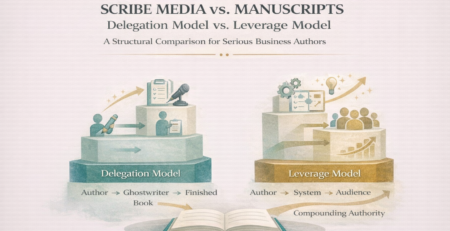
One model delegates intellectual creation to a ghostwriter.
The other preserves the author’s role as the primary intellectual source of the book.
The distinction determines how the book functions long after publication.
Outsourced Authorship
In outsourced authorship, the ghostwriter absorbs a substantial portion of the intellectual responsibility behind the book.
This may include:
- structuring arguments
- synthesizing interviews
- developing frameworks
- shaping the narrative progression
The author supplies expertise and perspective, but the ghostwriter translates that material into the intellectual architecture of the book.
This model can produce strong manuscripts, particularly when time constraints make sustained writing impossible.
However, it also means that part of the intellectual construction of the book originates outside the author.
Author-Led Intellectual Development
In an author-led model, the author remains the primary source of the book’s ideas, frameworks, and arguments.
Editors and publishing partners contribute structure, clarity, and developmental guidance, but the intellectual architecture originates with the author.
This approach preserves direct intellectual ownership while still benefiting from professional editorial support.
Because the ideas originate from the author, the book more naturally reinforces long-term authority.
Why This Distinction Matters
The difference between these models is not simply stylistic.
It determines whether the book functions primarily as:
- a professionally produced manuscript or
- a durable intellectual asset tied directly to the author’s thinking.
Understanding this distinction allows authors to evaluate ghostwriting not just as a writing service, but as a strategic authorship decision.
These differences reflect broader publishing models, which determine how control, ownership, and long-term leverage are structured across the book.
Ghostwriting Cost Comparison (2026)
| Ghostwriting Tier | Typical Cost | Best For | Author Involvement | Primary Tradeoff |
| Entry-Level Ghostwriter | $15K–$40K | Short books or lower-complexity projects | Moderate involvement | Limited strategic development |
| Professional Ghostwriter | $40K–$80K | Standard nonfiction books | High interview collaboration | Cost increases with complexity |
| Elite Ghostwriter | $80K–$150K+ | Major thought leadership or public figures | Low writing involvement | Significant intellectual delegation |
| Strategic Editorial Partnership | $25K–$75K+ | Author-led books with strong editorial guidance | High author involvement | Requires sustained author participation |
This range reflects differences in intellectual responsibility rather than writing volume.
The Cost vs Control Map
Ghostwriting decisions are best understood as a tradeoff between financial investment and intellectual control.
Projects vary along two axes:
- financial investment
- intellectual control
Entry-level ghostwriting typically offers lower costs but requires more author participation.
Professional and elite ghostwriting increase cost as the writer absorbs more intellectual responsibility.
Author-led editorial partnerships invert the relationship.
The author retains intellectual ownership while editors support structure, clarity, and development.
The key insight is simple:
ghostwriting is not just about cost, it’s about control.
They are about how much intellectual authorship the writer transfers to someone else.
The Ghostwriting Responsibility Ladder
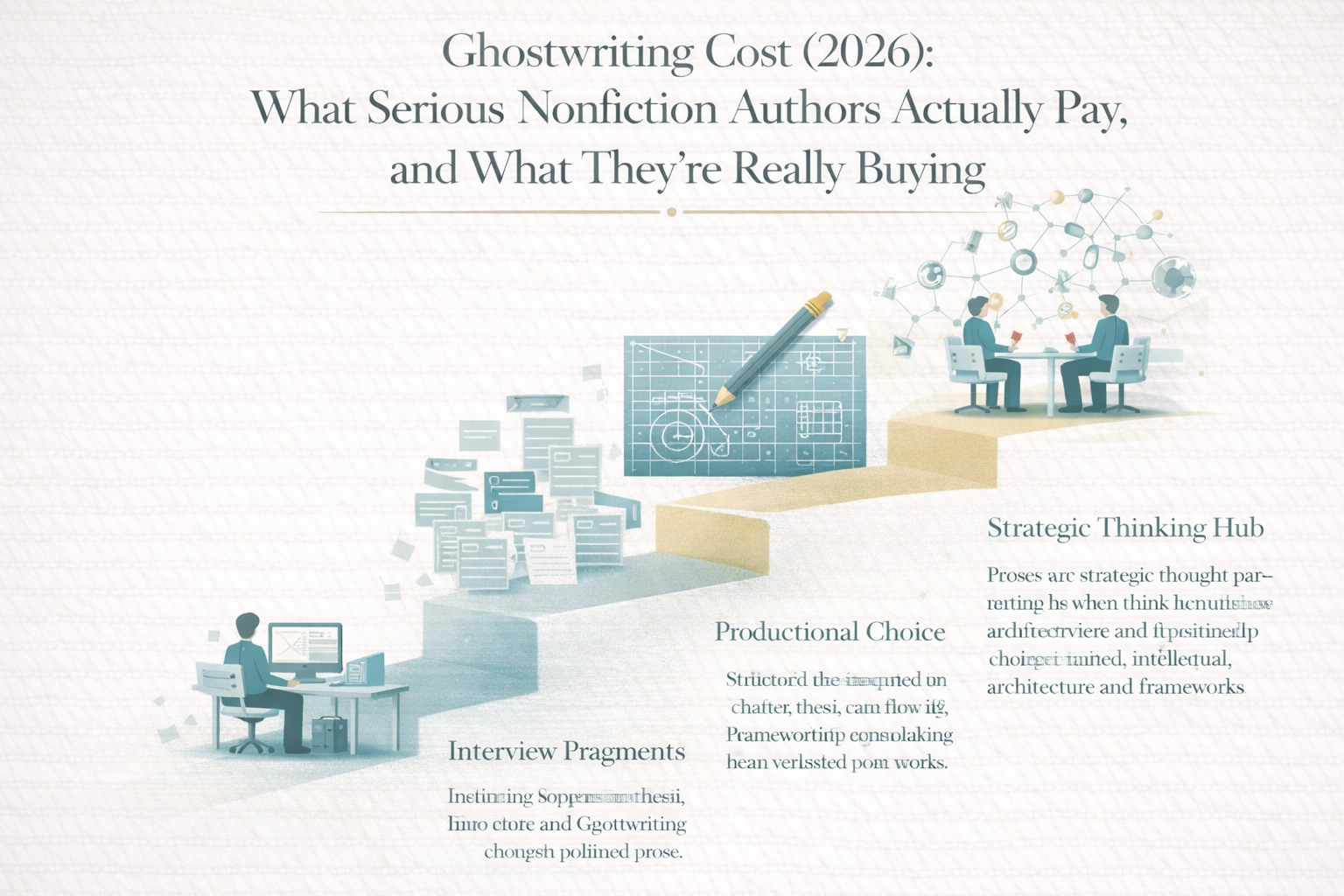
Ghostwriting engagements vary widely because they absorb different levels of intellectual responsibility.
The more responsibility the ghostwriter assumes, the more the engagement shifts from writing assistance toward intellectual partnership.
This progression can be understood as a responsibility ladder, where each level represents a deeper transfer of authorship responsibility from the author to the writer.
Level 1 — Writing Labor
At the base level, the ghostwriter performs writing labor.
The writer converts existing material, such as notes, outlines, or rough drafts, into polished prose.
Responsibilities typically include:
- sentence-level writing
- stylistic editing
- readability improvements
The author remains responsible for the ideas, argument, and structure of the book.
This level resembles professional writing assistance, not full ghostwriting.
Level 2 — Interview Translation
At the second level, the ghostwriter conducts interviews and converts conversations into written chapters.
The author supplies the insights, but the ghostwriter performs the synthesis required to transform those conversations into coherent narrative.
Typical responsibilities include:
- structured interviews
- chapter drafting from interview transcripts
- narrative flow and readability
The intellectual source remains the author, but the ghostwriter becomes responsible for translating spoken expertise into written form.
Level 3 — Structural Development
At this level, the ghostwriter begins shaping the architecture of the book itself.
Responsibilities may include:
- defining the thesis
- structuring the chapter sequence
- organizing frameworks and core ideas
The ghostwriter is no longer simply translating ideas.
They are helping design the intellectual structure that organizes the book.
This level represents a meaningful shift toward shared intellectual responsibility.
Level 4 — Strategic Thought Partnership
At the highest level, the ghostwriter operates as a strategic partner in developing the book.
The writer may help:
- refine the book’s positioning
- shape frameworks and models
- guide the intellectual direction of the manuscript
At this stage, the ghostwriter functions less as a writer and more as a thought partner helping architect the book’s ideas.
Many high-profile ghostwriting engagements operate at this level.
Key Insight
Ghostwriting fees increase as responsibility moves up the ladder.
But the tradeoff is not simply financial.
As responsibility rises, more intellectual authorship shifts from the author to the ghostwriter.
Understanding where an engagement sits on this ladder helps authors evaluate ghostwriting proposals not only by cost, but by how much intellectual responsibility they are transferring.
Responsibility Transfer Diagram
Ghostwriting redistributes responsibility across the publishing process.
Typical stages include:
- Idea Development
- Thesis & Positioning
- Book Architecture
- Chapter Drafting
- Narrative Voice
- Final Manuscript
In an author-led writing model, the author maintains responsibility across most stages.
In collaborative ghostwriting, responsibility is shared between author and writer.
In full ghostwriting, the writer assumes primary responsibility for drafting and structuring the manuscript.
The key shift is not the writing itself.
It is the transfer of intellectual responsibility across the stages of book development.
What Book Ghostwriting Services Actually Cover
Ghostwriting fees compensate for several forms of work that occur behind the manuscript.
Interview-Based Manuscript Development
Many ghostwriting projects begin with recorded interviews.
The writer extracts insights and converts them into structured chapters.
This model works well for busy executives who prefer speaking to writing.
Structural Development
Ghostwriters often help shape the conceptual structure of the book.
This may include:
- clarifying the thesis
- organizing chapters
- developing frameworks
This work often determines the clarity and coherence of the final manuscript.
Full Manuscript Creation
In full ghostwriting engagements, the writer drafts most of the manuscript.
The author provides ideas and feedback but participates less in day-to-day writing.
This approach is common for public figures or extremely busy leaders.
Strategic Thought Partnership
Some ghostwriters function as strategic partners.
They contribute to positioning, intellectual structure, and conceptual clarity.
At this level, the writer is helping shape the intellectual architecture of the book.
The Hidden Cost Layer: What Ghostwriting Doesn’t Include
Ghostwriting fees rarely represent the full cost of producing a professional nonfiction book.
Most ghostwriting engagements focus on manuscript development.
But a serious book typically requires additional layers of work that exist outside the ghostwriting contract.
These costs often include:
Developmental Editing
Even when a ghostwriter drafts the manuscript, additional editorial work may be required to strengthen clarity, argument structure, and reader flow.
Understanding what different types of book editors do helps clarify what level of support is needed at each stage.
Publishing Production
Professional publishing typically includes:
- cover design
- interior layout
- formatting
- distribution setup
These services are often handled by a publisher or production team rather than the ghostwriter.
Concept Positioning
Strong nonfiction books require clear positioning.
This may involve refining:
- the thesis
- the framework
- the audience focus
Positioning work is sometimes handled by strategic editors or publishing partners.
Launch Strategy
Books designed to support authority or business outcomes require coordinated launch planning, which may include:
- audience building
- presale strategy
- marketing sequencing
Ghostwriting engagements rarely include launch strategy.
Authority Integration
For many professional authors, the book must integrate with a broader platform that includes:
- consulting
- speaking
- advisory work
- intellectual property development
Designing this integration typically occurs outside the ghostwriting engagement.
Why This Layer Matters
Authors comparing ghostwriting proposals often assume the ghostwriting fee represents the total publishing investment.
In practice, ghostwriting typically covers manuscript creation, not the full publishing system.
Understanding this cost layer helps authors evaluate proposals realistically and avoid underestimating the total scope of bringing a serious nonfiction book to market.
Manuscripts Perspective: Ghostwriting vs Author-Led Publishing
Authors researching ghostwriting often believe they are comparing writing services.
In reality, they are choosing between two fundamentally different models of authorship.
Each model distributes intellectual responsibility differently and therefore produces different long-term outcomes.
Ghostwriting Model
Ghostwriting solves a specific operational problem: writing labor.
In this model, the ghostwriter may absorb responsibility for:
- drafting the manuscript
- synthesizing interviews
- structuring arguments
- shaping narrative flow
The author contributes expertise and perspective, but much of the manuscript’s intellectual construction may occur through the ghostwriter.
This approach works well when the primary goal is completing and publishing a book efficiently.
Author-Led Publishing Model
Author-led publishing focuses on a different objective: preserving intellectual ownership.
In this model, the author remains responsible for:
- the ideas
- the frameworks
- the conceptual architecture of the book
Editors and publishing partners contribute:
- structural guidance
- developmental feedback
- editorial clarity
But they do not replace the author’s intellectual role.
The result is a book where the ideas originate directly from the author while still benefiting from professional editorial development.
The Strategic Difference
The difference between these models is not simply who writes the sentences.
It is where the intellectual center of the book lives.
Ghostwriting prioritizes speed and completion.
Author-led publishing prioritizes intellectual ownership and long-term authority.
For many Modern Authors, the book is not the final product.
It is the foundation of an authority platform.
In that context, preserving authorship of the underlying ideas becomes strategically important.
Buyer Checklist
Authors evaluating ghostwriting should ask:
- What responsibilities will the ghostwriter absorb?
- How will the writer capture my voice?
- Who owns the manuscript rights?
- Will positioning and thesis development be included?
- What revision rounds are included?
- What editorial oversight exists?
- How will the book integrate with my authority platform?
Clear answers reveal how much authorship responsibility is being delegated.
This evaluation is part of choosing the right publishing partner, where incentives and model structure determine long-term outcomes.
Ghostwriting Decision Scorecard
Authors can quickly evaluate ghostwriting suitability using five criteria.
Score each factor from 1 (low) to 5 (high):
- Time availability
- Authorship priority
- Importance of intellectual property ownership
- Strategic role of the book
- Framework development importance
Score Interpretation
5–12 → Author-led publishing
13–18 → Hybrid collaboration
19–25 → Full ghostwriting
This tool helps authors align the writing model with their strategic goals.
Decision Alignment
Ghostwriting becomes appropriate when time constraints dominate and delegating authorship responsibility is acceptable.
Author-led publishing becomes more appropriate when intellectual ownership and authority development matter more than writing convenience.
The key decision is not whether ghostwriting is good or bad.
It is whether the book’s role requires outsourced authorship or author-led intellectual development.
Rule of Thumb
Ghostwriting is not simply a writing service.
It is a transfer of intellectual responsibility.
Authors should choose the model that aligns with the role their book must play.
FAQ
How much does ghostwriting cost in 2026?
Professional ghostwriting for serious nonfiction books typically ranges from $25,000 to more than $150,000 depending on the level of intellectual responsibility, structural development, and strategic involvement required.
How much does it cost to hire a ghostwriter?
Hiring a ghostwriter can cost anywhere from roughly $15,000 for lower-complexity projects to six figures for elite nonfiction ghostwriting engagements. Pricing usually reflects how much writing, structuring, and intellectual development the ghostwriter absorbs.
What do ghostwriting services include?
Ghostwriting services often include interviews, manuscript drafting, structural development, narrative organization, and editorial revisions. Higher-end engagements may also include positioning support, framework development, and strategic thought partnership.
Is hiring a nonfiction ghostwriter worth it?
Hiring a nonfiction ghostwriter can be valuable for authors with limited time or existing platform leverage who need help turning expertise into a professionally written book. The decision depends on whether speed and delegation matter more than retaining full intellectual ownership.
Should I hire a ghostwriter or write the book myself?
That depends on the strategic role of the book. Ghostwriting is often appropriate when time constraints dominate, while author-led writing is usually stronger for books tied closely to intellectual property, positioning, and long-term authority.
If You’re Deciding What to Do Next
If this report clarified your thinking, the next step is usually not “publishing.”
It’s pressure-testing your strategy before you commit time, budget, or reputation.
Here are three ways authors typically proceed.
Map Your Modern Author Strategy
If you want to:
- Pressure-test your author model
- Clarify realistic outcomes
- Understand where ROI is likely to show up
- Avoid unnecessary spend
A short strategy conversation can surface issues early, before they become expensive.
Schedule a Modern Author Strategy Session
This is a working session, not a pitch.
Explore the Modern Publishing System
If you’re assessing:
- Whether to publish traditionally, hybrid, or independently
- How to structure presale and early activation
- What support actually reduces risk
You may want a clearer view of how the Modern Publishing System works in practice.
Explore Manuscripts Publishing Services
Study Real Author Outcomes
(For internal validation and stakeholder alignment)
If you’re preparing a recommendation for leadership, concrete examples often help.
See Modern Author Success Stories
About the Author
Eric Koester is an award-winning entrepreneurship professor at Georgetown University, bestselling author, and founder of Manuscripts. His work focuses on how ideas become assets, how books create leverage, and why modern authors need systems, not just publishing support.
He has worked with thousands of authors across traditional, hybrid, and modern publishing paths, helping them turn books into platforms, platforms into credibility, and credibility into durable business outcomes.
About Manuscripts
Manuscripts is the Modern Author OS for nonfiction experts.
We help founders, executives, coaches, and thought leaders design books as strategic assets, not standalone products. Our work spans positioning, author model design, developmental editing, AI-enhanced drafting tools, presale strategy, and long-term launch systems.
Manuscripts authors use their books to generate clients, speaking engagements, training programs, and enterprise opportunities, often before publication.
For readers who want to go deeper into specific mechanics, the following guides expand on topics referenced in this report:
- How to Write a Book if You’re Busy
- Modern Ghostwriting for Nonfiction Authors
- AI Tools for Authors in 2026
- How to Build an Audience Before You Write Your Book
- The Evergreen Launch System for Modern Authors
Powered by Codex, the Modern Author Intelligence Tool.