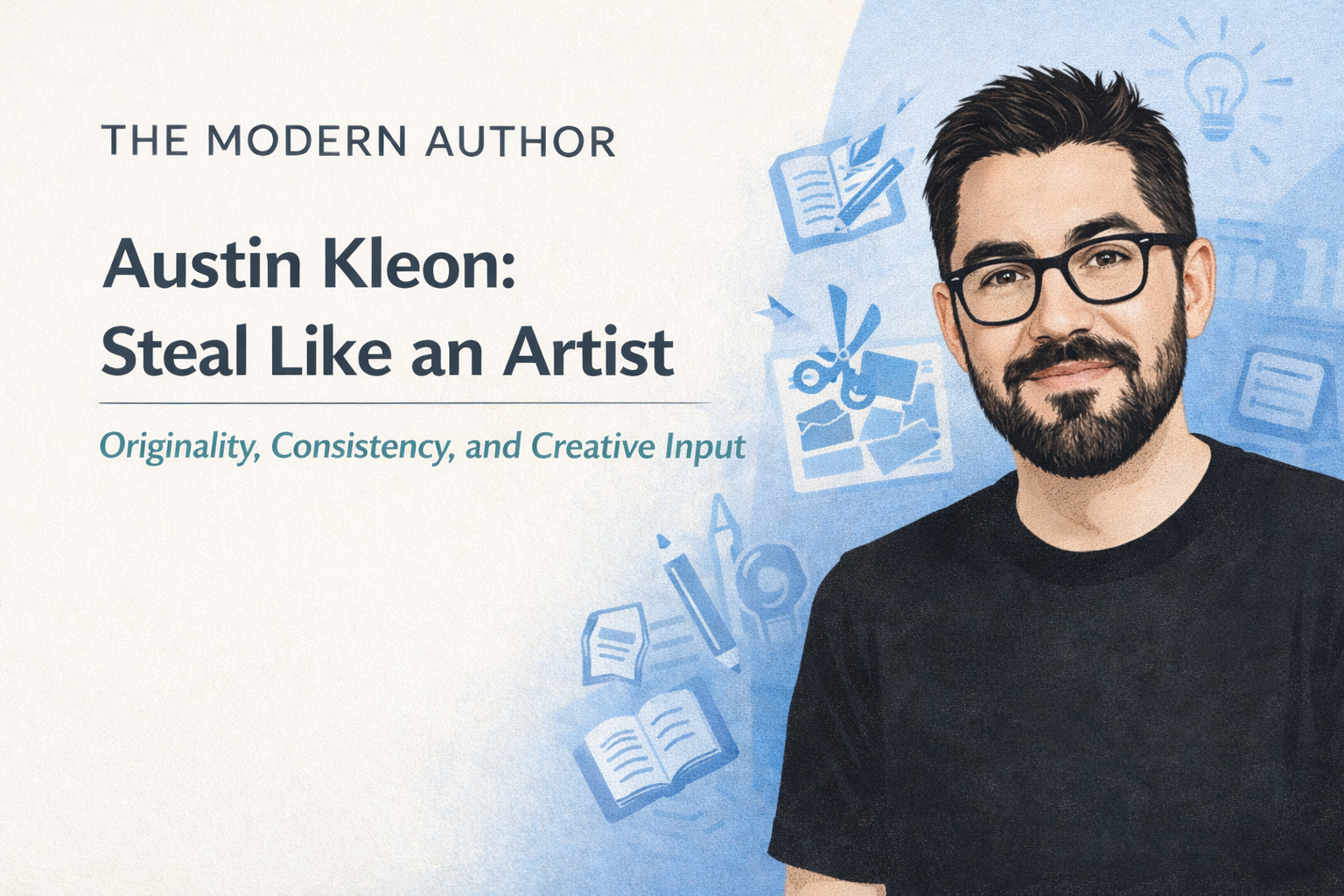
Write Like a Thought Leader: Why You Should Stop Outlining (and Do This First)

Most authors start every book the same way:

Open a document.

Write an outline.

Stare at it.

Then stall.

Outlining feels like progress — it’s structured, linear, and feels productive. But for thought leadership books, it’s often the wrong first step.

The most compelling chapters aren’t born from outlines.

They’re born from clarity of idea, not structure.

This post overturns the traditional “outline first” instruction and gives you a repeatable discovery framework that leads to stronger thinking and smoother writing. It’s about thinking on the page before you map the page.

We call this creating your "Author Brain," and what we discovered in when authors do this first, 90% of them go on to finish their book... on time.

Here's how you can do the same.


Who this is for

This is for you if you’ve ever:

  • stared at your table of contents like it’s a blank page
  • rewritten your outline more than your manuscript
  • felt unsure what your chapter is actually about
  • structured before you understood

The reason isn’t lack of skill. It’s lack of clarity before structure.


The Modern Author lesson

Clarity comes before structure.

Don’t outline what you think you want to say.

Write to discover what you actually need to say.

Outlining is a tool for people who already know what they mean.

Most authors don’t start there — they start with ideas that are hazy, half-formed, or contradictory.

So the first job isn’t outlining.

It’s thinking on the page — exploring your idea until it starts to reveal a natural shape.


The Problem with Outlining First

Outlines assume clarity that often doesn’t exist.

When you start with a table of contents, you’re implicitly saying:

  • “I already know the structure”
  • “I already know the key ideas”
  • “I can organize before thinking”

That rarely matches reality.

Outlining first usually leads to:

  • chapters that feel flat
  • ideas that looked good in headings but collapse in prose
  • endless re-outlining instead of writing

The real bottleneck isn’t lack of structure.

It’s lack of discovered thinking.


The Discovery-First Framework

This alternative sequence has one purpose:

Let your thinking create the structure, not the other way around.

Here’s how the strongest thought leaders actually work:

Step 1) Start with a claim — not an outline

Write one tentative sentence that you believe might be true.

Examples:

  • “The biggest mistake thought leaders make is outlining too soon.”
  • “Clarity comes from writing, not planning.”
  • “Ideas reveal themselves before structure ever does.”

This sentence isn’t your thesis. It’s your entry point.

Why this works:

A claim creates motion. An outline creates a cage.


Step 2) Write to explore the idea

Write 500–800 words with one rule:

Do not edit. Do not outline. Do not shape.

Your job is to:

  • describe what you think
  • test the idea against examples
  • explore contradictions
  • find where you keep returning

This phase is messy. That’s the point.

Why this works:

Structure hides uncertainty. Writing reveals it.


Step 3) Circle the energy

After the messy draft, highlight:

  • sentences that feel alive
  • moments where insight appeared
  • repetition of key patterns
  • parts that got easier to write

Ignore transitions, order, and logic for now.

You’re looking for signal, not polish.

Why this matters:

Energy precedes structure. The shape comes from what resonates.


Step 4) Extract your real structure

Now, and only now, outline.

But this outline isn’t hypothetical.

It’s based on what you already wrote.

Your chapters will naturally reveal:

  • a core tension
  • repeated themes
  • supporting ideas
  • a clear takeaway

Turn those into your table of contents.

Why this works:

You’re structuring discovered thinking, not guesswork.


Step 5) Rewrite with intent

Now rewrite cleanly.

Use:

  • sharper opening sentences
  • clearer throughlines
  • fewer but better developed ideas
  • a concrete takeaway at the end

This is where craftsmanship matters.

Why this works:

Structure amplifies clarity instead of attempting to force it.


How This Shows Up in Manuscripts Projects

Authors trapped in outline paralysis almost always have the same symptom:

They’re organizing ideas they haven’t yet formed.

In the Manuscripts workflow, we often see these patterns:

  • chapter headings get rewritten five times
  • opening paragraphs never arrive
  • writers switch chapters instead of finish them
  • drafts linger in half-thought limbo

When authors flip the sequence — discovery first, structure second — progress accelerates dramatically:

  • ideas become sharper faster
  • writing feels easier
  • chapters actually get finished

This is the difference between thinking about your book and thinking in your book.

For may authors, we recommend they leverage our Codex tool, which lets them upload blog posts, articles, their LinkedIn bio, papers, transcripts, etc., then use that to begin to organize.

We call this creating your "Author Brain," and its a powerful way to discover (with help), before you start writing.


Evidence It Works

Pattern Evidence

Across hundreds of nonfiction authors, the most successful chapters start as messy drafts, not polished outlines.

Writing Cortex Evidence

Writers produce clearer prose when they discover ideas in motion rather than impose structure first.

Outcome Evidence

Authors who follow discovery first:

  • draft faster
  • revise with confidence
  • finish more consistently

The structure becomes the echo of the idea — not its source.


When Outlining Still Works First

Outlining first works best when:

  • the argument is already fully formed
  • the ideas are stable and practiced
  • the author can say the chapters out loud before writing

This happens often in technical or procedural writing.

It’s rare in idea-driven, thought leadership books.


Common Mistakes (and How to Fix Them)

Mistake: Writing the outline because it “feels productive.”

Fix: Write one messy draft to test the idea’s real shape.

Mistake: Editing while discovering.

Fix: Separate discovery (writing) from refinement (editing).

Mistake: Keeping everything you wrote.

Fix: Cut ruthlessly once clarity appears.


A Simple Template You Can Copy

  1. Claim: “I think this might be true…”
  2. Discovery Draft: 500–800 words, no editing
  3. Circle Energy: Highlight the parts that sing
  4. Extract Structure: Build an outline from resonance
  5. Rewrite: Clarity first, structure second

This is writing as thinking, not planning as thinking.


Quick FAQ

Should I outline before writing a book chapter?

Not usually. Start by exploring your idea in prose first, then create an outline from what actually worked.

Why does outlining first feel easier?

Because it feels organized. But that organization is often fictional — it hasn’t been tested by real writing yet.

How many words should my discovery draft be?

Aim for 500–800 words per idea cluster. More than that and you lose momentum. Less than that and you don’t explore deeply enough.


The Bottom Line

Outlines don’t create clarity.

Clarity creates outlines.

If you want thought leadership that thinks clearly on the page, you can’t start with structure. You have to write to discover — then let the structure emerge from what you’ve found.

Outlining is not obsolete.

It’s just premature when used as a first step.

→ Schedule Your Free Strategy Call


About the Author

Eric Koester is an award-winning entrepreneurship professor at Georgetown University, bestselling author, and founder of Manuscripts, the Modern Author OS used by more than 3,000 authors. His work has helped creators turn ideas into books, books into brands, and brands into scalable businesses.

About Manuscripts

Manuscripts is the leading full-service publishing partner for modern nonfiction authors. We help founders, executives, coaches, and experts turn their books into growth engines, through positioning, coaching, developmental editing, design, AI-enhanced writing tools, and strategic launch systems. Manuscripts authors have sold thousands of books, booked paid speaking gigs, landed media features, and generated millions in business from their IP.

Work With Us

If you’re writing a book you want to matter, let’s map out your Modern Author Plan.

👉 Schedule a Modern Author Strategy Session → https://write.manuscripts.com/maa-web

👉 Explore Manuscripts Publishing Services → https://manuscripts.com/publish-with-us/

👉 See Modern Author Success Stories → https://manuscripts.com/authors/

Modern Author Resources

  • How to Write a Book if You’re Busy
  • Modern Ghostwriting for Nonfiction Authors
  • AI Tools for Authors in 2026
  • How to Build an Audience Before You Write Your Book
  • The Evergreen Launch System for Modern Authors

Powered by Codex: The Modern Author Author Intelligence Tool

Read more...

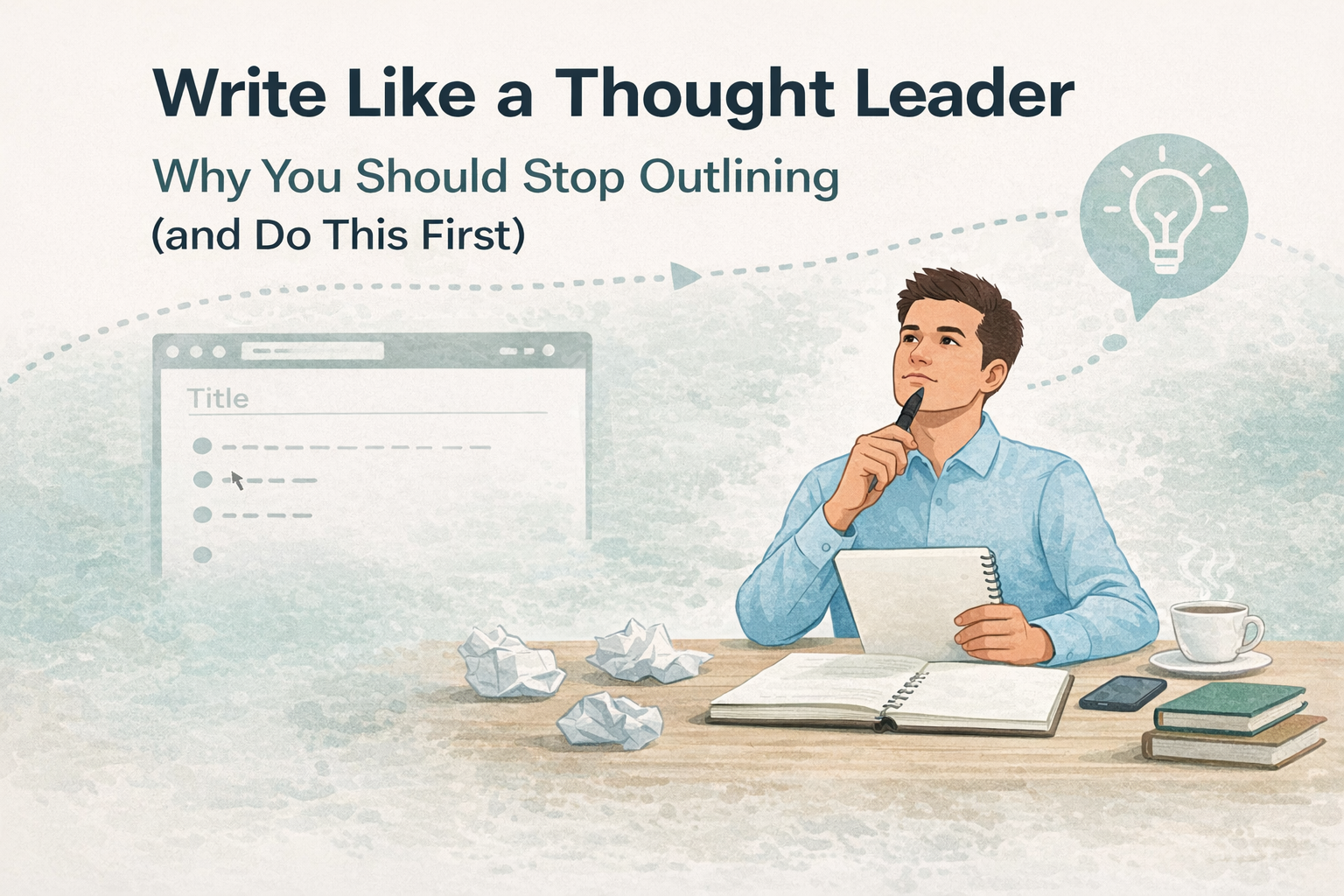
The Modern Author: Arianna Huffington on Burnout, Focus, and Creative Energy

Arianna Huffington didn’t burn out because she was weak.

She burned out because she was successful, driven, and running at full speed with no off switch.

After collapsing from exhaustion in 2007, she didn’t just recover. She rebuilt her entire philosophy of work, creativity, and leadership. That journey led to Thrive, Thrive Global, and a career-long mission to end the burnout epidemic.

This conversation isn’t about writing faster.

It’s about writing without frying your brain.

Because tired authors don’t fail from lack of talent.

They fail from diminishing returns.

And Arianna has spent years studying exactly where that line is.


Who This Is For

This is for you if:

  • you’re exhausted but still pushing
  • writing feels heavy instead of energizing
  • focus comes in short bursts, then disappears
  • your phone keeps winning
  • you know the book matters, but you’re running on fumes

The Modern Author Lesson

You don’t finish meaningful books by pushing harder.

You finish them by protecting creative energy and removing silent drains.

Burnout isn’t a badge of honor.

It’s a signal that the system is broken.


5 Takeaways Authors Can Steal from Arianna Huffington

1) Burnout creates diminishing returns, not breakthroughs

The point: More effort doesn’t always mean better work.

Arianna’s insight came the hard way. She collapsed from exhaustion while running the Huffington Post, a moment that forced her to confront a truth most authors ignore:

When you’re depleted, output drops even as effort increases.

Use it as an author:

Stop measuring writing by hours. Measure it by clarity per session.

Ask:

  • Did this session move the idea forward?
  • Did I protect energy for the next session?
  • Did I stop before quality declined?

Chapter angle:

“Why pushing harder makes your book worse.”


2) Balance is the wrong goal, recovery is the right one

The point: Creative intensity is fine. Chronic depletion is not.

Arianna doesn’t talk about “balance” the way most people do. She doesn’t believe in evenly dividing energy every day.

She believes in cycles.

Write deeply when you’re in flow. Then recharge deliberately.

Use it as an author:

Design writing seasons, not daily perfection.

  • sprint when creativity is high
  • recover without guilt
  • stop before exhaustion becomes the norm

This keeps writing sustainable instead of punishing.

Chapter angle:

“Why creative surges are healthy and burnout is optional.”


3) Your first draft doesn’t need a keyboard

The point: Writing is thinking, not typing.

Arianna shared that for her last two books, she dictated the first draft. Not because she was lazy, but because she noticed something important:

She could speak clearly for an hour without notes.

So she stopped fighting her natural strengths.

Use it as an author:

Lower the friction to get words out.

Try:

  • dictating while walking
  • voice notes during commutes
  • speaking sections as if explaining to a friend

Once a draft exists, editing becomes far easier.

Chapter angle:

“The fastest way to get unstuck is to stop typing.”


4) Distraction is poison for deep work

The point: Focus isn’t fragile. It’s interrupted.

Arianna is ruthless about one rule:

No notifications while writing. None.

If she wants the news, she goes and gets it. She doesn’t let it come to her.

Interruptions break creative continuity, and regaining depth takes far longer than most people realize.

Use it as an author:

Adopt one non-negotiable distraction rule for 7 days.

Examples:

  • phone out of the room
  • notifications off
  • one writing tab only
  • write before consuming anything

You don’t need perfect focus. You need protected focus.

Chapter angle:

“The hidden cost of ‘just checking’ your phone.”


5) Vulnerability isn’t optional if you’re writing about your life

The point: Readers can feel when you’re holding back.

Arianna was direct:

If you’re not willing to be vulnerable, you shouldn’t write a book that includes your life.

That doesn’t mean oversharing. It means honesty. No perfection. No performance.

Readers don’t connect to polish. They connect to truth.

Use it as an author:

Ask yourself:

  • Where am I trying to look impressive?
  • Where am I avoiding the real story?
  • What would change if I wrote this without protecting my image?

That’s usually where the book comes alive.

Chapter angle:

“Why perfect books feel empty.”


The Modern Author Playbook

Protect Energy, Produce Clarity (7-Day Reset)

Step 1: Identify your biggest energy leak

Choose one:

  • overworking
  • constant notifications
  • writing when exhausted
  • perfectionism
  • guilt-driven productivity

Step 2: Name the cost

Finish this sentence:

“When I keep doing this, my writing suffers because…”

Step 3: Choose one protection rule

Examples:

  • stop writing before exhaustion
  • dictate first drafts
  • phone out of the room
  • no editing during drafting

Step 4: Run the experiment for 7 days

No optimization. Just consistency.

Step 5: Capture proof

Each day, write one line:

“What felt easier or clearer today because I protected my energy?”

That’s how sustainable writing habits are built.


FAQs

Why do so many authors burn out while writing?

Because they treat writing like a grind instead of a creative system that requires recovery.

How do you write consistently without exhaustion?

By protecting focus, removing distractions, and stopping before diminishing returns kick in.

Is dictation really effective for book writing?

Yes. For many authors, it’s the fastest way to generate a first draft because it bypasses perfectionism and friction.


The Bottom Line

Burnout doesn’t make you serious.

Exhaustion doesn’t make you committed.

Finished books come from authors who respect their creative energy enough to protect it.

Arianna Huffington didn’t just survive burnout.

She redesigned how meaningful work gets done.

That’s the lesson modern authors can’t afford to ignore.

https://youtu.be/kOw5Y_4dA5Y

About the Author

Eric Koester is an award-winning entrepreneurship professor at Georgetown University, bestselling author, and founder of Manuscripts. He has helped more than 3,000 nonfiction authors turn ideas into books, and books into platforms for speaking, media, and business growth.

About Manuscripts

Manuscripts is a modern publishing partner for nonfiction authors who want their books to drive real-world outcomes. We help founders, executives, coaches, and experts design, write, and launch books that build authority, attract opportunities, and compound into long-term business assets.

Work With Us

If you’re writing a book you want to matter, we’ll help you map the right strategy before you write another word.

👉 Schedule a Modern Author Strategy Session
https://write.manuscripts.com/maa-web
Read more...

The Modern Author: How Jim Kwik Became the Superhero Who Battled His Villains

Jim Kwik didn’t start out confident. He wanted to be invisible. He sat behind the biggest kid in class because he didn’t have the answers.

And then he built a career teaching people how to learn, focus, and remember, basically the exact skills that authors need when they’re trying to write something real.

That’s the point of this episode. You’re not broken. You’re training.

Who this is for

This is for you if:

  • imposter syndrome keeps you quiet
  • perfectionism slows you down
  • distraction eats your writing time
  • you’re writing alone and it feels heavy

The Modern Author lesson

You don’t defeat writing resistance with motivation. You defeat it by naming the villain and training one superpower at a time.


5 takeaways authors can steal from Jim Kwik

1) Your labels become your limits

The point: the story you believe about yourself shapes what you attempt.

Kwik’s moment: he was labeled “the boy with the broken brain,” and that label became a box.

Use it as an author: write down the label you’re operating under, then rewrite it as a skill you’re building.

Quick reframe examples

  • “I’m not a real writer” → “I’m a writer in reps.”
  • “I’m bad at structure” → “I’m learning structure through templates.”
  • “I can’t focus” → “I’m rebuilding focus stamina.”

Chapter angle: “The labels that quietly kill books before they’re written.”


2) Self-awareness is a superpower

The point: you can’t fix patterns you refuse to see.

Kwik’s idea: curiosity and self-awareness come first, then courage to be yourself.

Use it as an author: identify your default sabotage pattern:

  • do you hide?
  • do you over-research?
  • do you polish instead of produce?
  • do you start new chapters to avoid finishing?

Chapter angle: “Your writing pattern isn’t random, it’s a protection strategy.”


3) Community beats loneliness, and loneliness kills momentum

The point: writing alone is dangerous, not romantic.

Kwik’s warning: chronic loneliness has real cognitive cost, and community shapes who you become.

Use it as an author: stop trying to “be strong.” Build one consistent touchpoint:

  • weekly writing sprint with 2–5 people
  • a co-working block
  • a weekly draft share

If you don’t have that yet, do what he suggests: be that person for someone else first.

Chapter angle: “The social system behind every finished book.”


4) Focus is a behavior, not a personality trait

The point: attention isn’t something you have, it’s something you do.

Kwik’s framing: focus is fixed on goal until successful. Multitasking is just task switching, and it costs time, accuracy, and energy.

Use it as an author: pick one focus rule and keep it for 7 days:

  • 25 minutes write, 5 minutes break (repeat)
  • phone stays out of the room
  • one chapter section per sprint, no switching

Chapter angle: “Why smart authors still don’t finish, and how focus fixes it.”


5) Your dominant question drives your output

The point: the question you repeat controls what you notice and what you do.

Kwik’s example: he sees top performers driven by a dominant question. Will Smith’s was “How do I make this moment more magical?”

Use it as an author: choose a dominant question that produces pages:

  • “What’s the simplest version of this idea?”
  • “What would make this section more useful?”
  • “What would I tell a smart friend over coffee?”
  • “How do I write the next paragraph, not the whole book?”

Chapter angle: “The hidden mental script that writes your book for you.”


The Modern Author Playbook

“Name Your Villain, Train Your Superpower” (7-day plan)

Step 1: Pick one villain

Choose one:

  • imposter syndrome
  • perfectionism
  • distraction
  • loneliness
  • overthinking

Step 2: Write its script

Finish this sentence:

“When I try to write, this villain says…”

Step 3: Choose one counter-move

Match the villain to a superpower:

  • Imposter syndrome → visibility reps (share imperfect drafts)
  • Perfectionism → shipping reps (publish ugly v1s)
  • Distraction → focus reps (Pomodoro + phone out of room)
  • Loneliness → community reps (weekly sprint)
  • Overthinking → clarity reps (write the simplest version first)

Step 4: Do 7 reps

One rep per day. Small is fine. Consistent is the point.

Step 5: Capture proof

End each day with one line:

“What did I do today that a person who finishes books would do?”

That line rewires identity.


FAQs

What’s the biggest reason people don’t finish writing a book?

Most people don’t fail on ideas, they fail on consistency because villains like perfectionism, imposter syndrome, and distraction win the daily battle.

How do you beat imposter syndrome while writing?

Treat it like a villain, not your identity. Build proof through small visibility reps and consistent writing sprints.

What’s a good daily writing routine for busy professionals?

Use 25-minute writing sprints with 5-minute breaks, and remove your phone from the room.

What does Jim Kwik mean by “dominant question”?

It’s the question you repeatedly ask yourself, consciously or not, that directs your focus and shapes your behavior.


Listen and watch

Julia Cameron on How to Silence Your Inner Critic - Book Is the Hook

Creative blocks aren’t a lack of talent. They’re usually a lack of permission. In this live, in-class conversation, Julia Cameron, author of The Artist’s Way, explains why simple, repetitive practices like Morning Pages are still the most effective way to unblock creativity. She breaks down how perfectionism shuts writers down, how the inner critic loses its power through daily practice, and why starting exactly where you are matters more than finding the perfect system. This episode is especially valuable for writers and creators who feel stuck, overwhelmed, or quietly afraid of getting it wrong.
  1. Julia Cameron on How to Silence Your Inner Critic
  2. Marc Randolph on Why Ideas Don’t Matter (Iteration Does)
  3. Seth Godin on Why Writing Is a Practice, Not a Performance
  4. Simon Sinek on Why Writing a Book Should Feel Hard
  5. The moment your story stops being performative and starts being useful
https://www.youtube.com/watch?v=RBgUdGPMgWM

About the Author

Eric Koester is an award-winning entrepreneurship professor at Georgetown University, bestselling author, and founder of Manuscripts. He has helped more than 3,000 nonfiction authors turn ideas into books, and books into platforms for speaking, media, and business growth.

About Manuscripts

Manuscripts is a modern publishing partner for nonfiction authors who want their books to drive real-world outcomes. We help founders, executives, coaches, and experts design, write, and launch books that build authority, attract opportunities, and compound into long-term business assets.

Work With Us

If you’re writing a book you want to matter, we’ll help you map the right strategy before you write another word.

👉 Schedule a Modern Author Strategy Session
https://write.manuscripts.com/maa-web

Read more...

How to Write and Launch a Book in 2025 (Without Feeling Afraid)

Writing a book seems scary. And this fear triggers 4 major mistakes. How to write and launch a book in 2025 (without feeling afraid)?

The 4 most common mistakes:

  1. Writing alone
  2. Forcing a structure
  3. Unique knowledge points
  4. Focusing on the Big Numbers
Let’s break them down:

1) Writing Alone

The first thing I’ll tell you: Most people think writing a book is an individual endeavor. It’s not. The reality? When you talk to the most successful authors, they all start by talking about other people.
  • How they worked with a group.
  • How they collaborated
  • How they had a ton of help
And this is what I always tell people: Writing is NOT something you do alone. You do the typing yourself, yes. But you DON’T write a book as an individual. No… It’s a collaborative effort.

2) Forcing a Structure.

This is a big one for most people. They think they need: • a table of contents • perfect structure • rigid outlines All this stuff, before they ever start. But I would flip that around. Analogy:
“You start this process with a compass, not a map”
And when I had the chance to interview Daniel Pink (who also happens to be my neighbor), he shared something interesting: He starts with 2 things: 1. A notepad 2. A list of questions And then he thinks about who he can talk to about those questions. As I said earlier… Books are not to be written alone!

3. Unique Knowledge Points

This is for my non-fiction writers. I studied 150+ best sellers and found this: Stories account for 80% of their written content. NOT unique knowledge points. So if you want to write an exceptional book: - Identify - Teach - Tell All through storytelling It’s the proven formula for success.

4. Focusing on Big # ’s

People often worry:
“Is my book going to sell 1,000,000 copies?”
And that’s not the best mindset. Here’s why: Books are sold via word of mouth. You want to find your first 200 fans and friends, and have them help spread the word. It happens in phases. And that’s a good thing ( I promise ).

The 4 major mistakes authors make:

1. Writing Alone 2. Forcing a structure 3. Unique Knowledge Points 4. Focusing on Big Numbers So let's break this cycle and utilize a community-driven approach for your next book project.
Read more...

How to Get Rid of Imposter Syndrome & Validate Your Voice

Imposter syndrome means extinction for most modern authors. And it's a shame.

Steal my 3 steps to validate your voice

I'll be honest: I hate the term "imposter syndrome." It’s almost as if you're afflicted with a disease—shunned by society—destined to live out your days in a dark forest. It plagues so many authors.

These 3 steps are the cure:

  • Step 1: Identify Your "Who"
  • Step 2: Create a Pact
  • Step 3: Gather Feedback
Let's regain your self-confidence. I know it's in there...

Step 1: Identify Your "Who."

Engrain this in your mind: You're NOT writing for everyone. When you accept the fact that you can't please every person on the planet, imposter syndrome fades. Normalize selective sharing. You'll also need some accountability. There are 2 types: 1. Professional accountability 2. Peer accountability Professional, you pay for: - Someone from a publisher - A writing consultant - Editors A peer can be a friend.

Step 2: Create a Pact.

The reality is, most writers think in word count. Bad idea. Try thinking in terms of time. But beware of overestimation. Research shows that we often overestimate the amount of work we'll need to do. This overestimation problem manifests as a disappointment problem. Here's an example of a time pact: “I’ve got two hours blocked off to write this week. Can I send you something to read from that?” Here's what you just accomplished:
  • You've limited your feedback loop.
  • You've scoped your deliverable.
  • You've set aside some time.
This loose commitment (pact) will increase your chances of completion. Give it a shot.

Step 3: Gather Feedback.

Here's what you don't want: Accidentally make your imposter syndrome worse. Make sure to ask for feedback in the way you'd like to receive it. Here's how... You probably don't want them to bloody up your book with a rampant red pen.
  • Tell them not to change the text
  • Ask for 1 or 2 things they liked
  • And what you can improve
Then you can go ahead and make changes you think make sense. Bye-bye imposter syndrome!
Read more...

Depth Over Frequency for Growing Your Brand

If you're interested in growing your brand or amplifying your voice, here's what we found in the research.

Aim for depth over frequency.

For my latest book, I researched over 6,000 individuals named to the Forbes 30 under 30. I wanted to see what stood out about them. It wasn't the schools they attended, the graduate degrees they help, or the companies they worked at. It wasn't even the companies they started.
Over 85% of them had a "Creation Event" -- a substantial, public project that they used to demonstrate their expertise, credibility, curiosity, and competence.

Nearly all of them 'went deep' on something outside of their job or work.

We found 9 creation events among these individuals, including:
  • hosted an event series or conference
  • hosted a podcast
  • created a video series
  • organized a concert or exhibit
  • published original research
  • wrote a book
  If you're looking for a path to elevate your voice or enhance your personal or business brand, focus on depth over frequency. OR, start with depth, and then add frequency based on the depth. Invest in a Creation Event. The best investment is an investment in your own growth. What's the most impactful creation event in your career/life?

Read more...

5 Tips to Find Your Writing Focus

Writing can be a painstaking process. And after launching 2,000+ authors and books of my own...

5 tips to find your writing focus:

With steadfast focus, you're unstoppable.

Steal my 5 tips:

1. The beautiful art of freewriting 2. Always write in small chunks 3. Find yourself a writing rival 4. Find stress-free activities 5. Discover a community Eggcellent, let's crack the shell. Shall we?

1) The Beautiful Art of Freewriting.

Set a timer for 10 minutes and write whatever comes to mind. Transfer all your: - Musings - Emotions - Negativity Onto the paper, or through the keyboard.

2) Always Write in Small Chunks.

This is a PSA for my modern authors... You don't have to: - Write 10,000 words at once - Put off your obligations - Pull all-nighters Try to write in smaller chunks, but do it more frequently.

3) Find Yourself a Writing Rival.

You guys have heard me say this before: "Writing is NOT something you do alone." Find a fellow author, then: - Challenge each other - Set some nice goals - Utilize rewards

4) Find Stress-Free Activities.

You have SO many options: - Walk - Do yoga - Lift weights - Listen to music Find something to relax your mind.

5) Discover a Community.

With a group of like-minded individuals, you increase the likelihood of (actually) sitting down to write. Not only that but: - Accomplishing your goals - Improving your craft - Fulfilling dreams That's what we're after, isn't it? Folks, this chapter has come to a close. What's your secret to find your writing focus?
Read more...

How To Leverage Creativity in Writing: Insights From Austin Kleon

Pablo Picasso once said:
“Good artists borrow, great artists steal.”
So I sat down with Austin Kleon, author of “Steal Like An Artist” to talk about creativity and writing.

These are the 10 best takeaways:

1) Exploring and Collecting.

Having a system for exploring and collecting ideas is vital. The best creators: • Explore the world • Capture its essence • And share the result

2) Input to Output Ratio.

Inputs: • Reading • Learning • Inquiring Outputs: • Writing • Ideating • Creating The ratio should be at least 1:1 If not 2:1, input to output.

3) Thinking in Verbs, Not Nouns.

Don't become too attached to job titles or nouns. Instead, focus on the verbs. The actions you take. The stuff you really enjoy. The things others respond to.

4) Authenticity and Frequency.

Authenticity and consistency are KEY. Try to set: • Goals • Deadlines • Aspirations This will help maintain frequency which will turn into consistency.

5) The Role of the Reader.

A book comes alive when the reader picks it up. The reader's interpretation and engagement with the work is a crucial part of the creative process. So pour out your heart and soul.

6) Making Yourself Interesting.

To create interesting work, you need to be an interesting person. That doesn't mean: • Outlandish • Eccentric • Flashy Just be genuinely interested in the world. And make it interesting to others.

7) The Importance of Fun.

Writing should be fun. If it feels like work, not play, it's hard for the reader to enjoy it. They feel what you feel. (That's the beauty of writing).

8) Stealing Like an Artist.

This doesn't mean plagiarizing. Rather, you should draw inspiration from existing works and add your own spin. Everything's already been said. But maybe not by you...

9) The Power of Visuals.

Austin Kleon's creative process often involves visuals. When there are more pictures than words, creativity thrives. As they say: "A picture is worth 1,000 words."

10) The Value of Notebooks.

As a writer, you NEED a notebook. Not only will it help capture thoughts and ideas, but you can also revisit them. You'll see your evolution over time. How do you cultivate creativity in your writing?
Read more...