Authority Builders: Why Books Remain the Fastest Way to Build Trust in the AI Era
The AI Explosion Didn’t Create a Content Problem. It Created a Trust Problem.
Authority builders are not defined by how much content they publish.
They are defined by how effectively they transform expertise into work that other people trust.
Artificial intelligence has dramatically changed the economics of publishing.
Creating content has become faster.
Publishing has become easier.
Information has become nearly limitless.
Today, almost anyone can generate articles, social posts, newsletters, presentations, or reports in minutes.
For the first time, content itself is no longer scarce.
This shift has led many professionals to assume that long-form work, especially books, will become less valuable.
The opposite is happening.
As content becomes abundant, the ability to create it becomes less differentiating.
What becomes valuable is not the volume of information someone produces.
It is whether people believe the expertise behind it.
When information is abundant, scarcity shifts elsewhere.
Today, the resources in shortest supply are:
- Trust
- Credibility
- Demonstrated expertise
- Intellectual ownership
Intellectual ownership is the ability to present original thinking, frameworks, and perspectives that are clearly associated with you rather than easily replicated by others.
Modern professionals are no longer competing primarily for visibility.
They are competing to become authority builders whose expertise is believable, discoverable, and trusted.
The question is no longer:
“Can you publish?”
It is:
“Why should anyone trust what you publish?”
Why Books Matter More in an AI Economy
This is why books have become more valuable, not less.
A book signals something that short-form content rarely can.
It demonstrates:
- Sustained thinking
- Intellectual discipline
- Structured expertise
- Original synthesis
- Long-term commitment
Anyone can generate information.
Far fewer people can organize years of expertise into a coherent body of work that withstands scrutiny.
A book is not simply another piece of content.
It is evidence that the author has invested the time to develop, organize, and stand behind an idea.
For many years, professionals competed for attention.
Today, attention is only the beginning.
The real competition is for trust.
In an environment flooded with instant content, authority no longer comes from publishing more.
It comes from creating proof that expertise is real, distinctive, and worth believing.
That is why books remain one of the strongest authority assets in the modern economy.
They transform expertise into visible proof and sustained thinking into lasting trust.
The Real Shift Most Professionals Miss
One of the biggest misconceptions in the AI era is that authority is simply a function of publishing more.
More posts.
More articles.
More videos.
More newsletters.
The assumption is straightforward:
More content creates more authority.
For a time, this often appeared true.
Publishing consistently increased visibility.
Visibility created familiarity.
And familiarity sometimes translated into influence.
Today, that relationship is becoming weaker.
As content becomes easier to produce, publishing alone is no longer enough to distinguish expertise.
Content Creates Awareness. Authority Creates Belief.
This is the shift many professionals overlook.
Content and authority are related.
But they are not the same.
| Content | Authority |
| Creates awareness | Creates belief |
| Increases visibility | Builds trust |
| Starts conversations | Shapes decisions |
| Can be produced quickly | Must be earned over time |
| Competes for attention | Competes for credibility |
Awareness answers the question:
“Have I heard of you?”
Authority answers a different question:
“Do I trust your judgment?”
The second question has become far more important.
The New Competitive Advantage
In an environment where almost anyone can produce content, professionals are increasingly evaluated on the quality of their thinking rather than the quantity of their output.
People look for evidence of:
- Expertise
- Judgment
- Originality
- Consistency
These qualities cannot be manufactured through volume alone.
They emerge through sustained work, coherent ideas, and demonstrated experience.
The professionals who stand out are rarely those who publish the most.
They are the ones who create the strongest proof that their expertise is worth trusting.
From Output to Evidence
This is the strategic shift.
The goal is no longer to publish more.
It is to publish work that demonstrates ownership, depth, and credibility.
The future belongs to professionals who create evidence—not simply output.
Because in an AI-driven economy, content may capture attention.
But proof is what earns belief.
The Decision in 60 Seconds
This Guide Is for You If…
- You want to become known for your expertise—not simply your content.
- You publish regularly but want to build greater credibility and authority.
- You want your ideas to compound into long-term professional opportunities.
- You see your book as part of a broader strategy for thought leadership, positioning, and influence.
- You want to understand why books continue to matter in an AI-driven world.
This Guide Is Not for You If…
- You’re looking for publishing mechanics or production advice.
- You want short-term marketing tactics to generate more content.
- You believe authority is primarily a function of publishing volume.
- You see a book as an isolated project rather than a long-term professional asset.
The Decision in One Sentence
As AI makes content easier to produce, trust becomes harder to earn.
Books remain one of the strongest signals that expertise is genuine because they transform knowledge into visible, structured, and credible proof.
The Question This Guide Answers
In a world where everyone can publish content, how do professionals create authority that people actually trust—and why do books remain one of the most powerful ways to do it?
Why This Matters to Modern Authors
Modern Authors approach publishing differently.
They do not write books simply to share information.
Information has never been easier to produce, distribute, or access.
What has become difficult is creating work that people trust, remember, and associate with genuine expertise.
This is why modern authorship is not primarily a publishing strategy.
It is an authority strategy.
Beyond Information Distribution
For many years, publishing was largely about making information available.
Today, information is abundant.
The greater opportunity is transforming expertise into assets that continue creating value long after they are published.
Modern Authors use books to create:
- Proof — Visible evidence that expertise has been developed, organized, and tested.
- Positioning — A clear association between the author and the ideas they want to become known for.
- Trust — Confidence that the author’s thinking is credible, original, and worth following.
- Discoverability — The ability for people to find, evaluate, and share the author’s expertise without relying on introductions.
- Long-term leverage — Opportunities that extend beyond the book itself, including speaking, advisory work, business development, media, and thought leadership.
The Modern Author’s Perspective
This shift changes the role a book plays.
A book is no longer simply the final product of someone’s knowledge.
It becomes the infrastructure that supports a larger body of work.
It helps expertise become visible.
It strengthens professional positioning.
And it creates an asset that continues building authority long after publication.
For Modern Authors, publishing is not the destination.
It is the mechanism through which expertise becomes trusted, discoverable, and strategically valuable.
What This Guide Will Teach You
This guide is not about how to publish a book.
It is about why books continue to matter in a world where information is abundant, content is increasingly commoditized, and trust has become the defining competitive advantage.
Throughout the following sections, you’ll explore how authority is built—not through publishing more, but through creating stronger proof of expertise.
Inside This Guide, You’ll Learn
- Why AI changed the economics of authority and shifted scarcity from information to trust.
- Why trust has become more valuable than attention in a world where anyone can generate content.
- Why books signal expertise differently from other forms of media, even as publishing becomes easier.
- How books become authority platforms, creating positioning, credibility, and influence that extend far beyond publication.
- Why intellectual assets compound over time, transforming expertise into opportunities that continue generating value.
- How Modern Authors build long-term credibility systems by connecting books to a broader strategy for authority, visibility, and professional leverage.
The Transformation
By the end of this guide, the question will no longer be:
“Should I write a book?”
It will become:
“How can I use a book to build an authority system that continues creating trust, credibility, and opportunity long after it is published?”
That is the shift this guide is designed to help you make.

PART I — The New Economics of Trust
For generations, professional authority followed a familiar pattern.
Knowledge was difficult to access.
Publishing was expensive.
Distribution was limited.
Those constraints meant that simply creating and sharing ideas carried significant value.
Artificial intelligence has changed those economics.
The ability to produce information is no longer the primary advantage.
The ability to create work that people trust is.
Understanding this shift is the foundation for understanding why books have become more valuable—not less—in the AI era.
Why the AI Era Changed the Value of Content
Artificial intelligence did not eliminate the need for content.
It eliminated much of the scarcity that once made content itself valuable.
Today, creating articles, reports, newsletters, presentations, and social media posts requires significantly less time, effort, and specialized skill than it did only a few years ago.
As a result, several long-standing barriers have largely disappeared:
- Publishing is no longer scarce.
- Content has become inexpensive to produce.
- Information is widely abundant.
- Visibility is easier to achieve.
These are remarkable changes.
But they have also changed what audiences value.
When Supply Increases, Value Shifts
The economics are straightforward.
When something becomes abundant, it becomes less differentiating.
The competitive advantage moves elsewhere.
For professionals, that advantage has shifted away from producing information and toward demonstrating expertise.
People are no longer impressed simply because someone publishes.
They want evidence that the thinking behind the content is credible, original, and worth trusting.
This is why the AI era has not diminished the importance of authority.
It has increased it.
The New Scarcity
Information is abundant.
Attention is fragmented.
Content is everywhere.
What remains scarce is confidence in the person behind the ideas.
Today, professionals compete for:
- Credibility
- Trust
- Demonstrated expertise
- Sound judgment
- Intellectual ownership
These qualities cannot be automated simply by increasing output.
They must be earned through work that consistently demonstrates depth, coherence, and experience.
The Key Shift
The most important change is not technological.
It is economic.
Scarcity has moved.
It no longer resides in information.
It resides in credibility.
The professionals who thrive in the AI era will not necessarily be those who produce the most content.
They will be those who create the strongest evidence that their expertise deserves attention and trust.
Content Is No Longer the Competitive Advantage
For years, publishing more content was a reliable way to build visibility.
If you consistently wrote articles, shared ideas, recorded videos, or published insights, you were often rewarded with greater attention.
That equation has changed.
Today, creating content is easier than ever.
As production becomes increasingly accessible, content itself becomes less capable of distinguishing one professional from another.
The competitive advantage has shifted.
Content and Authority Are Not the Same
Content and authority often work together.
But they perform different functions.
| Content | Authority |
| Creates awareness | Creates belief |
| Helps people discover you | Gives people confidence in your expertise |
| Captures attention | Earns trust |
| Can be produced quickly | Must be built over time |
| Increases visibility | Strengthens credibility |
Awareness answers the question:
“Do people know you exist?”
Authority answers a different question:
“Do people trust your judgment?”
Visibility may open the door.
Authority determines whether people walk through it.
The Shift From Production to Proof
This is one of the defining changes of the AI era.
Producing content is becoming easier.
Demonstrating expertise is not.
Readers, clients, partners, and decision-makers are increasingly looking for evidence that someone possesses:
- Deep expertise
- Sound judgment
- Original thinking
- Consistent perspective
These qualities cannot be established through output alone.
They are demonstrated through work that reflects sustained thinking and credible expertise.
Publishing remains important.
But publishing by itself is no longer enough.
The professionals who stand out are not simply those who produce the most content.
They are the ones who create the strongest proof that their ideas are worth trusting.
Content creates awareness.
Authority creates belief.
In an AI-driven economy, the professionals who build lasting influence will be those who invest less in producing more content and more in creating work that people believe.
Why Trust Has Become the New Scarce Resource
Every major technological shift changes what the market values.
When information was difficult to access, knowledge itself created an advantage.
When publishing was expensive, visibility carried significant value.
Today, both information and visibility are increasingly abundant.
As those barriers disappear, professionals are no longer judged primarily by how much they publish.
They are judged by whether their expertise is believable.
Trust has become the new scarce resource.
How People Evaluate Expertise Today
Modern audiences have more information than they can consume.
As a result, they have become more selective about who they believe.
Instead of asking,
“Who publishes the most?”
They increasingly ask,
“Whose thinking deserves my attention?”
That evaluation is shaped less by activity and more by qualities that are difficult to imitate:
- Expertise — Do they demonstrate a deep understanding of the subject?
- Judgment — Can they distinguish what matters from what doesn’t?
- Originality — Do they contribute ideas rather than simply repeating them?
- Consistency — Does their work reinforce a coherent point of view over time?
These are the signals that create confidence.
And confidence is what trust is built upon.
Activity Is Easy to Measure. Trust Is Hard to Earn.
Publishing frequently can make someone more visible.
It does not automatically make them more credible.
In an AI-driven economy, activity is increasingly expected.
Trust is not.
Trust is earned when professionals consistently produce work that reflects thoughtful analysis, clear reasoning, and lived expertise.
That is why credibility compounds more slowly than content.
It requires repeated evidence, not repeated output.
This is the defining shift.
Professionals are no longer competing primarily on how often they create.
They are competing on how much confidence their work inspires.
The strongest careers will increasingly belong to people who create ideas others remember, judgment others respect, and expertise others trust.
Because in a world where everyone can publish, trust becomes the resource that determines whose work truly matters.

PART II — Why Books Signal Something Different
The previous section established that trust has become the scarcest resource in the modern economy.
The next question is obvious:
If trust matters more than ever, what actually builds it?
Not all forms of content send the same signal.
Some create awareness.
Some create engagement.
A few create lasting credibility.
Books belong in that final category because they communicate something that shorter formats rarely can: sustained, organized, and enduring expertise.
Why Books Remain the Strongest Signal of Expertise
A book is more than a collection of information.
It is evidence of sustained intellectual effort.
Unlike most forms of content, a book requires an author to organize ideas, develop a coherent argument, connect concepts, and maintain consistency across an entire body of work.
The result is not simply more information.
It is a stronger signal.
When someone publishes a serious nonfiction book, they communicate qualities that audiences increasingly value:
- Depth of expertise
- Long-term commitment
- Structured thinking
- Intellectual discipline
- Sustained focus
These signals are difficult to manufacture quickly.
That is precisely why they remain valuable.
Not All Content Sends the Same Signal
Different formats serve different purposes.
Short-form content is excellent for introducing ideas and maintaining visibility.
Books serve a different function.
They establish credibility.
| Short-Form Content | Books |
| Fast to produce | High investment |
| Individual ideas | Integrated thinking |
| Temporary attention | Enduring reference |
| Frequent activity | Sustained commitment |
| Builds visibility | Builds credibility |
Neither format replaces the other.
But they are evaluated differently.
Publishing another post tells people you are active.
Publishing a book tells people you have developed something substantial enough to organize, defend, and share.
Why This Difference Matters
As AI makes publishing easier, audiences become more selective about what they trust.
The value of a book is not that it contains more words.
It is that it demonstrates a level of thinking that shorter formats rarely require.
A book asks the author to move beyond isolated observations and build a coherent body of knowledge.
That process creates a stronger credibility signal because it reflects sustained expertise rather than momentary output.
In an age where information is abundant, books remain one of the clearest ways to demonstrate that expertise is real, intentional, and worthy of trust.
Books Demonstrate Intellectual Ownership
Knowledge is increasingly accessible.
With AI, search engines, and digital libraries, almost anyone can retrieve information within seconds.
That means information alone is no longer a meaningful competitive advantage.
What distinguishes experts today is not simply what they know.
It is how they organize, interpret, and develop that knowledge into ideas that are recognizably their own.
This is where books create a different kind of value.
They demonstrate intellectual ownership.
What Is Intellectual Ownership?
Intellectual ownership is the ability to develop and communicate a distinctive way of thinking about a subject.
It goes beyond possessing expertise.
It means transforming experience into original intellectual assets that others can understand, reference, and associate with you.
A serious nonfiction book requires an author to do more than explain what they know.
It requires them to:
- Synthesize ideas from experience, research, and observation into a coherent perspective.
- Organize knowledge into a logical structure that others can follow.
- Develop original thinking that contributes something beyond widely available information.
- Build coherent frameworks that make complex ideas understandable, memorable, and transferable.
These are not simply writing skills.
They are signals of intellectual leadership.
Information Is Shared. Ownership Is Recognized.
Many professionals possess valuable expertise.
Fewer transform that expertise into work that becomes identifiable with their name.
That distinction matters.
Information can be repeated.
Ideas can be copied.
But a clearly articulated framework, a distinctive point of view, or a well-developed body of thinking becomes part of an author’s intellectual identity.
This is why books continue to matter.
They help establish not only what an author knows, but how they think.
From Knowledge to Intellectual Property
A book is one of the most effective ways to convert expertise into intellectual property.
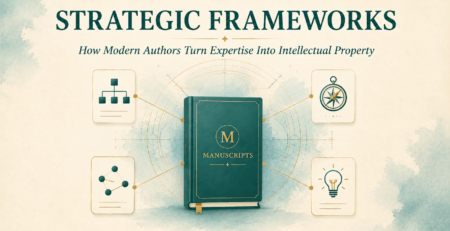
Intellectual property is knowledge that has been deliberately organized into original, reusable assets such as frameworks, models, methodologies, and systems.
That process creates something more durable than information alone.
It creates work that people can reference, teach, apply, and associate with its creator.
Books do not simply share knowledge.
They package ownership of an idea.
And in an economy where information is abundant, intellectual ownership becomes one of the strongest forms of professional differentiation.
Why Long-Form Thinking Becomes More Valuable in an AI Economy
One of the biggest misconceptions about artificial intelligence is that it makes books less relevant.
The opposite is true.
AI has made content easier to produce.
It has not made deep thinking easier to develop.
As the cost of generating information falls, the value of the thinking behind that information rises.
That is why long-form work has become more—not less—important.
When Production Becomes Cheap, Thinking Becomes Valuable
Every technological shift changes what the market rewards.
As AI commoditizes content production, the competitive advantage moves toward qualities that remain difficult to replicate.
Those qualities include:
- Depth — A thorough understanding developed through sustained experience and exploration.
- Originality — A perspective that contributes something beyond what is already widely available.
- Synthesis — The ability to connect ideas, experiences, and research into a coherent whole.
- Judgment — The capacity to determine what matters, what does not, and why.
These qualities become more valuable precisely because they cannot be generated simply by producing more content.
Books are uniquely positioned to demonstrate all four.
Writing a serious nonfiction book requires an author to organize ideas into a coherent argument, connect concepts across chapters, and sustain a clear point of view from beginning to end.
That process reveals the quality of an author’s thinking—not simply the quantity of their output.
AI Raises the Standard for Human Expertise
This is the paradox of the AI era.
AI lowers the barrier to creating content.
At the same time, it raises the standard for demonstrating expertise.
Readers can access more information than ever before.
What they increasingly seek is work that reflects careful reasoning, original insight, and sound judgment.
Those qualities are difficult to fake because they emerge from experience rather than automation.
That is why books continue to hold extraordinary value.
They communicate more than knowledge.
They demonstrate sustained thinking.
In an economy where information is abundant, the professionals who stand out will not simply produce more content.
They will create work that reflects depth, originality, synthesis, and judgment—the very qualities that long-form thinking communicates best.
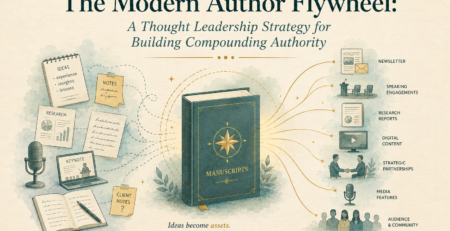
The Authority Builder Flywheel
Authority is often viewed as a milestone.
Something a professional eventually achieves after years of experience, successful projects, or industry recognition.
In practice, authority functions less like a destination and more like a compounding system.
Each stage strengthens the next.
Over time, that cycle becomes increasingly difficult to replicate because every new opportunity creates additional expertise, stronger ideas, and greater credibility.
The Trust Compounding System
| Phase | Outcome |
| 1. Experience | Real-world expertise accumulates. |
| 2. Ideas | Expertise becomes insights and frameworks. |
| 3. Book | Ideas become public intellectual assets. |
| 4. Trust | Readers gain confidence in the author’s thinking. |
| 5. Authority | Expertise becomes recognized and remembered. |
| 6. Opportunities | Authority creates new relationships and work. |
| 7. New Experience | Opportunities generate deeper expertise. |
| 8. Stronger Ideas | New expertise fuels the next book, framework, or body of work. |
The cycle repeats, compounding authority over time.
The important insight is that the book is not the end of the process.
It is the catalyst that makes expertise visible and allows authority to compound.
Without visible proof, much of an expert’s knowledge remains difficult for others to discover, evaluate, or share.
With a book, that expertise becomes part of a system that continuously generates new trust, new opportunities, and new intellectual capital.
Authority compounds when expertise becomes visible, memorable, and repeatedly discoverable.

PART III — Books Create Authority Platforms
The previous section explained why books communicate expertise differently from other forms of content.
The next question is equally important:
What does that expertise actually produce?
The answer is not simply greater visibility.
It is stronger positioning.
Books do more than collect ideas into a single publication.
They organize expertise into something the market can recognize, remember, and trust.
That is how authors move beyond creating content and begin building authority.
Authority Is Built Around Ideas, Not Activity
Many professionals assume authority grows in direct proportion to how much they publish.
More posts.
More articles.
More newsletters.
More videos.
Consistency certainly matters.
But consistency alone rarely creates lasting authority.
People do not remember professionals because they published every Tuesday.
They remember them because they became associated with a clear idea.
1. The Market Remembers Ideas
Think about the experts whose work has endured.
What usually comes to mind is not their publishing schedule.
It is the concept they introduced.
The framework they developed.
The category they helped define.
Authority grows when expertise becomes memorable.
That happens when people can quickly associate an individual with a distinct way of thinking.
Recognition is built through intellectual clarity, not publishing frequency.
2. From Activity to Association
This is the shift many professionals miss.
Publishing activity creates visibility.
Intellectual association creates authority.
Over time, people begin connecting an expert with:
- A distinctive idea
- A recognizable framework
- A clear point of view
- A specific problem they help solve
Those associations become mental shortcuts.
Instead of remembering individual pieces of content, people remember the thinking behind them.
That is what makes authority durable.
3. Why Books Accelerate This Process
A book provides enough space to develop an idea completely.
Instead of presenting isolated insights, it connects them into a coherent argument that readers can understand, remember, and share.
The result is not simply another publication.
It is a recognizable intellectual position.
The professionals who build lasting authority are rarely those who publish the most.
They are the ones whose ideas become easiest to remember and hardest to separate from their name.
Books Create Categories, Not Just Content
Most professionals measure publishing by output.
How many articles have I written?
How often do I post?
How many newsletters have I sent?
Those questions measure activity.
They do not measure authority.
Authority is built differently.
It grows when people begin to associate your name with a specific idea.
Not a single article.
Not a viral post.
An idea.
That is one of the most valuable things a book can do.
A Book Gives an Idea a Home
Ideas scattered across dozens of blog posts rarely become memorable.
Each piece may be useful on its own, but without a central organizing principle, the thinking remains fragmented.
A book changes that.
It gathers years of expertise into a single intellectual position.
Instead of publishing disconnected observations, the author develops one coherent argument that readers can understand, revisit, and recommend to others.
The book becomes the definitive home for that idea.
From Content to Category
As that idea circulates, something subtle begins to happen.
The market stops recognizing the author simply as someone who creates content.
It begins recognizing them as someone who owns a particular conversation.
That shift creates three powerful advantages:
- Category association — people connect the author with a specific domain, problem, or way of thinking.
- Intellectual positioning — the author’s perspective becomes differentiated from others discussing similar topics.
- Memorable expertise — audiences develop a clear answer to the question, “What is this person known for?”
This is how expertise becomes easier to recognize, remember, and recommend.
The Goal Is to Own an Idea
Most content competes for attention.
The strongest books compete for mental real estate.
They give readers a clear concept to remember and a name to attach to it.
That is why books continue to outperform isolated pieces of content as authority assets.
They do not simply add to the conversation.
They help define it.
And when an author becomes identified with an idea rather than a stream of content, they move beyond publishing.
They begin building a category around their expertise.
Publishing Turns Expertise Into Public Infrastructure
Most expertise exists in private.
It lives inside conversations.
Client engagements.
Board meetings.
Workshops.
Years of experience.
The knowledge is real.
The capability is real.
But to everyone outside that immediate circle, it is largely invisible.
This is one of the biggest constraints facing accomplished professionals.
Not a lack of expertise.
A lack of infrastructure.
Until expertise becomes visible, it cannot easily be discovered, evaluated, referenced, or shared.
Publishing changes that.
It transforms private knowledge into public infrastructure.
What Is Authority Infrastructure?
Infrastructure is something that continues creating value after it has been built.
Roads move people.
Power grids distribute energy.
Digital networks connect information.
Authority infrastructure performs a similar function.
It allows expertise to travel beyond the person who originally created it.
A published book becomes part of that infrastructure.
It makes ideas available whether the author is in the room or not.
Readers can discover them.
Colleagues can recommend them.
Clients can evaluate them.
The author’s thinking becomes continuously accessible rather than dependent on introductions or existing relationships.
From Invisible Expertise to Public Assets
Publishing changes the role expertise plays in a professional career.
Instead of remaining locked inside experience, it becomes an asset others can find and use.
That transformation creates lasting advantages:
| Publishing Creates | Why It Matters |
| Discoverability | Expertise can be found by people who have never met the author. |
| Proof | Readers can evaluate the author’s thinking directly. |
| Authority | Consistent public evidence strengthens professional credibility. |
| Positioning | The market develops a clearer understanding of what the author is known for. |
| Leverage | One intellectual asset can continue creating opportunities long after it is published. |
None of these outcomes happen because a book is marketed well.
They happen because the expertise now exists in a form that can be discovered, shared, referenced, and trusted.
That is the strategic shift.
Publishing is not primarily a marketing activity.
It is the deliberate construction of authority infrastructure.
It transforms expertise from something a professional possesses into something the market can continuously access, recognize, and build upon.
PART IV — Authority in Action
The principles in this guide are not theoretical.
They become visible when expertise is transformed into work that other people can discover, remember, and associate with a single idea.
The following examples illustrate what happens when a book becomes more than a publication.
It becomes an intellectual position.
Case Study Card — Stefaan van Hooydonk
Many professionals possess broad expertise.
They have years of experience.
Strong credentials.
A track record of meaningful work.
Yet they remain difficult to describe in a single sentence.
That makes their expertise harder to remember—and even harder to recommend.
Stefaan van Hooydonk demonstrates a different approach.
Rather than becoming known for a wide range of leadership topics, he became closely associated with one enduring idea:
Curiosity.
His work explores how curiosity shapes leadership, learning, innovation, and organizational performance.
The book did not create that expertise.
It organized it.
It gave years of experience a clear intellectual center that others could immediately recognize.
As a result, curiosity became more than a topic he discussed.
It became the idea people associated with his name.
That distinction matters.
Professionals are rarely remembered because they know many things.
They are remembered because they become synonymous with one important thing.
Why This Matters
A strong book does more than communicate expertise.
It gives expertise a recognizable identity.
Instead of asking audiences to remember dozens of individual insights, it organizes those insights around a single memorable concept.
That shift creates a stronger intellectual position because it makes expertise easier to:
- Understand
- Remember
- Reference
- Recommend
The lesson extends well beyond this example.
The strongest authority platforms are often built around one idea developed deeply and consistently over time.
For Stefaan van Hooydonk, that idea was curiosity.
The book became the vehicle that transformed it from an area of expertise into a category of recognition.
Case Study Card — Edwige Robinson
A common misconception about publishing is that a book creates credibility.
For accomplished professionals, the opposite is usually true.
Credibility already exists.
It has been built through years of experience, leadership, decision-making, and results.
The challenge is that much of that credibility remains confined to the environments where it was earned.
Edwige Robinson illustrates this distinction well.
Before publishing, she had already built an accomplished executive career leading innovation, operations, and global teams across major organizations.
Her expertise was not in question.
What changed was its reach.
Publishing transformed years of executive experience into a public intellectual asset that people could discover, engage with, and learn from without needing to work alongside her.
The book did not make her more experienced.
It made that experience more accessible.
That is a profound difference.
Expertise Becomes Scalable
Experience is naturally limited by time and proximity.
An executive can lead a team.
Advise an organization.
Deliver a keynote.
Mentor a small group of leaders.
Each creates value.
But each also depends on the executive being personally present.
A book changes that equation.
It allows expertise to travel beyond meetings, organizations, and existing professional networks.
The same ideas can now reach readers across industries, geographies, and generations.
Knowledge that was once delivered one conversation at a time becomes available to thousands of people simultaneously.
That is what makes publishing a form of scale.
The Strategic Lesson
Many professionals view a book as the culmination of a successful career.
Increasingly, it functions as the mechanism that extends that career into new audiences and new opportunities.
The expertise already exists.
Publishing amplifies it.
It transforms private experience into public influence, allowing years of accumulated knowledge to continue creating value long after it has been written.
For leaders like Edwige Robinson, the book was not the source of authority.
It was the vehicle that allowed existing authority to reach far beyond the boundaries of a single role, organization, or network.
Deeper Story Example — From Expertise to Authority Platform
Imagine two executives with similar careers.
Both have spent decades solving difficult problems.
Both have led teams, built organizations, and accumulated insights that others would benefit from.
Both are highly respected by the people who know them.
Yet their professional trajectories begin to diverge.
The first keeps that expertise largely inside existing relationships.
Their influence depends on meetings, introductions, referrals, and the organizations they have worked for.
When they leave a role, much of their visibility leaves with it.
The second publishes.
Not because they need more expertise.
But because they want their expertise to become visible.
The experience is the same.
The difference is what happens to it.
When Expertise Becomes Discoverable
A book transforms years of accumulated knowledge into something other people can find, evaluate, and share.
Instead of existing only in conversations, expertise becomes part of the public record.
It becomes:
- Discoverable thinking that readers can encounter long before they ever meet the author.
- Category positioning that gives the market a clear understanding of what the author stands for.
- Long-term trust built through a body of work that continues demonstrating expertise over time.
The knowledge has not changed.
Its accessibility has.
The Platform Effect
Once expertise becomes public, new opportunities begin to emerge.
Not because the author suddenly became more capable.
Because more people can now recognize that capability.
The book becomes a platform that supports opportunities such as:
- Speaking invitations
- Media appearances
- Advisory work
- Strategic partnerships
- Expanded professional influence
Each opportunity introduces the author’s thinking to new audiences, creating additional trust and opening the door to future opportunities.
The platform continues working even when the author is not actively promoting it.
The Core Lesson
This is one of the defining characteristics of modern authorship.
A book does not create expertise.
Expertise already exists.
A book creates the platform through which that expertise can scale.
It transforms years of private experience into public infrastructure—making knowledge discoverable, authority recognizable, and influence capable of extending far beyond the boundaries of an existing network, organization, or career stage.

PART V — Books as Long-Term Authority Assets
Publishing is often viewed as a single event.
A launch.
A release date.
A marketing campaign.
Those moments matter.
But they are rarely where a book creates its greatest value.
The real impact begins after publication, as the book continues introducing ideas, building trust, and creating opportunities long after the initial excitement has passed.
Why Books Continue Working After Publication
Most professional work stops creating value once the interaction ends.
A keynote concludes.
A workshop finishes.
A consulting engagement reaches completion.
Even an outstanding presentation influences only the people who were present.
A book operates differently.
Once published, it becomes an enduring intellectual asset that continues working independently of the author.
Someone can discover it years later.
Read it in a different country.
Share it with a colleague.
Reference it in a meeting.
Recommend it to a client.
The author does not need to be present for any of those things to happen.
That is one of the defining characteristics of books as authority assets.
They continue creating value asynchronously.
A Book Travels Further Than Its Author
Unlike expertise that exists only in conversations or presentations, a published book can move continuously through professional networks.
It travels.
It is discovered through searches, recommendations, referrals, libraries, podcasts, conferences, and conversations the author may never know about.
Every new reader becomes another opportunity for the author’s thinking to reach someone else.
The book becomes a vehicle through which expertise continues expanding its audience.
Authority Compounds Over Time
The value of a book is not limited to the moment it is published.
It often grows as the work accumulates readers, references, recommendations, and professional recognition.
Over time, one book can simultaneously:
- Reach new audiences.
- Reinforce the author’s credibility.
- Introduce ideas to future clients and collaborators.
- Create trust before the first conversation ever takes place.
- Continue generating opportunities years after publication.
This is fundamentally different from most forms of professional activity.
A book is not consumed once and forgotten.
It remains available for discovery whenever someone encounters the problem it was written to solve.
That is why books function less like campaigns and more like long-term assets.
They continue traveling, scaling, compounding, and building trust long after publication—turning expertise into an enduring source of authority that keeps creating value whether the author is actively promoting it or not.
The Hidden Economics of Authority
Many professionals evaluate a book by asking a straightforward question:
“How many copies will it sell?”
That is understandable.
Books are products.
Products have sales.
But for most Modern Authors, book sales represent only a small part of the value a book creates.
The larger return comes from what the book makes possible.
A book changes how expertise is perceived.
That shift often changes the kinds of opportunities that begin finding the author.
This is the hidden economics of authority.
Authority Changes the Nature of Opportunity
Opportunities rarely emerge because someone has written a book.
They emerge because the book gives decision-makers confidence.
It allows them to evaluate the author’s thinking before the first conversation ever takes place.
Instead of asking, “Can this person help us?” they can see the evidence for themselves.
That visible proof reduces uncertainty.
And when uncertainty decreases, opportunities increase.
A book can become the reason an executive is invited into conversations they would never have entered otherwise.
Not because the book is the product being purchased.
Because the expertise behind the book becomes easier to trust.
How Authority Creates Leverage
As authority grows, it often expands into opportunities that extend far beyond publishing itself.
A book can become the foundation for:
- Speaking engagements, where ideas developed in the book reach new audiences.
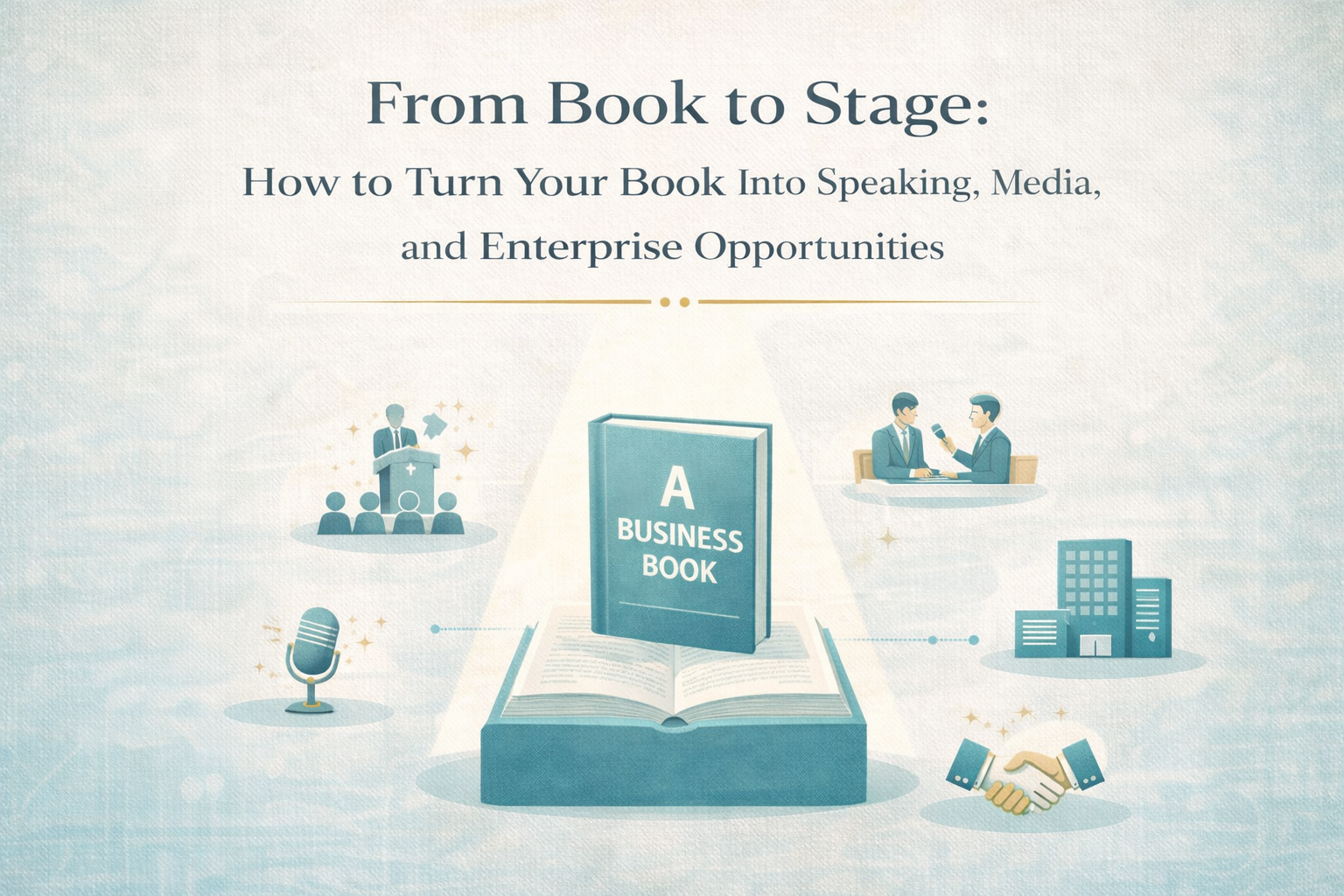
- Consulting and advisory work, where organizations seek the author’s judgment on complex challenges.
- Media opportunities, where journalists and podcast hosts look for credible voices with established perspectives.
- Strategic partnerships, where aligned organizations recognize shared ideas and expertise.
- Leadership opportunities, including board roles, executive appointments, teaching, and industry influence.
None of these outcomes are guaranteed.
But they become significantly more likely when expertise is organized into a credible, public body of work.
Beyond the Economics of Book Sales
This is why the economics of authority differ from the economics of publishing.
A book may be purchased once.
Its influence can create value repeatedly.
One reader becomes a client.
A client recommends the author to an event organizer.
A keynote leads to an advisory relationship.
An interview introduces the author’s ideas to an entirely new audience.
Each opportunity builds upon the trust created by the one before it.
That is why the most valuable return on a book is often indirect.
It is not measured only in royalties.
It is measured in the opportunities that emerge because expertise has become visible, credible, and easy to trust.
For Modern Authors, those opportunities are often the most enduring return a book will ever produce.
A Book Is Not the Product
By the time most professionals decide to write a book, they have already spent years building expertise.
They have led organizations.
Solved complex problems.
Developed judgment that only experience can produce.
From that perspective, it is easy to see the book as the final product of everything they have learned.
In reality, the book is something far more valuable.
It is the mechanism that allows expertise to continue creating value long after it has been written.
That distinction changes how Modern Authors think about publishing.
The Book Is the Beginning, Not the End
Traditional publishing often treats a book as the destination.
The manuscript is completed.
The book is released.
The project is finished.
Modern Authors think differently.
Publication is not the finish line.
It is the point at which expertise becomes visible, portable, and capable of creating opportunities at scale.
The book is no longer the outcome.
It becomes the foundation.
What a Book Actually Creates
The value of a book extends far beyond the words printed on its pages.
It becomes an asset that continues strengthening an author’s professional position in multiple ways.
| A Book Becomes | Why It Matters |
| Proof | Demonstrates that expertise has been developed into a coherent body of work others can evaluate. |
| Positioning | Establishes what the author wants to be known for and strengthens intellectual differentiation. |
| Leverage | Creates opportunities that extend beyond the book itself, including speaking, advisory work, media, and business development. |
| Trust Infrastructure | Continues building credibility by making expertise publicly accessible long after publication. |
| Authority Asset | Functions as a long-term intellectual asset that appreciates as it reaches new readers, organizations, and opportunities. |
This is why the return on a book is rarely confined to book sales.
Its greatest value comes from the authority it helps create and the opportunities that authority continues to generate.
The Modern Author Reframe
The question is no longer:
“How successful will my book be?”
The better question is:
“What kind of authority system will this book help me build?”
That is the strategic shift.
A book is not simply a product to launch.
It is proof of expertise.
A positioning asset.
A source of leverage.
A piece of trust infrastructure.
An authority asset that continues working long after publication, transforming knowledge into influence and influence into long-term professional opportunity.
PART VI — The Modern Author Authority System
A book is one of the most powerful authority assets a professional can create.
It is rarely the only one.
The strongest Modern Authors do not build authority around a single publication.
They build interconnected intellectual assets that reinforce one another, deepen credibility, and continue creating value over time.
The book becomes the foundation of a much larger system.
The Modern Author Builds Intellectual Assets
One of the biggest shifts in modern authorship is recognizing that books are not isolated achievements.
They are part of a broader body of intellectual work.
An intellectual asset is any original body of thinking that can be discovered, shared, applied, and associated with its creator.
Unlike expertise that remains inside conversations or organizations, intellectual assets continue creating value long after they are developed.
This is how expertise becomes durable.
Not by producing more content.
But by creating assets that continue demonstrating expertise over time.
Beyond the Book
A book is often the most visible intellectual asset.
It also becomes the source from which many others emerge.
As ideas mature, they can evolve into:
- Frameworks that simplify complex ideas into repeatable models.
- Research that strengthens credibility through original insights and evidence.
- Intellectual property such as methodologies, models, and proprietary approaches that distinguish an author’s thinking.
- Additional books that deepen, expand, or refine a body of work.
Each asset reinforces the others.
Together, they create a recognizable body of thought rather than a collection of disconnected publications.
From Publishing Books to Building Systems
This is the defining difference between publishing and modern authorship.
Publishing focuses on producing individual works.
Modern authorship focuses on building an enduring intellectual ecosystem.
Each new asset strengthens the author’s authority by making their expertise more visible, more memorable, and easier to apply.
Over time, those assets begin working together.
Research informs frameworks.
Frameworks strengthen books.
Books create opportunities to develop new ideas.
New ideas become the foundation for future intellectual property.
Authority grows because each asset compounds the value of the others.
That is why Modern Authors do not measure success by the number of books they publish.
They measure it by the strength of the intellectual system they are building—one that continues creating credibility, influence, and professional leverage for years to come.
Books Are Components of Larger Credibility Systems
A common assumption is that a book succeeds or fails on its own.
It does not.
The most effective books rarely operate as isolated assets.
They become part of a broader credibility system in which every component reinforces the others.
The book strengthens the author’s reputation.
That reputation attracts new opportunities.
Those opportunities create additional visibility.
And that visibility introduces more readers to the book.
Authority grows because the system compounds.
Not because any single asset carries the entire burden.
A Book Connects the System
The strategic value of a book comes from how it supports—and is supported by—other parts of an author’s professional ecosystem.
Rather than existing independently, the book becomes a central asset that connects to multiple authority-building activities.
| Credibility System | How the Book Contributes |
| Audience Building | Gives readers a substantial reason to discover, follow, and remain connected to the author’s work. |
| Speaking | Provides a clear intellectual platform that strengthens keynote topics and event positioning. |
| Thought Leadership | Establishes a coherent point of view that can be reinforced through articles, interviews, podcasts, and presentations. |
| Content Systems | Supplies ideas, frameworks, and intellectual property that can be repurposed across multiple formats without losing consistency. |
| Business Development | Creates credibility before the first meeting, helping prospective clients, partners, and organizations evaluate the author’s expertise. |
Each component makes the others stronger.
The book does not simply generate content.
It gives the entire system a clear intellectual foundation.
Authority Compounds Through Integration
This is one of the defining characteristics of Modern Authors.
They do not think in terms of individual marketing activities.
They build integrated credibility systems.
A keynote reinforces the book.
The book strengthens business conversations.
Client work generates new insights.
Those insights become future articles, frameworks, research, and eventually another book.
Each asset contributes to the next.
That is why a book achieves its greatest strategic value when it is viewed not as a standalone publication, but as one component of a larger authority system—one designed to build trust, strengthen positioning, and create professional opportunities that continue compounding over time.
Related Systems Inside the Manuscripts Ecosystem
This guide has focused on one central idea:
A book is not simply something you publish.
It is an authority asset.
But authority is rarely built through a single asset alone.
The strongest Modern Authors create systems in which every component reinforces the others.
A book strengthens positioning.
Positioning attracts opportunities.
Those opportunities generate new ideas.
Those ideas become additional intellectual assets.
That is the philosophy behind the Manuscripts ecosystem.
Each system addresses a different part of the authority-building journey while working together as a single operating model.
The Modern Author Ecosystem
| System | Purpose |
| Modern Author OS | The strategic operating system for turning expertise into books, intellectual property, and long-term authority. |
| Modern Publishing OS | A publishing framework that aligns editorial quality, positioning, launch strategy, and long-term business outcomes. |
| Codex / Author Intelligence | A knowledge system that captures, organizes, and develops an author’s ideas into reusable intellectual assets over time. |
Each system supports a different stage of the journey.
Together, they help transform expertise into a durable body of work rather than a single publication.
Continue Building Your Authority System
If this guide introduced ideas you want to explore further, these resources expand on the key components of modern authorship:
- Audience Building — Learn how to develop an audience before your book launches so trust begins compounding long before publication.
- Author Positioning — Discover how to become associated with a distinctive idea, framework, or category of expertise.
- Framework Development — Learn how to transform experience into original intellectual property that readers can understand, apply, and remember.
- Authority Through Books — Explore how books function as long-term strategic assets that create credibility, influence, and professional leverage.
None of these systems exist in isolation.
Audience building strengthens positioning.
Positioning increases the impact of a book.
Books create opportunities to develop new frameworks, research, and intellectual property.
Each asset reinforces the others.
That is the strategic reframe.
Books create the greatest value when they are connected to an intentional authority system—one designed not simply to publish ideas, but to transform expertise into enduring credibility, influence, and long-term professional leverage.
PART VII — The Future Belongs to Authority Builders
Every section in this guide has pointed toward the same conclusion.
The future will not belong to the professionals who publish the most.
It will belong to those who create the strongest evidence of expertise.
As information becomes abundant and content becomes easier to produce, authority is increasingly earned through work that people can discover, evaluate, trust, and remember.
That is the opportunity modern authorship creates.
What This Means for Modern Professionals
For decades, professional success was often measured by credentials, titles, and institutional affiliation.
Those signals still matter.
But they are no longer the only way expertise becomes visible.
Today, professionals can demonstrate what they know directly.
They can publish their thinking.
Develop original frameworks.
Build intellectual assets.
Create work that others can evaluate without relying solely on institutional validation.
That shift changes one of the most important questions in a professional career.
It is no longer:
“How much content have you published?”
It is:
“What evidence have you created that people can trust?”
The distinction matters because content and evidence perform different jobs.
Content attracts attention.
Evidence creates belief.
Content is consumed.
Evidence is referenced.
Content can be forgotten.
Evidence compounds.
This is the strategic advantage available to Modern Authors.
Instead of competing to produce more content than everyone else, they invest in creating assets that continue demonstrating expertise long after they are published.
Books.
Frameworks.
Research.
Intellectual property.
Together, they become visible proof that expertise is genuine.
In an AI-driven economy, that may become one of the most valuable professional advantages of all.
The future belongs to authority builders—professionals who understand that lasting credibility is not measured by the volume of what they create, but by the quality of the evidence they leave behind.
From Content Creator to Authority Builder
The central argument of this guide can be summarized as a simple shift in perspective.
Many professionals believe their next opportunity depends on publishing more.
More articles.
More newsletters.
More videos.
More posts.
That approach made sense when visibility was the primary constraint.
Today, the constraint is different.
The market is not struggling to find content.
It is struggling to identify expertise it can trust.
That changes the role of publishing.
The objective is no longer to create more output.
It is to create stronger evidence.
The Identity Shift
The transition from content creator to authority builder is not primarily about producing different formats.
It is about pursuing a different outcome.
| From… | To… |
| I need to publish more. | I need to create stronger proof. |
| Focus on producing content. | Focus on building intellectual assets. |
| Measure success by consistency and volume. | Measure success by credibility and long-term influence. |
| Chase attention. | Earn trust. |
| Create for the next post. | Build for the next decade. |
This shift influences every publishing decision.
Instead of asking, “What should I post next?”
Modern Authors ask:
- What idea deserves to become a lasting intellectual asset?
- What evidence will strengthen my authority over time?
- What work will still be valuable years from now?
Those questions produce different decisions.
And ultimately, different careers.
Build Proof, Not Just Presence
Presence matters.
Visibility matters.
Consistent publishing still has value.
But those activities become significantly more powerful when they are anchored to something deeper.
A book.
A framework.
Original research.
A body of intellectual property.
These are the assets that transform attention into trust and trust into authority.
That is the identity shift.
Modern Authors are not simply content creators.
They are authority builders.
They understand that lasting influence is not created by publishing more than everyone else.
It is created by developing work that people can discover, trust, reference, and return to long after it is first published.
The New Economics of Authority
Throughout this guide, we have returned to the same question from different angles:
In a world where everyone can publish, what makes someone worth trusting?
The answer is not more information.
Information has never been more abundant.
Anyone can generate content.
Anyone can summarize ideas.
Anyone can publish at scale.
That is precisely why information is becoming less valuable as a signal of expertise.
Trust is becoming more valuable instead.
This is where books continue to matter.
Not because they contain information that cannot be found elsewhere.
But because they demonstrate something that cannot be measured by volume alone.
They reflect sustained thinking.
Intellectual ownership.
Judgment.
The discipline to organize years of experience into ideas that other people can understand, evaluate, and apply.
That is why a serious nonfiction book remains one of the strongest authority assets a professional can create.
It does not simply communicate what someone knows.
It provides visible proof of how they think.
Ultimately, this is the transformation that defines modern authorship.
Expertise becomes trust.
Trust becomes authority.
Authority becomes opportunity.
And those opportunities create new experience, deeper thinking, and even stronger intellectual assets that continue compounding over time.
Books are not valuable because they contain information.
They are valuable because they transform expertise into trusted proof, trusted proof into enduring authority, and enduring authority into opportunities that continue creating value long after publication.
In an AI-driven economy, that may be the most durable competitive advantage a professional can build.
Build Your Authority System
If you’ve read this far, you’ve probably recognized something important.
Writing a book is not simply about publishing.
It is about building a professional asset that continues creating value long after the manuscript is finished.
The strongest books do more than communicate expertise.
They create visible proof.
Strengthen positioning.
Earn trust.
Open opportunities.
And become the foundation of a larger authority system.
That is the philosophy behind Manuscripts.
We believe modern authorship is not about producing a book for its own sake.
It is about transforming expertise into assets that continue compounding throughout a professional career.
Whether your goal is to become a recognized thought leader, strengthen your company’s market position, expand your speaking platform, or create intellectual property that outlives your current role, the objective remains the same:
Build an authority system—not simply a book.
If you’re ready to build that system with a team that understands modern publishing, strategic positioning, and long-term authority creation, that’s the conversation Manuscripts exists to have.
Continue Exploring
If you’d like to continue developing your authority system, these resources are a natural next step:
- Modern Author OS — Learn how Modern Authors transform expertise into long-term authority.
- Modern Publishing OS — Explore a publishing system designed around credibility, positioning, and business outcomes.
- Codex / Author Intelligence — Discover how to capture, organize, and develop your intellectual capital into lasting assets.
- Audience Building Guides — Learn how to build trust and demand before your book is published.
- Authority Positioning Guides — Develop a distinctive intellectual position the market can recognize and remember.
- Framework Development Guides — Turn experience into original frameworks, methodologies, and intellectual property that compound over time.
Because the goal is not simply to publish a book.
It is to build an authority system that transforms expertise into visible proof, trusted ideas, discoverable authority, and lasting professional leverage.